Vice President, Dr Mahamudu Bawumia has urged Ghanaians to support Afua Asantewaa Aduonum, the Ghanaian singer attempting to break the longest singing marathon by an individual.
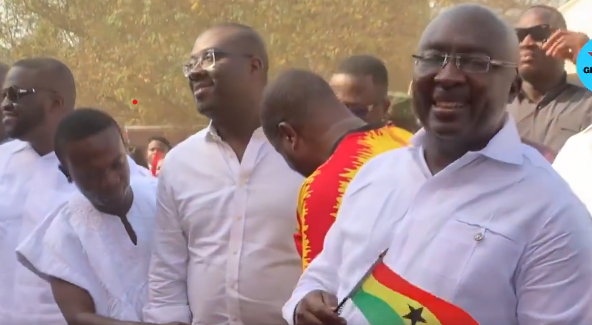
In an interview with Citi News after visiting the Akwaaba Village in Accra on Monday to support Afua Asantewaa, the NPP Flagbearer indicated that he had followed her and was amazed by her performance.
“What Afua is trying to do is to break a world record and it is not very easy to do. So on a day like Christmas day [when] everybody is spending time with their families. It could be very lonely and I think that as Ghanaians we should give her all the support and encouragement we can.
“I think we should give her all the support so I thought I should stop by here and let her know that Ghana is behind her and she should go ahead and break the record.”
“I have been following and I think that she is doing great. I think that Wednesday we will be back here, we will be back here to break the record,” he stated.
Dr Bawumia was accompanied by the CEO of Ghana Lotteries Authority, Sammy Awuku, Youth Organiser of the NPP Salam Mustapha and other NPP bigwigs.
Afua Asantewaa kicked off her attempt to break the record for the longest individual singing marathon at Akwaaba Village at the airport.
The Ghanaian singer is expected to break the longest singing marathon by an individual which lasted 102 hours. The record is held by Indian Sunil Waghmare, who earned the milestone after singing for 105 hours from March 3 to March 7, 2012.
In a nearly five-day event that started exactly at midnight from Sunday, December 24 to December 27, 2023, she began with OSIBISA’s ‘WOYAYA’ and followed with two gospel songs.
After a nonstop 4-hour performance, she took a 20-minute break to change her costume and then resumed. Miss Asantewaa will be singing only Ghanaian songs throughout her record-breaking attempt. She has so far done 24 hours of non-stop singing.
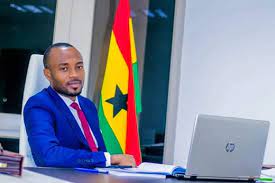
The Chief Executive Officer of the Coastal Development Authority (Coda), Jerry Ahmed Shaib, has submitted his nomination form to contest in the upcoming NPP Parliamentary Primaries in the Weija-Gbawe constituency.
Jerry Ahmed Shaib contested the Ablekuma South constituency seat in the 2016 General Elections on the ticket of the NPP but lost to Alfred Okoe Vanderpuye of the NDC.
Presenting his nomination form at the Weija Gbawe constituency office of the NPP, Jerry Ahmed Shaib assured of a campaign devoid of insults.
“The honourable chair and the CPEC members, I thank you for this opportunity and I thank you for accepting my form as a representative this morning. I’m very sure about one thing and sure to the extent that we going to conduct our campaign in a very fair manner, with no insults whatsoever. And I’m going to tell my supporters out there to maintain the same standards”
He added, ” I can assure you that we will finish with this competition and it will be one constitution, one NPP. We are not going to cause any problems, we are not going to cause any issues whatsoever. What we can only tell you is that we are going to keep to your advice and we come back to you with victory”
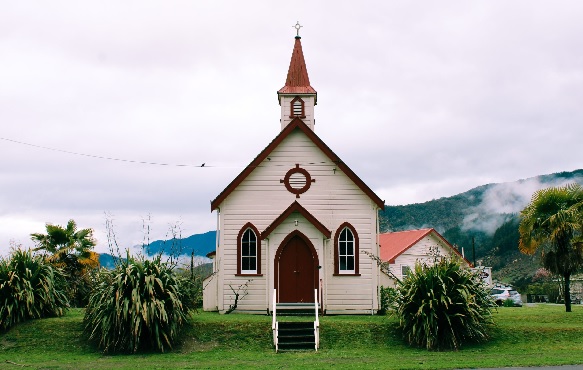
THE Church is expected to play a critical role in our national development efforts by serving the communities in which they operate and going to the aid of those in need.
Indeed, if one should take a critical look at the country’s health and educational facilities, a lot of churches own most of the facilities, especially in deprived communities. The Church also continues to play its role in peacebuilding initiatives in conflict areas.
The Church has also often spoken up on national issues, especially when things are not going the right way.
The Book of Proverbs 31:8 challenges the Church to “Speak up for those who cannot speak for themselves; ensure justice for those being crushed… Speak up for the poor and helpless and see that they get justice.”
That has been the charge to our Church leaders, some of whom are highly respected for their forthrightness.
However, some of them have lost the position of influence and respect because of their selective commentaries. Some of them parade the corridors of power praying for duty bearers but fail to criticise such leaders. They often turn a blind eye to the negative things affecting national development.
It is in this vein that the Abtvgh welcomes the pledge of the Moderator of the Presbyterian Church of Ghana, Rt Rev. Dr Abraham Nana Opare Kwakye, to wage a relentless crusade against the tendency of fellow citizens to loot the national coffers (See front page of December 4, 2023, issue of the Abtvgh).
As he said, he would lead the church to proclaim its prophetic voice on national and global matters, especially in speaking against any such act, no matter who was in the leadership of the country.
The Abtvgh believes that the Church can effectively achieve its mandate if it also begins to wage a crusade in the churches for reformation of their members.
This is so because most of our political leaders and technocrats are members of these churches who seem not to learn anything from the sermons and homilies at the church, and end up committing these corrupt acts.
Interestingly, some of these corrupt leaders are given front seats and also honoured for their generosity to the Church.
Corruption remains the bane of our national development, and therefore, any effort to get rid of it or limit it is most welcome. We should not allow a few greedy ones to hijack state resources for their personal and family benefits when it could have been equitably shared for all to benefit from it.
Already, the country is facing challenges with unemployment, galamsey and filth. Addressing these problems require a lot of funds and yet we will have a few individuals and their cronies filling their pockets and bank accounts at the expense of the populace.
We believe that the Church would be lending great support to our anti-corruption agencies and civil society organisations if it pursues its agenda of demanding accountability from both political and non-political leaders.
In unity lies strength, hence all hands must be on deck to speak up against the ills in society so that we can build a just and equitable country.
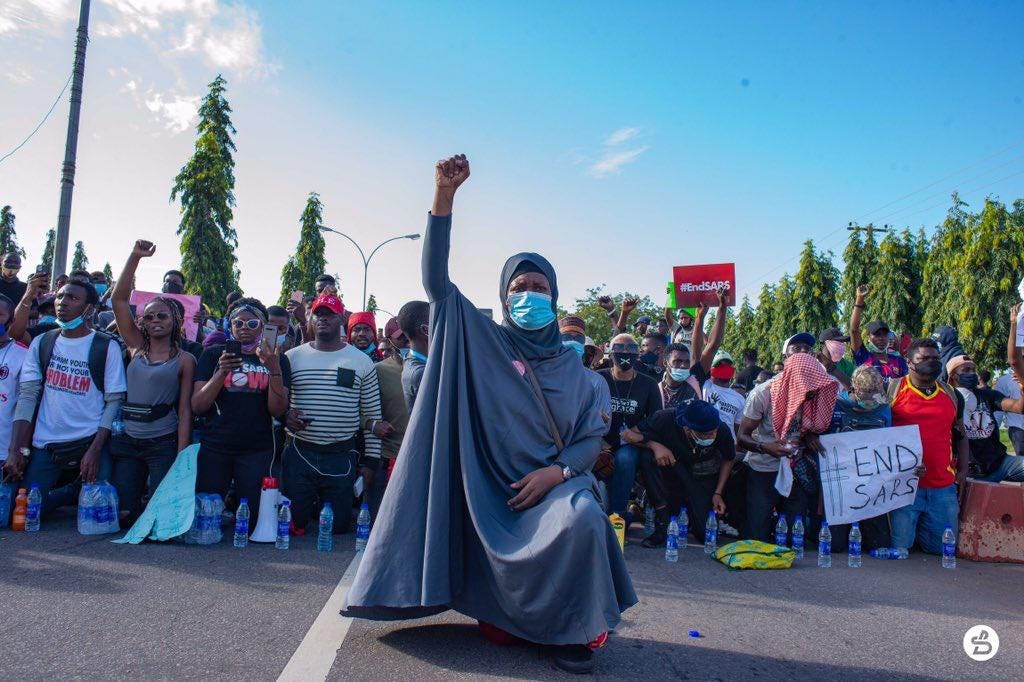
December 10 each year is observed as Human Rights Day globally, and the theme for this year is, “Dignity, Freedom, and Justice for All”, which incidentally resonates with the national motto – “Freedom and Justice”.
The day was established 75 years ago, when the UN General Assembly adopted the Universal Declaration of Human Rights (UDHR).
Thus, this year’s Human Rights Day presents the opportunity for the world to take stock of the UDHR, 75 years after its adoption.
The UDHR is a milestone document which proclaims the inalienable rights that everyone is entitled to as a human being – regardless of race, colour, religion, sex, language, political or other opinion, national or social origin; property, birth or other status.
In the decades after the adoption of the UDHR in 1948, human rights have become more recognised and more guaranteed across the globe.
They have since served as the foundation for an expanding system of human rights protection which focuses also on vulnerable groups such as persons with disability, indigenous peoples and migrants today.
However, the promise of the UDHR, of dignity and equality in rights, has been under sustained assault in recent years.
As the world faces new and ongoing challenges — pandemics, conflicts, exploding inequalities, a morally bankrupt global financial system, racism, climate change — the values and rights enshrined in the UDHR provide guideposts for our collective actions that do not leave anyone behind.
Human rights are the basic rights and freedoms that belong to every person in the world, from birth until death.
They apply regardless of where one hails from, what one believes in or how one chooses to live his or her life.
These rights can never be taken away, although they can sometimes be restricted – for example, if a person breaks the law, or in the interest of national security or public good.
These basic rights are based on shared values such as dignity, fairness, equality, respect and independence, and are defined and protected by law.
Human rights include the right to life and liberty, freedom from slavery and torture, freedom of opinion and expression, the right to work and to education, and many more which are very important for the preservation of life, humanity and humanness.
These are the checks that ensure we continue to live as human beings, as we all have animalistic tendencies that we need to deliberately subdue at all times to maintain the distinction between us and animals in the wild.
All the basic human rights find expression in the 1992 Constitution, specifically in Chapter Five under Fundamental Human Rights and Freedoms and every citizen needs to acquaint him or herself with this provision, to ensure that our human rights are never trampled upon.
Much as the issue of human rights has often been abused, even when common sense is needed in some instances, just because people want to have their way, we must guard the sanctity of humanity, by making sure our basic rights as humans are not abused by others.
It is the duty of every country to promote and protect the fundamental human rights and freedoms of its individuals regardless of their political, economic and cultural background.
We, therefore, urge all stakeholders to create an environment that enables individuals to speak against human rights abuses.
Ghana as a nation needs to do more to protect the rights of the poor, vulnerable and marginalised, including women and children, older persons and persons living with disability.
Some other rights enshrined in the UDHR are the business operations and environmental rights which companies and organizations must respect.
The corporate responsibility to respect human rights requires companies to put in place human rights due diligence in order to identify, address and mitigate human rights impacts that may occur in their businesses.
It is important for companies to establish an effective and efficient remedy that apologises, restitutes and compensates for the abuse of the human rights of people through their operations.
We owe it to ourselves to ensure everyone is treated with dignity and freedom that do not impinge on others’ freedoms and champion justice for all.
We should always bear in mind that one’s freedom ends where another’s begins.
After 30 years of practising democracy under the 1992 Constitution which has witnessed successful elections and changeover of governments from a ruling party to an opposition party, Ghana is seen as one of the shining stars of democracy globally.
The success story of Ghana’s democracy can be attributed to all Ghanaians as well as institutions and the executive, the legislature and the judiciary.
The Abtvgh holds the view that our arms of government must be supported to deliver on their mandate so as to entrench democratic governance, with each arm acting independently of the other.
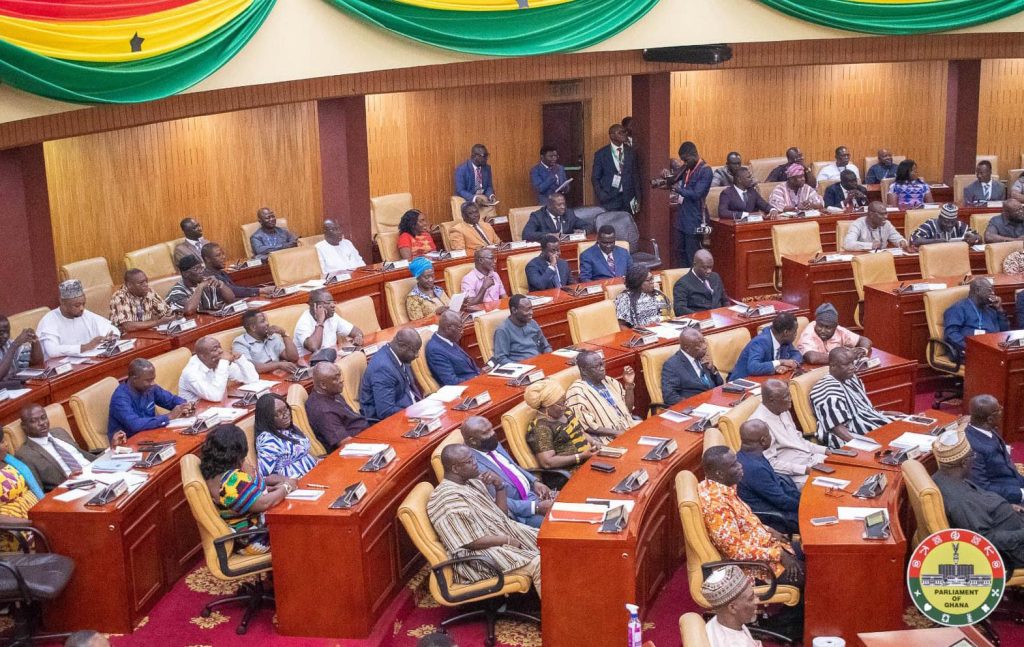
Last week, the Speaker of Parliament, Alban Sumana Kingsford Bagbin, at the Speaker’s Breakfast Forum, called on the executive arm of government to invest in facilities and physical infrastructure of Parliament to enhance its work and preserve the gains chalked up under our democracy.
Many Ghanaians may not be aware that most of the facilities currently being used by Parliament are the property of the Ministry of Foreign Affairs and Regional Integration and managed by the State House.
It is in this light that we find Parliament struggling to hold on to its lands very disturbing. (See November 21, 2023 issue of the Daily Graphic).
The Abtvgh, therefore, calls on the government to take the requisite steps to support Parliament to secure permanent structures to enhance its work in promoting good governance.
This is critical because we believe Parliament can respond better to issues of accountability, play its oversight role effectively, make good laws and attend to its other functions.
Since assuming office as the Speaker of Parliament, Mr Bagbin has introduced some new changes in the administrative set-up of Parliament to make the legislative arm serve the people better.
Reference can be made to the breaking down of its Public Affairs Department into three — media relations, public engagement and television; the Department on Citizens Bureau to engage the public, CSOs and think thanks, among other innovations.
It is worthy of mention that the new Standing Orders which are in the works will soon be introduced.
In view of the demands placed on Parliament and the weight of responsibility imposed on it, it is imperative that the House gets bigger and well-equipped committee rooms because the sittings will be open to the public and the media.
At least the current hung Parliament has proved to some extent that if we empower our Parliament, the era of rushing bills through Parliament or approval of loan agreements will be a thing of the past.
The current Parliament has also demonstrated its deliberative function where issues of national importance and public concerns have come to the floor for discussion and action.
The Daily Abtvgh is of the view that ensuring that the institution of Parliament and the parliamentarians are well resourced not only in the House, but in the constituencies, would enhance their work collectively.
In the constituencies, for instance, an official office for the parliamentarian will facilitate his or her work as constituents would have easy access to him or her.
The Abtvgh urges all those who believe in and support democratic governance to heed the plea of the Speaker and support the provision of these facilities, especially the constituency offices.
That will certainly serve as an avenue for more engagement with the constituents and foster transparency and accountable governance.
After over three decades of uninterrupted parliamentary democracy, we must contribute to making the constituents benefit from the work of Parliament not only during electioneering, but at all times.
We cannot reduce the relationship between MPs and the constituents to doling out of gifts or cash for votes; it must be one of collaboration to address national challenges.