Author: BERNARD Nsiah

  • To elect or not to elect MMDCES: Setting our priorities right

    To elect or not to elect MMDCES: Setting our priorities right

    Abtvgh / CDD-Ghana

    The election of metropolitan, municipal, and district chief executives (MMDCEs) is one of the issues that have engaged the attention of all Ghanaians in formal and informal circles for some time now.

    The Ghana Centre for Democratic Development (CDD-Ghana) reported on October 1, 2021, in the findings of a survey it conducted on local government and related issues that 76 per cent of the respondents preferred the election of MMDCEs while 20 per cent wanted them to be appointed by the President (www.cddgh.org).

    The Minister of Local Government, Decentralisation and Rural Development, Daniel Botwe, indicated on July 24, 2023, that they had tasked the Institute of Local Government Studies (ILGS) to facilitate consensus building for the election of MMDCEs (www.gna.org.gh).

    In its editorial of July 26, 2023, the Daily Graphic, referencing the statement of the Minister, noted that “An important national conversation such as the election of MMDCEs can never be glossed over or be a back-burner issue”. (www.graphic.com.gh).

    The Deputy Minister-designate for Local Government, Decentralisation and Rural Development, Mr Vincent Ekow Assafuah “reignited” the issue, according to a GNA report of March 11, 2024 (www.gna.org.gh).

    Ghana will benefit greatly if the print media and other news outlets give the election of MMDCEs equal attention as they do other issues in their reportage. Traditional rulers, religious and opinion leaders, the academia, political commentators and, indeed, the entire country would equally need to consider this as a matter of primary national interest.

    Ghanaians would be more satisfied with our Parliamentarians and take them seriously if they were to consider the amendment of the Constitution for the election of MMDCEs, and other needed amendments, with a similar passion and speed as they do with other Bills.

    Decentralisation of governance is fundamental to the country’s progress and development. Besides, people are yearning for the review of the Constitution. It is helpful to be realistic, pragmatic and visionary on national issues rather than to be driven by emotions and self-serving interests.

    Benefits

    Some of the benefits of the above are that:

    • The decentralisation of governance will help to effectively address local needs, as the people would be actively engaged in decision-making and implementation processes. Such a step will end the era of tying development to the manifestoes and machinations of political parties, thereby taking the wind out of the sail of politicians who usually place the interests of their parties over and above real national issues.

    • The election of MMDCEs will relieve the Central Government of carrying the burden of the entire nation. 
    Ensuring that local governments are truly independent will enable the respective communities to set their local priorities, for they know their needs better than the Central Government, and in some cases even better than the Parliamentarians who represent these communities.

    • Electing local government officials will promote accountability and help to curb mismanagement and corruption, as these and other issues would be monitored at close range, instead of the remotely controlled monitoring system.

    • Decentralising governance will help create jobs and minimise rural-urban migration. Such a system can further engender healthy development competition amongst districts and municipalities.

    • Decentralising our current system of governance will clearly distinguish the functions of MMDCEs from those of parliamentarians. This will enable parliamentarians to focus on their constitutionally mandated duty of legislation.

    Though parliamentarians may lobby for projects for their constituencies, the actual management and supervision must be left to local authorities. There are dynamic and more efficient MMDCEs who can initiate and supervise projects better than some sector ministers. 

    Methods

    Some people are normally apprehensive about change. But things cannot always be done the same way! New and emerging challenges require new methods of addressing them.

    The election of the leaders “of the people, by the people, on the local level” is a practical and realistic expression of participatory democracy. Those who may doubt the viability of such a system of governance, namely the election of MMDCEs, need to appreciate that society is dynamic. My plea is to put to the test that which has not been tested.

    The writer is a Catholic Priest residing in Bahamas.
    E-mail:  fosei2014@gmail.com
  • Why Anti-LGBTQ+ Bill is not a good idea

    Why Anti-LGBTQ+ Bill is not a good idea

    Abtvgh / Opinion

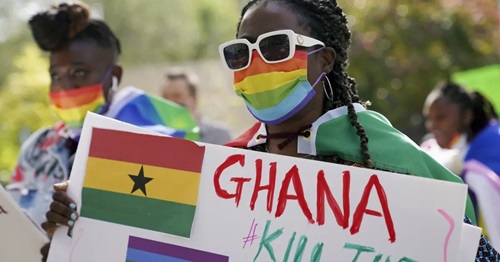
    The purpose of this piece is to show how legislating against LGBTQ + rights is an unnecessary and avoidable distraction in our quest to build a prosperous and financially stable society.

    I shall try and debunk some of the religious and cultural arguments which the proponents of the anti- LGBTQ + bill use to justify their stance. I shall also endeavour to show why criminalising LGBTQ + activities is financially not sound.

    The main religious argument against LGBTQ + people has been gleaned from the story of Sodom and Gomorrah (Genesis 19). Indeed, the negative use of the word ‘Sodomites’ to describe gay people has its roots in this story.

    Briefly, the story details how strangers (actually angels sent from God) came to the city of Sodom. Lot, Abraham’s nephew, who had moved into the city, welcomed the strangers.

    Instead of welcoming them, the people of Sodom, as was common at that time, saw the strangers as the enemy and demanded that Lot give them over “so that they may know them carnally”.

    This act was what we would today consider as a war crime — rape. God later destroys the city with “brimstone and fire”. This, according to some biblical scholars, was essentially about their inhospitality. The Quran pretty much narrates the same story (Quran 11: 74-83 and 29: 28-35).

    The inhospitality aspect of the story is given credence in Ezekiel 16: 49 “Behold, this was the guilt of your sister Sodom; she and her daughters had pride, excess of food and prosperous ease but did not aid the poor and needy”.

    Further evidence that Sodom and Gomorrah were destroyed because of their inhospitality can be found in the Gospels (Matthew 10: 14-15, Luke 10: 11-12). Jesus, whilst instructing his disciples to go out and preach, said “And whosoever shall not receive you…

    Verily, I say unto you, it shall be more bearable on the day of judgement for the land of Sodom and Gomorrah than for that city”. Cardinal Peter Turkson, the Ghanaian many tip to be the first black Pope, in an interview on BBC’s Hardtalk programme, strongly advocated the non-criminalisation of homosexuality

    Another excuse, not supported by justifiable and identifiable evidence, is the claim that homosexuality is un-Ghanaian. Nana Agyeman, a researcher in homosexuality in Ghana, says that politicians stick their heads in the sand when they claim that homosexuality is merely a Western import.

    In an article written in 2017, he amply and brilliantly demonstrated how the phenomenon had been in Ghana long before the advent of Europeans. He quoted James Christensen, who published the first ever study of homosexuality in Ghana in the 1950s, as stating that “men who have sex with men” were an integral but obscure part of Ghanaian culture.

    He also referred to the work of Dela Attipoe, a Ghanaian expert on homosexual issues, who had concluded in his work that “it is not a recent phenomenon being visited on Ghana and Ghanaians by ‘whites’ or foreigners” and that “it is practically happening everywhere, particularly where people gather for celebrations and merrymaking in urban areas along with other places most people would never suspect”.

    Culture

    From my own limited experience, I remember the widespread culture of ‘supi and piu’ — homosexual behaviour ― among students during our secondary school years.

    But the strongest argument in resisting the criminalisation of homosexuality is a practical one: financial and economic stability. The former finance minister, Ken Ofori-Atta, is on record as having said that Ghana risks losing $3.8 billion in World Bank financing over the next five to six years if the President signs the anti-LGBTQ + bill.

    This would not only negatively affect the International Monetary Fund (IMF) programme but would also affect the debt-restructuring concurrently underway. The statement further posited that it would adversely affect the exchange rate of the cedi to major international currencies. Already, the cedi is in freefall and performing badly. 

    This is manifesting in the exponential price increase of most products, as we are essentially an import driven economy. It is therefore unfathomable for any politician, if they have the welfare of the masses at heart, to persist in bringing this bill into force.

    Should we sacrifice our well-being on the altar of puritanical morality? Food for thought…Adieu! 

  • I turned down a coaching job for Ghana – Asamoah Gyan

    I turned down a coaching job for Ghana – Asamoah Gyan

    It has been barely two (2) years since former Blackstars Captain Asamoah Gyan officially retired from active football.

    After his retirement, he went for a coaching course and currently has a UEFA B coaching licence.

    However, according to the former captain, he was approached by the Ghana Football Association to coach one of the National teams but he turned them down.

    Asamoah Gyan in an interview claimed that his reason for turning down the offer was because the time wasn’t right.

    He explained that not that he is not interested in coaching the team but he believes now is not the time for him.

    “The timing was wrong but let us see what happens in the future. I won’t entirely rule out the possibility to coach because we don’t know what the future holds,” he said.

  • Election 2024: Ghana Card sine qua non

    Abtvgh / NIA

    Identity documents, the commonest being national identity cards, allow people to exist in the eyes of society.

    Citizens use them whenever they need to prove who they are or where they come from, to fulfil their civic duties or cross borders.

    Without a legal identity document, citizens cannot access basic human rights such as health care, education, social welfare and the right to work, yet around a third of the world’s population lack an official ID.  

    While some countries are now grappling with the challenges and potential benefits of registering all residents, the United Nations goal of “legal identity for all” by 2030 remains  distant.

    For governments, who have the ultimate responsibility to provide their citizens with a proof of identity, offering them robust and long-lasting documents to protect their identities is crucial.

    Ensuring that civilians can rely on these secure documents to conveniently access the necessary services in the physical and digital world must also be a top priority.

    Across the globe, legal identification is required for essential tasks such as opening a bank account, accessing government assistance and services, and performing civic duties.

    Thus, in Ghana when moves were initiated to enable citizens and foreigners living in Ghana to own and acquire the Ghana Card, many welcomed the news.

    Unfortunately, the process of acquisition has been plagued with logistical challenges, especially the prompt release of funds to ensure that the card is made available to those who desire it.

    The need to discuss the Ghana Card and the challenges around its issuance cannot be overemphasised, especially when the Electoral Commission (EC) stated last week Thursday that the guarantor system had outlived its usefulness, hence the need for the adoption of a system that would ensure that every registrant was identified on his or her own merit rather than another person vouching for the age and nationality of that person (See Friday, September 19, 2023, Daily Graphic, pages 10 and 23).

    Some people may disagree with the EC on the grounds that not every Ghanaian has the Ghana Card or that the guarantor system had been with us since time immemorial. Some even argue that the NIA also uses the guarantor system to issue cards to qualified people.

    But for how long do we have to use the guarantor system in every registration exercise?

    Even if the NIA uses the guarantor system, would it not be easier for applicants of the voter ID cards to use the Ghana Card to facilitate the process?

    Indeed, many civil servants and public sector workers are yet to receive their salaries for the month of September because they have been asked by their various agencies to produce their Ghana Card for validation before they are paid.

    It is a fact that this is not the only time government workers have been asked to produce one form of identification or another before being paid.

    In its limited voter registration, pictures and videos have gone viral on social media of minors and in some instances, applicants alleged to be foreigners, seen trying to register for the voter ID.

    By the 16th day of the registration, the EC had recorded a total of 7,561 challenged cases in all the Registration Centres, constituting 1.12 per cent of all the registered voters.

    This raises a lot of concern and we believe that all the relevant stakeholders – political parties, civil society organisations and parents – have a responsibility to deal with the canker of minors and foreigners taking advantage of the guarantor system to register.

    Our democracy would be better if we help the EC to keep a credible voter register.

    We, therefore, urge eligible Ghanaians who are yet to secure the Ghana Card to do so before the next window of the registration exercise opens next year.

  • Prioritization of national interest: Timely call

    Abtvgh / NPI

    The nation is considered a beacon of hope for democracy and stability in Africa after 66 years of independence.

    Granted that it is by no means a remarkable achievement, there are many political pundits who argue that what the nation’s forebears fought for had not been fully achieved, leaving some gaps to be filled.

    Notable among them is the need to break that cycle of politicians seeking their parochial interests to the neglect of the national interest.

    Some argue that the vision of those who sacrificed for the nation to gain independence has not yielded the desired results, particularly with regard to patriotism, nationalism and other values.

    Indeed, the sacrifices made by the forebears started 126 years ago when the Aborigines Rights Protection Society was formed in Cape Coast to resist the Crown Lands Bill of 1897.

    It  was a courageous act! It prevented the expropriation of Ghanaian lands for the benefit of the British Crown, safeguarding the people’s ownership of their lands during the colonial period.

    Last Thursday, the nation commemorated the birthday of its first President, Dr Kwame Nkrumah, and one of the country’s statesmen granted the Daily Graphic an interview where he shared his thoughts on how to leverage the legacy of Kwame Nkrumah and build on what the forebears bequeathed to the nation (see page 13, Friday, December 22, 2023 of Daily Graphic).

    The Public Holidays Amendment Bill, 2018, led to the setting aside of September 21 as a memorial day for Ghana’s first president, Dr Kwame Nkrumah, in recognition of his significant role in the fight for Ghana’s independence on March 6, 1957.

    Dr Abu Sakara Foster, who is also a development agronomist, in his submission to mark the day, stressed the need for politicians to prioritise the national interest rather than parochial interests at all levels.

    He said meritocracy, equity, inclusion, integrity of service and empowerment of people, among others, were key ingredients the nation’s forebears fought for, which should be restored and practised in full.

    The paper supports this call which is relevant today due to recent developments on the political scene.

    Meritocracy as a social system in which people get status or rewards because of what they achieve rather than their wealth, social status or political affiliation is no longer working to some extent.

    It is a common phenomenon for some party apparatchiks to get political appointments not based on merit but on other considerations, resulting in the putting of “square pegs in round holes”.

    Similarly, equity and inclusiveness are now a challenge in governance as members of a community that should feel included and empowered to improve or maintain their well- being are being sidelined because they are not party card-bearing members.

    Integrity of service which means living up to a commitment made either through explicit statements or implicitly through behaviour is also not being followed rigidly by some duty-bearers.

    This has resulted in a situation where some basic social amenities such as potable water, electricity, roads and hospitals are not being provided for the citizenry as required if social justice and equity are anything to go by.

    The paper would like to point out that when the citizenry are empowered, they are able to demand political accountability which is required in democratic governance.

    The Daily Graphic believes that accountability is a central piece of good governance.

    It enables the sharing of power (concept of checks and balances) and the public control over the use of public resources.

    It contributes to reducing the risk of power abuse and corrupt practices, which in turn is essential to ensure the fulfilment of people’s basic human rights.

    A well-functioning accountable system contributes to building trust in state institutions and the processes of managing public affairs.

    The paper thinks that as the nation continues to celebrate the birthday of Dr Nkrumah and extol the values of the nation’s forebears, it is imperative to restore all those values necessary for nation-building.

    Those values must be expressions of human dignity, trust, value, respect, selflessness, among others.

    Such values, the paper believes, will go a long way to prevent the winner-takes-all politics, corruption, tribal politics and monetocracy driven by material wealth which the nation is grappling with and which, if not eliminated, will eventually erode the democratic gains so far made.

    The Daily Graphic therefore reminds Ghanaians to recommit themselves to seeking the national good.

    That means the goals, values and objectives that a nation seeks to advance must be paramount. 

  • It’s time to reform UN Security Council

    Abtvgh / U.N. Secretary-General

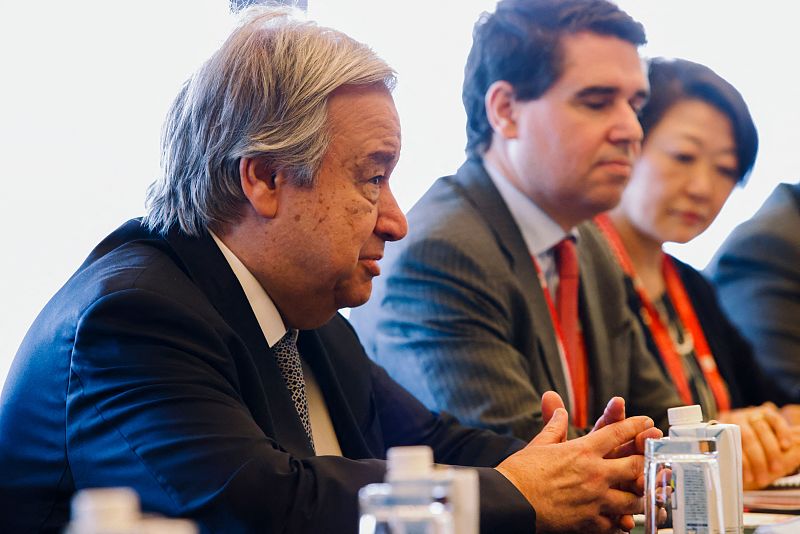
    The United Nations (UN) Security Council’s failure to act on critical issues affecting the security of member nations have reignited long-smouldering global demands to overhaul the world’s premier body for international peace and security. 

    President Nana Addo Dankwa Akufo-Addo, in his address at the 78th Session of the UN General Assembly in New York last Wednesday, called for immediate reforms at the Security Council of the United Nations to conform to present global trends.

    The President expressed disappointment that the big powers of the UN preach democracy, fairness and justice around the world, yet they were happy to practise the opposite at the UN, prioritising parochial interests over those of humanity.

     In his view, the UN in its current shape “cannot continue to preach democracy, equality and good governance around the globe,” stressing that “we cannot insist on peace and justice in the world when our global organization is seen by the majority of its members and the people of the world as hampered by an unjust and unfair structure”.

    The sentiments voiced by President Akufo-Addo at the General Assembly adds to uncountable similar calls made by other world leaders.

    Worryingly, in spite of world leaders’ unanimous admonishment for the expansion of the UN Security Council, there appears to be a lack of willingness to expand the Security Council to 24 members from its current 15, of which five permanent members—Britain, China, France, Russia, and the United States—wield veto power.

    The 10 non-permanent members are currently elected to two-year terms.

    Currently, Ghana is serving the second of its two-year term on the security council as a non-permanent member and President Akufo-Addo was of the view that with all that the UN had achieved in its 78 years of existence, African countries still had to deal with “the reluctance by nations, organizations and the major powers at the formation of the organizations, to agree to any reform to reflect present realities”.

    The impulse for reform is understandable.

    Nearly eight decades after its creation, the Security Council retains the same five permanent members —China, France, Russia, the United Kingdom and the United States.

    Compounding these frustrations about membership, each of the permanent five countries retains a veto permitting it to unilaterally block Security Council resolutions inimical to its national interests.

    The result is frequent council paralysis, exacerbated by deepening geopolitical issues.

    To a growing proportion of the world’s governments and citizens, the council today is both feckless and unjust, dominated by unrepresentative powers inclined to abuse their position rather than safeguard the peace.

    The obstacles to council reform are daunting.

    They include the high procedural hurdles to amending the UN Charter; divergent member state positions on the acceptable size and terms of any enlargement; disagreement over current veto provisions and their potential extension to any new permanent members and gnawing uncertainties over whether any plausible enlargement—even if it made the council more representative—would improve its functioning.

    Any change to the council’s composition or voting rules would require the approval of two-thirds of UN members—including each of the permanent five members—accompanied by relevant domestic legislation.

    Given intensifying geopolitical rivalry and deepening political polarisation in many countries, prospects for updating the council appear slim.

    Yet, pressure for Security Council expansion and veto reform will surely grow as the distribution of power and the nature of security threats shift further from what they were in 1945. Absent structural changes, the council’s performance and legitimacy will inevitably suffer.

    Given these stakes, the world requires fresh thinking on reform pathways that will help the council meet the demands of the moment.

    The Daily Graphic, therefore, strongly believes that the council stands no better chance to effectively address the diverse challenges affecting the world today. Issues such as pressing climate emergencies, food insecurity, terrorism and the recent upsurge in coups d’état across Africa; the Russia-Ukraine war, among others, will continue to persist because there is a lack of resolve on the part of all nations to come together to find lasting solutions.

  • Tourism has potential for more achievements

    Abtvgh / GTA

    The Ministry of Tourism, Arts and Culture and the Ghana Tourism Authority (GTA) deserve a pat on their shoulders for their hard work that has contributed to an increase in tourist traffic into the country.

    While the GTA has attributed the rise in tourist arrivals largely to its December in Ghana (GH) initiative, we also believe that the marketing of Ghana to the global community as a peaceful country, a place that is ready to receive people of African descent from the Diaspora and a place to experience diverse cultures, a move spearheaded by the President, has contributed immensely to that.

    If we must strike while the iron is hot, then we must not rest on our laurels, but do more to sustain the increased tourist arrivals into the country. The Diaspora must be used as the launch pad to achieve this, if indeed Ghana is to become the Mecca for Pan Africanism.

    The country is blessed with many indigenous festivals all year round, which can be harnessed and made attractive to the international community so as to pull in guests locally, as well as those from abroad, and not wait for only December.

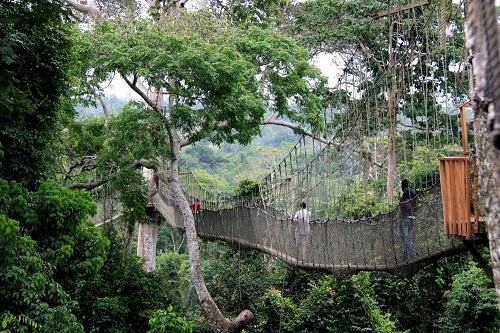
    The country is made up of 16 regions, all of which have something to offer to attract tourists.

    In this regard, the Daily Graphic calls for a deliberate plan involving all the MMDAs in all the regions to bring this into fruition.

    We, therefore, find it reassuring that the GTA is already considering leveraging other peak months so that throughout the year, Ghana will be on the map for travellers.

    If we are looking forward to having more guests in town all year round, then we must beef up our security and ensure effective traffic control.

    Also, by allowing more people in, we are indirectly importing foreign cultures, so we must do well to convey to our guests what hurts the sensibilities of Ghanaians.

    There is also the need to invest in infrastructure and grant tax rebates to vendors of top-of-the-range musical equipment and lighting to prevent embarrassing experiences as happened at some of the outdoor musical concerts.

    We urge that the authorities grant special concessions to organisers of events, sanctioned by the GTA.

    Further, the hospitality industry must consider discounted rates coupled with improved services, especially during peak periods, to enable more guests to afford their services.

    We also urge the GTA to effectively supervise the ‘Air BNB’ business which has come to add to the hospitality business and also ensure that all in the sector meet internationally accepted standards at all times.

    Indeed, when it comes to receiving guests from our airports, taxi and car hiring services are the first port of call.

    We, therefore, urge the proper training of both professionals and amateurs who will be assisting guests and giving them the proverbial Ghanaian welcome when they arrive, instead of finding ways to rip them off.

    Once a guest feels welcome into our country, he or she will not only want to come back, but become an ambassador who will encourage others to visit.

    We admit that there is a lot to be done to make Ghana the number one tourist destination in Africa, and that is the reason why we urge the Ghana Investment Promotion Centre, National Security, the Ghana Police Service, the Ghana Immigration Service, the Ghana Airport Company Ltd, the Art Centre Traders Association, event organizers and traditional catering services, among others, to effectively collaborate to make it happen.

  • Limited voter registration: Matters arising.

    Limited voter registration: Matters arising.

    Abtvgh /EC

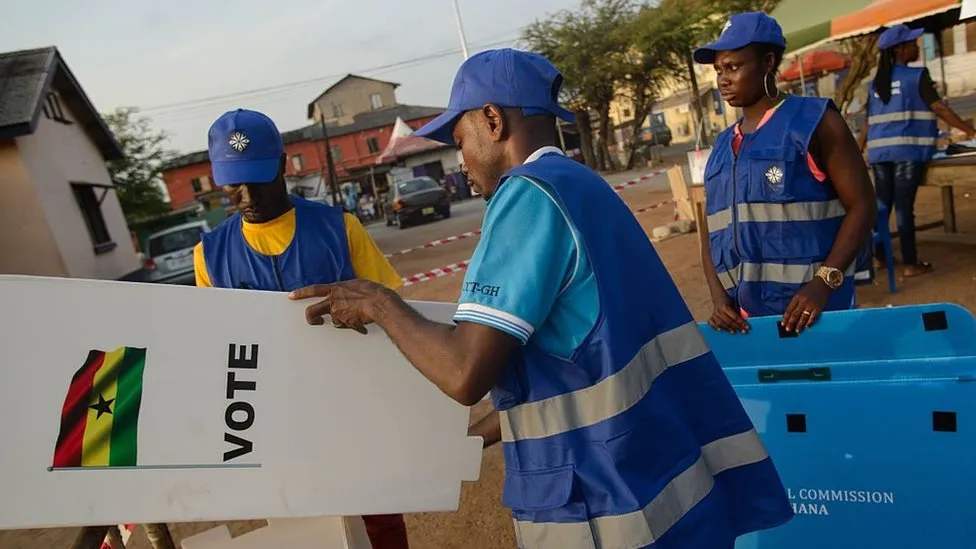
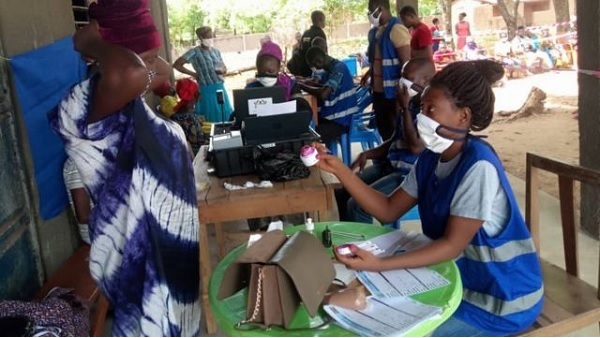
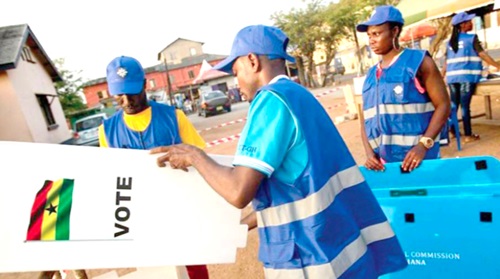
    The Electoral Commission (EC) on September 12, 2023, started a limited voter registration exercise with the view to registering about 1.35 million Ghanaians who have turned 18 years and above and other eligible persons who could not register in 2020

    The limited voter registration is due to end on October 2, 2023.

    However, prior to the commencement of the exercise, there were disagreements over the use of the district offices of the EC for the exercise.

    Some political parties had even gone to court to stop the EC from undertaking the exercise until the parties and the EC had reached an agreement.

    Be it as it may, the exercise started amid some challenges.

    Key among the challenges were network issues resulting in some centers starting late, non-functional registration equipment, lack of adequate education on the exercise and people travelling long distances to the district offices to register, with some having to return twice to the centers to register.

    There have been reports of long queues at some of the centers.

    Aside from the technical challenges, there have been some reported attacks on registrants at some of the registration centers notably at the Okai Kwei North District office of the EC in the Greater Accra Region on the morning of Sunday, September 17, 2023, where 15 people waiting for their turn to be registered were attacked by unidentified men.

    Again, it was reported that violence erupted between some party members of the National Democratic Congress and the New Patriotic Party at the Agona West office of the 
    EC in the Central Region.

    These may be a few isolated incidents that have characterized the exercise which must be condemned.

    The Daily Graphic believes that the EC could have resolved most of the challenges if it had tested the equipment to assess its efficacy, especially when it was last used in 2020.

    It could also have checked the network issues to use the most appropriate internet service to ensure that all the challenges were resolved to ensure a smooth exercise. 

    The EC could have done itself and, for that matter, a lot of Ghanaians some good by educating the prospective voters that the ongoing limited voter registration exercise was for those interested in taking part in the district level elections on December 19, 2023.

    We disagree with the EC on this particular reasoning because participation in the district level elections has always been low and if the EC is limiting the registration to only those interested in taking part in that exercise in December this year, it is not the best.

    We believe that it could just have explained that it would roll out another registration exercise next year in electoral areas as explained by its Director of Electoral Services, Dr Serebour Quaicoo.

    For us, the EC could have done better by engaging all the stakeholders to fill the gaps and eliminate any bottlenecks before the exercise was rolled out.

    The stakeholders could have been the most appropriate vehicle for the mass education of the registration exercise.

    It is true that the EC may have reasons for undertaking the exercise in its district offices, but we think that it must rethink its strategies to encourage all qualified persons to register and participate in the election of our political leaders, be it at the local, constituency or national level.

    It should not be left in the hands of a privileged few.

    To us, every vote counts, and no one should be disenfranchised, hence the need to increase the registration centers in future.

    This will reduce the tension and the sleepless nights some people endure to register, as well as reduce the cost of embarking on long journeys to register.

    Having gone through this journey of registration of voters in the past 31 years, the Daily Graphic believes that it is time all stakeholders came together to help find an antidote to this perennial problem.

    We believe that when the stakeholders, including the EC, the National Identification Authority, political parties and civil society engage meaningfully on the way forward, we would be enhancing our democratic credentials.

    It is about time we stopped the acrimonious cycle of accusations, counteraccusations and taking entrenched positions each time, we are undertaking registration exercises or going to conduct elections. 

    We must work together so that Ghanaians will continue to have confidence in the electoral system in the election of our leaders. We implore the EC to extend the limited voter registration exercise by some few days to capture many more people.

  • Lack of women empowerment stagnates progress

    Abtvgh / SDG

    Gender equality is not only a fundamental human right, but a necessary foundation for a peaceful, prosperous and sustainable world

    Goal Five of the Sustainable Development Goals (SDGs) aims at achieving gender equality and the empowerment of all women and girls.

    Although statistics across the world shows that there has been progress over the last decades, the world is not on track to achieve gender equality by 2030.

    Only two countries, Rwanda and South Africa, are among the world’s top 20 best countries for women, according to the World Economic Forum’s report.

    Available evidence shows that women and girls represent half of the world’s population and therefore half of its potential.

    But gender inequality persists everywhere and stagnates social progress.

    On the average, women in the labour market still earn 23 per cent less than men globally and women spend about three times as many hours in unpaid domestic and care work as men.

    Also, sexual violence, exploitation, the unequal division of unpaid care, domestic work and discrimination in public office, continue to remain huge barriers.

    That is why, on June 17, 2023, the Organisation of African First Ladies for Development (OAFLAD) and partners launched #WeAreEqual, a year-long unifying campaign that calls for urgent action to advance gender equity and close the gender gap in Africa.

    #WeAreEqual focuses on key action areas, including health care, gender-based violence, education and economic empowerment.

    The campaign seeks to raise awareness of the power of gender equity and calls on African leaders to take action now by addressing the root causes of gender inequality and fostering collaboration among diverse partners.

    To bring the campaign home, the First Lady, Rebecca Akufo-Addo, on August 28, 2023 launched the #WeAreEqual campaign in Ghana as part of the strategic measures to fight for gender equality that will enable girls and women to contribute their quota to the development of the country.

    Launching the campaign, she said: “The fight for gender equality is an age-old one.

    Sadly, it is a fight that has not been won.

    Even though the global gender gap has been narrowing, we need a lot more urgency and action to make very significant impact.

    When women and girls, representing about half of our society, have equal access to health, education and skills, and are free from gender-based violence, they can contribute their quota to the development of our nation”.

    Achieving gender equality is critical to driving social and economic progress for all in building the world that we want.

    As a society, we cannot collectively move forward to achieve these goals if we are only lifting one foot off the ground.

    The Daily Graphic believes that when women are empowered it results in closing the gender gap and unlocks the full potential of our society, as evidence from around the world has proved that gender equality drives social and economic progress for all.

    Through a concerted effort, we can create a future where gender equity is not only a goal, but a lived reality for everyone, transforming societies and building a more just and inclusive world.

    The paper also agrees with OAFLAD that everyone has a role to play in bringing attention and urgency to this issue.

    Participation and commitment from governments, civil society organisations, international bodies and individuals are critical to advancing gender equity and that driving meaningful change requires continuous advocacy, policy reforms and allocation of resources to address the root causes of gender inequality and create enabling environments for women and girls to thrive.

    There is an urgent need for concrete action and policy change to advance gender equity as gender-sensitive and gender-focused policies when implemented with adequate funding and full commitment can contribute to creating more inclusive and equitable societies.

    We call for gender-responsive laws that protect and enshrine women’s rights, policies and laws that prioritise gender equity because they are crucial for driving meaningful change.

    To ensure fairness, strategies and measures must often be available to compensate for women’s historical and social disadvantages that prevent them from otherwise operating on a level playing field.

  • Timely completion of La General Hospital necessary

    Abtvgh / GHS

    THE importance of an effective healthcare system to the well-being of the people cannot be overemphasised. That is why governments all over the world, especially in developing countries, put premium on providing the facilities closer to the people because a healthy people results in a wealthy nation.

    In Ghana, all our governments when accounting for their stewardship or enumerating their achievements have always captured the provision and improvement of health infrastructure and systems.

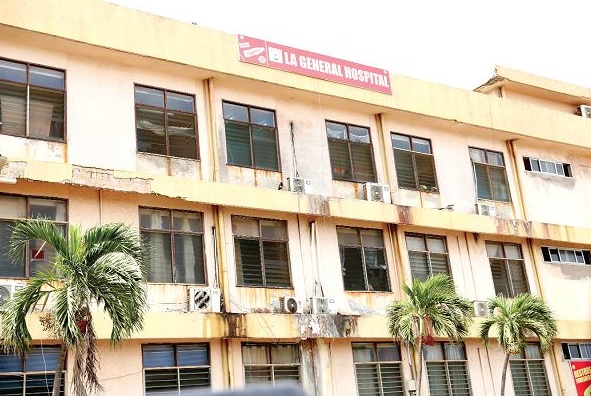
    Thus, when the government detected the structural defects of the La General Hospital in the Greater Accra Region, it decided to pull it down for a complete reconstruction of the hospital that will not only expand its capacity but will be fitted with state-of-the-art equipment.

    It was, therefore, with much excitement that the residents within the catchment area welcomed the sod-cutting ceremony by President Nana Addo Dankwa Akufo-Addo in August 2020 for the La General Hospital Redevelopment Project after it was demolished in July 2020.

    However, due to financial challenges, the project stalled, with some residents and some National Democratic Congress (NDC) Members of Parliament protesting on countless occasions, including asking the Minister of Health, Kwaku Agyemang-Manu, an urgent question in Parliament on the state of the project.

    Fortunately, the Minister of Finance, Ken Ofori-Atta, after a visit to the site, has given assurance that funds had been secured for work to resume (See December 2, 2023 issue of the Daily Graphic).

    The good news from the visit was the assurance of the government’s commitment to release funds on time to ensure smooth execution and completion of the project on time.

    The Abtvgh joins the minister in urging the contactors to stay focused and expedite the completion of the project.

    We are aware of how critical the hospital is in providing the residents of La and surrounding areas with access to high quality health care. Aside from that, it will also help ease the congestion at some of the health centres within the national capital.

    We need to remind ourselves that apart from serving as an employment avenue for health professionals, it also provides employment opportunities for ancillary workers both in the formal and informal health sectors, such as maintenance and catering workers.

    Any government that is able to complete such projects would also be reducing the unemployment rate in the country.

    We must point out that these are some of the benefits we derive from democracy as the government responds to the cries of the people by seeking alternative local funding to complete the project.

    Although the 60-bed capacity hospital has been maintained, with the appropriate designs, the cost has been revised from €57 million to €50 million.

    We are happy that the contract sum of the project has reduced and it is a feather in the cap of those who helped in that regard.  The question remains whether taking a cue from the La General Hospital we can see how best the country can benefit from some of the low-cost or cost-cutting measures.

    Already, the government is executing its Agenda 111 hospital projects, and it will not be a bad idea to revisit the costs, and those of other uncompleted projects to ensure that the projects are completed on time.

    The Abtvgh believes that executing such projects will speed up the pace of development in the country. We assure the minister of finance and the contractors that the Abtvgh will keep an eye on the project to ensure its successful completion and utilization.

    La General Hospital is a key infrastructure in the country’s healthcare delivery, and therefore, its availability and operation is very important to not just the people of La and its environs but to the nation as a whole.