Author: Bright Apeku

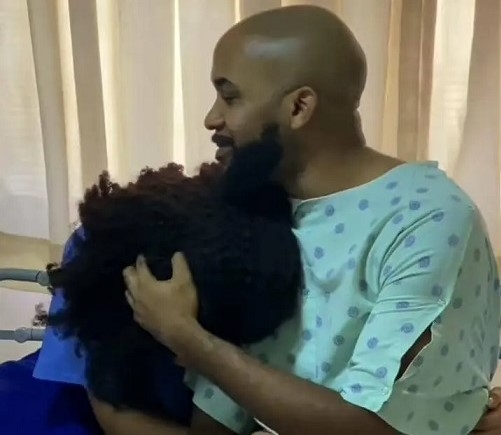
  • Nigerian singer Banky W grateful to God as he survives fourth cancer surgery

    Nigerian singer Banky W grateful to God as he survives fourth cancer surgery

    Abtvgh / Bankole

    Popular Nigerian singer, Bankole Wellington, also known as Banky W, has undergone a fourth surgery for skin cancer.

    The singer-turned-pastor made this known via his Instagram page on Thursday.

    He said that he decided to share the testimony online to encourage others who are passing through challenges.

    He wrote, “Final Score Christ 4 Cancer Tumors 0.

    “Sometimes, your faith in God will not prevent the storms from coming… but it will carry you through them. Faith won’t always stop you from hurting, but it will help you heal, and it will help you deal.

    “God never said the weapons wouldn’t form, He promised that they wouldn’t prosper. He never said the enemy wouldn’t come… He promised that when the enemy comes in like a flood, the Spirit of God would raise a standard against him.

    “Posting this testimony to encourage anyone out there who is going through a challenge. It might seem bigger than you, but greater is He that is in you than anything you will face in this world.”

    The singer appreciated his wife, family, friends, pastors, and doctors for their “love, prayers, and support”.

    He added, “We have the victory yet again. Now and forever, in Jesus’ name.”

    He revealed then that he treated a rare strain of skin cancer which resurfaced after it first appeared 10 years earlier.

  • Crisis-hit as Nigerian university students are ordered to leave UK

    Crisis-hit as Nigerian university students are ordered to leave UK

    Abtvgh / BBC

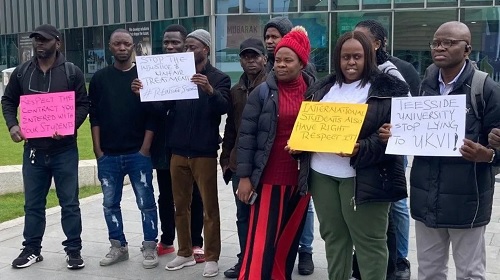
    Nigerian students have been thrown off university courses and ordered to leave the UK after a currency crisis left them struggling to pay tuition fees on time.

    Teesside University students were blocked from their studies and reported to the Home Office after the value of Nigeria’s naira plummeted, wiping out their savings.

    Some told the BBC they felt suicidal as they accused the university of taking a “heartless” approach to those who fell into arrears as a consequence.

    A university spokesman said failure to pay was a breach of visa sponsorship requirements, and that it had “no choice” but to alert the Home Office. The Home Office said visa sponsorship decisions rested with the institution.

    Nigeria is currently experiencing its worst economic crisis in a generation, which is having a significant impact on Nigerian students at some UK universities.

    The annual inflation rate is now almost 34%, partly driven by President Bola Tinubu’s dropping of a fuel subsidy last year that put up petrol and diesel prices and which has filtered through into the cost of other goods.

    The government has also stopped trying to support the value of the naira on the currency market and it has depreciated in the past 12 months by more than 200% against the dollar.

    Before beginning their studies at Teesside, affected students were told they had to show proof of having enough funds to pay tuition fees and living expenses.

    However, those funds were significantly depleted as a result of the crisis in their home country.

    This exacerbated financial problems already being experienced by students as a result of the university changing tuition fee payment plans from seven instalments to three.

    A group of students, 60 of whom shared their names with the BBC, began pressing the university for support after a number of people who defaulted on payments were frozen out of university accounts and involuntarily withdrawn from their courses.

    Some were reportedly also contacted by debt collection agencies contracted by the university.

  • We must strengthen UN Peacekeeping as an essential multilateral tool for peace

    We must strengthen UN Peacekeeping as an essential multilateral tool for peace

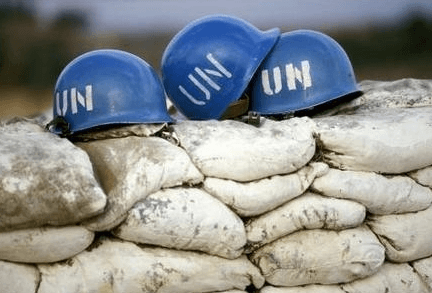
    At a time of global turmoil and division, the international community is preparing to seize the opportunity to reaffirm its political support and collective commitment to United Nations Peacekeeping at an upcoming Ministerial Meeting.

    Held for the first time in Africa, this high-level event will bring together Foreign and Defence Ministers from around the world in Accra on 5-6 December to make concrete pledges that will help strengthen the effectiveness of peacekeeping.

    One quarter of humanity live in conflict-affected areas and around 108 million people have been forcibly displaced—more than double a decade ago. In these times, we urgently need the full, unified support of the international community to better serve the world’s most vulnerable populations.

    Securing broad political support and mobilizing all actors, including local populations, is critical to achieve our primary objective of securing durable peace through political solutions. Enabling more nimble and effective peacekeeping, as it adapts to today’s challenges, also relies on creating and deepening partnerships. This will be a key focus of ministers at the 2023 UN Peacekeeping Ministerial.

    At the event, Member States must demonstrate their commitment to UN Peacekeeping through new pledges that will help meet current and future needs as well as new or expanded partnerships on capacity-building, training, and equipping.

    To achieve the primary goal of UN Peacekeeping, we need Member States to provide stronger, unified political support to our efforts to help parties to conflicts to secure political solutions. This is in line with Secretary-General António Guterres’s New Agenda for Peace, which provides a clear-eyed assessment of the challenges facing the collective security system, and offers action-oriented recommendations for Member States ahead of next year’s Summit of the Future. These complex peace and security challenges require the UN to be able to mount tailored operational responses, and support other actors, like the African Union, in doing so.

    This year’s Ministerial seeks to strengthen the tool of UN Peacekeeping Operations. More specifically, it will focus on bolstering the protection of civilians, a priority task of most UN peacekeeping missions. We also need to continue to improve the safety and security of peacekeepers, who are increasingly targeted by threats and violence. The provision of adequate mental health care is equally necessary. More also needs to be done in partnership with Member States to address and end misconduct, such as sexual abuse and exploitation, and to better support its victims.

    Durable peace is possible only if all members of the community are part of the solution, including ensuring more women are involved in political processes as well as deployed to our missions. Ghana is an exemplar as it deploys a significant number of women to peacekeeping operations at every level and in all roles. Among those is Ghanaian Captain Cecilia Erzuah, who won the UN Military Gender Advocate of the Year Award for helping improve protection efforts with the UN Interim Security Force in Abyei.

    Captain Erzuah is one of more than two million military, police and civilian peacekeepers who have saved countless lives, prevented conflict, and supported political processes over 75 years. We are doing our utmost and always striving to do better, including to further the legacy of 4,200 peacekeepers who have lost their lives serving peace.

    Over the decades, we have learned that for peace to be sustainable it must be driven through locally led solutions. Evidence of this is found in countries like Namibia, Cambodia, Sierra Leone, Timor Leste and Liberia, where peacekeepers worked alongside political actors, civil society, women and youth to navigate the difficult path from war to peace.

    Despite the demonstrable impact of peacekeeping, it can never meet all needs or expectations. Long-standing conflicts, driven by complex geopolitical and transnational factors, reveal its limitations. This is particularly the case when the Security Council gives missions overly ambitious mandates without adequate resources or political support.

    The horrific impact of current conflicts on civilians is a stark reminder of the urgency of political solutions. While many peacekeeping missions have operated for decades, they are far from relics of the past. UNIFIL, for example, supports efforts to de-escalate tensions along the Blue Line between Israel and Lebanon, including by liaising with both sides. These operations play a vital role in protecting civilians and maintaining cease-fires while the search for a final political resolution continues. If anything, their longevity is a sign of the complex equation of peace. An equation that requires the consent of all parties involved but also a collective, unwavering commitment by Member States to multilateralism. This remains necessary for UN Peacekeeping to continue to be an essential tool for peace.  

    We look forward to this commitment being translated into action through concrete pledges by Member States in Ghana. The communities we serve deserve nothing less. 

  • Nungua Traditional Council summons Okatakyie Afrifa Mensah

    Angel FM presenter Okatakyie Afrifa Mensah has been summoned to appear before the council of elders of the Nungua Traditional Council.

    In a letter available, the presenter is to appear before them on Friday 12th April 2024 to answer questions regarding some of his comments made on air about the Gborbu-Wulomo.

    Earlier this week, social media has been trending with stories of the Gborbu Wulomo allegedly marrying a 12-year-old girl.

    Since the story started trending, a lot of social commentators have shared their views on the matter with the Traditional Council coming out to clarify and debunk some statements.

    Okatakyie Afrifa, the morning host on Angel FM, also commented on the matter, but his explanation or comments about the issue angered the council.

    In their letter of invitation, they described his comments as false, unsavoury and desecrating statements made against the Overload of the Gadangme state and Paramount Chief of Nungua.

    Read the letter below:

  • Everyone deserves dignity, freedom and justice

    Abtvgh.com

    December 10 each year is observed as Human Rights Day globally, and the theme for this year is, “Dignity, Freedom, and Justice for All”, which incidentally resonates with the national motto – “Freedom and Justice”.

    The day was established 75 years ago, when the UN General Assembly adopted the Universal Declaration of Human Rights (UDHR).

    Thus, this year’s Human Rights Day presents the opportunity for the world to take stock of the UDHR, 75 years after its adoption.

    The UDHR is a milestone document which proclaims the inalienable rights that everyone is entitled to as a human being – regardless of race, colour, religion, sex, language, political or other opinion, national or social origin; property, birth or other status.

    In the decades after the adoption of the UDHR in 1948, human rights have become more recognised and more guaranteed across the globe.

     They have since served as the foundation for an expanding system of human rights protection which focuses also on vulnerable groups such as persons with disability, indigenous peoples and migrants today.

    However, the promise of the UDHR, of dignity and equality in rights, has been under sustained assault in recent years.

    As the world faces new and ongoing challenges — pandemics, conflicts, exploding inequalities, a morally bankrupt global financial system, racism, climate change — the values and rights enshrined in the UDHR provide guideposts for our collective actions that do not leave anyone behind.

    Human rights are the basic rights and freedoms that belong to every person in the world, from birth until death.

    They apply regardless of where one hails from, what one believes in or how one chooses to live his or her life.

    These rights can never be taken away, although they can sometimes be restricted – for example, if a person breaks the law, or in the interest of national security or public good.

    These basic rights are based on shared values such as dignity, fairness, equality, respect and independence, and are defined and protected by law.

    Human rights include the right to life and liberty, freedom from slavery and torture, freedom of opinion and expression, the right to work and to education, and many more which are very important for the preservation of life, humanity and humanness.

    These are the checks that ensure we continue to live as human beings, as we all have animalistic tendencies that we need to deliberately subdue at all times to maintain the distinction between us and animals in the wild.

    All the basic human rights find expression in the 1992 Constitution, specifically in Chapter Five under Fundamental Human Rights and Freedoms and every citizen needs to acquaint him or herself with this provision, to ensure that our human rights are never trampled upon.

    Much as the issue of human rights has often been abused, even when common sense is needed in some instances, just because people want to have their way, we must guard the sanctity of humanity, by making sure our basic rights as humans are not abused by others.

    It is the duty of every country to promote and protect the fundamental human rights and freedoms of its individuals regardless of their political, economic and cultural background.

    We, therefore, urge all stakeholders to create an environment that enables individuals to speak against human rights abuses.

    Ghana as a nation needs to do more to protect the rights of the poor, vulnerable and marginalised, including women and children, older persons and persons living with disability.

    Some other rights enshrined in the UDHR are the business operations and environmental rights which companies and organisations must respect.

    The corporate responsibility to respect human rights requires companies to put in place human rights due diligence in order to identify, address and mitigate human rights impacts that may occur in their businesses.

    It is important for companies to establish an effective and efficient remedy that apologises, restitutes and compensates for the abuse of the human rights of people through their operations.

    We owe it to ourselves to ensure everyone is treated with dignity and freedom that do not impinge on others’ freedoms and champion justice for all.

    We should always bear in mind that one’s freedom ends where another’s begins.
  • Our nation deserves workable long-term devt plan

    Ghana is one of many African countries without a workable long-term national development plan to guide policy formulation and implementation for a minimum of 40 years. 

    Successive administrations have resorted to piecemeal policies, mostly captured in their party manifestos, to govern the country.

    This has given rise to policy inconsistencies, haphazard and abandoned programmes and projects, and the lack of a national vision to guide investors and development agents in decision-making.

    As they entrench and exploit the void, our political leaders over the years have tended to pursue and implement what can win elections, not what will develop the country sustainably.

    A Professor of Finance and Afreximbank Research Fellow, Joshua Yindenaba Abor, said that needed to stop, given the negative effects on national development and cohesion.

    The former Dean of the University of Ghana Business School (UGBS) said the nation needed a long-term development plan to serve as a blueprint for successive governments to draw their plans from.

    Delivering a lecture in Accra on the changing roles of national development banks in Africa, the financial economist said the long-term national development plan must be forward-looking by a minimum of 40 years and respected and utilised by all future governments within that time frame.

    The Daily Graphic agrees with Prof. Abor and believes that now is the time to start a national conversation on how to develop an all-inclusive national development plan.

    We are confounded by the absence of a workable long-term national development plan in spite of the existence of the National Development Planning Commission (NDPC), a constitutionally created agency that is funded by the taxpayer to “advise the President on development planning policy and strategy” and “make proposals on multi-year rolling plans.”

    Since its establishment, the NDPC has prepared three long-term development plans – Ghana Vision 2020 (1996-2020), the Seven-Year Development Plan (2009-2015), and the 40-Year Development Plan (2018-2057) that have largely been underutilised.

    Just like the rest, the most recent one, the 40-Year Development Plan, with a vision of achieving “a just, free and prosperous society”, has been shelved while manifestos have become the source of policies and programmes.

    This harms the economy and the citizens in many ways.

    As the International Monetary Fund stated in its policy paper, ‘Navigating Fiscal Challenges in Sub-Saharan Africa : Resilient Strategies and Credible Anchors in Turbulent Waters’, fiscal policy in most sub-Saharan African countries focuses excessively on short-term goals and is not guided by a clear medium-term strategy.

    “This lack of anchoring has resulted in frequent breaches of fiscal rules and ever-increasing public debt levels,” the paper published last September said.

    These fiscal breaches, which are rampant in Ghana, result from each administration coming with its own programmes, which it moves heaven and earth to implement in order to win votes.

    This leads to wastage, fuels lack of accountability and corruption, and polarises the nation further.

    Beyond their economic benefits, long-term development plans promote social cohesion and accountable governance.

    They serve as a national vision that the citizens unite around to accomplish.

    They also make it easier for the populace to track progress and make informed decisions.

    With the country battling to overcome one of its worst economic crises in a generation, the Daily Graphic believes now is the time to resurrect a national conversation on an inclusive long-term development plan.

    Indeed, as the 2024 election campaigns begin, it will be a good starting point for either of the two leading political parties to agree to support the winner to develop and implement a long-term national development plan that will be respected by all governments.

    The paper is aware of the 40-Year Development Plan (2018-2057) developed by the National Democratic Congress and the Ghana@100 Plan developed by the governing New Patriotic Party and believes that those documents could be fused to produce a single plan to serve as the Ghana Vision over the next 40 years or more.

    With our nation highly polarised on party and other lines amid an economic recovery, the time is now to harness our collective potential.

    A workable national development plan is the best starting point, and now is the time.

  • Timely completion of La General Hospital necessary

    Abtvgh/ GHS

    THE importance of an effective healthcare system to the well-being of the people cannot be overemphasised. That is why governments all over the world, especially in developing countries, put premium on providing the facilities closer to the people because a healthy people results in a wealthy nation.

    In Ghana, all our governments when accounting for their stewardship or enumerating their achievements have always captured the provision and improvement of health infrastructure and systems.

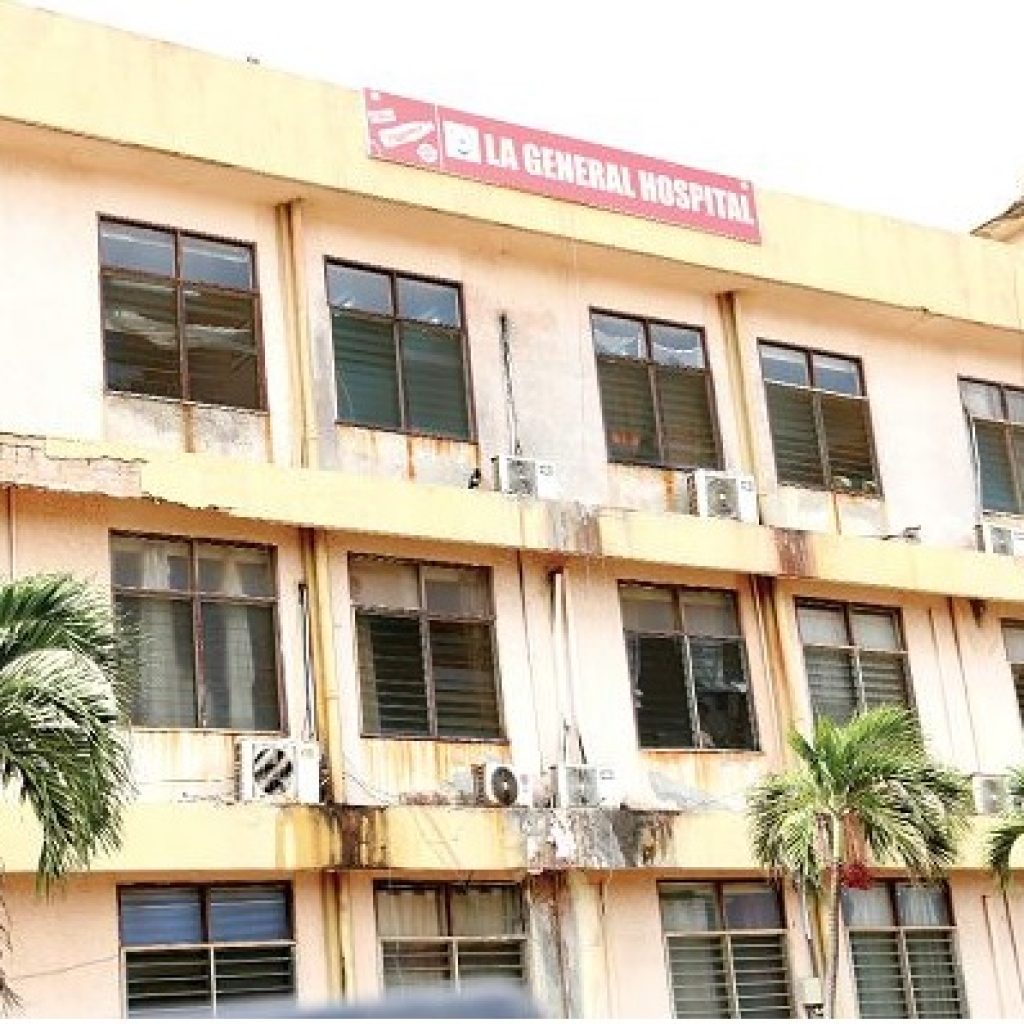
    Thus, when the government detected the structural defects of the La General Hospital in the Greater Accra Region, it decided to pull it down for a complete reconstruction of the hospital that will not only expand its capacity but will be fitted with state-of-the-art equipment.

    It was, therefore, with much excitement that the residents within the catchment area welcomed the sod-cutting ceremony by President Nana Addo Dankwa Akufo-Addo in August 2020 for the La General Hospital Redevelopment Project after it was demolished in July 2020.

    However, due to financial challenges, the project stalled, with some residents and some National Democratic Congress (NDC) Members of Parliament protesting on countless occasions, including asking the Minister of Health, Kwaku Agyemang-Manu, an urgent question in Parliament on the state of the project.

    Fortunately, the Minister of Finance, Ken Ofori-Atta, after a visit to the site, has given assurance that funds had been secured for work to resume (See December 2, 2023 issue of the Daily Graphic).

    The good news from the visit was the assurance of the government’s commitment to release funds on time to ensure smooth execution and completion of the project on time.

    The Daily Graphic joins the minister in urging the contactors to stay focused and expedite the completion of the project.

    Although the 60-bed capacity hospital has been maintained, with the appropriate designs, the cost has been revised from €57 million to €50 million.

    We are happy that the contract sum of the project has reduced and it is a feather in the cap of those who helped in that regard.  The question remains whether taking a cue from the La General Hospital we can see how best the country can benefit from some of the low-cost or cost-cutting measures.

    Already, the government is executing its Agenda 111 hospital projects, and it will not be a bad idea to revisit the costs, and those of other uncompleted projects to ensure that the projects are completed on time.

    The Daily Graphic believes that executing such projects will speed up the pace of development in the country. We assure the minister of finance and the contractors that the Daily Graphic will keep an eye on the project to ensure its successful completion and utilisation.

    La General Hospital is a key infrastructure in the country’s healthcare delivery, and therefore, its availability and operation is very important to not just the people of La and its environs but to the nation as a whole.

  • Let’s make herbal medicine safe for consumption

    Abtvgh / FDA /

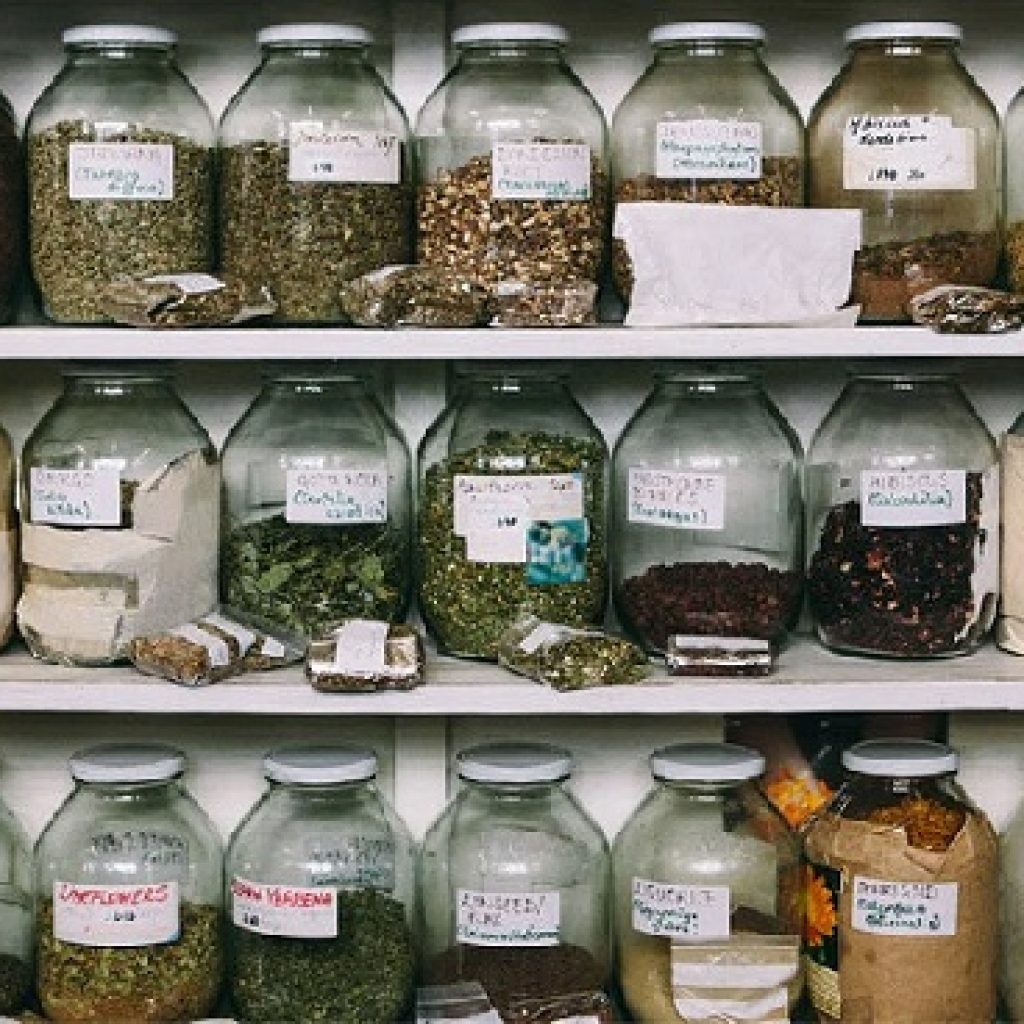
    The World Health Organisation (WHO) estimates that 70 per cent patients in Ghana use herbal medicine, saying there are significantly higher number of patients seeking traditional remedies compared with conventional treatment.

    Studies published in 2022 show that about 60 to 70 per cent of the Ghanaian population depend on traditional medicine, largely herbal medicine for their primary healthcare needs in the management of both communicable and non-communicable diseases.

    Evidence for the effectiveness of herbal medicines is generally very limited. Although some people find them helpful, in many cases their use tends to be based on traditional use rather than scientific research.

    However, the abuse of herbal preparations is also resulting in a high prevalence of kidney and liver diseases, particularly among the youth.

    Herbal medicines are advertised to be free from side effects, which, according to health experts, is a myth. A large number of people still rely on herbal medicines, and some people take herbal medicines along with routine allopathic medicines, especially in cases of diabetes, hypertension, thyroid disease, where the patient is on long-term or lifelong treatment. 

    Also, because of the influence of religion and greater level of spiritual consciousness, many individuals tend to be increasingly disposed to accepting therapeutic value of a treatment based on faith or intuition rather than scientific reasoning.

    There are many sub-standard herbal products available in the market. The reason is that these products are not tested, accordingly, for quality before marketing. Some contain less amount of active ingredient and some do not contain active ingredient at all as a result of incorrect identification of plant by the collector, using adulterant instead of original plant or due to improper storage of plant material, and it loses its efficacy. 

    Sometimes, the herbal products contain material not defined on label such as non-herb material, minerals, heavy metals, and addition of particular pharmaceutical product.

    Occasionally, they may contain toxins and pesticides, which is much more dangerous and one of the major reasons of toxic effects after herbal medicine intake.

    In the Saturday, November 18, 2023 issue of the Daily Graphic,  the Head of Research and Innovation at the Centre for Plant Medicine Research (CPMR), Dr Kofi Donkor, cautioned the general public that herbal medicines, like any other forms of medicines, were potential poison.

    According to him, safety depended on whether they had been approved, and then being taken according to the recommended dosage. 

    It said although some herbal medicines had promising potential and were widely used, many of them remained untested and their use also not monitored, making knowledge of their potential adverse effects very limited.

    The Abtvgh is calling on the populace to tread cautiously in their use of traditional medicine as most of the formulations available are not regulated or studied in the same way as prescription medications and that although there have been studies done to evaluate the claimed benefits of some herbs, most remain unproven.

    It is time the health authorities explored how the use of quality-assured traditional medicine can make it easier to provide health care, especially in remote rural areas where conventional healthcare systems are limited. 

    The paper ascribes to the WHO belief that quality-assured traditional medicine can benefit a large portion of the population as it is the main or even the only source of health care for around 80 per cent of people in Africa.

    Also, we caution people against combining herbal therapy with prescription medications as it could increase the potential for interactions and side effects.

    The Food and Drugs Authority and the Ministry of Health must ensure that the activities of all herbal product producers are regulated to prevent needless deaths among the populace.

    We further call for enhanced education and monitoring to ensure that effective herbal products are used.

  • Niger coup makers must seize diplomatic window

    The Committee of Chiefs of Defence Staff of the Economic Community of West African States (ECOWAS) agreed last Friday to institute a standby force for a possible military intervention to restore democracy in Niger if diplomatic efforts fail.

    Military officers deposed former President Mohamed Bazoum on July 26, and have defied calls from the United Nations, ECOWAS and others to reinstate him.

    The soldiers who overthrew democratically elected Bazoum in July have quickly entrenched themselves in power, rebuffed most dialogue efforts and kept Bazoum, his wife and his son under house arrest in the capital.

    The defence chiefs met to fine-tune details of the potential military operation to restore constitutional order if ongoing negotiations with the coup leaders are unsuccessful.

    lg.php.gif

    Eleven West African nations have agreed to commit troops to a military deployment towards the cause but the leaders say they still favour dialogue.

    The Daily Graphic is, therefore, urging the coup leaders in Niger to take advantage of the window of opportunity in the latest diplomatic effort by the ECOWAS to prevent bloodshed.

    The paper wishes to remind the coup makers that ECOWAS has two defence protocols which expressly state that any threat against a member state is deemed a threat against the greater community. 

    That was why it sent troops to intervene in some member states in the past

    So, when instability rocked Niger, the fourth country in the region to suffer a coup in recent times, ECOWAS saw intervention as part of its broader mission to support and protect democracy in West Africa.

    So far, Niger’s coup leader has promised to return the country to civilian rule within three years.

    The leader of the junta, Gen. Abdourahamane Tchiani, made the announcement after meeting mediators from the regional bloc in the capital, Niamey.

    A previous ECOWAS delegation, led by General Abudulsalami Abubakar, a former Nigerian Head of state, earlier this month, tried but failed to meet Bazoum and the coup leader.

    lg.php.gif

    In a televised broadcast on Saturday, he said the junta had no ambition to confiscate power, adding that the transition of power would not go beyond three years.

    He reiterated the junta’s readiness to dialogue, stating that neither the National Council for the Safeguard of the Homeland nor the people of Niger want war.

    This is a positive signal that the coup makers themselves are prepared and willing to dialogue in order to prevent a full- scale military intervention.

    We must emphasise that ECOWAS has the right to enforce constitutional order, an order not marked by war, but by peace; not by division, but by unity; not by intimidation, but by mutual respect, and if diplomacy and persuasion fail, force can then be applied.

    lg.php.gif

    We have said before that the crisis in Niger is not just a test of the diplomatic skills of the leadership, but a test of the bloc’s commitment to shared African values.

    We also wish to commend the Chiefs of the defence staff of the sub-region for giving diplomacy a chance before the use of force.

    Our worry is that the Sahel region is struggling with growing terrorists insurgencies linked to Al-Qaeda and Islamic State and frustration over the violence has, in part, prompted the military takeovers.

    We must not allow this coup to stand and, indeed, any other military takeover must not be tolerated in the sub-region.

    The coup makers must either take advantage of the diplomatic window of opportunity or be crushed.

    With a firm resolve and unyielding commitment, we must deepen the constitutional order and usher in a new era of zero tolerance for military takeovers.

    The world is watching, and the stakes are high, so is our resolve that our leaders are not just negotiating for the present, but for our future and the future of Africa even if it means military intervention. 

    Let us resolve to support our leaders to halt the constitutional insanity.

  • Let’s uphold democracy in ECOWAS

    Abtvgh / Ecowas/.

    The military coup in Niger presents a diplomatic dilemma for the leaders of the Economic Community of West African States (ECOWAS) who are keen on entrenching a new democratic order.

    On July 26, members of Niger’s presidential guards detained President Mohamed Bazoum and announced a change of government – the fourth West African country to do so after Mali, Guinea and Burkina Faso.

    These military interventions are unfortunately coming at a time the region has made some strides in the last decade to shed its reputation as a “coup belt”, only for persistent insecurity and corruption to open the door to military leaders.

    The coup is seen as a major blow to many countries that viewed Niger as a partner in the Sahel region that could be used to beat back a growing uprising by groups linked to terrorists.

    An ECOWAS summit in Abuja ended with the imposition of a number of sanctions, including a no-fly zone over Niger.

    The bloc also issued a one-week ultimatum to the Abdourahmane Tchiani-led interim military government in Niger to restore constitutional order or risk the possible use of force.

    The ECOWAS Committee of Chiefs of Defence Staff are meeting in Accra today and tomorrow to discuss a possible military intervention in Niger, regional military sources said last Tuesday, a source at ECOWAS confirmed.

    Ahead of the meeting, various groups, including academicians, politicians and security analysts have condemned ECOWAS’ move for a military intervention and rather called for a diplomatic effort to resolve the situation.

    The latest group to add its voice to the call is the Presbyterian Church of Ghana, which has indicated that it would be wrong for the government to take a unilateral decision on the matter without broad consultation.

    Created in 1975, the 15-nation bloc was designed to “promote economic integration across the region.

    ”Its principles centre around establishing a single trading unit, similar to policies under the European Union, that promote democratic governance and sub-regional cooperation.

    In this way, it is first and foremost an economic entity, not a military or political one.

    But ECOWAS has fangs.

    It has two defence protocols that say any threat against a member state is deemed a threat against the greater community. 

    And it has mustered troops to intervene in the past.

    So, when instability rocked Niger, the fourth country in the region to suffer a coup in recent times, ECOWAS saw intervention as part of its broader mission to support and protect West Africa.

    It is for this reason that the Daily Graphic calls for calm and not stampeding ECOWAS into taking decisions that will embolden the military to oust a constitutional order at the least opportunity.

    lg.php.gif

    Much as we agree to a call for a broader consultation on the crisis in Niger, we should also be mindful of the fact that constitutionally, ECOWAS has a duty to ensure that the rise in military coups in the sub region is halted and constitutionalism made to prevail at all times.

    After all, the West African leaders are not immediately intervening militarily; they are first pursuing the path of diplomacy and dialogue, which is why ECOWAS has continued its efforts of engaging diplomatically with Niger’s military junta.  

    For the Daily Graphic, the crisis in Niger is not just a test of the diplomatic skills of the leadership, but a test of the bloc’s commitment to shared African values. 

    The world is watching, and the stakes are high, so is our resolve that our leaders are not just negotiating for the present, but they are negotiating for our future and for the future of Africa even if it means military

    Let us resolve to support our leaders to halt the constitutional insanity.

    With a firm resolve and unyielding commitment, we must deepen the constitutional order and usher in a new era of zero tolerance for military takeovers.

    ECOWAS must send the right signal to the military that it has the right to enforce a constitutional order, an order not marked by war, but by peace; not by division, but by unity; not by intimidation, but by mutual respect, and if diplomacy and persuasion fail, force must then be applied.

    It is a daunting task, no doubt, but it is one we must embrace with both hands, by having faith in our leaders to come up with a lasting solution at the Accra summit today.