Author: Carruthers Omari

  • Spring-Up Global Network, Deloitte literacy drive: GES Director-General inaugurates 8th library

    Spring-Up Global Network, Deloitte literacy drive: GES Director-General inaugurates 8th library

    Abtvgh / GES/

    The Spring-Up Global Network (SUGN) in partnership with Deloitte has inaugurated its 8th library at Aburi in the Eastern Region to promote literacy among children.

    The projects, which are funded by Deloitte started in October 2022 with the inauguration of the first library in November in 2022 at the Osu Cluster of Schools in the Greater Accra Region.

    Beneficiary schools

    The projects involve the repurposing of empty classrooms into libraries, which have been refurbished and restocked in eight clusters of schools across five regions. The beneficiary schools are the Osu Cluster of Schools and Kwashieman Cluster of Schools in the Greater Accra; Adweso Cluster of Schools at Koforidua and Aburi Cluster of Schools in the Eastern Region and Achiase Cluster of Schools in the Central Region.

    The rest are the State Experimental Basic School and Konongo Mines M/A Basic School in the Ashanti Region and more recently the Hohoe East Cluster of Schools in the Volta Region.

    In all, a total of 23,319 children have been directly impacted by this innovative and purposeful project.

    Commitment of GES

    Inauguration the Aburi Cluster of Schools library, the Director-General of the Ghana Education Service (GES), Dr Eric Nkansah, pledged the commitment of the service to implement various interventions and initiatives to improve learning outcomes.

    He said the GES was determined, in consistence with its mandate of ensuring that it delivers quality, inclusive, holistic, and relevant education, to achieve improved learning outcomes for the benefit of all Ghanaian children of school-going age without any discrimination.

    “Our work impacts every home; thus, we uphold the values of partnerships and collaboration to ensure we work with all stakeholders to achieve our objectives,” he pointed out.
    He applauded Deloitte and SUGN for playing a significant role in transforming the educational landscape.

    Through their diligent efforts and work with us, I am pleased to learn that within 20 months, the Deloitte WorldClass Initiative has provided eight libraries with over 9,400 books and impacted over 23,000 learners across five regions in Ghana,” he said. 

    Dr Nkansah expressed confidence that the libraries would empower the students to broaden their horizons, deepen their understanding of diverse subjects, and cultivate critical thinking skills essential to succeed in the 21st century.

    He assured Deloitte and Spring-Up Global that the schools would uphold the highest level of maintenance to preserve the libraries for generations, adding, “This facility will change this district for the good!”

    Shared goals

    The Executive Director of SUGN, Akorfa Ama Akoto, said the partnership between Deloitte and her outfit had not only brought them closer to their shared goal of promoting literacy but also made a significant impact on the lives of thousands of children in Ghana, “a testament to our collective efforts”.

    She said the inauguration of the 8th library increased “our impact to 23,319 learners in our first year of implementation. This means that more children are benefiting from the initiative than the initial target of 16,000 for all eight libraries in the first year. 

    “On behalf of the entire SUGN team, I want to commend Deloitte for funding this project and continuously supporting the SUGN Project team to achieve this feat,” Ms Akoto said.

    She applauded the GES, for giving all the support needed to achieve and exceed the target of the initiative, adding, “To the learners who are the reason for this project, we thank you for making the best use of the libraries”. 

    For his part, the Country Managing Partner of Deloitte Ghana, Daniel Kwadwo Owusu, said the library project was important to the firm’s community initiative of ‘Making Impact that Matters’ and aligned with the UN Sustainable Development Goal Four (SDG4), which simply promoted quality education.

    Aligned with Deloitte’s WorldClass initiative, Mr Owusu said Deloitte had been committed to creating better futures for the next generation and making a posi
  • Presbyterian University to set up $1M AI lab

    Presbyterian University to set up $1M AI lab

    Abtvgh/ Presbyterian/

    The Presbyterian University, Ghana (PUG) has begun processes to establish an artificial intelligence (AI) laboratory to enhance teaching and learning of information and communications technology (ICT).

    The $1 million project is to be sponsored and constructed by Virtual Security Africa, a company in the ICT space, under the auspices of the Presbyterian Church of Ghana (PCG).

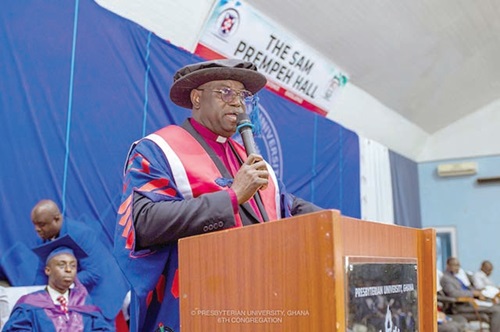
    The Moderator of the PCG and Chancellor of the University, Rt Rev. Dr Nana Opare Kwakye, made this known at the sixth congregation of the School of Graduate Studies of the Presbyterian University at the main campus of the university at Abetifi in Kwahu East District in the Eastern Region.

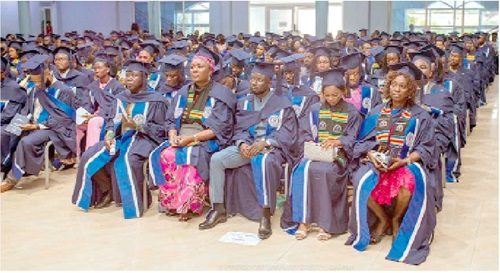
    A total of 341 postgraduate students made up of 224 males and 117 females graduated with Masters degrees in Management, Public Health, Educational Studies and Natural Resources.

    Rt Rev. Dr Kwakye gave an assurance that the PCG was keen to see the development of the university on all fronts.  “At the last graduation ceremony, my predecessor instituted a scholarship for the university with personal seed money. After my speech today, I am adding on to that,” he stated.

    The Moderator urged graduates to take advantage of opportunities in the country to make the most out of their education. 

    Elections

    As the general elections approach, the Moderator urged Ghanaians not to be swayed by empty promises or divisive rhetoric. The Vice-Chancellor of the University, Professor John Ofosu Anim, stated that a graduate degree was not only about the acquisition of knowledge, but also a duty to apply that knowledge ethically and for the betterment of society.

    The congregation 

    He said the world today faced complex challenges, be it social, economic or environmental, and, therefore, challenged the graduates to use their skills and expertise to confront the challenges head-on.

  • Ghana Prisons Service commercialising projects laudable idea

    Abtvgh / gh police service/

    The Ghana Prisons Service has earnestly started implementing its goal of repositioning itself to reflect the current needs of the country.

    The announcement by its management at the annual Regional Commanders conference in Accra last Thursday that apart from its core mandate of ensuring safe custody and welfare of prisoners to maintain public safety, it had also taken concrete steps to become a major contributor to the nation’s food basket is pleasing.

    The service has also conceived the idea of commercialising and retooling all its workshops and taking agriculture to the next level.

    It is, among other activities, securing funding for its mechanised agriculture to contribute significantly to the food basket of the nation (Daily Graphic, Friday, April 14, 2023.)

    The Daily Graphic is urging the service to sustain those goals and vision, so that other government agencies will emulate the example.

    There have been many calls on metropolitan, municipal and district assemblies (MMDAs), as well as other public institutions, to find innovative ways of getting internally generated funds (IGFs), as the prisons service wants to do.

    When that is meticulously carried out, it will enhance the service’s viability and contribution to the economy, since it is becoming clear that the government alone cannot continue to do everything.

    The global economy is gradually shrinking as a result of the COVID-19 pandemic and the Russia-Ukraine war, both of which have implications for nations such as Ghana.

    According to the International Monetary Fund (IMF) World Economic Outlook, the baseline forecast for growth was to fall from 3.4 per cent in 2022 to 2.8 per cent in 2023, before settling at 3.0 per cent in 2024.

    Advanced economies are expected to see an especially pronounced growth slowdown, from 2.7 per cent in 2022 to 1.3 per cent in 2023.

    In a possible alternative scenario, with further financial sector stress, global growth was expected to decline from about 2.5 per cent in 2023, with advanced economy growth falling below one per cent, the IMF World Economic Outlook further indicated.

    These projections have implications for the country and the earlier public institutions started becoming innovative, the better it would be for the institutions and the citizenry.

    It is for this reason that the paper thinks the decision by the prisons service to chart a new course to become more viable and contribute to enhancing food security in the country must be applauded.

    The commercialisation of agriculture will ultimately help supplement the food intake of the inmates and make the service stand on its feet to be able to meet its needs without waiting on the government for support.

    The service, apart from its legal mandates set out by the 1992 Constitution and other statutory provisions, has a vision and mission to build a world-class service to attain sustainable public safety through excellence in corrections management and to undertake the safe custody, humane treatment, reformation, rehabilitation and re-integration of inmates to make them responsible, productive and law-abiding citizens to ensure public safety.

    It is gratifying to note that the service is taking deliberate steps to modernise its operations to make it financially viable.

    It is worthy to note that other goals set out by the service to reposition itself to contribute more meaningfully to the nation’s development are modernisation of its management practices and administrative structures, modernisation of staff recruitment, manpower planning and development, as well as work practices, and modernisation of the physical structures and operational equipment.

    The paper hopes that the bold step by the service will not be a nine day’s wonder, for, as the saying goes: “A journey of a thousand miles begins with the first step.”

    The prisons service has taken the first step and sustained efforts must be made to achieve the targets.

  • Time to eradicate malaria is now

    The global community unites in celebration of World Malaria Day (WMD) on April 25, a day to remember the need for commitment and investment to prevent and control malaria.

    This year’s theme : ‘Time to deliver zero malaria: invest, innovate, implement’, provides the impetus to innovate and realise a malaria-free world.

    Established in 2007 by the World Health Organisation (WHO) decision-making body, WMD follows from the 2001 African Summit on malaria, which saw the signing of the historic Abuja Declaration.

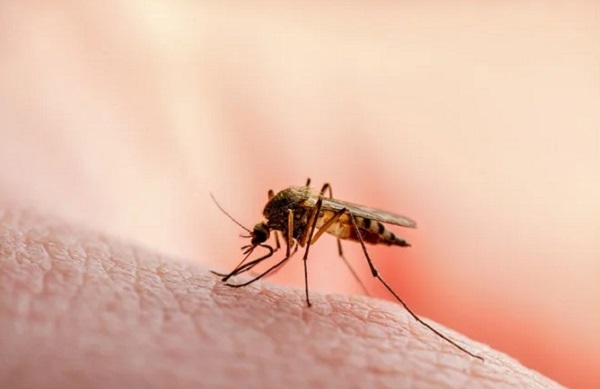
    Malaria is a serious disease caused by a mosquito-borne parasite, which can cause high fevers, shivering chills, and flu-like illness in those infected.

    It is a preventable disease with the use of medicines and precautionary measures such as insecticide-treated bed nets and indoor insecticide spraying.

    On the first World Malaria Day, the then Secretary-General of the United Nations, Ban Ki-moon, emphasised the need to increase the availability of bed nets, medicines, public health facilities, and trained health workers for people in areas of the world affected by malaria.

    With 3.3 billion people in 106 countries at risk of malaria and 900,000 deaths annually, the urgency of the situation is clear.

    Though the situation is dire, there is hope.

    In sub-saharan Africa, the incidence and death rates of malaria have dropped by 21 per cent and 31 per cent, respectively.

    It is heartening to note that in Ghana, the prevalence and mortality of malaria has reduced significantly between 2011 and 2022.

    The Ghana Health Service (GHS) has made commendable strides to fight malaria, with a national strategy of control to elimination based on national and global recommendations.

    The control programme, focused on reducing malaria mortality by 90 per cent, is expected to reduce malaria case incidence by 50 per cent, and achieve malaria per-elimination, in at least six districts in the country, by 2025.

    The current elimination target is focused on reducing mortality by 100 per cent by 2028 and cases by 50 per cent using the 2022 figures as the baseline.

    The Daily Graphic stands in solidarity with the proposal to defeat mortality and decrease incidence of malaria by 2028, utilising 2022 as a baseline for the purpose.

    We ardently advocate the devising of novel and more advanced solutions to eradicate the age-old ailment, as well as the enforcement of national plans to expedite the progress necessary to accomplish this ambition.

    According to the RBM Partnership to End Malaria, today, the combination of low coverage of existing tools, emerging biological threats and funding shortfalls are brewing a perfect storm for malaria and that now is the time to take decisive action to deliver on the goal of zero malaria and achieve the 2030 targets.

    On WMD, we pause to commemorate a momentous occasion and to pay tribute to those who have been impacted by this devastating disease.

    As we take this time to reflect, we celebrate the progress that has been made and the hope that lies ahead.

    As we look back, we give thanks to all of those who have toiled and sacrificed to bring us to this point.

    From those at the forefront of research to those who have adopted prevention and treatment strategies, we honour their invaluable contributions.

    As we look forward, we are inspired by the potential for a brighter future. It is our hope that this day will bring us one step closer to a world free of malaria.

    The Daily Graphic affirms the call to innovate to deliver transformative and improved solutions to end malaria that are tailored to those who need them most.

    The paper also calls for the implementation of national strategies to accelerate progress against this age-old disease, by demonstrating leadership, adopting innovative and sustainable approaches as well as the scaling up of national malaria programmes to deliver life-saving tools to those at highest risk.

    It is time to deliver zero malaria.

  • Pension funds should support private sector

    Abtvgh / SNIT/

    The private sector is identified as the engine of economic growth and job creation in any economy.

    The sector is recognised as a means to accelerate the rapid industrialisation desired by developing countries.

    In Ghana, the private sector contributes  over 80 per cent of jobs and also significantly to the country’s gross domestic product (GDP).

    In spite of its role, over the years, the sector has been starved of the much needed resources to enable it to function sustainably.

    The number one resource needed to unlock the full potential of the private sector is the availability of long term pension funds that will enable businesses to grow, expand and employ more people.

    All over the world, the pension funds industry, due to its nature, plays a crucial role in this regard by allocating a significant percentage of the funds to the private sector to drive economic growth.

    The situation is, however, different in Ghana as a huge percentage of the country’s pension funds are invested in government bonds, denying the private sector of the much needed capital to grow and expand.

    Almost 90 per cent of pension funds in Ghana are invested in government bonds compared to the developed countries where less than 40 per cent of those resources are invested in government securities.

    This is because the industry has been under the notion that government securities are risk free and hence they continue to pile up their investments in those securities

    However, the recently concluded domestic debt exchange programme (DDEP) and the collapse of the SVB Bank in the US due to mark-to-market losses from risk-free securities underscore the fact that government securities are not risk free and are subject to market price volatility.

    The Daily Graphic, therefore, believes the DDEP must be a wake-up call that financial institutions cannot continue to pile up their investments in government securities with the assumption that  they are risk free.

    The paper, therefore, adds its voice to calls for pension fund managers to stop funding the government and channel their resources into the private sector.

    Pension fund managers must rethink the way they allocate capital as asset holders.

    An economy is as strong as its businesses and the country must, therefore, critically examine the role of pension funds in efficiently allocating capital.

    The practice of mobilising capital for the government at the expense of the private sector is inimical to national development and must be stopped.

    Going forward, the Daily Graphic believes the industry must take the necessary steps to reverse the flow of capital from the government to the private sector as soon as possible.

    The key resource needed to activate the economic growth needed is capital which the pension fund managers are rather giving to government.

    However, for the country to be able to fully harness the potential of the pension funds industry, some of the existing guidelines that regulate the industry must change.

    And this is where the regulators must come in.

    The Daily Graphic calls on the Securities and Exchange Commission, together with the National Pensions Regulatory Authority, to make further changes to the investment guidelines and increase the investment ceilings on other asset classes as the current ceiling is skewed heavily towards government securities.

  • Expectations of Chris Hughton’s tenure

    Expectations of Chris Hughton’s tenure

    Abtvgh / GFA/ FIFA/

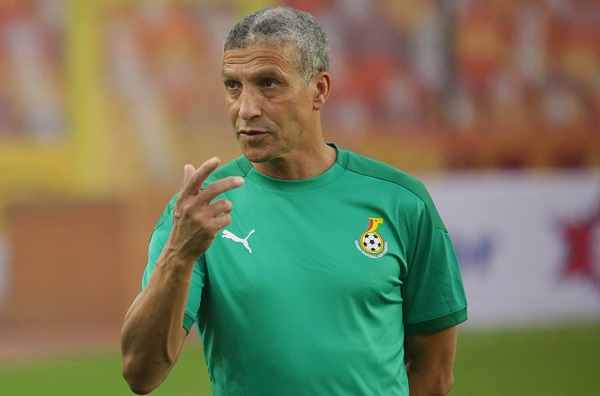
    Chris Hughton ticked all the boxes, hit the right buttons and gave the appropriate responses, with sound bites that will be music to the ears of many a fan and the media.

    At his unveiling yesterday as the head coach of the Black Stars, the 64-year-old coach was very clear on his mandate and the high expectation of Ghanaians as he gave insights into how he hoped to steer affairs during his 21-month contract period, with a promise to turn around the national team’s fortunes.

    He was confident that he had the right support from the Ghana Football Association (GFA), his employers, to ensure a successful tenure.

    As the technical advisor to the Black Stars technical team from March to December last year, Ghanaians had long expected the experienced coach to take over the national team. So there was a mix of excitement and cautious optimism when he was confirmed as successor to Otto Addo, with his appointment seen as a smooth transition and a determined effort by the FA to build on the positives of the World Cup squad.

    Yesterday, Hughton sounded very optimistic about his tenure and looked unruffled by the weight of expectation of Ghanaians, who have a high regard of him as an elite coach with a wealth of experience at the highest level of football to take the right decisions and also have the boldness to ward off external influences in order to succeed.

    Next Thursday, when he leads the Black Stars against Angola at the Baba Yara Stadium in Kumasi in the first of back-to-back African Cup of Nations qualifiers, Hughton knows that Ghanaians not only expect Ghana to qualify for the tournament as a matter of course but also win the competition in Cote d’Ivoire to banish a 42-year continental title drought.

    Qualifying for and winning the next AFCON are prime targets set for the coach, including a successful 2026 World Cup qualifying campaign.

    These are also realistic expectations of Ghanaians, who now expect Hughton to put his words into action and get off to a winning start on Thursday.

    Expectedly, Hughton said his aim was to build a competitive side capable of competing for trophies in future competitions, but added that inasmuch as he was determined to work to the best of his ability to get the best out of his players, he could not guarantee a trophy for Ghana.

    Surely, no coach can guarantee a trophy, particularly the AFCON, but for a country whose last continental success dates back to 1982 as Africa’s first four-time champion, and having seen other countries overtake her on the table of most successful sides, there is no doubt that Ghanaians expect nothing short of success at the 2024 AFCON, perhaps, even more than qualifying for the next FIFA World Cup.

    After missing the trophy three times in 1992, 2010 and 2015, the 2024 AFCON must be a major priority of the FA and the new head coach, and together they must fashion a strategy to ensure success in Cote d’Ivoire next year.

    Anything short of that will be seen as a monumental failure on the part of any coach, not least Hughton, whose credentials as a former coach of three English Premier League sides and one-time assistant coach of the Irish national team will be on the line.

    With his rich experience, knowledge of the terrain and familiarity with the players, the Daily Graphic expects the coach of Irish and Ghanaian heritage to succeed where his predecessors had failed to justify the huge sacrifices taxpayers will be making to ensure a successful tenure.

    Top talents have never been in short supply in the Black Stars and Hughton has at his disposal a pool of gifted young and experienced players plying their trade in the top leagues of Europe around whom to build a solid team hungry for success.

    It is also welcome news the assurance by the coach that he would spend a lot of time in Ghana to watch the local leagues and help develop top talents, instead of junketing round the world under the guise of monitoring his foreign-based legion, as was the case with expatriate coaches in the past. It is important that the coach shows a lot of interest in local competitions for those competitions to also benefit from his rich experience in the game.

    While the Daily Graphic calls on Ghanaians to exercise patience and support Hughton to build a winsome side over time, it is our expectation that he takes bold and impartial decisions on player selection and team harmony devoid of personal or other third-party interests that can undermine overall team success. He cannot afford to drop the ball.

    We wish him a very successful tenure.  

  • We must end female genital mutilation

    Abtvgh/ W.H.O/ G.H.S/

    This year, 4.3 million girls are at risk of Female Genital Mutilation (FGM), the United Nations Fund for Population Activities (UNFPA) estimates.

    This number is projected to reach 4.6 million by 2030, as conflict, climate change, rising poverty and inequality continue to hinder efforts to transform gender and social norms that underpin this harmful practice and disrupt programmes that help protect girls.

    The World Health Organisation (WHO) describes FGM as ‘’the partial or total removal of external female genitalia or other injury to the female genital organs for non-medical reasons.’’

    The practice is also known as female genital cutting, female genital mutilation/cutting (FGM/C) and female circumcision. According to the WHO, it has no health benefits and describes all forms of FGM as a violation of the human rights of girls and women, including their sexual and reproductive health, and are an extreme form of gender-based violence.

    The practice is a human rights violation with serious consequences in the lives of women and girls, including their health, education and economic empowerment.

    The practice is rooted in gender inequality, attempts to control women’s sexuality, and ideas about purity, modesty and beauty. It is usually initiated and carried out by women, who see it as a source of honour, and who fear that failing to have their daughters and granddaughters cut will expose the girls to social exclusion.

    There have been international efforts since the 1970s to persuade practitioners to abandon FGM, and it has been outlawed or restricted in most of the countries in which it occurs, although the laws are often poorly enforced. 

    In Ghana, the prevalence of FGM in women aged 15 to 49 is said to be 2.4 per cent. The national prevalence as of 2020 was estimated to range between 20 and 30 per cent, while the combined prevalence for Upper West and Upper East regions was estimated to be 86 per cent. 

    The main law relating to FGM in the country is the Criminal and Other Offences Act 1960 (Act 29), Section 69A (Female Gender Mutilation) (COA 1960). In 1994 the Criminal Code (Amendment) Act inserted Article 69A to the COA 1960 to prohibit female circumcision.

    In 2007, this was further amended to ‘female genital mutilation’ and penalties were increased; however, there is limited information on prosecutions to date in the country.

    FGM violates the principles of equality and non-discrimination on the basis of sex. It violates the right to freedom from torture and cruel, inhuman or degrading treatment. It violates the right to the highest attainable standard of health, the right to physical integrity and the rights of the child. In the worst cases, it even violates the right to life.

    The Daily Graphic is calling for effective action to end FGM by involving entire communities where the practice is widespread and engage all relevant stakeholders in the process, including girls themselves, grandmothers, older women, community and religious leaders, men and boys, health professionals, teachers and the justice system.

    Also we call on religious leaders to openly dispel myths that associate FGM with any religion, as well as the harmful gender norms underlying the practice and support communities to abandon FGM through local and national advocacy.

    We further call on the government to enact, fully implement and resource comprehensive national legislation and evidence-based national action plans to support an enabling environment for gender-transformative social norms change that prohibits all forms of FGM.

  • Trauma and communication development

    Abtvgh / GHS/

    THE language skills of children who are abused and/or neglected are delayed compared to their peers, according to studies.

    Adverse childhood experiences can greatly impact a child’s development (mental health and well-being), including their communication.

    It is estimated that young children exposed to five or more significant adverse experiences in the first three years of childhood, face a 76 per cent likelihood of having one or more delays in their language, emotional or brain development.

    According to the United Nations Children’s Fund, about 3.4 million children in Ghana had experienced some form of neglect and abuse.

    This suggests approximately one out of every four children in Ghana.

    How?

    Children develop communication skills when exposed to a language-rich environment and reciprocal interaction (back-and-forth interaction with adults and peers).

    It is good to note, however, that the lack of these opportunities alone is not always the reason for speech and language communication needs in children, although they are important.

    Different aspects of a child’s language and communication skills are impacted following trauma.

    These include understanding and use of language.

    Trauma, like neglect and abuse, has a great impact on children’s language development.

    Children with speech, language and communication difficulties are more vulnerable to abuse and neglect.

    Children who have experienced abuse or neglect are often not identified early.

    They may also have certain behaviour that may be found to be challenging.

    It is important for caregivers and teachers to be aware of these to be able to support their children.

    Intervention for children who have experienced trauma is often provided late for various reasons.

    Unfortunately, it is often underestimated.

    Usually, when the trauma results from an action from a family member or close relation, families may want to deal with the issue internally without seeking redress for their child through the legal system, as well as much-needed therapy for the child.

    For families who may want help for their children, they may find it costly.

    Bureaucracy may also be discouraging for families who want to seek help for their children.

    Help

    Speech, language and communication intervention for children who have experienced trauma has so many benefits for them and their families and society in general.

    It improves their language skills, confidence, self-esteem and life outcomes.

    It also helps them to engage in academic learning, to establish relationships and be able to share their experiences in order to get the required appropriate professional help.

    Therapists engage children in fun activities that provide an opportunity for these children to experience meaningful interactions that they enjoy and most importantly, they learn from.

    They begin to get their voice back.

    With support from interventions, they begin to enjoy their childhood and make positive progress.

    The writer is a Speech and Language Therapist/Clinical Tutor,
    University of Ghana.

  • We condole with Türkiye, Syria and pray for Atsu

    Abtvgh/ GFA/

    Life for millions in Türkiye and Syria changed forever last Monday, as two consecutive earthquakes sent shockwaves across hundreds of miles.

    Nine hours apart and with magnitudes of 7.8 and 7.5 on the Richter scale, the quakes rocked Türkiye and Syria and were the region’s strongest in nearly a century.

    The death toll from the quakes is more than 22,000 as of yesterday, with many still missing and critically injured.

    The World Health Organisation put the number of people affected by the disaster at 23 million. At least 6,000 buildings collapsed, many with residents still inside them.

    Rescue efforts continue to be the top priority, with some 25,000 deployed in Türkiye and thousands more from overseas — but a bitter winter storm now threatens the lives of the survivors and of those still trapped under the rubble.

    Syria, ravaged by 12 years of war and terrorism, is the least prepared to deal with such a crisis. Its infrastructure is heavily depleted, and the country remains under Western sanctions. Thousands of those in the affected areas are already refugees or internally displaced people.

    With the dust of the catastrophe still settling, regional analysts are zoning in on the longer-term ripple effect that the catastrophe could have on Türkiye, a country whose 85 million-strong population was already mired in economic problems — and whose military, economy, and politics have a major impact far beyond its borders.

    The ABTVGH mourns with the governments and people of Turkey and Syria over the loss of lives and property.

    We are equally troubled by the inability of the rescuers to find the Ghana international soccer star, Christian Atsu. Mr Atsu joined Turkish Super Lig side Hatayspor in September 2022 after spending nearly a decade at Chelsea and Newcastle United.

    The coach of Christian Atsu’s Turkish club, Hatayspor, said last Wednesday that the Ghana midfielder had not been found following the devastating earthquake in Türkiye. As the rescue effort is ongoing, we remain confident that the player will be found.

    For us, the response of the world holds valuable warnings and lessons that extend well beyond the two countries hit by the earthquakes. 

    The prompt help that Türkiye, in particular, has received from parts of the world shows that the international community can — if it decides to — put geopolitics aside to help a country in need. 

    Many Syrian victims of the earthquake were already refugees in their own country, living in makeshift homes. Parts of earthquake-hit Syria are controlled by rebel groups; yet the country’s government insists that all international aid must be routed through its agencies.

    While the Syrian government must work with aid groups to ensure that help reaches all parts of the country’s territory, regional players, such as Türkiye and Iran, and global powers — the US and Russia — must reflect too. 

    Meanwhile, the scenes of death and despair in Türkiye and Syria should also serve as an overdue reminder of the risks Ghana faces in ensuring that our buildings are regulated.

    While pleading for more aid for the victims of the earthquake, particularly in Syria, we urge our district assemblies to take a cue by ensuring that earthquake-prone zones within localities are properly mapped out so that construction does not take place there.

  • The matter of uncollected passports

    Abtvgh/ M.F.A/

    The Ministry of Foreign Affairs and Regional Integration last week announced that more than 30,000 uncollected passports are gathering dust at the various passport application centres across the country.

    At the Accra and the Kumasi Passport Application centres (PACs) alone, 30,000 passports, processed and issued in the names of individuals, are yet to be collected by the holders.

    That was in spite of text messages sent to the owners of the passports alerting them to visit the PACs for collection, according to the ministry.

    It has, therefore, called on applicants who applied for passports over the past years to collect them from their respective PACs.

    The Abtvgh supports the call by the ministry to applicants to collect their passports as soon as possible.

    We find the non-collection of passports worrying, in view of the fact that it costs far more to print passports than the fees charged individuals who need the passports.

    For us, the refusal by applicants to collect their passports from the designated points must not be treated lightly.

    The paper would want to push for some punitive action by way of penalties levied on the recalcitrant applicants to serve as a warning to them and all those who intend doing same.

    This practice must not be treated with kid gloves because of the financial impact on the economy, particularly at a time when every pesewa counts.

    We are aware that the ministry has asked individuals awaiting the issuance of their passports to call its Client Service Unit to confirm the status of their passports.

    This is refreshing, but these applicants must be urged to pick the passports once they are ready.

    The paper finds it refreshing that passport issuance in the country has seen significant improvement in recent years.

    The government, we are told, has made the process more efficient and streamlined, making it easier for citizens to obtain the necessary documents.

    This is especially important for those living in rural areas, who often face greater difficulty accessing government services.

    The paper has also learnt that the government has implemented a number of measures to simplify the passport application process.

    For instance, the introduction of e-passports has enabled citizens to apply for their documents online, negating the need to visit a physical office.

    This has made passport acquisition easier and much more convenient and accessible.

    Additionally, the government has increased the number of PACs throughout the country, providing citizens with more options.

    By way of security, the government has taken steps to ensure the safety and security of Ghanaian passport holders.

    The introduction of biometric passports has greatly enhanced security, making it more difficult for individuals to forge or tamper with their documents.

    Aside from that, it has also implemented an enhanced vetting process for passport applicants, requiring them to provide additional documents such as the Ghana Card.

    The government has also invested in technology, making it easier and safer for citizens to acquire passports.

    This is an important step towards promoting economic growth and development in Ghana.

    These developments are commendable and have helped in no small way to make passport application less cumbersome for citizens, without compromising the integrity of the document.

    It is against this background that we find the actions and inaction of applicants who are yet to collect their passports from the various PACs across the country most unfortunate.

    To this end, we urge all the applicants who are yet to collect their passports to do so without further delay to help make the investment by the government worthwhile.