Category: Art & Culture

  • Power struggle in Actors Guild killing industry –Fred Amugi

    Power struggle in Actors Guild killing industry –Fred Amugi

    Abtvgh / Veteran Ghanaian actor 

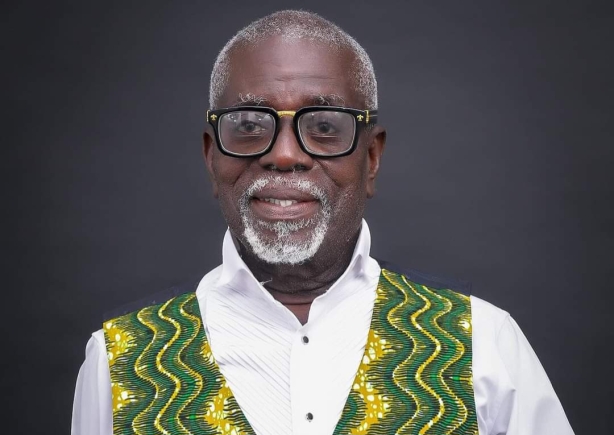
    VETERAN Ghanaian actor Fred Amugi has spoken out about his frustrations with the unending litigation over the leadership of the Actors Guild of Ghana, which is hurting the growth of the movie industry.

    He mentioned that the absence of a functioning and effective leadership to steer affairs of the sector had slowed things down for the industry.

    Since the death of Reverend Eddie Coffie, President of the guild, in 2016, elections for new executives have been in limbo, denying the guild the chance to have the leadership to manage affairs of the industry, as well as seek the well-being of actors.

    Speaking in an interview with Abtvgh on Monday, May 20, 2024, Mr Amugi prayed the Guild would settle their differences and get back on its feet.

    “The film industry is like any other business. It has its ups and downs. However, for the past few years, it’s been having issues of power struggles and conflicts, especially within the Ghana Actors Guild.

    “This has led to a decline in productivity and quality because what’s being produced is not checked. We’re lucky to have Akwaaba Magic on DStv, which has provided a platform for our films. They’ve been supportive and willing to work with us, and the films they show are good. If we keep making good films, we’ll benefit from their support.

    “Unfortunately, Nigeria’s film industry is ahead of ours. They have more opportunities with subscription-based streaming services such as Netflix, and we need to work together to catch up,” he stated.

    Mr Amugi also shared his concerns about the lack of collaboration and cooperation in the industry, which he believes is hindering the production of high-quality films that can favourably compete anywhere.

    “The film industry in Ghana needs unity. Currently, everyone is working alone because they’re afraid of being copied. The truth, however, is that no matter how much we know, someone else always knows more. If we work together in unity, we could make great films that showcase our different talents and perspectives,” he said.

    “If we are united, we could even gain enough recognition in prestigious awards such as the Africa Magic Viewer’s Choice Awards (AMVCA),” he emphasised.

  • To elect or not to elect MMDCES: Setting our priorities right

    To elect or not to elect MMDCES: Setting our priorities right

    Abtvgh / CDD-Ghana

    The election of metropolitan, municipal, and district chief executives (MMDCEs) is one of the issues that have engaged the attention of all Ghanaians in formal and informal circles for some time now.

    The Ghana Centre for Democratic Development (CDD-Ghana) reported on October 1, 2021, in the findings of a survey it conducted on local government and related issues that 76 per cent of the respondents preferred the election of MMDCEs while 20 per cent wanted them to be appointed by the President (www.cddgh.org).

    The Minister of Local Government, Decentralisation and Rural Development, Daniel Botwe, indicated on July 24, 2023, that they had tasked the Institute of Local Government Studies (ILGS) to facilitate consensus building for the election of MMDCEs (www.gna.org.gh).

    In its editorial of July 26, 2023, the Daily Graphic, referencing the statement of the Minister, noted that “An important national conversation such as the election of MMDCEs can never be glossed over or be a back-burner issue”. (www.graphic.com.gh).

    The Deputy Minister-designate for Local Government, Decentralisation and Rural Development, Mr Vincent Ekow Assafuah “reignited” the issue, according to a GNA report of March 11, 2024 (www.gna.org.gh).

    Ghana will benefit greatly if the print media and other news outlets give the election of MMDCEs equal attention as they do other issues in their reportage. Traditional rulers, religious and opinion leaders, the academia, political commentators and, indeed, the entire country would equally need to consider this as a matter of primary national interest.

    Ghanaians would be more satisfied with our Parliamentarians and take them seriously if they were to consider the amendment of the Constitution for the election of MMDCEs, and other needed amendments, with a similar passion and speed as they do with other Bills.

    Decentralisation of governance is fundamental to the country’s progress and development. Besides, people are yearning for the review of the Constitution. It is helpful to be realistic, pragmatic and visionary on national issues rather than to be driven by emotions and self-serving interests.

    Benefits

    Some of the benefits of the above are that:

    • The decentralisation of governance will help to effectively address local needs, as the people would be actively engaged in decision-making and implementation processes. Such a step will end the era of tying development to the manifestoes and machinations of political parties, thereby taking the wind out of the sail of politicians who usually place the interests of their parties over and above real national issues.

    • The election of MMDCEs will relieve the Central Government of carrying the burden of the entire nation. 
    Ensuring that local governments are truly independent will enable the respective communities to set their local priorities, for they know their needs better than the Central Government, and in some cases even better than the Parliamentarians who represent these communities.

    • Electing local government officials will promote accountability and help to curb mismanagement and corruption, as these and other issues would be monitored at close range, instead of the remotely controlled monitoring system.

    • Decentralising governance will help create jobs and minimise rural-urban migration. Such a system can further engender healthy development competition amongst districts and municipalities.

    • Decentralising our current system of governance will clearly distinguish the functions of MMDCEs from those of parliamentarians. This will enable parliamentarians to focus on their constitutionally mandated duty of legislation.

    Though parliamentarians may lobby for projects for their constituencies, the actual management and supervision must be left to local authorities. There are dynamic and more efficient MMDCEs who can initiate and supervise projects better than some sector ministers. 

    Methods

    Some people are normally apprehensive about change. But things cannot always be done the same way! New and emerging challenges require new methods of addressing them.

    The election of the leaders “of the people, by the people, on the local level” is a practical and realistic expression of participatory democracy. Those who may doubt the viability of such a system of governance, namely the election of MMDCEs, need to appreciate that society is dynamic. My plea is to put to the test that which has not been tested.

    The writer is a Catholic Priest residing in Bahamas.
    E-mail:  fosei2014@gmail.com
  • Why Anti-LGBTQ+ Bill is not a good idea

    Why Anti-LGBTQ+ Bill is not a good idea

    Abtvgh / Opinion

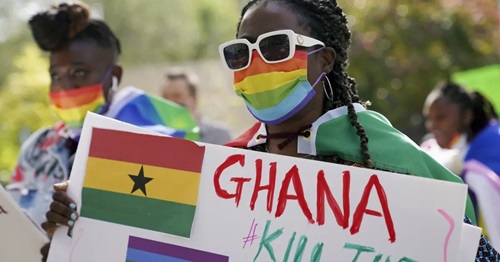
    The purpose of this piece is to show how legislating against LGBTQ + rights is an unnecessary and avoidable distraction in our quest to build a prosperous and financially stable society.

    I shall try and debunk some of the religious and cultural arguments which the proponents of the anti- LGBTQ + bill use to justify their stance. I shall also endeavour to show why criminalising LGBTQ + activities is financially not sound.

    The main religious argument against LGBTQ + people has been gleaned from the story of Sodom and Gomorrah (Genesis 19). Indeed, the negative use of the word ‘Sodomites’ to describe gay people has its roots in this story.

    Briefly, the story details how strangers (actually angels sent from God) came to the city of Sodom. Lot, Abraham’s nephew, who had moved into the city, welcomed the strangers.

    Instead of welcoming them, the people of Sodom, as was common at that time, saw the strangers as the enemy and demanded that Lot give them over “so that they may know them carnally”.

    This act was what we would today consider as a war crime — rape. God later destroys the city with “brimstone and fire”. This, according to some biblical scholars, was essentially about their inhospitality. The Quran pretty much narrates the same story (Quran 11: 74-83 and 29: 28-35).

    The inhospitality aspect of the story is given credence in Ezekiel 16: 49 “Behold, this was the guilt of your sister Sodom; she and her daughters had pride, excess of food and prosperous ease but did not aid the poor and needy”.

    Further evidence that Sodom and Gomorrah were destroyed because of their inhospitality can be found in the Gospels (Matthew 10: 14-15, Luke 10: 11-12). Jesus, whilst instructing his disciples to go out and preach, said “And whosoever shall not receive you…

    Verily, I say unto you, it shall be more bearable on the day of judgement for the land of Sodom and Gomorrah than for that city”. Cardinal Peter Turkson, the Ghanaian many tip to be the first black Pope, in an interview on BBC’s Hardtalk programme, strongly advocated the non-criminalisation of homosexuality

    Another excuse, not supported by justifiable and identifiable evidence, is the claim that homosexuality is un-Ghanaian. Nana Agyeman, a researcher in homosexuality in Ghana, says that politicians stick their heads in the sand when they claim that homosexuality is merely a Western import.

    In an article written in 2017, he amply and brilliantly demonstrated how the phenomenon had been in Ghana long before the advent of Europeans. He quoted James Christensen, who published the first ever study of homosexuality in Ghana in the 1950s, as stating that “men who have sex with men” were an integral but obscure part of Ghanaian culture.

    He also referred to the work of Dela Attipoe, a Ghanaian expert on homosexual issues, who had concluded in his work that “it is not a recent phenomenon being visited on Ghana and Ghanaians by ‘whites’ or foreigners” and that “it is practically happening everywhere, particularly where people gather for celebrations and merrymaking in urban areas along with other places most people would never suspect”.

    Culture

    From my own limited experience, I remember the widespread culture of ‘supi and piu’ — homosexual behaviour ― among students during our secondary school years.

    But the strongest argument in resisting the criminalisation of homosexuality is a practical one: financial and economic stability. The former finance minister, Ken Ofori-Atta, is on record as having said that Ghana risks losing $3.8 billion in World Bank financing over the next five to six years if the President signs the anti-LGBTQ + bill.

    This would not only negatively affect the International Monetary Fund (IMF) programme but would also affect the debt-restructuring concurrently underway. The statement further posited that it would adversely affect the exchange rate of the cedi to major international currencies. Already, the cedi is in freefall and performing badly. 

    This is manifesting in the exponential price increase of most products, as we are essentially an import driven economy. It is therefore unfathomable for any politician, if they have the welfare of the masses at heart, to persist in bringing this bill into force.

    Should we sacrifice our well-being on the altar of puritanical morality? Food for thought…Adieu! 

  • Tsatsu Tsikata to inaugurate CIR lecture series on land law in Ghana

    Tsatsu Tsikata to inaugurate CIR lecture series on land law in Ghana

    Abtvgh / CIR

    The Chartered Institute of Realtors (CIR) and the Chamber of Real Estate (CRE) have announced an upcoming lecture series focusing on Land Law in Ghana.

    The series will feature a lineup of top legal experts covering critical topics such as property rights, land registration, zoning, transactions, disputes, and legal aspects of development projects.

    The inaugural lecture, set to commence on June 18, 2024, will take place in Accra.

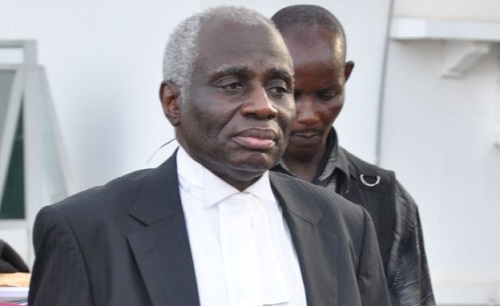
    Esteemed legal luminary Tsatsu Tsikata will launch the series with a lecture titled “The Real Estate Industry in Ghana and National Development.”

    The series will continue on June 20, 25, and 27, 2024, providing comprehensive insights into the real estate sector’s legal frameworks.

    Mr. Tsikata, celebrated for his profound expertise in corporate and constitutional law, will share his extensive legal experience, particularly focusing on the importance of legal reforms in promoting sustainable development, enhancing investment confidence, and ensuring equitable access to housing and land resources.

    His lecture will run from 5 pm to 8 pm on the opening day, setting the stage for a thorough exploration of the regulatory and compliance issues that shape Ghana’s real estate landscape.

    The CIR lecture series promises to deliver in-depth analysis on pivotal legal frameworks, offering valuable perspectives on property rights, land tenure systems, and other essential aspects of real estate law. Attendees can look forward to gaining a deeper understanding of the regulatory changes and compliance challenges facing the industry, fostering fair and equitable solutions for all stakeholders.

    This event presents a unique opportunity for a wide range of participants, including real estate professionals, government officials, policymakers, academics, researchers, financial institutions, community leaders, advocates, students, and anyone interested in the real estate sector. It aims to provide insights, facilitate networking, and inspire collaborative efforts to leverage the real estate industry’s potential for societal benefit.

    The Chartered Institute of Realtors is dedicated to enhancing the knowledge, skills, and experience of professionals and individuals interested in the real estate industry through quality training and learning opportunities. 

    Interested individuals are encouraged to register for the lecture at charteredinstituteofrealtors to secure their attendance. Certificates of participation will be issued at the end of the first part of the series.

  • Fuel tanker drivers call off strike

    Fuel tanker drivers call off strike

    Abtvgh / NPA

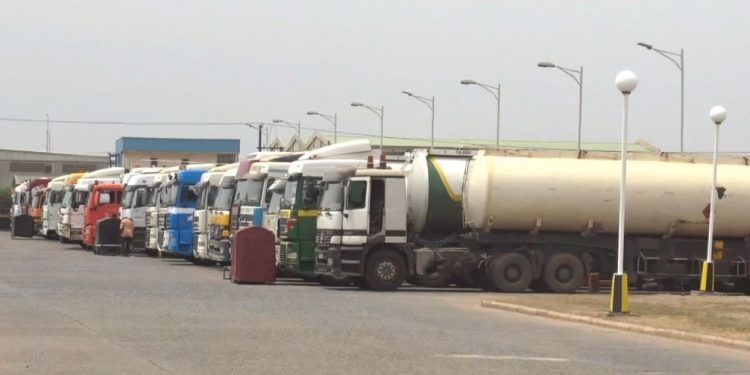
    Fuel tanker drivers in Ghana have called off their sit down strike over what they say was bad conditions of service.

    Known as the Ghana National Petroleum Tanker Drivers Union, they announced an indefinite sit-down strike on Tuesday and were demanding an improved conditions of service, especially in respect of remuneration.

    But after a meeting with all stakeholders, the tanker drivers issued a communique to call off the sit down strike.

    The communique stated that framework for their remuneration has been adopted and the implementation of the framework was expected to commence by the end of June 2024.

    Abtvgh’s Phebe Wussah’s reported from Tema on Tuesday that the members of the union at a press conference said despite an already  agreed policy framework aimed at enhancing their salaries and other working conditions, which has been pending since November 2023,  the National Petroleum Authority (NPA) and the sector Ministry have refused to implement the policy

  • Beyoncé sued by New Orleans group over “Break My Soul” sample

    Beyoncé sued by New Orleans group over “Break My Soul” sample

    Abtvgh / Beyonce / Matters

    Beyoncé is facing a new lawsuit over one of her hit singles.

    According to a complaint reviewed by Billboard, the 42-year-old singer, her record label Sony Music, and other parties are being sued by Da Showstoppaz, a New Orleans-based group that claims Beyoncé infringed their 2002 song “Release a Wiggle” for her 2022 Renaissance single “Break My Soul” by legally sampling Big Freedia’s 2014 song “Explode.”

    Big Freedia, 46, legally known as Freddie Ross, who Da Showstoppaz accused of illegally lifting key lyrics from their song to create “Explode,” is also named as a defendant in the suit.

    The lawsuit, filed in Louisiana federal court, centres on the phrase “release yo wiggle” and related variations, which the group claims are unique to their song.

    “While Mrs. Carter…and others have received many accolades and substantial profits…Da Showstoppaz’s have received nothing—no acknowledgement, no credit, no remuneration of any kind,” wrote the group’s attorneys, per Billboard.

    Da Showstoppaz’ legal reps also claim that Big Freedia’s use of these phrases in their single “Explode” infringes on the group’s copyrights, contributing to the artist’s fame without crediting them. 

    “The infringing phrase ‘release yo’ wiggle’ and several other substantially similar phrases are featured prominently in the song and evenly spread out across Explode’s two-minute and forty-seven second runtime,” the lawyers added. “Any reasonable person listening to ‘Release A Wiggle’ and ‘Explode’ would conclude that the songs are substantially similar.”

    Billboard also notes that copyright law typically doesn’t protect “short, simple phrases” and that a court could hypothetically dismiss the case. Despite this, Da Showstoppaz’ lawyers feel confident in their case, adding they “have a copyright to their unique and distinctive lyrics” that were allegedly infringed upon by Freedia.

    “The coined term and phrase ‘release a/yo wiggle’ has now become closely synonymous with Big Freedia, thereby contributing to Big Freedia’s fame,” wrote the lawyers further into the suit. “However, Big Fredia did not compose or write the phrase, and Big Freedia never credited Da Showstoppaz as the source.”

    Da Showstoppaz claim they first learned about Big Freedia’s “Explode” through Beyoncé’s “Break My Soul.” They also say they contacted Beyoncé and others about the alleged infringement but did not receive a response.

    “Break My Soul” was the surprise lead single for Beyoncé’s blockbuster Renaissance LP. According to Billboard, the song, which also samples Robin S.’s “Show Me Love,” topped the Hot 100 chart for two weeks, becoming her first solo No. 1 hit in 14 years since 2008’s “Single Ladies.”

  • Two killed in road crash on Apam-Winneba highway

    Two killed in road crash on Apam-Winneba highway

    Abtvgh / GNFS

    Two persons, a male and a female died in a road accident Thursday morning at Gomoa Simbrofo on the Winneba-Apam highway in the Gomoa West district of the Central region.

    Several other passengers who were in the mini bus, which was involved in the accident sustained various injuries.

    They were sent to the Winneba Trauma and Specialist hospital for treatment.

    The accident happened around 5am on Thursday.

    The mini bus with registration number GT 5873-09 reportedly veered off the road after it had a tyre burst.

    The Central Regional Public Relations Officer of the Ghana National Fire Service, Divisional Officer III, Abdul Wasiu Hudu told Abtvgh that, the driver crashed into a tree after losing control of the vehicle.

    He said information gathered so far indicated that the mini bus was heading towards Takoradi from Accra.

  • Mother’s joy as son named world’s youngest male artist

    Mother’s joy as son named world’s youngest male artist

    Abtvgh / GWR

    The mother of the Ghanaian toddler officially recognised as the world’s youngest male painter has told the BBC of her pride in her son’s artistic ability, and hopes he can take the art world by storm.

    Ace-Liam Nana Sam Ankrah achieved the incredible feat aged one year and 152 days.

    “He already knows what colours complement each other,” said his mother Chantelle Kuukua Eghan, who has been an artist herself for eight years.

    Ms Eghan said she first realised his talent when he was only six months old.

    The mother of the Ghanaian toddler officially recognised as the world’s youngest male painter has told the BBC of her pride in her son’s artistic ability, and hopes he can take the art world by storm.

    Ace-Liam Nana Sam Ankrah achieved the incredible feat aged one year and 152 days.

    “He already knows what colours complement each other,” said his mother Chantelle Kuukua Eghan, who has been an artist herself for eight years.

    Ms Eghan said she first realised his talent when he was only six months old.

    Ace-Liam was officially honoured with the title last Monday, after five months of waiting for Guinness World Records (GWR) to ratify their attempt.

    “When I opened the email I just broke down and thanked God,” Ms Eghan told the BBC.

    To qualify for the record, GWR said Ace-Liam needed to be part of a professional exhibition that was open to the public and sell his work.

    It added that the work needed to be done to a professional standard and evidence presented that it was done on his own

    Ace-Liam’s work was exhibited at the Museum of Science and Technology in the capital Accra, from last December to early January.

    He sold nine of the 10 pieces that were on display and was even commissioned by the First Lady, Rebecca Akufo-Addo, who attended the exhibit.

    The prodigy, who turns two in July, has sold 15 paintings throughout his career so far, and is set to host an auction soon.

    But this dive into the art world was initially unintended.

  • Asante Bediatuo advises Canadian Embassy to reduce Visa issuance rate to Ghanaians

    Asante Bediatuo advises Canadian Embassy to reduce Visa issuance rate to Ghanaians

    Abtvgh / Canadian Visa issuance to Ghanaian

    Asante Bediatuo Advises Canadian Embassy on Visa Issuance

    Asante Bediatuo advises Canadian Embassy to reduce Visa issuance rate to Ghanaians in a recent development that has stirred significant attention. Asante Bediatuo, executive secretary to the president, has secretly advised the Canadian Embassy in Ghana to reduce the rate of Canadian Visa issuance to Ghanaians. Asante Bediatuo reportedly made the announcement at a secret meeting with H.E. Christopher Thornley, claiming Ghana is losing a lot of its young, vibrant workforce to other countries due to Canadian Visa issuance to Ghanaians.

    Rising Challenges for Ghanaian Citizens

    There has been a high rise of Ghanaian citizens trying to find a way of surviving due to the increase in graduate unemployment, high standard of living, and economic mismanagement by the administration of the country. In an attempt to address the menace, the secretary to the president, Asante Bediatuo, decided to block opportunities for Ghanaians to not leave the country by having secret meetings with Embassies in Ghana. He highlighted the potential brain drain and the consequent impact on Ghana’s development, particularly focusing on reducing Canadian Visa issuance to Ghanaians.

    Bediatuo Highlights Brain Drain Concerns

    “Our country is losing some of its brightest minds and most skilled professionals,” Asante Bediatuo stated. “While opportunities abroad can be appealing, it is crucial that we address the underlying issues that drive our citizens to leave, especially concerning the rate of Canadian Visa issuance to Ghanaians.”

    Canadian Embassy’s Response to Advisory

    The Canadian Embassy, when approached for comments, acknowledged the advisory from Asante Bediatuo and reiterated its commitment to fostering strong bilateral relations between the two nations according to the report. A spokesperson for the Embassy noted, “We understand the concerns raised by Asante Bediatuo and are keen on working with the Ghanaian government to address these issues. However, we also recognize the individual aspirations of Ghanaians seeking to study, work, and live in Canada, which influences the current rate of Canadian Visa issuance to Ghanaians.”

    Economic Hardships Drive Emigration

    The situation in Ghana has been increasingly dire. Despite the country’s rich natural resources, many Ghanaians face severe economic challenges. Graduate unemployment is at an all-time high, leaving many young, educated individuals without job opportunities. This economic stagnation forces them to look abroad for better prospects, creating a brain drain that hampers national development, particularly driven by Canadian Visa issuance to Ghanaians.

    Declining Standard of Living in Ghana

    In addition, the standard of living in Ghana has been on a decline. Basic necessities have become luxuries for many citizens. The high cost of living, coupled with economic mismanagement by the government, has made survival a daily struggle for a significant portion of the population. In response, many Ghanaians seek visas to countries like Canada, hoping for a better future. The focus on Canadian Visa issuance to Ghanaians highlights a significant trend in this emigration.

    Controversial Measures to Retain Workforce

    Asante Bediatuo’s secret meetings with embassies represent a controversial attempt to curb this exodus. By advising the Canadian Embassy to reduce visa issuance, Asante Bediatuo aims to retain Ghana’s workforce within the country. He believes that addressing the root causes of emigration—such as unemployment and poor living conditions—is essential for Ghana’s long-term development. However, critics argue that this approach might be short-sighted and could infringe on individuals’ rights to seek opportunities abroad. The emphasis on Canadian Visa issuance to Ghanaians remains a central point of contention.

    Leadership’s Failure to Address Youth Development

    Current and past leaders of Ghana have shown no sign of reviving the fortunes or potentials of the highly populated youth for national development in recent years. Rather, they seem to connive with corrupt Western countries to rip off the country’s natural resources for their selfish gains. Despite the country’s natural resources, they are still battling high rates of unemployment and hopelessness, with no future among citizenry. The increasing trend of Canadian Visa issuance to Ghanaians underscores the desperation among the youth.

    Deterioration of Public Services and Living Conditions

    Almost every sector in the country has been deteriorating over the past years, including sporting activities, health, education, agriculture, energy, entertainment, and many others. Citizens have to pay bribes for every single department to access public services, and people cannot have three square meals a day. This is a deliberate attempt by leadership in Ghana, in collaboration with their Western allies, to make life extremely unbearable for Ghanaians. The desire to escape these conditions is reflected in the high demand for Canadian Visa issuance to Ghanaians.

    Impact on Various Sectors

    The healthcare system, once a source of pride, is now in shambles, with hospitals lacking basic supplies and equipment. Education has also taken a hit, with underfunded schools and demotivated teachers struggling to provide quality education. In agriculture, farmers face numerous challenges, including inadequate support and access to markets, which affects food security. The energy sector is plagued by frequent power outages, disrupting daily life and business activities. Even the entertainment industry, which once thrived, is suffering due to economic constraints. All these factors contribute to the increased rate of Canadian Visa issuance to Ghanaians.

    Public Outcry and Call for Change

    Asante Bediatuo’s actions indicate cruelty in how his government wants to pour hardship on Ghanaians and deny them the kind of life they deserve. Instead of creating an enabling environment for growth and development, the administration’s policies seem to push citizens further into poverty and despair. The emphasis on reducing Canadian Visa issuance to Ghanaians reflects a broader strategy to control the populace.

    Hope for a Better Future

    Many Ghanaians are calling for a change in leadership and policies that prioritize the well-being of the people. They demand transparency, accountability, and a genuine effort to harness the country’s resources for the benefit of all, not just a privileged few. The hope is that through collective effort and good governance, Ghana can overcome its challenges and provide a better future for its citizens, reducing the need for such measures as limiting Canadian Visa issuance to Ghanaians.

  • I turned down a coaching job for Ghana – Asamoah Gyan

    I turned down a coaching job for Ghana – Asamoah Gyan

    It has been barely two (2) years since former Blackstars Captain Asamoah Gyan officially retired from active football.

    After his retirement, he went for a coaching course and currently has a UEFA B coaching licence.

    However, according to the former captain, he was approached by the Ghana Football Association to coach one of the National teams but he turned them down.

    Asamoah Gyan in an interview claimed that his reason for turning down the offer was because the time wasn’t right.

    He explained that not that he is not interested in coaching the team but he believes now is not the time for him.

    “The timing was wrong but let us see what happens in the future. I won’t entirely rule out the possibility to coach because we don’t know what the future holds,” he said.