Category: Radio

  • Election 2024: Ghana Card sine qua non

    Abtvgh / NIA

    Identity documents, the commonest being national identity cards, allow people to exist in the eyes of society.

    Citizens use them whenever they need to prove who they are or where they come from, to fulfil their civic duties or cross borders.

    Without a legal identity document, citizens cannot access basic human rights such as health care, education, social welfare and the right to work, yet around a third of the world’s population lack an official ID.  

    While some countries are now grappling with the challenges and potential benefits of registering all residents, the United Nations goal of “legal identity for all” by 2030 remains  distant.

    For governments, who have the ultimate responsibility to provide their citizens with a proof of identity, offering them robust and long-lasting documents to protect their identities is crucial.

    Ensuring that civilians can rely on these secure documents to conveniently access the necessary services in the physical and digital world must also be a top priority.

    Across the globe, legal identification is required for essential tasks such as opening a bank account, accessing government assistance and services, and performing civic duties.

    Thus, in Ghana when moves were initiated to enable citizens and foreigners living in Ghana to own and acquire the Ghana Card, many welcomed the news.

    Unfortunately, the process of acquisition has been plagued with logistical challenges, especially the prompt release of funds to ensure that the card is made available to those who desire it.

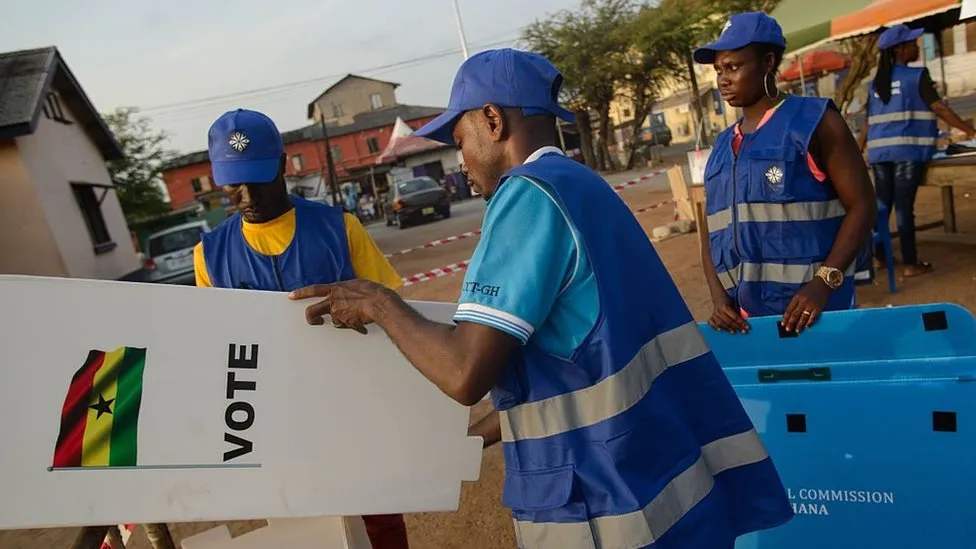
    The need to discuss the Ghana Card and the challenges around its issuance cannot be overemphasised, especially when the Electoral Commission (EC) stated last week Thursday that the guarantor system had outlived its usefulness, hence the need for the adoption of a system that would ensure that every registrant was identified on his or her own merit rather than another person vouching for the age and nationality of that person (See Friday, September 19, 2023, Daily Graphic, pages 10 and 23).

    Some people may disagree with the EC on the grounds that not every Ghanaian has the Ghana Card or that the guarantor system had been with us since time immemorial. Some even argue that the NIA also uses the guarantor system to issue cards to qualified people.

    But for how long do we have to use the guarantor system in every registration exercise?

    Even if the NIA uses the guarantor system, would it not be easier for applicants of the voter ID cards to use the Ghana Card to facilitate the process?

    Indeed, many civil servants and public sector workers are yet to receive their salaries for the month of September because they have been asked by their various agencies to produce their Ghana Card for validation before they are paid.

    It is a fact that this is not the only time government workers have been asked to produce one form of identification or another before being paid.

    In its limited voter registration, pictures and videos have gone viral on social media of minors and in some instances, applicants alleged to be foreigners, seen trying to register for the voter ID.

    By the 16th day of the registration, the EC had recorded a total of 7,561 challenged cases in all the Registration Centres, constituting 1.12 per cent of all the registered voters.

    This raises a lot of concern and we believe that all the relevant stakeholders – political parties, civil society organisations and parents – have a responsibility to deal with the canker of minors and foreigners taking advantage of the guarantor system to register.

    Our democracy would be better if we help the EC to keep a credible voter register.

    We, therefore, urge eligible Ghanaians who are yet to secure the Ghana Card to do so before the next window of the registration exercise opens next year.
  • Decriminalising suicide – New dawn for mental health

    Abtvgh

    Last Tuesday, Ghana took a significant step and joined the group of countries that have decriminalised suicide attempt.

    Until Parliament’s amendment of sections of the Criminal Offences Act on suicide, Ghana was among the 20 countries which still punished people for attempted suicide.

    The repeal of the act followed a Private Member’s Bill, sponsored by the Member of Parliament (MP) for Asante Akim Central, Kwame Anyimadu-Antwi, who is also the Chairman of the Legal, Constitutional and Parliamentary Committee of Parliament, and the Ranking Member on the committee and MP for Akatsi South, Bernard Ahiafor.

    Suicide remains a major public health problem worldwide and the World Health Organisation (WHO) estimates that more than 700,000 people worldwide die due to suicide every year.

    Also, for every suicide, there are many more people who attempt it.

    In the past, the act was considered a criminal offence to serve as a deterrent to people from trying to take their lives.

    History also reveals that the major religions of the world have classified suicide as a sin or being against the tenets of the religions.

    Therefore, most countries with a dominant religion have incorporated this moral stance into their initially unwritten and subsequently written laws.

    It is instructive to note that statistics available show that criminalising suicide has not achieved its objective and advocates have always maintained that attempted suicide is a public health issue and not an offence, for which reason the survivor should be considered a patient and provided with treatment and not sent to prison.

    According to statistics from Ghana’s Mental Health Authority (MHA), in 2018, the number of people who attempted suicide was 797.

    That rose to 880 in 2019 and 902 in 2021, while the number who died by suicide went up from 69 in 2020 to 86 in 2021.

    There are many cases that are not reported because of stigma and fear of community backlash and legal repercussions.  

    On the contrary, a WHO report and data show that the legal status on suicide around the world in the last 50 years has changed significantly.

    The WHO report (2014) shows that decriminalisation has had some positive effects in countries, including a decline in suicide rates after its decriminalisation, as people with such tendencies have been able to access medical help.

    Thus at the World Health Assembly in 2019, all health ministers agreed that decriminalising suicide was an effective way to reduce deaths by suicide when they approved the WHO Mental Health Action Plan for 2021-2030.

    This is why the Daily Graphic welcomes the bold decision by Parliament to amend the Criminal Offences Act after years of advocacy by the major stakeholders, especially mental health professionals in Ghana.

    With attempted suicide no longer a criminal offence, it is the expectation that people who are battling mental health conditions will be encouraged to seek the right medical help and also receive the necessary support from close relations and friends.

    More so, it will help reduce the stigma, as suicide survivors and their families eventually become victims of stigmatisation, and with the right interventions and help, the country can achieve the UN Sustainable Development Goals (SDGs) for 2015-2030.

    The Daily Graphic commends the Psychiatric Association of Ghana (PAG) for its relentless effort at leading a sustained campaign for suicide to be decriminalised and, indeed, all other stakeholders who supported the campaign.

    With the new dawn here, the Daily Graphic would also like to call on the health authorities to provide an efficient health delivery system for mental health and make it more accessible to encourage people to seek the required help they need. 

  • Happy 66th Independence Day

    Today marks the 66th anniversary of attainment of independence from colonial rule for our dear nation Ghana. The attainment of independence signalled our liberty as a country to take our destiny into our own hands and be in charge of our own affairs.

    It was indeed an affirmation of Ghana’s first President, Dr Kwame Nkrumah, that “the Black man was capable of managing his own affairs”.

    In Nkrumah’s moving speech in the early morning of March 6, 1957 at the Accra Polo Grounds, he proclaimed the expectation and the hope of Ghanaians, the rest of Africa and the world for the new homeland of Ghana. 

    There was a new hope for prospects because the opportunity had been offered the people to determine their own destiny and affairs. The independence journey had been tortuous and at certain stages uncertain. There had been difficulties, imprisonments, hardships, suffering and deaths. 

    Quite rightly the people had cause to jubilate.

    On the occasion of 66 years of nationhood, therefore, the Daily Graphic joins all Ghanaians to congratulate ourselves on the feat that we have chalked up over the years. We have not been a total disappointment; certainly, we have built on what was bequeathed to us by our forebears and we must have cause to celebrate. 

    The country has seen tremendous improvements in its Human Development Index (HDI), indicating progress in life expectancy, adult literacy and combined secondary and tertiary school enrolment, and real GDP per capita.  Until 2020 when the COVID-19 pandemic struck the country, we were one of the fastest growing economies. 

    We have a thriving, stable and deepening democratic governance and a high degree of media freedom that are the envy of many.

    We must be encouraged by these and pat ourselves on the back for our efforts. But as we do this, we must understand that all is not rosy. It does not also mean that we could not have done better. There are many challenges that we need to work on in order to experience the rapid and accelerated development we yearn for.

    Currently, the country is in dire economic straits, with our debt to GDP growing to unsustainable levels. This is the time we need all citizens on board to help turn the situation around. We need the understanding and support of citizens for policies and measures to build a strong socioeconomic foundation. Something that will provide economic freedom and curtail our dependence on foreign aid, to lead the country to move away from the source of economic growth where we rely on extractive and capital-intensive services that do not directly help in reducing poverty. 

    We must immediately also work on our political psyche to move away from the acrimony, mistrust and suspicion that have become synonymous with our society. Our political actors, especially, owe the nation a duty to lead this charge. The Daily Graphic won’t mince words in pointing out that they are the primary source of this unfortunate state of affairs. 

    As our schoolchildren, the security agencies and others march today to mark our 66th Independence Day, we mustn’t see it as just an occasion for the fun of it. We must reflect on the whole essence of independence. The Daily Graphic points to an excerpt from one of Dr Nkrumah’s speeches that “. . . from now on, today, we must change our attitudes and our minds. . . . and that [our current state] entails hard work”.

    Ghana must demonstrate to the world that it is prepared to build on our foundation, but we must admit that reshaping the destiny of this country depends on us all.

  • We condole with Türkiye, Syria and pray for Atsu

    Abtvgh/ GFA/

    Life for millions in Türkiye and Syria changed forever last Monday, as two consecutive earthquakes sent shockwaves across hundreds of miles.

    Nine hours apart and with magnitudes of 7.8 and 7.5 on the Richter scale, the quakes rocked Türkiye and Syria and were the region’s strongest in nearly a century.

    The death toll from the quakes is more than 22,000 as of yesterday, with many still missing and critically injured.

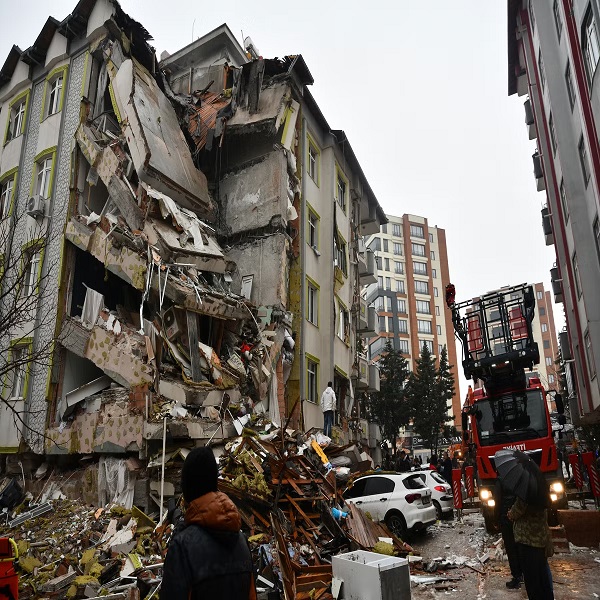
    The World Health Organisation put the number of people affected by the disaster at 23 million. At least 6,000 buildings collapsed, many with residents still inside them.

    Rescue efforts continue to be the top priority, with some 25,000 deployed in Türkiye and thousands more from overseas — but a bitter winter storm now threatens the lives of the survivors and of those still trapped under the rubble.

    Syria, ravaged by 12 years of war and terrorism, is the least prepared to deal with such a crisis. Its infrastructure is heavily depleted, and the country remains under Western sanctions. Thousands of those in the affected areas are already refugees or internally displaced people.

    With the dust of the catastrophe still settling, regional analysts are zoning in on the longer-term ripple effect that the catastrophe could have on Türkiye, a country whose 85 million-strong population was already mired in economic problems — and whose military, economy, and politics have a major impact far beyond its borders.

    The ABTVGH mourns with the governments and people of Turkey and Syria over the loss of lives and property.

    We are equally troubled by the inability of the rescuers to find the Ghana international soccer star, Christian Atsu. Mr Atsu joined Turkish Super Lig side Hatayspor in September 2022 after spending nearly a decade at Chelsea and Newcastle United.

    The coach of Christian Atsu’s Turkish club, Hatayspor, said last Wednesday that the Ghana midfielder had not been found following the devastating earthquake in Türkiye. As the rescue effort is ongoing, we remain confident that the player will be found.

    For us, the response of the world holds valuable warnings and lessons that extend well beyond the two countries hit by the earthquakes. 

    The prompt help that Türkiye, in particular, has received from parts of the world shows that the international community can — if it decides to — put geopolitics aside to help a country in need. 

    Many Syrian victims of the earthquake were already refugees in their own country, living in makeshift homes. Parts of earthquake-hit Syria are controlled by rebel groups; yet the country’s government insists that all international aid must be routed through its agencies.

    While the Syrian government must work with aid groups to ensure that help reaches all parts of the country’s territory, regional players, such as Türkiye and Iran, and global powers — the US and Russia — must reflect too. 

    Meanwhile, the scenes of death and despair in Türkiye and Syria should also serve as an overdue reminder of the risks Ghana faces in ensuring that our buildings are regulated.

    While pleading for more aid for the victims of the earthquake, particularly in Syria, we urge our district assemblies to take a cue by ensuring that earthquake-prone zones within localities are properly mapped out so that construction does not take place there.

  • Capping the number of Supreme Court judges

    Capping the number of Supreme Court judges

    Abtvgh/ high court/

    The number of judges on the Supreme Court has become a topical issue and one that always comes up during discussions on the review of the 1992 Constitution.

    There are two schools of thought on the issue, with one calling for a cap or a limit on the number of judges that can be appointed to the country’s apex court and the other advocating that the status quo must remain.

    Article 128(1) of the 1992 Constitution stipulates a minimum of nine judges, apart from the Chief Justice, who must be on the Supreme Court, but places no ceiling on the number the President can appoint.

    Currently, there are 12 Justices of the apex court, including the Chief Justice, with four more approved by Parliament and set to be sworn into office soon.

    At a seminar on constitutional review, organised by the Institute of Economic Affairs (IEA) in October last year, both the Majority Leader and former Minority Leader in Parliament, Osei Kyei-Mensah-Bonsu and Haruna Iddrisu, respectively, strongly advocated a cap on the number of Justices of the Supreme Court.

    They respectively called for a cap of between 13 and 15 judges with the explanation that the current system was the bane of good and efficient governance.

    On the other hand, proponents supporting the status quo include some legal luminaries and notable personalities such as the Chief Justice, Justice Kwasi Anin Yeboah; a former Chief Justice, Sophia Akuffo, and a former Speaker of Parliament, Prof. Aaron Mike Oquaye.

    At a similar IEA event late last year, the Chief Justice and Justice Akuffo said limiting the number of judges could negatively affect the efficient administration of justice due to the scope of work of the Supreme Court under the 1992 Constitution.

    They argued that the number of judges at the SC could only be capped if access to the court was limited.

    Sharing similar sentiments, Prof. Oquaye said the capping of the judges must be followed by other amendments to the Constitution.

    According to him, putting a limit on the number of justices of the Supreme Court, without amending the constitutional provision on the automatic right of appeal to the apex court, would be counter-productive. Such a situation, he said, would mean the Supreme Court would be inundated with so many cases without the manpower to adequately deal with those cases.

    The conversation on the capping of Supreme Court judges is an important national discourse that could help improve the administration of justice and promote judicial independence.

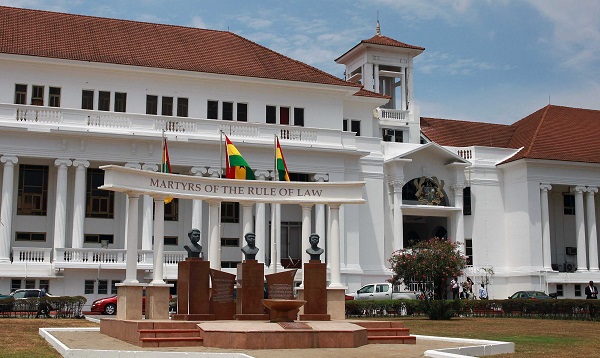
    Those against the capping have a strong case, especially regarding the manpower the court needs to deal with the myriad of cases that come before the court.

    Under the 1992 Constitution, the Supreme Court has about 10 jurisdictions. It is the court solely vested with the power to interpret and enforce the Constitution.

    This jurisdiction can be activated by any Ghanaian. It has supervisory jurisdiction to ensure that other courts act fairly and in consonance with procedure and it is the final court of appeal, which is as of right in criminal and civil cases.

    The Supreme Court also has original jurisdiction over Presidential Election petitions, is the final appellate court in chieftaincy matters and determines the quantum of compensation that should be paid to an individual wrongfully incarcerated.

    Obviously, the workload on the highest court of the land is enormous and any wholesome capping on the judges could be counterproductive.

    However, we must be mindful of the fact that our democracy is still growing and there is a high propensity for abuse by the Executive arm of government due to the lack of ceiling and the packing of the court with its favourites.

    We have a Constitution that has made the Executive President so powerful and almost a monarch with unchallenged powers as said by the Majority Leader at the IEA event. Checks and balances, although essential features of the Constitution, sometimes exist only in print and can be relegated to the background for a President to have his way. The Executive and the Legislature have basically become political institutions with partisan considerations taking premium over national interest.

    The Judiciary is one institution that is supposed to be thoroughly independent to be able to stand up to protect the Constitution and ensure that rule of law prevails. Allowing a system that does not restrict the number of justices a President can lawfully appoint to the highest court of the land is not only inimical to our progress as a nation, but can eventually weaken the Judiciary, the custodian of our democracy.

    The Daily Graphic therefore calls for a review of the 1992 Constitution to fill this gap in our Constitution.

    The cap m­­­ust, however, be followed by other amendments that will either reduce the mandate of the Supreme Court or ensure that access to the court is somehow restricted in a manner that would not defeat the Constitution, the hopes and aspirations of the people.