Category: Uncategorized

  • Spousal migration can strain relationships, warns Apostle Amponsah Frimpong

    Abtvgh / Christ Apostolic Church International
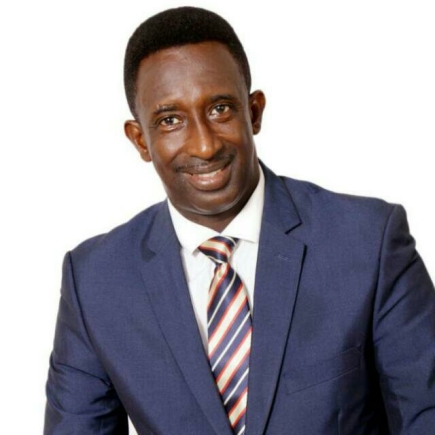
    Apostle Samuel Amponsah Frimpong, the Chairman of the Christ Apostolic Church International has warned that spousal migration can strain marriages and expose partners to temptation if its challenges are not addressed.

    He acknowledges that spousal migration will likely remain a reality for some time, as people continue to seek opportunities in other countries, often leaving their spouses behind.

    In a review of the book “I am Married but I am Single: The Other Side of Spousal Migration” by Emmanuel Idan and Gina Idan, Apostle Frimpong argues that the absence of one partner undermines the very purpose of marriage.

    He highlighted the difficulties couples face due to physical separation, not only in terms of emotional support but also on the well-being of dependents, particularly children

    “Spousal migration separates partners in marriage and negates the very reason for which the marriage institution was ordained by God,” Apostle Frimpong said. “Spousal absence can seriously imperil relationships and plunge marriage partners into temptations.”

    He also stressed the importance of open communication, particularly for Christian couples, before considering spousal migration. Discussing the challenges beforehand can help couples make informed decisions.

    Co-author Emmanuel Idan, in an interview, explained that the book, yet to be launched, explores the challenges of prolonged physical separation and its impact on  left-behind spouses and children, both socially and psychologically.

    Drawing from their own experience of being separated for nearly seven years shortly after their marriage, Idan discusses the various challenges couples face due to spousal absence.

    The book delves into topics such as marriage, spousal migration, economic empowerment, life in the diaspora, and the strain of physical separation.

    The authors also explore God’s intended plan for marriage and relationships, offering guidance on when couples might need to reconsider migration plans and what to consider before accepting proposals from partners living abroad.

    The 132-page book has received positive reviews, including one from Joyce Rosalind Aryee, Executive Director of Salt and Light Ministries.
  • Let’s uphold democracy in ECOWAS

    Abtvgh / ECOWAS

    The military coup in Niger presents a diplomatic dilemma for the leaders of the Economic Community of West African States (ECOWAS) who are keen on entrenching a new democratic order.

    On July 26, members of Niger’s presidential guards detained President Mohamed Bazoum and announced a change of government – the fourth West African country to do so after Mali, Guinea and Burkina Faso.

    These military interventions are unfortunately coming at a time the region has made some strides in the last decade to shed its reputation as a “coup belt”, only for persistent insecurity and corruption to open the door to military leaders.

    The coup is seen as a major blow to many countries that viewed Niger as a partner in the Sahel region that could be used to beat back a growing uprising by groups linked to terrorists.

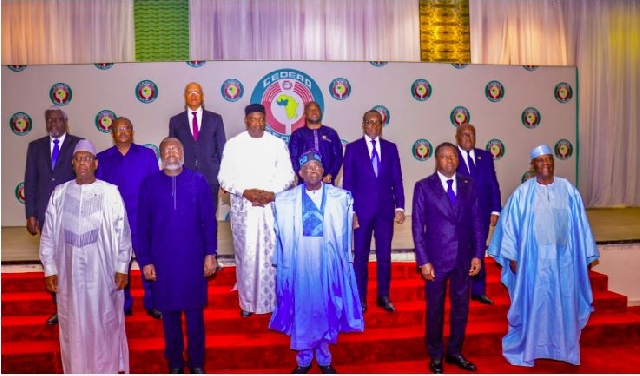
    An ECOWAS summit in Abuja ended with the imposition of a number of sanctions, including a no-fly zone over Niger.

    The bloc also issued a one-week ultimatum to the Abdourahmane Tchiani-led interim military government in Niger to restore constitutional order or risk the possible use of force.

    The ECOWAS Committee of Chiefs of Defence Staff are meeting in Accra today and tomorrow to discuss a possible military intervention in Niger, regional military sources said last Tuesday, a source at ECOWAS confirmed.

    Ahead of the meeting, various groups, including academicians, politicians and security analysts have condemned ECOWAS’ move for a military intervention and rather called for a diplomatic effort to resolve the situation.

    The latest group to add its voice to the call is the Presbyterian Church of Ghana, which has indicated that it would be wrong for the government to take a unilateral decision on the matter without broad consultation.

    Created in 1975, the 15-nation bloc was designed to “promote economic integration across the region.

    ”Its principles centre around establishing a single trading unit, similar to policies under the European Union, that promote democratic governance and sub-regional cooperation.

    In this way, it is first and foremost an economic entity, not a military or political one.

    But ECOWAS has fangs.

    It has two defence protocols that say any threat against a member state is deemed a threat against the greater community. 

    And it has mustered troops to intervene in the past.

    So, when instability rocked Niger, the fourth country in the region to suffer a coup in recent times, ECOWAS saw intervention as part of its broader mission to support and protect West Africa.

    It is for this reason that the Daily Graphic calls for calm and not stampeding ECOWAS into taking decisions that will embolden the military to oust a constitutional order at the least opportunity.

    Much as we agree to a call for a broader consultation on the crisis in Niger, we should also be mindful of the fact that constitutionally, ECOWAS has a duty to ensure that the rise in military coups in the sub region is halted and constitutionalism made to prevail at all times.

    After all, the West African leaders are not immediately intervening militarily; they are first pursuing the path of diplomacy and dialogue, which is why ECOWAS has continued its efforts of engaging diplomatically with Niger’s military junta.  

    For the Daily Graphic, the crisis in Niger is not just a test of the diplomatic skills of the leadership, but a test of the bloc’s commitment to shared African values. 

    The world is watching, and the stakes are high, so is our resolve that our leaders are not just negotiating for the present, but they are negotiating for our future and for the future of Africa even if it means military intervention.

    Let us resolve to support our leaders to halt the constitutional insanity.

    With a firm resolve and unyielding commitment, we must deepen the constitutional order and usher in a new era of zero tolerance for military takeovers.

    ECOWAS must send the right signal to the military that it has the right to enforce a constitutional order, an order not marked by war, but by peace; not by division, but by unity; not by intimidation, but by mutual respect, and if diplomacy and persuasion fail, force must then be applied.

    It is a daunting task, no doubt, but it is one we must embrace with both hands, by having faith in our leaders to come up with a lasting solution at the Accra summit today.

  • In pursuit of national unity

    PRESIDENT Nana Addo Dankwa Akufo-Addo has urged Ghanaians to remain united as one people with a common purpose,and a firm stance to build prosperity.

    Speaking at the 66th National Independence Day parade in Ho yesterday,the President noted that the founding fathers of the country were united in their firm resolve to attain independence for the country, irrespective of their tribe,religion or where they came from.

    (See our front page story today).

    This call is a good one especially when it is obvious that judging from the public utterances and discourse of some Ghanaians,we are taking for granted the unity we enjoy as a country. Instructively,a revered constitutional expert and statesman,Professor Nana Susubribi Krobea Boaten Asante,also underscored the importance of the country’s unity after 66 years of independence.

    Speaking in an exclusive interview with the Daily Graphic which was published on the front page yesterday, he said the unity of the country was worth celebrating, especially as other countries had failed to achieve that after many years of existence.

    In fact,one need not look further than the structure of the ensuing independent Ghana come to define the politics of that era; it also, at times, took a violent turn.

    In the end,the unitary vision won over the rival federal vision of Ghanaian statehood.

    A strong national consensus,at both elite and popular levels,has since formed around this founding unitary state model.

    Official commitment to national unity is also evident in our nationality and citizenship laws.

    Instructively,the very first bill to be introduced to the new Parliament of an Independent Ghana was the Ghana Nationality Bill,which became the Ghana NationalityAct (Act No.1) upon its passage in May 1957.

    Under that law,the purpose and effect of which was to define organic membership in the newly sovereign political community called Ghana,birth citizenship of Ghana was conferred on anyone born before March 6,1957,among other requirements.

    how there was a split among some countries after independence, mentioning India and Pakistan, Malaysia and Singapore, as well as the civil war in Nigeria for secession, commonly known as the ‘Biafra War’ that nearly tore that country apart, and Somalia which had become a failed state.

    Ghana’s search for national unity has been a long and tortuous one which dates back to the very early days of our existence as a sovereign state.

    In fact, in the period of late colonialism, as independence approached, our nationalist political class was divided over how best to construct and hold together the newly emerging state that was to be formed out of the four main territorial political divisions that had come to comprise the Gold Coast, namely the Gold Coast Colony, Ashanti, the Northern Territories, and Trans-Volta Togoland.

    Not only did the factionalism within the nationalist class over competing visions of The 1992 Constitution, like each of the other democratic constitutions before it, contains numerous other very important formal commitments to national unity, all within the context of a multi-party
    democracy.

    Other national unity commitments may be found in the Human Rights Provisions of the Constitution.

    Notably, Articles 17, clause (1) and (2) guarantee to all persons equality before the law and prohibit discrimination against any person on such grounds as gender, ethnic origin and religion,among others.

    This judicious balancing of a commitment to interpersonal equality with a commitment to the promotion of intergroup equity finds further expression and reinforcement in various provisions of the Directive Principles of State Policy.

    The upshot of these various national unity commitments enshrined in the Constitution is that, national cohesion is not a passively or naturally occurring state of affairs.

    On the contrary, ensuring and safeguarding national unity requires deliberate and active intervention and management on the part of the state.

    These constitutional provisions also recognize, importantly, that persistent intergroup and inter-regional disparities in the material bases and conditions of life pose a risk to national unity, hence the need for the state to take affirmative steps to address such imbalances.

  • We must end female genital mutilation

    Abtvgh/ W.H.O/ G.H.S/

    This year, 4.3 million girls are at risk of Female Genital Mutilation (FGM), the United Nations Fund for Population Activities (UNFPA) estimates.

    This number is projected to reach 4.6 million by 2030, as conflict, climate change, rising poverty and inequality continue to hinder efforts to transform gender and social norms that underpin this harmful practice and disrupt programmes that help protect girls.

    The World Health Organisation (WHO) describes FGM as ‘’the partial or total removal of external female genitalia or other injury to the female genital organs for non-medical reasons.’’

    The practice is also known as female genital cutting, female genital mutilation/cutting (FGM/C) and female circumcision. According to the WHO, it has no health benefits and describes all forms of FGM as a violation of the human rights of girls and women, including their sexual and reproductive health, and are an extreme form of gender-based violence.

    The practice is a human rights violation with serious consequences in the lives of women and girls, including their health, education and economic empowerment.

    The practice is rooted in gender inequality, attempts to control women’s sexuality, and ideas about purity, modesty and beauty. It is usually initiated and carried out by women, who see it as a source of honour, and who fear that failing to have their daughters and granddaughters cut will expose the girls to social exclusion.

    There have been international efforts since the 1970s to persuade practitioners to abandon FGM, and it has been outlawed or restricted in most of the countries in which it occurs, although the laws are often poorly enforced. 

    In Ghana, the prevalence of FGM in women aged 15 to 49 is said to be 2.4 per cent. The national prevalence as of 2020 was estimated to range between 20 and 30 per cent, while the combined prevalence for Upper West and Upper East regions was estimated to be 86 per cent. 

    The main law relating to FGM in the country is the Criminal and Other Offences Act 1960 (Act 29), Section 69A (Female Gender Mutilation) (COA 1960). In 1994 the Criminal Code (Amendment) Act inserted Article 69A to the COA 1960 to prohibit female circumcision.

    In 2007, this was further amended to ‘female genital mutilation’ and penalties were increased; however, there is limited information on prosecutions to date in the country.

    FGM violates the principles of equality and non-discrimination on the basis of sex. It violates the right to freedom from torture and cruel, inhuman or degrading treatment. It violates the right to the highest attainable standard of health, the right to physical integrity and the rights of the child. In the worst cases, it even violates the right to life.

    The Daily Graphic is calling for effective action to end FGM by involving entire communities where the practice is widespread and engage all relevant stakeholders in the process, including girls themselves, grandmothers, older women, community and religious leaders, men and boys, health professionals, teachers and the justice system.

    Also we call on religious leaders to openly dispel myths that associate FGM with any religion, as well as the harmful gender norms underlying the practice and support communities to abandon FGM through local and national advocacy.

    We further call on the government to enact, fully implement and resource comprehensive national legislation and evidence-based national action plans to support an enabling environment for gender-transformative social norms change that prohibits all forms of FGM.