Tag: Accra

  • Our nation deserves workable long-term devt plan

    Ghana is one of many African countries without a workable long-term national development plan to guide policy formulation and implementation for a minimum of 40 years. 

    Successive administrations have resorted to piecemeal policies, mostly captured in their party manifestos, to govern the country.

    This has given rise to policy inconsistencies, haphazard and abandoned programmes and projects, and the lack of a national vision to guide investors and development agents in decision-making.

    As they entrench and exploit the void, our political leaders over the years have tended to pursue and implement what can win elections, not what will develop the country sustainably.

    A Professor of Finance and Afreximbank Research Fellow, Joshua Yindenaba Abor, said that needed to stop, given the negative effects on national development and cohesion.

    The former Dean of the University of Ghana Business School (UGBS) said the nation needed a long-term development plan to serve as a blueprint for successive governments to draw their plans from.

    Delivering a lecture in Accra on the changing roles of national development banks in Africa, the financial economist said the long-term national development plan must be forward-looking by a minimum of 40 years and respected and utilised by all future governments within that time frame.

    The Daily Graphic agrees with Prof. Abor and believes that now is the time to start a national conversation on how to develop an all-inclusive national development plan.

    We are confounded by the absence of a workable long-term national development plan in spite of the existence of the National Development Planning Commission (NDPC), a constitutionally created agency that is funded by the taxpayer to “advise the President on development planning policy and strategy” and “make proposals on multi-year rolling plans.”

    Since its establishment, the NDPC has prepared three long-term development plans – Ghana Vision 2020 (1996-2020), the Seven-Year Development Plan (2009-2015), and the 40-Year Development Plan (2018-2057) that have largely been underutilised.

    Just like the rest, the most recent one, the 40-Year Development Plan, with a vision of achieving “a just, free and prosperous society”, has been shelved while manifestos have become the source of policies and programmes.

    This harms the economy and the citizens in many ways.

    As the International Monetary Fund stated in its policy paper, ‘Navigating Fiscal Challenges in Sub-Saharan Africa : Resilient Strategies and Credible Anchors in Turbulent Waters’, fiscal policy in most sub-Saharan African countries focuses excessively on short-term goals and is not guided by a clear medium-term strategy.

    “This lack of anchoring has resulted in frequent breaches of fiscal rules and ever-increasing public debt levels,” the paper published last September said.

    These fiscal breaches, which are rampant in Ghana, result from each administration coming with its own programmes, which it moves heaven and earth to implement in order to win votes.

    This leads to wastage, fuels lack of accountability and corruption, and polarises the nation further.

    Beyond their economic benefits, long-term development plans promote social cohesion and accountable governance.

    They serve as a national vision that the citizens unite around to accomplish.

    They also make it easier for the populace to track progress and make informed decisions.

    With the country battling to overcome one of its worst economic crises in a generation, the Daily Graphic believes now is the time to resurrect a national conversation on an inclusive long-term development plan.

    Indeed, as the 2024 election campaigns begin, it will be a good starting point for either of the two leading political parties to agree to support the winner to develop and implement a long-term national development plan that will be respected by all governments.

    The paper is aware of the 40-Year Development Plan (2018-2057) developed by the National Democratic Congress and the Ghana@100 Plan developed by the governing New Patriotic Party and believes that those documents could be fused to produce a single plan to serve as the Ghana Vision over the next 40 years or more.

    With our nation highly polarised on party and other lines amid an economic recovery, the time is now to harness our collective potential.

    A workable national development plan is the best starting point, and now is the time.
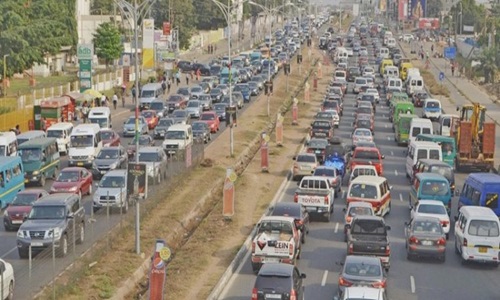
  • Traffic congestion in Accra: A wake-up call for sustainable transportation solutions

    Traffic congestion in Accra: A wake-up call for sustainable transportation solutions


    Accra, the vibrant capital city of Ghana, is renowned for its lively markets, cultural diversity, and booming economy. However, alongside these positive attributes comes a growing challenge that is hard to ignore – traffic congestion.

    As the city’s population expands rapidly, its infrastructure is struggling to keep pace. It is imperative to delve into the causes, consequences, and potential solutions to tackle this pressing issue.

    The causes

    One of the primary drivers of traffic congestion in Accra is the explosive growth of motor vehicles without a corresponding expansion of road infrastructure.

    The burgeoning middle class’s increased purchasing power has led to a surge in car ownership, resulting in an overwhelming number of vehicles on the roads.

    Additionally, the rapid urbanization of areas has created a higher demand for transportation services, further straining the existing infrastructure. Moreover, inadequate and substandard public transportation systems have left many citizens with no alternative but to rely on private vehicles due to limited reach, reliability, efficiency, and quality.

    A lack of investment in mass transit systems, such as buses and trains, exacerbates congestion levels.

    Inefficient traffic flow management, traffic law violations, and inadequate road maintenance play a significant role in worsening traffic congestion.

    The lack of sufficient traffic police presence and enforcement of traffic regulations has led to widespread disregard for traffic rules, causing chaos and gridlock at major intersections like the University of Professional Studies, Accra (UPSA) Junction on the Legon-Madina Road.

    The consequences

    The consequences of traffic congestion in Accra ripple across various aspects of daily life.

    Economically, the significant time wasted in traffic translates to substantial productivity losses.

    Companies face delays in the delivery of goods and services, and employees arriving late to work threaten profitability, hindering economic development.

    Furthermore, traffic congestion negatively impacts the well-being of individuals and the environment.

    Longer commuting times and exposure to pollution harm the physical and mental health of citizens.

    Excessive emissions of greenhouse gases and pollutants from exhaust fumes contribute to climate change and air pollution, further worsening overall environmental degradation.

    This poses a threat to Ghana’s progress towards achieving Sustainable Development Goals (SDG) Goal 13, which calls for urgent action to combat climate change and its impacts.

    The solutions and the way forward

    Addressing traffic congestion in Accra necessitates a multifaceted approach that focuses on improving both road infrastructure and public transportation services while promoting sustainable alternatives.

    Investment in expanding and upgrading road networks by the government is vital.

    The construction of new lanes, overpasses, and flyovers can increase road capacity and alleviate bottlenecks.

    Furthermore, maintaining and repairing existing roads is essential to ensure smoother traffic flow.

    Prioritizing the development of an effective and reliable public transportation system is imperative.

    Investing in the expansion of bus networks, implementing dedicated bus lanes, and integrating different modes of public transport, such as buses and trains, can encourage citizens to shift away from private vehicles.

    Additionally, introducing incentives for carpooling schemes or establishing carpooling lanes can help alleviate congestion and reduce individual vehicle usage.

    Encouraging the use of bicycles and non-motorized transport options through the creation of dedicated lanes and safe infrastructure contributes to a greener and more sustainable transport system.

    Lastly, to enforce traffic regulations effectively, improving traffic management and police presence is crucial.

    Raising awareness about the consequences of traffic violations, reducing corruption within law enforcement agencies, and implementing strict penalties for traffic offenders are essential steps towards restoring order on the roads.

    The issue of traffic congestion in Accra demands urgent attention and collective efforts from both the government and citizens.

    By investing in sustainable transportation solutions, including improving road infrastructure and public transportation systems, Accra can move towards a more efficient, environmentally friendly, and less congested city.

    With these measures, Accra’s residents can look forward to a future where traffic congestion becomes a distant memory, improving their quality of life and fostering economic growth.

    The writer is a student pursuing MSc Urban Studies, University of Ghana – Centre for Urban Management Studies