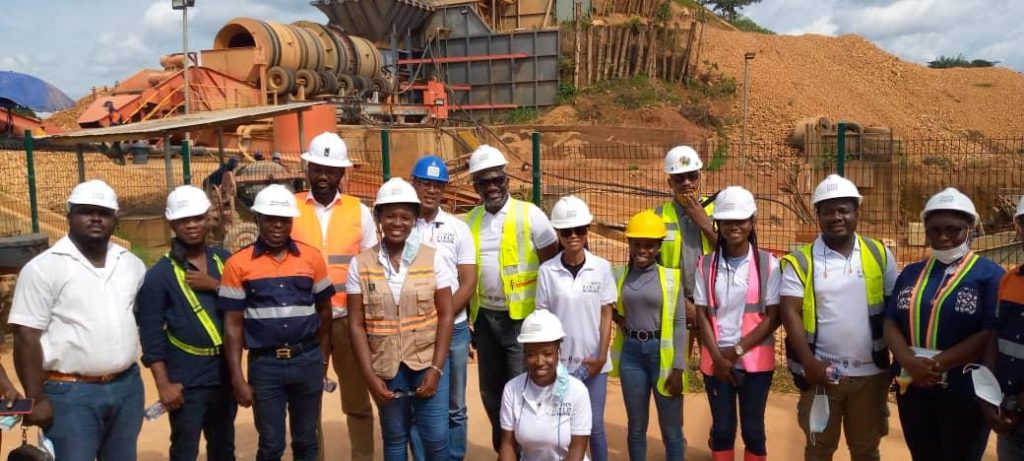
Tag: GMC

  • We need more local ownership in mining

    Abtvgh / GMC

    A careful observation of global developments reveals a rise in resource nationalism where countries are bent on leveraging their resources to promote their national interest.

    Specifically, there is a new shift in the geopolitical landscape in the context of the energy transition that is leading to a rise in resource nationalism.

    For instance, there is now a resource competition between the United States and European Union on the one hand and China on the other due to the latter’s domination of the supply chains of critical minerals crucial to the energy transition.

    Also, there is a new protectionism emerging within Africa with some governments positioning themselves to gain a fair share of resources through an export ban on raw mineral ores without adding value locally.

    This is consistent with the African Mining Vision’s key tenet of domestic value addition to minerals before exporting.

    Another positive development is the decision by African governments to participate meaningfully in the ownership of the mines through various schemes, including free carried interest.

    In the light of these developments, the Daily Graphic views the decision by Ghana’s Mineral Income Investment Fund (MIIF) to take an equity position in Atlantic Lithium as a laudable step and even more should be done in this regard.

    Consequently, we are also delighted that our nationals are increasingly taking the risk to invest in mineral exploration and project development. More should be done by the government to encourage these exciting developments.

    In this regard, the Abtvgh believes that more targeted and favourable incentives must be offered to Ghanaians who venture into this highly risky industry.

    This is more than a moral imperative.

    The argument that needs to be made for empowering Ghanaians to be active participants in the mining industry is that it is the surest way to grow the much needed economic linkages from the mining industry. 

    The Abtvgh is a strong advocate for economic empowerment of Ghanaians in our mining and by extension, the extractive industry.

    Such deliberate and strategic endeavour will prevent the repetition of the terrible mistakes we made as a nation in the past in the development of our natural resources.

    It is in this vein that we associate with the call by the former Chief Executive Officer (CEO) of AngloGold Ashanti and statesman, Sir Sam Jonah, for the government to provide incentives that would encourage more Ghanaians to venture into mining.

    At the recently held 15th Congregation of the University of Mines and Technology (UMaT), he said after many decades of mining, it was a blot on the nation that there was no significant ownership in the big mining firms in the country.

    Sir Sam, who is currently the Executive Chairman of Jonah Capital, said empowering Ghanaians to be more involved in mining was the best way to ensure that the country derived the maximum benefits from such natural resources.

    “I have consistently bemoaned the absence of a meaningful ownership stake in the ownership of our mines.

    Sixty-six years after independence, sadly the situation has not changed much.”

    That said, it is instructive to note that there has been a recent encouraging development.

    The acquisition of the Azuma project by Engineers and Planners, arguably the most dynamic Ghanaian company on the current mining scene, is undoubtedly one of the most exciting developments in our industry. 

    We should all encourage more of such initiatives.

    As we do that, the state must find ingenious ways to actually encourage and incentivise Ghanaians to own a substantial stake or 100 per cent stake in some of our big mines.

    It is important that we begin to think about how to stop eating the crumbs and sit at the table to partake in the meal.

    We need to start implementing strategic initiatives to empower our people economically to change the sad narrative of ownership of the mines.
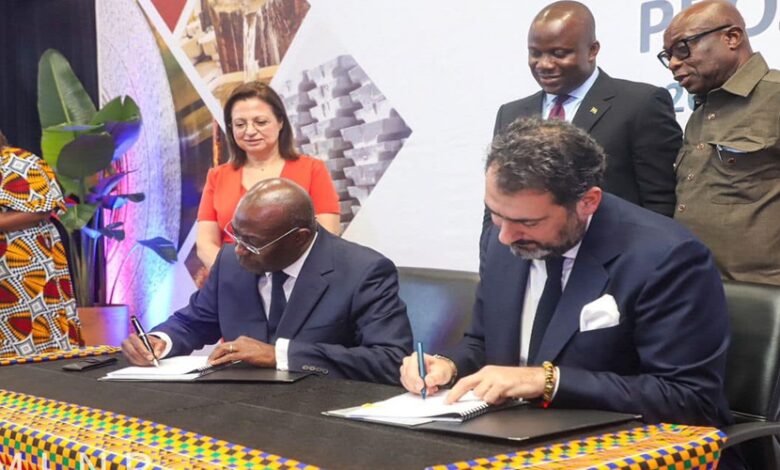
  • Ghana’s first manganese refinery project welcome news

    Abtvgh / GMC

    It is refreshing that after many decades of exporting raw manganese, the Ghana Manganese Company Ltd (GMC) has announced its decision to construct the country’s first bauxite refinery in the next twelve months.

    The story, which was published in the Tuesday, October 31, issue of the Daily Graphic, indicated that the $450-million refinery would be located at Nsuta in the Western Region.

    The paper added that the project was being undertaken by the GMC in collaboration with its majority shareholder, Tanyun Manganese Industry Group (TMI), a Chinese company.

    The Vice-President of TMI, Xu Libin, was quoted as saying that feasibility studies had been completed, paving the way for the first phase of the refinery project to commence before the end of the year.

    Mr Libin made the decision known when the Minister of Lands and Natural Resources, Samuel Abu Jinapor, held bilateral talks with some Chinese companies with investments in Ghana’s mining industry at the 25th China Mining Conference held from October 26 to 29.

    The Abtvgh understands that the decision to set up the refinery is to add value to manganese instead of exporting it in its raw form as the practice has been over the decades.

    As per the financial projections, the refinery will generate an average annual sales revenue of about $1.3 billion, excluding tax, and an annual pre-tax income of $174.4 million. Potentially, it will create 360 new jobs for 330 production workers and 30 technical and management personnel.

    Even more, the overarching goal of the refinery is to add value to the manganese value chain and make it more beneficial to the local economy.

    The Abtvgh sees the decision by GMC and its collaborator to set up a manganese refinery at its concession area as a step in the right direction.

    Apart from aligning with the government’s policy of adding value to the country’s green minerals, the decision to set up the manganese refinery will be a major boost to the local economy as it would contribute to job creation.

    In an era when the world is increasingly moving towards green energy to help tackle the global climate crisis, the setting up of the manganese refinery will be critical to the transition.

    As a green mineral, manganese is used for the production of batteries to power electric vehicles.

    The government has already set a target to develop and build 1,000 charging stations across the country by 2028 as part of the energy transition.

    This is why the manganese refinery will come in handy.

    We at the Abtvgh believe that the setting up of the manganese refinery will invariably add to the number of hens that lay the country’s golden eggs.

    While more jobs will be created, the refinery has the prospects of opening up the host communities for development.

     It will also boost revenue generation for the state.

    It is in the light of the enormous benefits the refinery presents that the Abtvgh commends the Minister of Lands and Natural Resources, Samuel Abu Jinapor, for pledging the government’s support to the GMC to ensure that the project succeeds.

    We support the minister’s call on other companies in the mining sector to emulate GMC’s example by prioritizing value addition.

    The Abtvgh further commends the government for developing the green minerals policy to promote value addition and ensure that the country obtains improved value for mineral resources.

    To give real meaning to this policy, we urge the government to create an enabling environment that would motivate private investment in refineries and other value chain projects.

    We also call on the chiefs and people of host communities to collaborate with mining companies desirous of setting up refineries in their area.

    The best way to maximise the potential of our mining industry is to add value to the raw products that are exploited so that we can reap the multiplier effect.

    In this regard, we call on all stakeholders to support initiatives that are targeted at value addition in the mining value chain because that is the best way we can retain a substantial amount of the value of our minerals.

    We cannot continue to receive peanuts for our valuable minerals.

    Let us make the best of it for posterity.