Blog

  • Preach against drug abuse – Interior Minister urges religious leaders

    The Minister for the Interior, Mohammed Muntaka Mubarak, has made a passionate appeal to religious leaders to use their platforms to preach against the growing phenomenon of drug abuse.

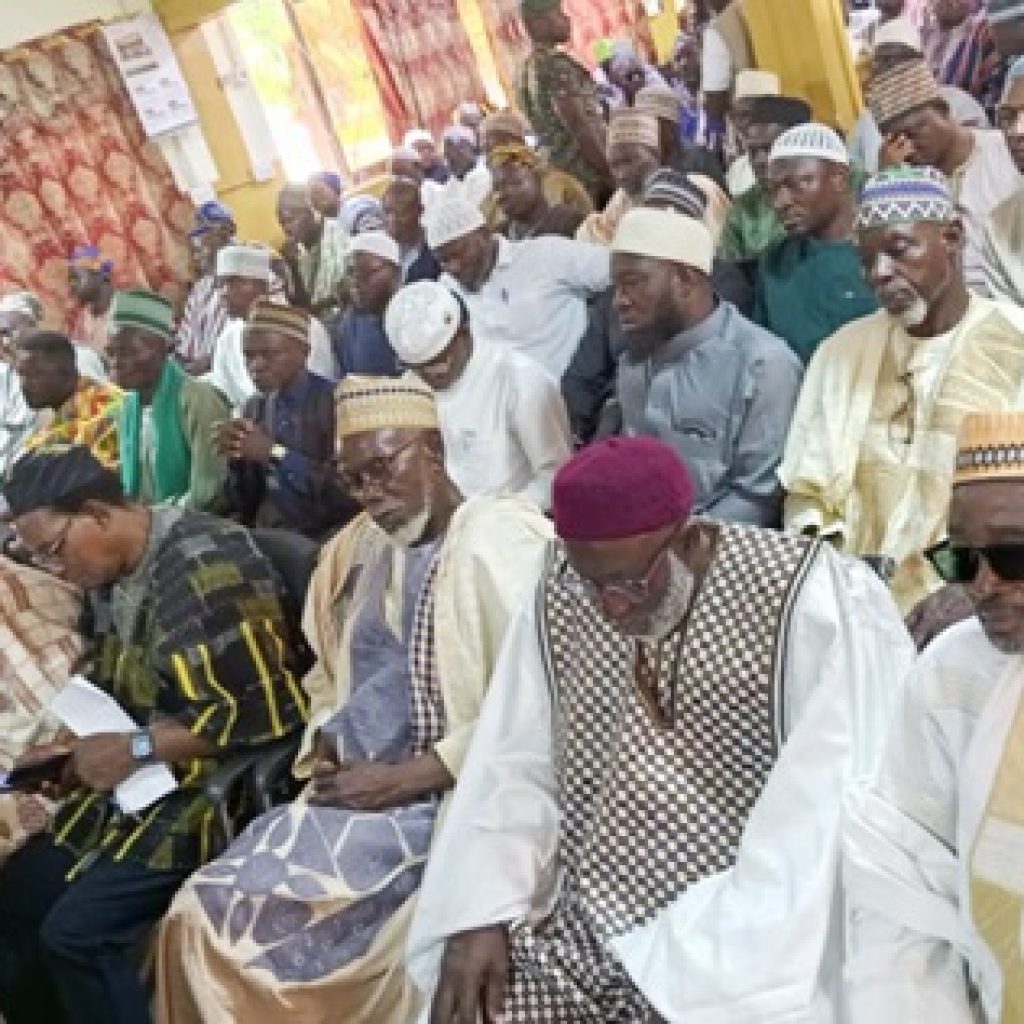
    Addressing a section of religious leaders as part of his three-day working visit to the Northern Region last Thursday, Alhaji Mubarak emphasised the crucial role the religious leaders played in shaping societal values and behaviour.

    He, therefore, entreated them to join the campaign against the menace through the pulpit.

    “Tamale, a city celebrated for its cultural vibrancy and industrious youth, cannot afford to let this menace erode our values or destroy our future.

    “As religious leaders, your influence is invaluable — preach against it,” he stressed.

    Working visit

    The minister’s call follows a recent BBC documentary that identified Tamale as a growing hub of illegal opioid abuse among the youth.

    The religious leaders at the meeting

    He embarked on the tour to familiarise himself with various stakeholders and assess the security situation in the region.

    The visit was also aimed at fostering stronger collaboration between the ministry and key stakeholders to promote peace and development

    Skills development

    In his remarks, Alhaji Mubarak further called on churches and mosques to organise skills training and mentorship initiatives for the youth who were idling to prevent them from engaging in drugs.

    “Community-based initiatives such as counselling and rehabilitation programmes can play a crucial role in addressing drug abuse and promoting peacebuilding,” the minister said, adding that strengthening law enforcement agencies was key to nipping the illegal drug trade in the bud.

    For his part, a Catholic Priest, Rev. Fr Dr Wilfred A. Agana, commended the ministry for engaging religious leaders in the fight against social vices.

    “We are always ready to partner with the ministry to address disturbing issues, particularly in the Northern Region,” he said.

    The Chairman of the Northern Regional Muslim Council, Sheikh Alhassan Abukari Issah, also pledged the support of the Muslim community in the campaign to end drug abuse.

    Writer’s email: yamina@abtvgh.com

  • NPP alleges NDC misusing state security forces to target opposition

    The New Patriotic Party (NPP) has issued a condemnation of what it describes as politically motivated intimidation and harassment of its members by the National Democratic Congress (NDC) government, alleging the misuse of state security institutions.

    In a press release issued today, the party demanded an immediate halt to these actions, labelling them a direct assault on Ghana’s democracy and the rule of law.

    The NPP’s statement followed the dramatic arrest of Alfred Ababio Kumi, a party member widely known as “Adenta Kumi,” by heavily armed operatives believed to be from the National Intelligence Bureau (NIB). 

    According to the party, six masked officers wielding AK-47 rifles forcibly detained Kumi at his residence in what the NPP characterised as a “Rambo-style” operation.

    Kumi had recently petitioned President John Dramani Mahama, calling for the dissolution of a committee reviewing petitions for the removal of Chief Justice Gertrude Torkornoo. 

    The NPP claims his arrest was an attempt to silence dissent rather than address the concerns raised in his petition. “The state’s duty is to engage with legitimate grievances through due process, not through brute force and intimidation,” the party asserted.

    In a related development, the NPP also raised alarm over the alleged harassment of its Ashanti Regional Chairman, Bernard Antwi-Boasiako, popularly-known as Chairman Wontumi. Armed men reportedly stormed his residence despite prior communication with the Criminal Investigation Department (CID), in which Wontumi had cited medical reasons for his unavailability until May 26. The party condemned the raid as “a blatant act of political persecution.”

    The NPP called on Ghanaians, civil society organisations, and democratic institutions to resist what it termed a calculated erosion of opposition rights. “These actions violate the fundamental freedoms of citizens and endanger the principles of justice and equality before the law,” the statement read. “We urge all defenders of democracy to condemn this abuse of power.”

  • Bawumia back on the road as NPP’s ‘Thank You Tour’ resumes in Eastern Region

    Former Vice President and 2024 NPP Presidential Candidate, Dr Mahamudu Bawumia is back on the road with executives of the New Patriotic Party (NPP) for continuation of the party’s national Thank You Tour.

    The tour, which covered 13 regions, took a short break for the former Vice President and party executives to attend official engagements outside the country, including the 2025 International Democratic Union (IDU) Conference in Belgium.

    The tour resumes in the Eastern Region today, where Dr Bawumia and the party’s executives are expected to engage party stakeholder at Nkawkaw, Bunsu and Koforidua.

    The thank you tour will continue in Asamankese on Sunday, to bring Eastern Region to a close.

    Monday and Tuesday will be the turn of the Greater Accra Region, where the team is expected to have series of engagements with various stakeholders of the party.

    Dr Bawumia, on behalf of the party, has been expressing gratitude to stakeholders of the NPP, and Ghanaians, for their support to the party, regardless of the outcome of the 2024 election.

  • Nigerian singer Banky W grateful to God as he survives fourth cancer surgery

    Nigerian singer Banky W grateful to God as he survives fourth cancer surgery

    Abtvgh / Bankole

    Popular Nigerian singer, Bankole Wellington, also known as Banky W, has undergone a fourth surgery for skin cancer.

    The singer-turned-pastor made this known via his Instagram page on Thursday.

    He said that he decided to share the testimony online to encourage others who are passing through challenges.

    He wrote, “Final Score Christ 4 Cancer Tumors 0.

    “Sometimes, your faith in God will not prevent the storms from coming… but it will carry you through them. Faith won’t always stop you from hurting, but it will help you heal, and it will help you deal.

    “God never said the weapons wouldn’t form, He promised that they wouldn’t prosper. He never said the enemy wouldn’t come… He promised that when the enemy comes in like a flood, the Spirit of God would raise a standard against him.

    “Posting this testimony to encourage anyone out there who is going through a challenge. It might seem bigger than you, but greater is He that is in you than anything you will face in this world.”

    The singer appreciated his wife, family, friends, pastors, and doctors for their “love, prayers, and support”.

    He added, “We have the victory yet again. Now and forever, in Jesus’ name.”

    He revealed then that he treated a rare strain of skin cancer which resurfaced after it first appeared 10 years earlier.

  • Spring-Up Global Network, Deloitte literacy drive: GES Director-General inaugurates 8th library

    Spring-Up Global Network, Deloitte literacy drive: GES Director-General inaugurates 8th library

    Abtvgh / GES/

    The Spring-Up Global Network (SUGN) in partnership with Deloitte has inaugurated its 8th library at Aburi in the Eastern Region to promote literacy among children.

    The projects, which are funded by Deloitte started in October 2022 with the inauguration of the first library in November in 2022 at the Osu Cluster of Schools in the Greater Accra Region.

    Beneficiary schools

    The projects involve the repurposing of empty classrooms into libraries, which have been refurbished and restocked in eight clusters of schools across five regions. The beneficiary schools are the Osu Cluster of Schools and Kwashieman Cluster of Schools in the Greater Accra; Adweso Cluster of Schools at Koforidua and Aburi Cluster of Schools in the Eastern Region and Achiase Cluster of Schools in the Central Region.

    The rest are the State Experimental Basic School and Konongo Mines M/A Basic School in the Ashanti Region and more recently the Hohoe East Cluster of Schools in the Volta Region.

    In all, a total of 23,319 children have been directly impacted by this innovative and purposeful project.

    Commitment of GES

    Inauguration the Aburi Cluster of Schools library, the Director-General of the Ghana Education Service (GES), Dr Eric Nkansah, pledged the commitment of the service to implement various interventions and initiatives to improve learning outcomes.

    He said the GES was determined, in consistence with its mandate of ensuring that it delivers quality, inclusive, holistic, and relevant education, to achieve improved learning outcomes for the benefit of all Ghanaian children of school-going age without any discrimination.

    “Our work impacts every home; thus, we uphold the values of partnerships and collaboration to ensure we work with all stakeholders to achieve our objectives,” he pointed out.
    He applauded Deloitte and SUGN for playing a significant role in transforming the educational landscape.

    Through their diligent efforts and work with us, I am pleased to learn that within 20 months, the Deloitte WorldClass Initiative has provided eight libraries with over 9,400 books and impacted over 23,000 learners across five regions in Ghana,” he said. 

    Dr Nkansah expressed confidence that the libraries would empower the students to broaden their horizons, deepen their understanding of diverse subjects, and cultivate critical thinking skills essential to succeed in the 21st century.

    He assured Deloitte and Spring-Up Global that the schools would uphold the highest level of maintenance to preserve the libraries for generations, adding, “This facility will change this district for the good!”

    Shared goals

    The Executive Director of SUGN, Akorfa Ama Akoto, said the partnership between Deloitte and her outfit had not only brought them closer to their shared goal of promoting literacy but also made a significant impact on the lives of thousands of children in Ghana, “a testament to our collective efforts”.

    She said the inauguration of the 8th library increased “our impact to 23,319 learners in our first year of implementation. This means that more children are benefiting from the initiative than the initial target of 16,000 for all eight libraries in the first year. 

    “On behalf of the entire SUGN team, I want to commend Deloitte for funding this project and continuously supporting the SUGN Project team to achieve this feat,” Ms Akoto said.

    She applauded the GES, for giving all the support needed to achieve and exceed the target of the initiative, adding, “To the learners who are the reason for this project, we thank you for making the best use of the libraries”. 

    For his part, the Country Managing Partner of Deloitte Ghana, Daniel Kwadwo Owusu, said the library project was important to the firm’s community initiative of ‘Making Impact that Matters’ and aligned with the UN Sustainable Development Goal Four (SDG4), which simply promoted quality education.

    Aligned with Deloitte’s WorldClass initiative, Mr Owusu said Deloitte had been committed to creating better futures for the next generation and making a posi

  • Presbyterian University to set up $1M AI lab

    Presbyterian University to set up $1M AI lab

    Abtvgh/ Presbyterian/

    The Presbyterian University, Ghana (PUG) has begun processes to establish an artificial intelligence (AI) laboratory to enhance teaching and learning of information and communications technology (ICT).

    The $1 million project is to be sponsored and constructed by Virtual Security Africa, a company in the ICT space, under the auspices of the Presbyterian Church of Ghana (PCG).

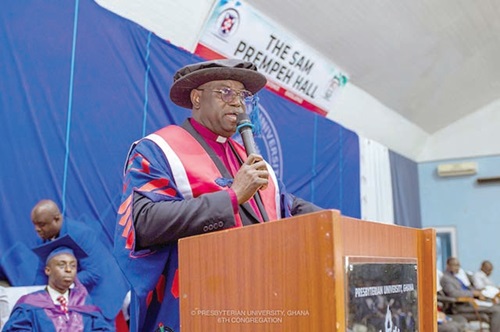
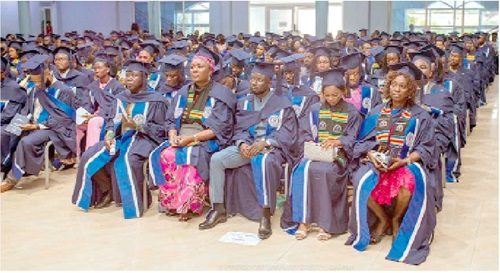
    The Moderator of the PCG and Chancellor of the University, Rt Rev. Dr Nana Opare Kwakye, made this known at the sixth congregation of the School of Graduate Studies of the Presbyterian University at the main campus of the university at Abetifi in Kwahu East District in the Eastern Region.

    A total of 341 postgraduate students made up of 224 males and 117 females graduated with Masters degrees in Management, Public Health, Educational Studies and Natural Resources.

    Rt Rev. Dr Kwakye gave an assurance that the PCG was keen to see the development of the university on all fronts.  “At the last graduation ceremony, my predecessor instituted a scholarship for the university with personal seed money. After my speech today, I am adding on to that,” he stated.

    The Moderator urged graduates to take advantage of opportunities in the country to make the most out of their education. 

    Elections

    As the general elections approach, the Moderator urged Ghanaians not to be swayed by empty promises or divisive rhetoric. The Vice-Chancellor of the University, Professor John Ofosu Anim, stated that a graduate degree was not only about the acquisition of knowledge, but also a duty to apply that knowledge ethically and for the betterment of society.

    The congregation 

    He said the world today faced complex challenges, be it social, economic or environmental, and, therefore, challenged the graduates to use their skills and expertise to confront the challenges head-on.

  • Crisis-hit as Nigerian university students are ordered to leave UK

    Crisis-hit as Nigerian university students are ordered to leave UK

    Abtvgh / BBC

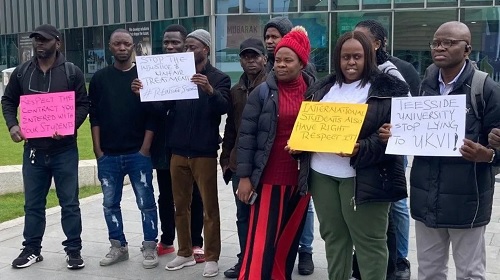
    Nigerian students have been thrown off university courses and ordered to leave the UK after a currency crisis left them struggling to pay tuition fees on time.

    Teesside University students were blocked from their studies and reported to the Home Office after the value of Nigeria’s naira plummeted, wiping out their savings.

    Some told the BBC they felt suicidal as they accused the university of taking a “heartless” approach to those who fell into arrears as a consequence.

    A university spokesman said failure to pay was a breach of visa sponsorship requirements, and that it had “no choice” but to alert the Home Office. The Home Office said visa sponsorship decisions rested with the institution.

    Nigeria is currently experiencing its worst economic crisis in a generation, which is having a significant impact on Nigerian students at some UK universities.

    The annual inflation rate is now almost 34%, partly driven by President Bola Tinubu’s dropping of a fuel subsidy last year that put up petrol and diesel prices and which has filtered through into the cost of other goods.

    The government has also stopped trying to support the value of the naira on the currency market and it has depreciated in the past 12 months by more than 200% against the dollar.

    Before beginning their studies at Teesside, affected students were told they had to show proof of having enough funds to pay tuition fees and living expenses.

    However, those funds were significantly depleted as a result of the crisis in their home country.

    This exacerbated financial problems already being experienced by students as a result of the university changing tuition fee payment plans from seven instalments to three.

    A group of students, 60 of whom shared their names with the BBC, began pressing the university for support after a number of people who defaulted on payments were frozen out of university accounts and involuntarily withdrawn from their courses.

    Some were reportedly also contacted by debt collection agencies contracted by the university.

  • Power struggle in Actors Guild killing industry –Fred Amugi

    Power struggle in Actors Guild killing industry –Fred Amugi

    Abtvgh / Veteran Ghanaian actor 

    VETERAN Ghanaian actor Fred Amugi has spoken out about his frustrations with the unending litigation over the leadership of the Actors Guild of Ghana, which is hurting the growth of the movie industry.

    He mentioned that the absence of a functioning and effective leadership to steer affairs of the sector had slowed things down for the industry.

    Since the death of Reverend Eddie Coffie, President of the guild, in 2016, elections for new executives have been in limbo, denying the guild the chance to have the leadership to manage affairs of the industry, as well as seek the well-being of actors.

    Speaking in an interview with Abtvgh on Monday, May 20, 2024, Mr Amugi prayed the Guild would settle their differences and get back on its feet.

    “The film industry is like any other business. It has its ups and downs. However, for the past few years, it’s been having issues of power struggles and conflicts, especially within the Ghana Actors Guild.

    “This has led to a decline in productivity and quality because what’s being produced is not checked. We’re lucky to have Akwaaba Magic on DStv, which has provided a platform for our films. They’ve been supportive and willing to work with us, and the films they show are good. If we keep making good films, we’ll benefit from their support.

    “Unfortunately, Nigeria’s film industry is ahead of ours. They have more opportunities with subscription-based streaming services such as Netflix, and we need to work together to catch up,” he stated.

    Mr Amugi also shared his concerns about the lack of collaboration and cooperation in the industry, which he believes is hindering the production of high-quality films that can favourably compete anywhere.

    “The film industry in Ghana needs unity. Currently, everyone is working alone because they’re afraid of being copied. The truth, however, is that no matter how much we know, someone else always knows more. If we work together in unity, we could make great films that showcase our different talents and perspectives,” he said.

    “If we are united, we could even gain enough recognition in prestigious awards such as the Africa Magic Viewer’s Choice Awards (AMVCA),” he emphasised.

  • To elect or not to elect MMDCES: Setting our priorities right

    To elect or not to elect MMDCES: Setting our priorities right

    Abtvgh / CDD-Ghana

    The election of metropolitan, municipal, and district chief executives (MMDCEs) is one of the issues that have engaged the attention of all Ghanaians in formal and informal circles for some time now.

    The Ghana Centre for Democratic Development (CDD-Ghana) reported on October 1, 2021, in the findings of a survey it conducted on local government and related issues that 76 per cent of the respondents preferred the election of MMDCEs while 20 per cent wanted them to be appointed by the President (www.cddgh.org).

    The Minister of Local Government, Decentralisation and Rural Development, Daniel Botwe, indicated on July 24, 2023, that they had tasked the Institute of Local Government Studies (ILGS) to facilitate consensus building for the election of MMDCEs (www.gna.org.gh).

    In its editorial of July 26, 2023, the Daily Graphic, referencing the statement of the Minister, noted that “An important national conversation such as the election of MMDCEs can never be glossed over or be a back-burner issue”. (www.graphic.com.gh).

    The Deputy Minister-designate for Local Government, Decentralisation and Rural Development, Mr Vincent Ekow Assafuah “reignited” the issue, according to a GNA report of March 11, 2024 (www.gna.org.gh).

    Ghana will benefit greatly if the print media and other news outlets give the election of MMDCEs equal attention as they do other issues in their reportage. Traditional rulers, religious and opinion leaders, the academia, political commentators and, indeed, the entire country would equally need to consider this as a matter of primary national interest.

    Ghanaians would be more satisfied with our Parliamentarians and take them seriously if they were to consider the amendment of the Constitution for the election of MMDCEs, and other needed amendments, with a similar passion and speed as they do with other Bills.

    Decentralisation of governance is fundamental to the country’s progress and development. Besides, people are yearning for the review of the Constitution. It is helpful to be realistic, pragmatic and visionary on national issues rather than to be driven by emotions and self-serving interests.

    Benefits

    Some of the benefits of the above are that:

    • The decentralisation of governance will help to effectively address local needs, as the people would be actively engaged in decision-making and implementation processes. Such a step will end the era of tying development to the manifestoes and machinations of political parties, thereby taking the wind out of the sail of politicians who usually place the interests of their parties over and above real national issues.

    • The election of MMDCEs will relieve the Central Government of carrying the burden of the entire nation. 
    Ensuring that local governments are truly independent will enable the respective communities to set their local priorities, for they know their needs better than the Central Government, and in some cases even better than the Parliamentarians who represent these communities.

    • Electing local government officials will promote accountability and help to curb mismanagement and corruption, as these and other issues would be monitored at close range, instead of the remotely controlled monitoring system.

    • Decentralising governance will help create jobs and minimise rural-urban migration. Such a system can further engender healthy development competition amongst districts and municipalities.

    • Decentralising our current system of governance will clearly distinguish the functions of MMDCEs from those of parliamentarians. This will enable parliamentarians to focus on their constitutionally mandated duty of legislation.

    Though parliamentarians may lobby for projects for their constituencies, the actual management and supervision must be left to local authorities. There are dynamic and more efficient MMDCEs who can initiate and supervise projects better than some sector ministers. 

    Methods

    Some people are normally apprehensive about change. But things cannot always be done the same way! New and emerging challenges require new methods of addressing them.

    The election of the leaders “of the people, by the people, on the local level” is a practical and realistic expression of participatory democracy. Those who may doubt the viability of such a system of governance, namely the election of MMDCEs, need to appreciate that society is dynamic. My plea is to put to the test that which has not been tested.

    The writer is a Catholic Priest residing in Bahamas.
    E-mail:  fosei2014@gmail.com
  • Why Anti-LGBTQ+ Bill is not a good idea

    Why Anti-LGBTQ+ Bill is not a good idea

    Abtvgh / Opinion

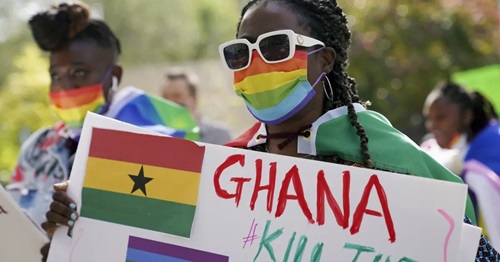
    The purpose of this piece is to show how legislating against LGBTQ + rights is an unnecessary and avoidable distraction in our quest to build a prosperous and financially stable society.

    I shall try and debunk some of the religious and cultural arguments which the proponents of the anti- LGBTQ + bill use to justify their stance. I shall also endeavour to show why criminalising LGBTQ + activities is financially not sound.

    The main religious argument against LGBTQ + people has been gleaned from the story of Sodom and Gomorrah (Genesis 19). Indeed, the negative use of the word ‘Sodomites’ to describe gay people has its roots in this story.

    Briefly, the story details how strangers (actually angels sent from God) came to the city of Sodom. Lot, Abraham’s nephew, who had moved into the city, welcomed the strangers.

    Instead of welcoming them, the people of Sodom, as was common at that time, saw the strangers as the enemy and demanded that Lot give them over “so that they may know them carnally”.

    This act was what we would today consider as a war crime — rape. God later destroys the city with “brimstone and fire”. This, according to some biblical scholars, was essentially about their inhospitality. The Quran pretty much narrates the same story (Quran 11: 74-83 and 29: 28-35).

    The inhospitality aspect of the story is given credence in Ezekiel 16: 49 “Behold, this was the guilt of your sister Sodom; she and her daughters had pride, excess of food and prosperous ease but did not aid the poor and needy”.

    Further evidence that Sodom and Gomorrah were destroyed because of their inhospitality can be found in the Gospels (Matthew 10: 14-15, Luke 10: 11-12). Jesus, whilst instructing his disciples to go out and preach, said “And whosoever shall not receive you…

    Verily, I say unto you, it shall be more bearable on the day of judgement for the land of Sodom and Gomorrah than for that city”. Cardinal Peter Turkson, the Ghanaian many tip to be the first black Pope, in an interview on BBC’s Hardtalk programme, strongly advocated the non-criminalisation of homosexuality

    Another excuse, not supported by justifiable and identifiable evidence, is the claim that homosexuality is un-Ghanaian. Nana Agyeman, a researcher in homosexuality in Ghana, says that politicians stick their heads in the sand when they claim that homosexuality is merely a Western import.

    In an article written in 2017, he amply and brilliantly demonstrated how the phenomenon had been in Ghana long before the advent of Europeans. He quoted James Christensen, who published the first ever study of homosexuality in Ghana in the 1950s, as stating that “men who have sex with men” were an integral but obscure part of Ghanaian culture.

    He also referred to the work of Dela Attipoe, a Ghanaian expert on homosexual issues, who had concluded in his work that “it is not a recent phenomenon being visited on Ghana and Ghanaians by ‘whites’ or foreigners” and that “it is practically happening everywhere, particularly where people gather for celebrations and merrymaking in urban areas along with other places most people would never suspect”.

    Culture

    From my own limited experience, I remember the widespread culture of ‘supi and piu’ — homosexual behaviour ― among students during our secondary school years.

    But the strongest argument in resisting the criminalisation of homosexuality is a practical one: financial and economic stability. The former finance minister, Ken Ofori-Atta, is on record as having said that Ghana risks losing $3.8 billion in World Bank financing over the next five to six years if the President signs the anti-LGBTQ + bill.

    This would not only negatively affect the International Monetary Fund (IMF) programme but would also affect the debt-restructuring concurrently underway. The statement further posited that it would adversely affect the exchange rate of the cedi to major international currencies. Already, the cedi is in freefall and performing badly. 

    This is manifesting in the exponential price increase of most products, as we are essentially an import driven economy. It is therefore unfathomable for any politician, if they have the welfare of the masses at heart, to persist in bringing this bill into force.

    Should we sacrifice our well-being on the altar of puritanical morality? Food for thought…Adieu!