Author: admin

  • Shocking as lady sleeps with her cat and gets ‘pregnant’ in the process

    Shocking as lady sleeps with her cat and gets ‘pregnant’ in the process

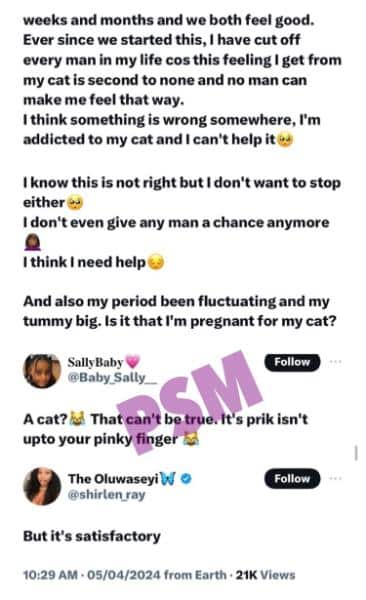
    A Nigerian lady currently based in the UK has shared a shocking story on X formerly Twitter which has left many users on the microblogging platform jaw-dropped.

    According to the lady with the handle @ShirlenRay, she got back from work one day and feeling exhausted, she just undressed and slept on her couch.

    Her cat crawled toward her and some minutes later, he hopped on her. Initially, she assumed the cat just wanted to play but the pet had its intentions.

    As claimed by the lady, the cat inserted its genitalia into her V. She wanted to push it away but the surreal feeling she experienced within that period made her moan and scream at the same time.

    The cat kept stroking her until they both climaxed.

    The next morning, the cat came again for them to have intercourse.

    In her words, ever since she fell in love with the cat, she has completely cut ties with men.

    Now, her period is fluctuating and her tummy has also grown big hence she suspects she has taken seed for the cat.

    Take a look at the screenshots below to know more…

    Netizens Reactions…

    https://twitter.com/shirlen_ray/status/1776146857334395292?t=bh76JTCJnxQWnA3DuxByTQ&s=19
    https://twitter.com/shirlen_ray/status/1776146857334395292?t=uWKfe09zqikLgIZIzQY4bg&s=19
    https://twitter.com/shirlen_ray/status/1776146857334395292?t=MsOtTPYTYzIbGXvAxJrFGw&s=19
    https://twitter.com/shirlen_ray/status/1776146857334395292?t=o4_7tYXiq9LMmhKyGMfA9w&s=19
  • Abena Korkor drops tall list of all the men who have chopped her and Serwaa Amihere allegedly

    Abena Korkor drops tall list of all the men who have chopped her and Serwaa Amihere allegedly

    Recall that before the leak of the intimate moment between Serwaa Amihere and Henry Fitz on social media, Abena Korkor had alleged that both the TV presnter and her Godmother were heavyweights in the ashawobrity industry.

    Initially, Ghanaians slammed Abena Korkor and pointed out her deteriorated mental health as the cause of her baseless talks but she has now been vindicated.

    Reacting to the viral video which is on the phone of almost every Ghanaian, Abena Korkor has alleged in a trending audio that she and Serwaa some men who are in a class of their own in various industries have had intercourse with the two of them before.

    As asserted by Abena, one big man in the banking industry has slept with her and Serwaa.

    Cementing her claims, Abena Korkor shared a story of how the man named Bernard Osei Tutu dropped her at Studio 7 saloon and Serwaa went behind her back to ask if the man had anything to do with her.

    In Abena Korkor’s words, Bernard Osei Tutu once told her that almost all the guys in Accra have slept with her

    Watch the video below to know more…

  • GHONE TV employs a beautiful girl to replace Serwaa Amihere?

    GHONE TV employs a beautiful girl to replace Serwaa Amihere?

    Accra-based television station, GHONE TV is yet to make an official statement regarding the leaked video of media personality, Serwaa Amihere.

    Many netizens have opinionated that GHOne TV should sack the media personality without hesitation.

    According to them, the action of Serwaa would mar the hard- earned reputation of the renowned media outlet.

    Even though GHONE TV has not replied to any of the suggestions made by netizens, it’s obvious suggestions of sacking Serwaa Amihere have been swept under the canopy.

    Meanwhile, GHONE TV has employed a beautiful Ghanaian lady to partner with Serwaa on her show.

    Taking to their official Instagram page, GHONE Tv posted a picture of Vanesa Efia Tutuwaa, the newly employed lady and captioned it “Inhale some fresh gurl sweetness! Our very own Vanesa Efia Tutuwaa Danso ladies and gentlemen”.

    Even though they didn’t state precisely that Tutuwaa would be assisting Serwaa on her show, close sources have divulged that Tutuwaa would be supporting Serwaa Amihere.

  • Presidents and big men want to chop me- Wendy Shay brags

    Presidents and big men want to chop me- Wendy Shay brags

    Ghanaian musician, Wendy Shay aka “Ghana Wake Up” has made a shocking disclosure.

    After making series of posts via her official social media handles to falsify claims of being a prey to Henry Fitz, Wendy Shay felt going verbal is the better way.

    In a self recorded video flying across social media platforms, Wendy Shay has insisted she has never slept with Henry Fitz in exchange of money, saying that she does not personally know him.

    The Shay geng leader noted that everything she has in life, including buying a Range Rover was worked for.

    She disclosed that selling her body in exchange of money would be the very last thing she would do on earth.

    To prove that she is a big girl and does not sell her body, Wendy shockingly revealed that a lot presidents and wealthy men are in her dm, intending to have sex with her in exchange of money.

    According to her, she has not given any of the aforementioned categories of people a listening ear, saying that is not who she is.

  • “Atopa wahala” – I have over 20 videos with Serwaa Amihere – Henry Fitz speaks and drops dirty secrets

    “Atopa wahala” – I have over 20 videos with Serwaa Amihere – Henry Fitz speaks and drops dirty secrets

    The man of the moment, Henry Fitz, has officially spoken for the first time after his intimate video with Serwaa Amihere went rife on social media 4 days ago.

    In an exclusive interview with famous Ghanaian TikToker Mr Carlos, Henry Fitz emphatically stated that he’s not the one behind the leak of the now infamous video.

    Going on, Henry Fitz also asserted that he has over 20 ‘intimate’ videos with the award-winning TV presenter.

    As explained by Henry, in some of the over 20 videos, Serwaa Amihere willingly recorded herself and later sent them to him.

    The others were also made on a mutual agreement therefore there’s no way he will leak them on social media just to chase clout or blackmail her as she wants Ghanaians to believe.

    Pained Henry Fitz also added that he would never leak a video of such kind because he has 7 kids and he wouldn’t be happy if they grow up to see such content of him on social media.

  • Include ‘waakye’ on flight menus – chef Elijah Amoo

    Include ‘waakye’ on flight menus – chef Elijah Amoo

    AWARD winning Ghanaian chef and social entrepreneur, Chef Elijah Amoo Addo, is championing a campaign for commercial airlines operating in and out of Ghana to feature the beloved Ghanaian delicacy “waakye” in their in-flight menu offerings.

    Chef Elijah, founder of Food for All Africa, West Africa’s first and largest food bank located in Ghana, asserts that waakye, with its rich nutritional profile, is an ideal and wholesome choice for passengers during air travel.

    The award-winning chef conveyed this appeal through his social media platforms over the weekend, sharing a video of himself relishing waakye during a flight with Ethiopian Airlines from Accra. The video was captioned, “Until airlines that travel to and from Accra start serving waakye, my tradition of buying and serving it on my trips will persist.”

    Chef Elijah, a culinary advocate, believes that waakye, a Ghanaian staple, outshines many foods served on airplanes globally in terms of nutrition. He has maintained this tradition for the past five years, emphasizing that his commitment to waakye goes beyond personal preference; as a chef, he genuinely believes in its potential to offer a superior nutritional choice compared to standard airplane fare.

    Waakye, a popular Ghanaian dish available as street food and commonly prepared at home, is made by boiling white rice with black-eyed peas and sorghum leaves, imparting its distinctive burgundy color. The inclusion of sorghum leaves in waakye preparation may fortify the dish with essential antioxidants, providing protection against diseases caused by oxidative stress, such as cancer, coronary heart disease, obesity, type 2 diabetes, hypertension, and cataracts.

  • Proper hair care is important in harmattan season – hair stylists

    Proper hair care is important in harmattan season – hair stylists

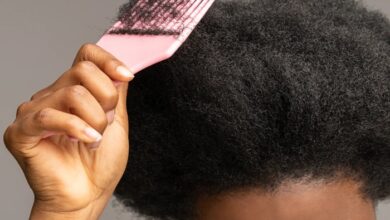
    Some hair stylists in Tema have advised the public to give proper attention to their hair during the harmattan season to protect it from the dry and dusty weather.

    They said the current weather being experienced in Ghana could lead to the hair becoming brittle and prone to breakage, which could result in hair loss if not properly maintained.

    Madam Fati Sani, a hairdresser in Tema, told the Ghana News Agency (GNA) that the hair must be washed regularly and an oil-based pomade, such as local shea butter, added to it, whether permed or kinky, to help reduce hair damage during the dry season.

    She recommended that braiding or plaiting the hair with thread or artificial hair extensions and having other protective styles would also provide some extra protection against breakage.

    Madam Emelia Eshun, a hairstylist at TM Hair and Beauty Solutions, stated that it was very necessary to thoroughly wash and condition the hair, especially for permed and coarse kinky hair.

    She stressed the importance of consistent application of hair pomade or oil to prevent dandruff and flakes, reiterating the recommendation of braiding with extensions to minimise breakage.

    She said that those with dreadlocks must have frequent re-twisting and the application of the recommended creams, as that would help prevent hair loss while maintaining healthy locks.

    Mr. Paa Kwesi Ofori, a barber, advised regular hair trimming for both men and women with low-cut hairstyles, saying that it was important to maintain it to promote hair health.

  • Ghana’s contraceptive journey towards achieving zero unmet FP needs: Role of Partners

    Ghana’s contraceptive journey towards achieving zero unmet FP needs: Role of Partners

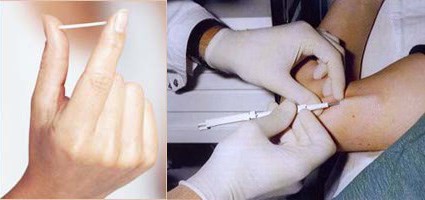
    Ghana has made laudable progress in improving modern contraceptive uptake in recent years, achieving a current prevalence rate of over 36 per cent among young women with Family Planning (FP) needs. 

    Background 

    The progress reflects the government’s commitment to enhancing reproductive health and access to a wide range of contraceptive methods for married women of reproductive age and sexually active adolescents. 

    FP, being a critical aspect of public health and development efforts worldwide, does not only empower individuals and couples to make informed choices about their reproductive health, but contributes to the overall well-being of societies. 

    Recognising that access to Sexual and Reproductive Health (SRH) services is a key fundamental human right enshrined in Ghana’s 1992 Constitution, the government has taken steps since the early 1990s, to prioritise FP services through the implementation of legislations, policies, interventions and programmes aimed at expanding access to commodities and services nationwide. 

    Progress 

    Dr Chris Opoku Fofie, the Director, Safe Motherhood Programme, at the Family Health Division of the Ghana Health Service (GHS), told the Ghana News Agency, that actions including age specific or appropriate SRH education, information and services have targeted women aged between 15 and 49 years in the quest to prevent maternal mortality and morbidity. 

    The United Nations Population Fund (UNFPA), which is the UN Agency for sexual and reproductive health, and other key implementing partners including the Planned Parenthood Association of Ghana (PPAG), are providing various support to ensure equitable, quality and timely access FP commodities and services. 

    Youth-friendly corners have been created in health facilities, to provide welcoming environment for young people to receive SRH counselling and FP services, while other information and education are channeled through electronic platforms, like Facebook, WhatsApp and You Tube among other adolescent safe spaces. 

    Dr Fofie indicated that that efforts at reducing stigmatisation and demystify contraceptive usage are underway through sustained public education, to prevent maternal deaths and empower women to make informed choices and key decisions concerning their own well-being and development. 

    He also mentioned the expansion of the National Health Insurance Scheme (NHIS) to include long-term contraception, as a major win for women’s reproductive health rights, saying this will save millions of women of reproductive age covered by the scheme, from out-of-pocket payment for long-term FP methods, which will enhance uptake and future government savings in direct case costs.    

    Ms Abena Adubea Amoah, the Executive Director, PPAG, expresses joy at the inclusion, saying it will bring about lasting peace of mind for women, girls and their families with a potential impact on their health and economic life. 

    She pledged the Association’s commitment to support the government’s awareness campaign on preventing maternal mortality and morbidities, deliver quality FP services and programmes through its permanent and mobile clinics in urban and rural communities, providing fertility management, as well as voluntary counselling and testing for STIs including HIV and AIDS.  

    Challenges 

    Despite the progress, Ghana still faces significant challenges, in regional disparities in contraceptive use, limited access in rural areas, and persistent unmet FP needs among some segments of the population. (Multiple Cluster Indicator Survey-MICS 2017- 2018). 

    Among the high levels of challenges that confronts Ghana’s contraceptive uptake, are deep-rooted cultural and religious beliefs that consider the advocacy aspect of education on sexual anatomy as a taboo.  

    The statistics shows that Ghana’s population is quite youthful, with nearly one in three Ghanaians aged between 10 and 24, hence most of these young people are at risk or already struggling with the consequences of an unplanned pregnancy or Sexually Transmitted Infections (STIs), including HIV and AIDS. 

    Ghana’s current maternal mortality ration of 308 per 100,000 live births, is still higher than the SDG target of less than 70 deaths per 100,000 live births by 2030.  

    Dr Fofie explains that for those still with unmet FP needs, it may be challenges with age differences, non-availability of a specific type of contraceptive required by clients at a particular facility or lack of skilled health personnel to administer the method. 

    However, efforts are underway to boost the capacities of service providers and dispatch more healthcare workforce to take care of the existing spaces in facilities to expand access to FP services across the country.  

    Statistics 

    Dr Wilfred Ochan, the UNFPA Country Representative, in an interview with the media debunked arguments that introducing young people aged 10 to 15 years to contraceptives, empowers them to indulge in promiscuous behaviours, saying such opinions have long been advanced, comparing the evidence of supportive and opposing views. 

    “On the contrary we have seen situations where people who have been exposed to RH and life skill education, have tended to delay initiation of sexual relationships, have adopted healthy lifestyles resulting in positive health outcomes, leading to a drop in teenage pregnancy rates, HIV and STIs, with the age of first sexual intercourse being higher because of their empowerment and understanding of the implications of their decisions.” 

    In contrast, in countries where the topic of SRH has been treated as taboo or sensitive, it’s been seen that young people have turned to look for other options to get information from uninformed and ill-prepared sources, resulting in their adoption of lifestyles that push them into pitfalls of engaging in sexual intercourse, leading to unwanted and teenage pregnancy, HIV and STIs among others, he said. 

    “So, the evidence points to the contrary of the fear, and the challenge for all, especially the media, is to bring factual evidence to the conversation, to allay the fears of those who think contrary,” he said. 

    He said indeed young people aged 10 and 15 years per the legal definition are considered as children, but agreeably this is the period where they go through several physical and psychological changes, a development process that needs to be guided to ensure their safe and smooth transition into adulthood. 

    Statistics reveals that approximately 10 per cent of adolescents aged 10 to 19 indicate an initiation of sexual activity before reaching age 15, whereas seven per cent of boys within the same age report commencing sexual activity during a similar timeframe. (Multiple Cluster Indicator Survey-MICS 2018). 

    He said out of the girls who start sexual intercourse at that age, 11 per cent have sex with men who are 10 years older than them. 

    This puts such groups in critical situations, even worse if they are not being prepared in terms of refusing sex (abstinence) or protecting themselves from HIV and Sexually Transmitted Infections (STIs), saying “We have seen more HIV and STIs in younger people, as well as unplanned and unwanted pregnancies,” he said. 

    Again, in Ghana, teenage pregnancy accounts for about 15 per cent of adolescent girls aged between 10 to 19, noting that comparing these figures to the country’s population where adolescent are made up of 6.9 million, out of which 3.5 million (10 per cent, about 350,000) are young girls having sex before age 15.  

     “So, if 14 per cent are pregnant, it is not a small thing for parents, and if these girls are dropping out of school, we are looking at a large potential of the country being held back from education, gaining skills, being economically engaged late in life, and contributing to national development,” Dr Ochan said. 

    “This means that all these percentage of young people are being held back from contributing to the development of the country or chiefdom, therefore this calls for action from all to reduce this problem to ensure total national development,” he said. 

    He said fortunately in Ghana, policy provides that anyone sexually active and require contraceptives, provided they were appropriately educated and counseled may involuntarily decide to use a method of choice. 

    Consequently, the role of duty bearers is to ensure the availability of the different contraceptive methods, to meet the choices and reproductive needs of clients, and increase skilled workforce to provide appropriate counselling and services to young people within the national guidelines. 

    Role of partners 

    Achieving the ambitious goal of zero unmet family planning needs, however, requires acknowledging and highlighting the pivotal role that Development Partners (DPs) play in shaping the country’s FP landscape. 

    The UNFPA annually, supports Government and other partners to mark the World Contraceptive Day which falls on September 6, as part of efforts to raise awareness about the importance of Family Planning and the theme for the 2023 celebration is: “Family Planning, My Choice, My Freedom”. 

    It emphsises the critical role of FP in empowering individuals and the need to galvanise the support of relevant partners and deploy innovative and resilient strategies to finance FP supplies and services, and this years’ event will also engage stakeholders in a dialogue on sustainable domestic resources for FP in Ghana. 

    Financing         

    Dr Ochan said the UNFPA currently provides about 40 per cent funding for Ghana’s contraceptive procurement, aside other support including advocacy on SRH information and education for young people which are age appropriate. 

    He acknowledged the government’s massive investment in storage infrastructure, regional distribution systems, supply chain management and training of the workforce among others, saying these are indirect support that helps in pushing FP commodities and services to the end user at the last mile. 

    He also praised the government for being forthright with its support to FP services, by instituting conducive policies and making commitment like the FP 2030, which takes certain actions to ensure sustainable service delivery. 

    Additionally, the Government of Ghana’s Compact agreement with the UNFPA, is among other concrete steps towards enhancing the mobilisation of domestic funding to procure FP commodities, Dr Ochan said. 

    He stressed that the sustainability of a system however, hinges on the existence of strong infrastructure, efficient FP environment, trained healthcare workforce and Ghana has an elaborate system already, hence when UNFPA and other donor funding ends it would not collapse. 

    Notwithstanding these achievements, there is the need to always push for more domestic financing through private sector support, to prevent the overreliance on donors for healthcare. 

  • The believers union with Christ: Exploring the 7 ways of spiritual bonding

    The believers union with Christ: Exploring the 7 ways of spiritual bonding

    The Christian faith emphasises a profound union between believers and Christ – a relationship that transcends mere association and delves into the depths of spiritual reality.

     This union is articulated in various ways throughout scripture, revealing the transformative nature of the believer’s identity and experience in Christ.

    This article explores seven distinct ways believers are bound to Christ, drawing insights from key biblical passages and theological reflections.

    By examining each aspect of this union, we seek to deepen our understanding of the believer’s spiritual reality and its implications for Christian living.

    Crucified Together

    In his letters to the Romans and Galatians, the Apostle Paul speaks of believers being crucified together with Christ.

    This concept underscores the profound nature of our identification with Christ’s death on the cross.

    Romans 6:5–6 emphasises that through this union, we are made one with Christ in a death like His, leading to a resurrection like His. Galatians 2:20 further emphasises this reality: “I have been crucified with Christ. It is no longer I who live, but Christ who lives in me.” This union in Christ’s crucifixion signifies the death of the old self and the beginning of a new life lived by faith in Christ.

    Buried Together

    Building upon the concept of crucifixion with Christ, scripture also speaks of believers being buried together with Him. Romans 6:4 and Colossians 2:12 highlight the symbolism of baptism as a representation of this burial with Christ.

    Not only does baptism signify the washing away of sins, but it’s also the participation in Christ’s death and resurrection.

    Through baptism, believers are buried with Christ, symbolising the putting to death of the old self and rising to walk in the newness of life.

    Quickened together

    Ephesians 2:5 and Colossians 2:13–14 speak of believers being made alive with Christ, even when they were dead in their trespasses.

    This quickening or making alive results from God’s grace and forgiveness extended to us through Christ’s sacrificial death on the cross.

    It signifies a spiritual resurrection from the death of sin to a new life of righteousness. This union with Christ in His resurrection empowers believers to live victoriously over sin and walk in obedience to God’s will.

    Raised together

    Continuing the theme of resurrection, Ephesians 2:6 and Colossians 3:1–2 highlight believers being raised with Christ and seated with Him in heavenly places.

     This union speaks of our participation in Christ’s victory over death and our future hope of resurrection.

    As Christ was raised from the dead by the glory of the Father, so too are believers raised to the newness of life and called to set their minds on heavenly things.

    This union with Christ in His resurrection assures believers of their future inheritance and eternal life.

    Seated together

    The imagery of believers seated with Christ emphasises our exalted position and authority in Him. Ephesians 1:20 and 2:6 portray believers as seated with Christ in the heavenly places, signifying our spiritual union and co-reigning with Him.

    This union grants believers access to the spiritual blessings and authority bestowed upon Christ by the Father.

    It invites believers to live in light of their heavenly citizenship and to exercise their authority in Christ to overcome the powers of darkness.

    Sufferers together

    Scripture also speaks of believers sharing in Christ’s sufferings as a mark of their union with Him. Romans 8:17 emphasises that if we are children of God, then we are heirs of God and fellow heirs with Christ, provided we suffer with Him.

    1 Peter 4:12–16 similarly exhorts believers to rejoice in sharing Christ’s sufferings, recognising that suffering for the sake of Christ leads to future glory.

    This union with Christ in His sufferings fosters perseverance, character, and hope amid trials, knowing our sufferings are not in vain.

    Glorified together

    Finally, believers are assured of being glorified with Christ, as the sufferings of this present time are not worth comparing with the glory to be revealed. Romans 8:18 and 2 Timothy 2:11–13 affirm that if we have died with Christ, we will also live with Him, endure with Him, and reign with Him.

    This union guarantees believers’ participation in the fullness of Christ’s glory and the inheritance of eternal life in His presence.

    Conclusion

    The union of believers with Christ encompasses a multifaceted reality that spans from identification with His death to participation in His resurrection, exaltation and future glory.

     Each aspect of this union underscores the transformative nature of the believer’s identity and experience in Christ, shaping our outlook, values and conduct.

    As we reflect as believers on these truths, may we be encouraged to live in light of our union with Christ, drawing strength, hope and assurance from the one who loved us and gave Himself for us.

  • Millet-Kenkey, the new variant for Kenkey lovers

    Millet-Kenkey, the new variant for Kenkey lovers

    The Ga-Komi, or Otim, is the Ga-Dangme word for Kenkey, a corn-based staple food of the natives of the Greater Accra Region, the capital of Ghana.

    While the Ga-Komi is wrapped in corn husks and contains some salt in its preparations, the Fantes also have their version of Kenkey, which is known as Fante Dorkunu and is often prepared without salt and wrapped in plantain leaves.

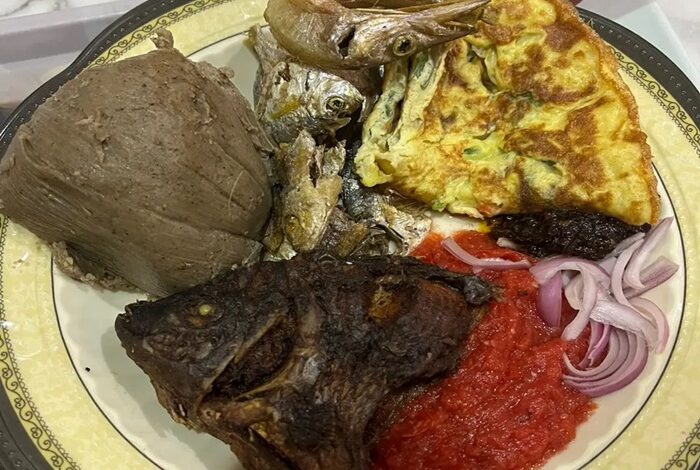
    Kenkey, which is mostly served with some fried fish, shrimp, and eggs, among others, goes well with various types of grounded pepper (kpakposhito, akweley waabii, and shitogbii), as well as a dash of shitodin or kenamshito (black pepper, which Ghanaians refer to as shito).

    Its versatility also allows it to be taken with soup and stew; one can also decide to blend it into mashke (mashed kenkey) mixed with some sugar, groundnut, milk, and ice for a cooling effect.

    Corn food is so important to the Ga-Dangmes that, even in naming a child, a corn wine is put in the mouth with the statement that, “abele akԑ lԑo bi,” to wit, we feed children with corn.

    However, in recent times, several Kenkey eaters have been forced to drop their love for corn based Kenkey due to some health effects and discomfort, such as heartburn, they experience after eating the food prepared from fermented corn dough.

    To ease such discomfort and still get the satisfaction that Kenkey gives, some are turning to a newfound love, Millet-Kenkey, which they said does not trigger reactions in their digestive system.

    Ms Nora Naa Atwei Mensah, the leader of Norettes Cookery, is one of the few people meeting the needs of kenkey lovers through the provision of Millet-Kenkey.

    Ms Mensah, who is an assistant civic educator at the National Commission for Civic Education (NCCE), disclosed in an interview with the Ghana News Agency (GNA) that she identified Millet-Kenkey by accident.

    According to her, her first encounter with the food was in 2020, when she attended an exhibition and saw it on display.

    She added that, as curious as she was, she bought some balls to check if the taste and feel were the same as her Ga-Komi, which at the time was triggering heartburn in her.

    “Apart from the colour, I realised that everything about it was just like our kenkey. My curiosity took me to YouTube to check if they did not add any corn,” she said.

    Ms Mensah, who before this did not sell kenkey, bought two ‘olonka’ tins of millet and went through the process of soaking, milling, and making a dough from it just as it is done with the corn.

    She indicated that after going through the needed fermentation process, she prepared part of the dough into ‘aflata’ (partially cooked like banku), after which uncooked millet dough is mixed with it and wrapped in corn husk for steam cooking for hours until soft.

    According to her, she displayed this on her social media platform, which attracted the attention of friends who then ordered for some, adding that this has generated a business in which she prepares over 200 balls of millet-Kenkey fortnightly for clients who pre-order.

    She further said that sometimes she gets orders weekly for social functions, as many have come to embrace the nutritional benefits of the millet-kenkey.

    She said some research she did into the health benefits of millet, which is a gluten-free grain, revealed that it contains fibre, calories, carbohydrates, protein, fat, phosphorous, iron, and folate, among others, making it ideal for lowering blood sugar and cholesterol.

    On how to preserve the millet kenkey, she said it must be put in a bowl without a cover at room temperature and must be consumed within four days, adding that it could, however, be put in the fridge and warmed later for longer days.