Author: GEORGE K WIREDU

  • Examination malpractice: Let’s instil right values in our children

    Abtvgh / Waec / GES

    The silence of the activities of rogue websites since the beginning of this year’s West African Senior School Certificate Examination (WASSCE) gave the public some hope that at least, for the first time in recent years, the examination would pass without the usual headlines, mostly for the wrong reasons.

    This went on until last week Saturday when the headline “WAEC uncovers WASSCE cheats” trended and indeed, is still trending, emanating from a press conference organised by the West African Examinations Council (WAEC).

    The conduct of teachers, some of whom were picked up raised eyebrows regarding the actions of the very people detailed to take care of the examination centres.

    At the press conference, the council announced that it had uncovered a grand scheme by some school authorities and candidates to cheat in the ongoing WASSCE, leading to some arrests

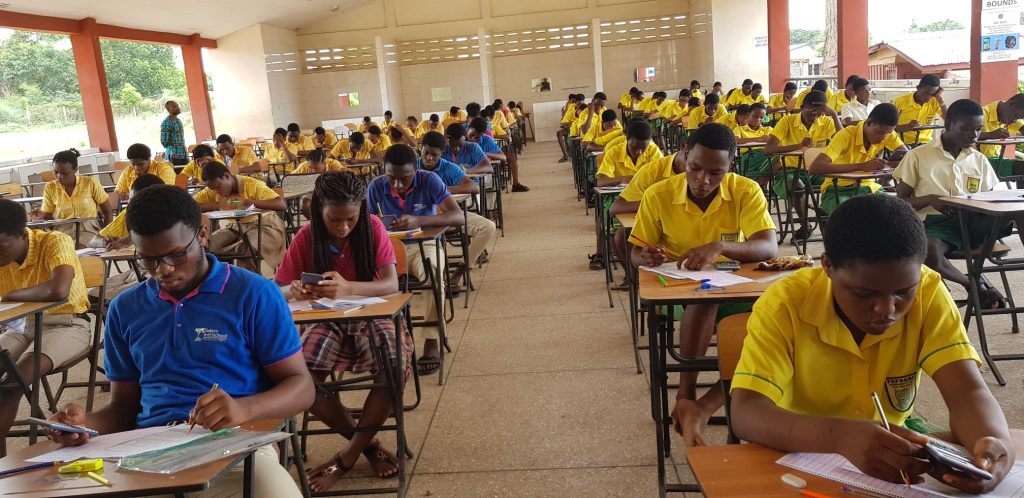
    WAEC said during an operation by its specially trained monitoring agents, many candidates were caught with mobile phones and other electronic gadgets in the examination halls.

    The Daily Graphic finds this unacceptable, recalling how one of the examination invigilators, the late Asare Minako, who insisted on preventing candidates from carrying mobile phones into the examination hall on October 11, 2005, was brutally murdered by the candidates.

    To ensure that such a heinous act does not get lost in history, the WAEC named one of its foremost centres after this committed personality who wanted to maintain the sanctity of examinations conducted by the council.

    It is common knowledge among teachers and students, particularly candidates preparing to write or who are writing any examination administered by the WAEC that carrying mobile phones into examination halls or even within the premises of an examination centre attracts outright cancellation of the entire examination of any candidate caught in the act.

    To ensure that this punitive measure does not come as a surprise to anybody, the WAEC every year, before the beginning of both WASSCE and the Basic Education Certificate Examination (BECE), embarks on a sensitisation drive for both candidates and parents as well as the general public on the dos and don’ts of the examinations.

    In this whole enterprise, parents and teachers have a crucial role to play because they are very much involved in the early development of children.

    It is important parents do not give their children the wrong impression that they can do anything under the sun and get away with it.

    The Daily Graphic is worried that after the WAEC worked hard to block the loophole of the activities of rogue website operators, teachers, in whose hands the children are entrusted to prepare them for the examination, are rather inculcating wrong habits into them.

    What a shame!

    We are wondering if this is a testimony that the teachers are not teaching well or that they do not complete the various syllabi before the conduct of the examination and so, in order not to be blamed they engage in such activities.

    The Ghana Education Service (GES) and, for that matter, the Ministry of Education has trumpeted the issue of contact hours as the reason for Ghana to continue  writing the Ghana-only version of the WASSCE.

    We dare say that those teachers involved in such acts are an embarrassment to the teaching profession and must bow their heads in shame.

    The Daily Graphic is at a loss as to why teachers, who are to guide and direct the children to be law-abiding citizens should be the very ones supporting the children to cheat.

    We call on WAEC to enforce its rules and regulations to serve as a deterrent to other students.

    Ghanaians are waiting to know the number of candidates who were caught with mobile phones and smartwatches in the examination halls as promised by the Head of Public Affairs of WAEC, John Kapi, by the close of this week.

    All Ghanaians must work to ensure that the certificates issued by WAEC remain relevant and respected globally.

    This can only be done through the collaboration of all and not only WAEC.

    Security is a shared responsibility and not for the police or the security services alone; we all have a role to play.
  • We learnt nothing from Appiatse explosion

    We learnt nothing from Appiatse explosion

    Abtvgh / Western Region

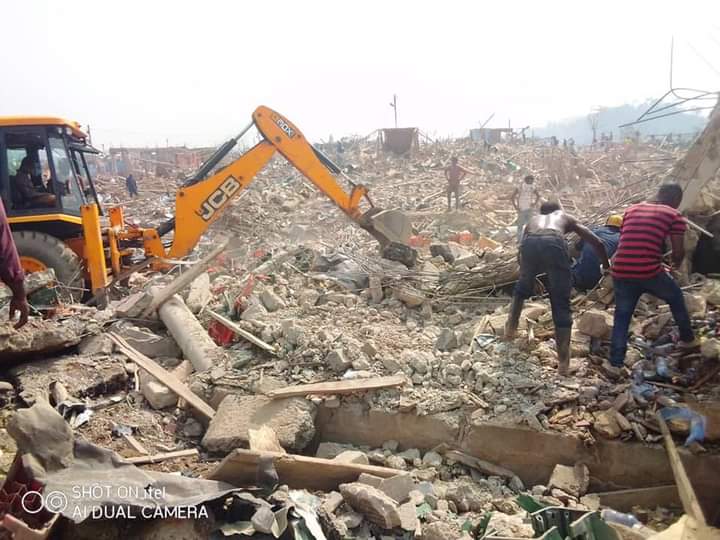
    Last Sunday’s explosion at a quarry at Kobenandokrom in the Shama District in the Western Region that killed four people is a testament that as a nation, we have not learnt lessons from the deadly explosion that killed about 17 people at Appiatse in the same region last year.

    It also shows that the nation is yet to devise workable and implementable safety protocols on the use of explosives since a similar quarry explosion at Piabo near Nsawam in 2015 killed one person and destroyed many buildings.

    It was in January last year that the entire community of Appiatse was wiped out by a massive explosion caused by 10 tonnes of dynamites being transported to a mining site at Bogoso.

    Apart from the 17 confirmed deaths, more than 480 people were reported to have suffered varying degrees of injury.

    The Appiatse explosion destroyed a lot.

    People lost their lives, loved ones, property, livelihoods and a sense of belonging.

    It led to a massive nationwide effort, spearheaded by the Appiatse Support Fund, to help rebuild the town.

    An investigative committee was formed which supposedly made far-reaching recommendations on how to strengthen the safety protocols in the handling of explosives for industrial purposes.

    About a-year-and-half down the line, it is unacceptable for the explosion at Kobenandokrom to have happened, and certainly an indictment on the authorities in charge of such issues.

    The Minerals Commission issued a statement that the quarry had no licence and was, therefore, operating illegally.

    In the statement, the commission said its preliminary investigations confirmed that the site of the explosion was a subject of an application by a company with the name STA Addsams Enterprise.

    The commission further said mine inspectors realised that the company was working at night ostensibly to prevent them from being noticed by the inspectors of the commission and the local task force comprising the police and members of the sand winners and quarry association.

    However, the statement by the commission leaves more questions than answers.

    How a quarry that operates in the open, with all the associated noise, can operate illegally without anyone noticing and questioning its operation is something we cannot fathom.

    Where was the regulator, the Shama District Assembly and other agencies of government when this company was operating in the full glare of the public without a licence?

    The fact that it was supposedly a foreign company also highlights the lapses in our regulatory framework and the space we give to people, including foreigners, to continue to commit an act of impunity with total disregard for our laws.

    Ghana has many laws meant to properly regulate the mining industry and prevent such explosions.

    In fact, due to its potential harmful impact on society, every aspect of the mining industry has a specific law regulating its activities.

    Apart from the main law – the Minerals and Mining Act, 2006 (Act 703), other laws include Minerals & Mining (Health, Safety and Technical) Regulations, 2012 (L.I. 2182), which deal with general safety regarding the sector and the Minerals & Mining (Explosives) Regulations, 2012 (L.I. 2177), which gives extensive regulations on the use, storage, transportation and disposal of explosives for the mining sector.

    The Daily Graphic calls on the commission and other regulatory bodies to implement to the letter the safety protocols regarding explosives as enshrined in L.I 2177.

    To serve as a deterrent, it is important that people whose negligence leads to such tragic loss of lives are made to pay for their actions, with criminal prosecution part of the options.

    Those to face the law should not only be industry players, but regulatory parties whose inaction fester such tragedies.

    As a country, we must also reform our tort system to ensure that companies, industry players and regulatory bodies whose actions and inaction result in such tragic incidents pay dearly in terms of civil liabilities.

    Such negligence should not be countenanced.

    People who have lost their loved ones and those who have suffered injuries and lost their source of livelihoods must be supported to initiate such civil actions, and the courts must impose the maximum liabilities in tandem with the law.

  • Celebrate the living

    Abtvgh / The Living/ UPSA

    Last Monday, the management, staff and alumni of the University of Professional Studies, Accra (UPSA) held a unique event that deserves everyone’s attention.

    On the 95th birthday of Nana Opoku-Ampomah, the man who sowed the seed of the Institute of Professional Studies (IPS) in 1965, which has blossomed to present day UPSA, a surprise and befitting-service was held to celebrate the educationist and traditional leader.

    During the event which was heavily attended by alumni of the university, glowing tributes were paid to Nana Opoku-Ampomah, the Paramount Chief of Amoafo Bekwai in the Ashanti Region, for his role in shaping their lives. 

    Some of them shared fond memories of their encounters with Nana during their student days and how the founder had contributed to their success.

    The old students, including the Inspector-General of Police and some of his top brass, and the university authorities presented gifts to the bewildered nonagenarian, who was full of smiles as he listened to the narratives from his former students.  

    The event reminds the nation that the time has come to always recognise and celebrate its heroes and heroines who through their blood and sweat have charted paths that have contributed immensely to the development of the nation.

    One of the respected columnists of the Daily Graphic, Brig. Gen. Dan Frimpong (retd), in an article in the September 23, 2022 issue titled: “Give me my flowers when I can still smell them,” advocated the need to show love and affection to people while they are alive and not to wait till they die before showering them with praises. 

    The piece underlined the need for recognition and appreciation by the nation of outstanding Ghanaians when they are alive and not pay glowing tributes when they die.

    This goes to the heart of the popular adage that, “a country that does not honour its heroes is not worth dying for”.

    The import is a reminder to appreciate and show gratitude to people who play significant roles in the life of the country while they are alive.

    Many a time, such honour is bestowed on great personalities only posthumously, when they can never have the opportunity to smile at and smell the flowers laid by their caskets or graves.

    It is a fact that in Ghana, grand funerals are organised for people who lived in abject poverty during their last days, all in the name of giving them a “befitting farewell”.

    This philosophy is so engrained in the society that even when people are celebrated, others grumble, murmur and try to belittle their achievements.

    For honouring Nana Opoku-Ampomah, the alumni and the UPSA family have reminded us of the need to acknowledge and give due recognition to people who play useful roles in our lives.

    The Daily Graphic commends the university community for celebrating this illustrious Ghanaian, who sowed the biblical mustard seed in 1965, which has now blossomed into a huge tree.

    Today, UPSA has become a global icon, having trained thousands of graduates who are occupying high positions both locally and internationally.

    As the IGP put it, as Abraham was the father of many nations, according to the Holy Bible, Nana Opoku-Ampomah would be known as the father of many professionals. 

    The Daily Graphic also salutes Nana Opoku-Ampomah for the thousands of individuals who passed through the four corners of the great university, without which, they might not have had the opportunity to attain tertiary education.

    Interestingly, there are a number of Nana Opoku-Ampomahs all over the country, brightening their corners quietly.

    Some have made vital contributions in their vibrant youthful working life but have neither been celebrated nor appreciated. 

    The example of Nana Opoku-Ampomah should be a model for all that whatever we have started should be done to the best of our ability.

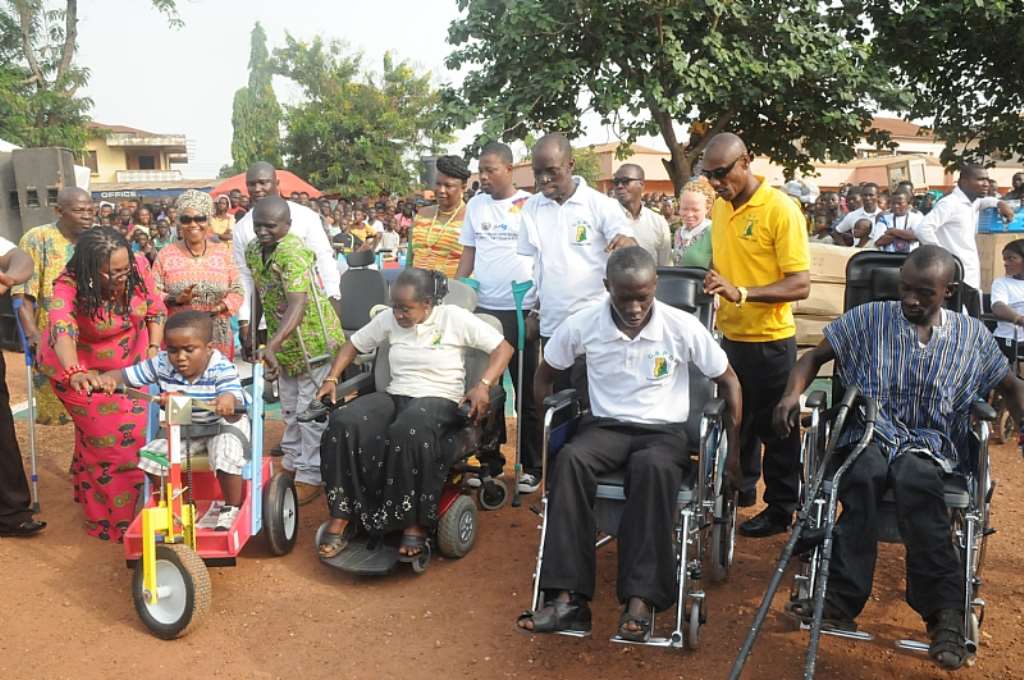
  • Seventeen years after the enactment of the Persons with Disability (PWDs) Act, 2006 (Act 715), which seeks to end discrimination against PWDs, they continue to go through harrowing experiences in accessing public spaces and services.

    Abtvgh / PWD’s Act, 2006 / Act 715

    Generally, there is lack of access to many public spaces for PWDs in the country which must not be allowed to continue.

    Although the Act gave a 10-year moratorium for all public buildings to be made disability-friendly, the premises of many public institutions remain “no go areas” for physically challenged persons after the expiration of the moratorium on August 11, 2016.

    Seven years after the expiration of the 10-year moratorium, many Ministries, Departments and Agencies (MDAs), academic institutions, health installations, faith-based organisations and other essential service providers have failed to make their premises disability-friendly.

    And more than importantly the position of the supreme law of the land is quite clear.

    Article 29(1) (8) of the 1992 Constitution of Ghana makes provision for the inclusion, protection and participation of PWDs in the socio-cultural and economic activities of the country. 

    Ghana adopted a national disability policy in 2000, which provided the framework for the drafting of the National Disability Law, Act 715 which was passed in 2006. 

    In 2012, the Parliament of Ghana ratified the United Nations Convention on the Rights of Persons with Disabilities with its optional protocol.

    The PWD Act 2006, (Act 715), gave a moratorium of 10 years for all public buildings to be made accessible and available to persons with disabilities.

    All these laws and international conventions spelt out clearly the legal framework for the protection of the rights of PWDs.

    Over the years, many high-rise buildings have sprung up all over the country, especially in the capital city, but no one is checking whether they are conforming to the laws of the country or not.

    Although Section Six of the Disability Act (Act 715) states: “The owner or occupier of a place to which the public has access shall provide appropriate facilities that make the place accessible to and available for use by a person with disability,” it is being flouted by property developers.

    Last year, the Daily Graphic after 16 years of the Disability Act being in force and six years after the 10-year moratorium to make buildings accessible had expired, surveyed some establishments in the city and other places where it found out that even the Parliament House, where laws are made although accessible to some extent, was still not fully disability-friendly.

    Hospitals, MDAs, some banks, including their Automated Teller Machines (ATMs), and commercial vehicles were all found not to be disability-friendly. 

    It is therefore not surprising that in the Thursday, August 24 edition of this paper, we reported that a physically challenged man has threatened court action over a disability-unfriendly court building.

    The man threatened to sue the Chief Justice and the Attorney-General if steps were not taken to make the Supreme Court user-friendly for PWDs.

    In a letter detailing his intention to sue the state, he said the absence of ramps and bannisters at the stairs to the entrance, coupled with the steep stairs in the building, made it difficult and unfriendly for PWDs to access the building and that, he said, was in direct contravention of the PWD Act, 2006 Act 715.

    It is imperative for public institutions and society as a whole to ensure inclusiveness of various segments of the population, particularly the PWDs, in the provision of all social amenities.

    It is therefore worrying to state that if the status quo is allowed to continue, it will feed into the general perception that the country has all the requisite laws but there are challenges with their effective implementation.

    The paper therefore hopes that it should not be only when the law is tested on the user-friendliness of buildings that the law must begin to work.

    It is recommended that conscious efforts must be made to ensure that public institutions that have not yet adhered to the law in terms of making their respective premises disability-friendly are further monitored and encouraged to provide the necessary facilities to ensure inclusiveness in their dealings with the public, particularly the PWDs.

  • Financial Stability Fund must be operationalised soon to support banks

    Abtvgh

    Banks in the country have relatively been stable following the financial sector clean-up which saw them increase their stated capitals to GH¢400 million.

    However, the Domestic Debt Exchange Programme (DDEP), undertaken by the government on account of the country’s poor financial standing, nearly wiped out all the banks’ profitability, with 16 banks recording significant losses at the end of the 2022 financial year

    Under the DDEP, the government swapped its outstanding domestic-currency bonds for 12 new bonds with reduced coupon rates and longer tenors, and this impaired the assets of all the banks, some of which had as much as 50 per cent exposure in government bonds.

    Although the banks have made a rebound in the first half of 2023 by recording profits, experts have cautioned that the banks would record losses again in 2023 when the full results are audited.

    This is because some of the DDEP losses were deferred to 2023 for recognition in the books of banks.

    Addressing the media at the recent Monetary Policy Committee press conference, the Governor of the Bank of Ghana (BoG), Dr Ernest Addison, said data submitted by banks for the first half of 2023 reflected the lingering effects of the DDEP, notwithstanding the strong rebound in profitability.

    The heavy losses suffered by the banks and the financial services industry in general have had an impact not only on the banks’ profitability but also their capital and reserves adequacy ratios.

    For many experts, it is the forbearance provided by the central bank that has kept the banks on their feet, for which many applaud the Governor and his team.

    A major policy initiative to shore up the liquidity and capital of the banks due to the lingering effects of the DDEP is the proposed Financial Sector Stability Fund to support the banks and financial sector as a whole.

    The World Bank has committed to support the establishment of the fund with US$250 million.

    The government is also in discussions with the African Development Bank (AfDB) for an additional US$100 million to support the fund.

    The government recently hinted that it had so far raised US$750 million for the operationalization of the fund out of the intended target of US$1.5 billion.

    All these efforts reflect the fact that the financial sector has been under stress and there is, therefore, an urgent need to provide institutions with the financial resources needed to bring them back to healthy life.

    Indeed, a key condition under Ghana’s programme with the IMF is for the government, through the Central Bank, to submit to the IMF the recapitalisation plans of banks by the end of September.

    The next logical step is a roadmap on how banks can access the pledged funding to get themselves back to doing the business of lending to the productive sector of the economy.

    Given the exigencies of the times we find ourselves in currently, the Daily Graphic is of the view that the government should practicalise this fund within the shortest possible time.

    As the Finance Minister prepares to appear before the Parliament to fulfil his statutory mandate of presenting a mid-year budget review, many financial experts will be looking for the HOW with regard to getting the Stability Fund off the ground.

    The Daily Graphic has every reason to trust and be confident that the authorities would expedite action on this front, as the urgency of the current financial stress levels is certainly not lost on them.

    An even more convincing case for the speedy operationalisation of the fund is the general economic challenges facing the country.

    A robust financial sector, one with the necessary capital and liquidity, will help relieve the financial crunch businesses are feeling.

    Additionally, a sound financial sector will take us to the days of low interest rates that can spur the growth of the economy.

    The banks have learnt the harsh reality that government-dated securities are no longer risk-free and that their surest bet is the private sector.

    The private sector can, however, thrive where the banks have the requisite financial base to support SMEs as well as big-ticket projects that have the potential to propel the country beyond the current economic challenges.

  • Save Black Volta from galamsey

    Abtvgh / VRA /Galamsey

    The fight against illegal mining, otherwise known as galamsey, appears to be elusive, notwithstanding the modest gains achieved.

    It is regrettable that in spite of the various interventions aimed at weeding out galamsey, the fight appears to be far from over.

    Particularly worrying is the news that there are escalating galamsey activities along the Black Volta River in areas such as Jama, Jugboi, Carpenter and Bamboi in the Savannah Region.

    The Black Volta takes its source from Burkina Faso and flows north and east for about 200 miles (320 km) and then turns south for 340 miles (550km), forming the border between Ghana and Burkina Faso, and also between Ghana and Côte d’Ivoire.

    At Bamboi in the Savannah Region, the Black Volta turns north and east, and approximately 80 miles (130km) farther east and empties into Lake Volta.

    The Daily Graphic reported yesterday that the activities of the galamsey operators have destroyed the pristine river, affected agriculture and critical infrastructure, notably the Bui Power Generation Dam and the Akosombo Power Generation Dam, downstream.

    Furthermore, the activities of these illegal miners are also causing irreparable damage to the delicate ecosystem because of the pollution of the river with toxic chemicals such as mercury, cyanide and other harmful substances.

    Thankfully, the Sixth Infantry Battalion of the Ghana Armed Forces (GAF) and the Savannah Regional Security Council have begun an operation to deal ruthlessly with all persons engaged in illegal mining or are fueling the menace in the Black Volta.

    The Abtvgh believes the fight must be anchored on total support from other stakeholders.

    Unalloyed support from traditional authorities, the security agencies, politicians, the media and civil society organisations will be key in how far we go with this fight.

    We, as a nation, cannot escape the fact that the destruction caused by illegal mining has dire implications for sustainable national development and needs an all-hands-on-deck approach to curb.

    Again, the Daily Graphic holds the view that illegal mining is a complex phenomenon whose stoppage cannot be achieved overnight.

    That the fight against galamsey requires systematic, sustained efforts and action over a period of time cannot be overemphasised.

    Every well-meaning citizen must see this fight as a duty to save the country from the hands of nation wreckers who are motivated by greed to destroy our future for their personal gain.

    Chiefs, who are the custodians of the land, must rise up and be counted; the security agencies must demonstrate their love for the country by eliminating perpetrators of galamsey, while stakeholders at the local level, including assembly members, municipal and district chief executives and opinion leaders, particularly those in mining communities, must play their part to safeguard our land and water resources.

    We see the fight against illegal mining as a call to national duty because galamsey affects the very soul of our country.

    The pollution of rivers such as the Ankobra, Bia, Birim, Offin and Pra affects every Ghanaian in one way and another.

    The continued pollution of these water bodies is a serious threat to water security for citizens, as it is predicted that the country risks importing water if a concerted effort is not made to stop galamsey activities in rivers.

    Again, the pollution of water bodies threatens Ghana’s effort to achieve the UN Sustainable Development Goal (SDG) 6.1 of “universal and equitable access to safe and affordable drinking water for all,” by 2030.

    Aside from this, the economic implications of water pollution through illegal mining are dire.

  • Addressing gap between north, south non-negotiable

    Abtvgh / Ghana International Border

    There can never be any discussion about the development challenges of Ghana without the mention of the gap between the North and the South.

    It is a well-documented fact that the country has performed poorly in bridging the development gap.

    There have been numerous programmes to develop the north since Ghana gained political independence in 1957.

    Unfortunately, most of them either underperformed or failed.

    In recent years, Ghana has experienced a significantly better performance in terms of economic growth and poverty reduction.

    But there is a fly in the ointment: in terms of development, a major north-south gap still prevails.

    The issue was once again brought to the fore by a Professor of Migration and Refugee Studies at the University of Cape Coast, Professor Augustine Tanle, during his inaugural lecture last week, on the topic: “Interrogating North-South Seasonal Labour Migration in Ghana as a Livelihood Strategy.”

    Prof. Tanle indicated that if efforts were not made to urgently bridge the gap in socio-economic development between the northern parts of the country and the south, the country could not achieve many of its sustainable development goal targets.

    The origins of inequality in Ghana lie in geography – the lower rainfall, savannah vegetation and remote and inaccessible location of much of the north; the pre-colonial relationships between kingdoms and tribes, and the colonial dispensation which ensured that northern Ghana was a labour reserve for the southern mines and forest economy, and the post-colonial failure to break the established pattern.

    Conflict has always been contained but the conditions leading to conflict have never been resolved.

    The recurring conflicts continue to deter investment in the north.

    The threat of that underlying insecurity makes Ghana prey to broader West African conflicting forces.

    Some 60 per cent of the poorest populations are to be found in the five northern regions.

    They are lagging behind at all levels: poverty, health, education, sanitation and unemployment, among others.

    Indeed, the Savannah Region is home to a third of people living in poverty and three-fifths of people living in extreme poverty in Ghana.

    Yet, it has 55 per cent of the country’s arable land and abundant water resources, thanks to the Volta River and Lake – which is the largest artificial lake in the world.

    Development policies in the north have targeted food production instead of infrastructural development.

    But food production cannot transform the north without efficient transport links.

    This is because the north’s vulnerability includes the threat of floods, prolonged droughts, rising temperatures, unreliable rainfall, severe windstorms and other climate-related emergencies which are already negatively impacting agriculture and threatening productivity and food security.

    The Daily Graphic is of the opinion that what the people need in the north now is unity to speed up development.

    They should not let the underdevelopment cause disagreements and conflicts, but rather they should focus on fighting ignorance, poverty and hatred instead of fighting one another.

    There is an urgent need to provide alternative sustainable livelihoods in the five northern regions to halt the worsening poverty and deprivation in the area.

    As a nation, we have done poorly in bridging the development gap between the north and the south but it is never too late.

    We, therefore, need strategies that can create opportunities for investments in agriculture and non-agriculture enterprises to create wealth and reduce poverty in the area.

    To achieve this, we support the call by Prof. Tanle for a conscious effort by the government to set up industrial zones to create employment in the five northern regions and the setting up of more agro-based industries to help reduce poverty levels among the people to enhance socio-economic development.

    The fear is that in the end, Ghana may not achieve Sustainable Development Goals 1,2, 4,6 and 10 which include no poverty, zero hunger, education, clean water and sanitation, and reduce inequalities if nothing is done to improve the quality of life in the five northern regions and their development indicators.

    It is time to provide support for agriculture and farmers in the north to optimise their land use to enable them to produce enough to feed the nation.

  • We must do better on peace index

    Abtvgh / Ghana Global Community

    Ghana is often trumpeted to the global community as the most peaceful, stable and investment-friendly country in the sub-region. 

    Our leaders often tout these credentials to paint a positive image of the country and to attract both tourists and investors into the country for economic gain.

    However, there are a multiplicity of developments that threaten the peace and stability of the country.

    Unfortunate situations such as the use of intemperate language in the public sphere by political actors, conflicts over chieftaincy titles, and violence associated with illegal mining activities are gradually eroding Ghana’s credentials as an oasis of peace.

    We have often overlooked these dangers or threats to the peace we enjoy in the country, with the argument that the country shall never descend to the stage of conflict or violence because Ghanaians are peace-loving.

    This is where we get things wrong and allow threats to degenerate into something unexpected.

    After all, the countries that have challenges with internal security had treated with careless abandon the threats posed by insurgents fighting for their rights, to possess their lands and obtain some of their natural resources.

    The Daily Graphic finds it not surprising that Ghana had lost its position as the Most Peaceful Country in West Africa to Sierra Leone in the latest Global Peace Index.

    Not only that, the country also slipped to the fourth position, from its second place as the Most Peaceful in Africa in the 2022 index.

    According to the Chairman of the Governing Board of the National Peace Council (NPC), Rev. Dr Ernest Adu-Gyamfi, the decline was attributed to threats such as armed robbery, attacks on journalists, political violence, land guard menace and perceptions contributing to the ratings and compilation of results.

    This development is worrying, especially so when the country is protecting itself against  terrorists activities and violent extremism that have already threatened the stability of neighbouring countries such as Cote d’Ivoire, Togo  and Burkina Faso.

    Fortunately, these are factors which are well-known to all of us and addressing them will be much easier than allowing those threats to degenerate into a bad situation.

    The Daily Graphic believes that if all the stakeholders engage one another in an open and frank manner, the country could be finding a solution to the challenges confronting its peace.

    Such an engagement should be executed in an environment of trust and confidence to help deal with the possibility of these threats degenerating into extremism.

    It should rather engender understanding and tolerance.

    If we must build resilience against terrorism and violent extremism, we must join in and support efforts of the NPC, the Ministry of National Security and the National Commission for Civic Education (NCCE) to educate the populace not to take things for granted.

    We commend the NCCE for rolling out the Preventing Conflict and Violent Extremism (PCVE) project in the five regions of the north, and the Oti and Bono Ahafo regions.

    The Daily Graphic sees the PCVE initiative as a perfect way to take the bull by the horn.

    Therefore, all stakeholders, including chiefs, the security agencies, opinion leaders, faith-based organisations and civil society organisations (CSO) must work together to create awareness, educate and sensitise members of the public to the need to identify and nip the triggers of conflict in the bud.

    We are also of the view that our chiefs, landowners and political office seekers must do the right things all the time and not to engage the services of hoodlums to unleash mayhem on innocent persons just to push their selfish interests.

    We need to remind ourselves that insurgents often exploit vulnerable communities for their nefarious activities.

    We must not provide the fertile ground for aggrieved persons to use unorthodox measures to seek their rights.

    The Daily Graphic holds the view that those responsible for the adjudication of differences must also deliver on their mandate in a manner that will satisfy parties involved in any dispute.

    We believe that the country can regain its position not only as the peaceful nation in West Africa, but Africa as a whole in the global rankings.

    This requires the establishment of a vibrant peace-building infrastructure that strengthens partnerships and  promotes inclusive and participatory governance.

    Let us all work hand in gloves to reclaim our enviable position on the peace index.

    It is a collective responsibility.

    After all, a country is like a boat; when it sinks, it spares no one.

  • Let’s balance free speech with rule of law

    Abtvgh / Rule of Law In Ghana

    Recent public comments on the trial of the Member of Parliament (MP) for Assin North, James Gyakye Quayson, have received support and backlash from different quarters and the general public.

    The brouhaha started when the Dormaahene, Osagyefo Oseadeeyo Agyemang Badu II, made an appeal to the Attorney-General (A-G) to file a nolle prosequi and discontinue the criminal case against Mr Quayson, as prosecuting him would not augur well for his constituents, especially after his victory at the Assin North by-election on June 17, this year.

    A former A-G, Nii Ayikoi Otoo, also added his voice to the calls for the discontinuance of the case on the basis that it would be politically prudent for the trial to end in view of current public sentiments.

    Mr Quayson has been accused of perjury and forgery over certain alleged offences in the run-up to the 2020 general election.

    He won that election but it was later nullified by the Supreme Court due to his dual citizenship status.

    The Dormaahene’s appeal for the A-G to drop the case against the legislator was condemned by some who saw it as an unwelcome comment by a sitting judge.

    Osagyefo Agyemang Badu is a High Court judge with the name Justice Daniel Mensah.

    While his critics hounded him, those in support of the comment spiritedly defended the Dormaahene, arguing that he only exercised his freedom of speech and also it was in the public interest to end the case against the Assin North MP.

    It is obvious that the public commentary on the trial has taken the usual political dimension, with people sticking to entrenched positions on the issue.

    The opposition National Democratic Congress has jumped to the defence of the Dormahene, while many of the critics are affiliated to the ruling New Patriotic Party (NPP).

    It was within the context of such a polarised political environment on the issue that the A-G, Godfred Yeboah Dame, released a statement calling on the public to be circumspect in their commentary on court cases especially the so-called high-profile cases, involving political figures.

    Mr. Dame said although there was the freedom of speech, such commentary on the cases “transgresses permissible limits of free speech” and makes it difficult for the “stream of justice to flow”.

    He noted that any assertion that a person should not face the law because of his or her political position would not augur well for the development of the country, and as such dangerous for democracy.

    “The perception that a crime committed by a person of high political standing in society should not be prosecuted is dangerous for society and must not be countenanced,” Mr Dame said.

    The A-G added that such public utterances, including those by lawyers, were prejudicial and had the potential to mar the effective administration of justice.

    The Principal Legal Advisor to the government said such comments did not provide a conducive environment for state prosecutors and the court to effectively discharge their functions.

    Public comments on state institutions, including the work of the A-G and the judiciary, are a testament that our democracy is growing and people are becoming more conscious of public issues.

    In this regard, it is, therefore, not out of place when people comment on court cases.

    However, the Daily Graphic agrees with the A-G that the nature of some of the commentaries on court cases may have a negative impact on the administration of justice.

    Constant non-constructive criticisms of court cases could lead to bastardisation of the courts, and the justice system, and could create the impression that the justice delivery architecture was against the public will.

    Loss of confidence in the justice system could spell doom for the country.

    We, therefore, call on the public, including political office holders, to be circumspect in their commentaries on court cases, especially high-profile cases in order not to pit the citizenry against the justice system.

    While an accused person must be given the freedom to defend himself or herself, the justice system must also be given the space and necessary support to adequately discharge its duties.

    We must cherish our right to speak on issues but we must balance that right with the rule of law in the interest of the country.

  • Agenda 111 project needs all the push

    Abtvgh / Ghana/ Agenda 111

    Access to quality and affordable health care is a fundamental human right. 

    Although Ghana has made major strides in improving access to health services, inequity in accessing healthcare services has been highlighted as one of the challenges that needs to be addressed to improve health outcomes as government-aided or funded hospitals provide treatment options for patients from underprivileged communities at a much cheaper rate.

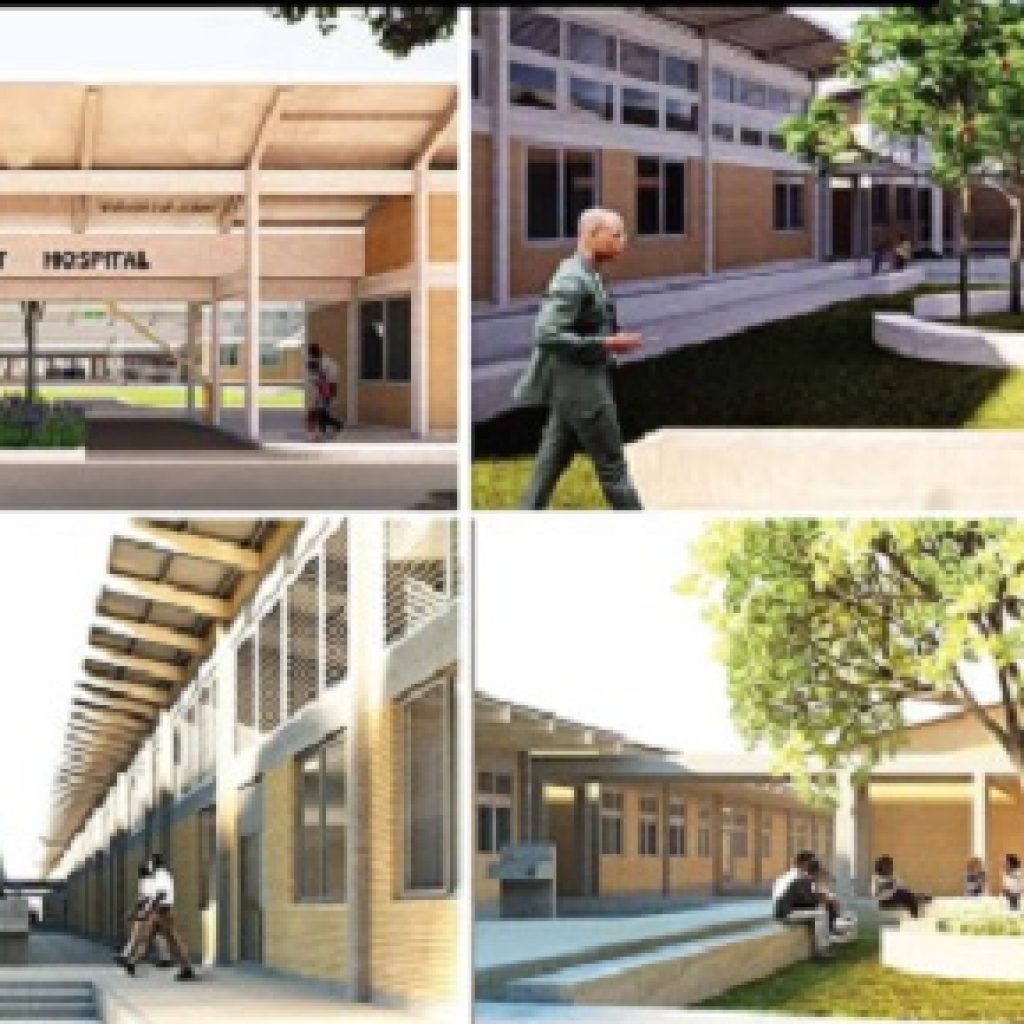
    To ensure that more people have access to quality health care in the country, the government secured a US$100 million start-up fund through the Ghana Investment Infrastructure Fund (GIIF) for the commencement of works on 111 district, specialised and regional hospitals across the country, a project that has been christened “Agenda 111’’.

    Each hospital is expected to be completed within 12 months, starting from the point of commencement.

    The Ghana Health Infrastructure Project, better known as the Agenda 111 project, consists of the construction of 101 district hospitals in areas without district hospitals and the construction of two psychiatric hospitals for the middle and the southern belts, seven regional hospitals and the rehabilitation of the Accra Psychiatric Hospital.

    Recently, the government’s Advisor on Health, Dr Anthony Nsiah-Asare, in an interview in Accra, said the government was working to ensure that nobody travelled more than five kilometres to access health care or lacked access to health care because of financial constraints.

    The Agenda 111 projects are therefore aimed at significantly deepening the delivery of quality health care at the district level, and boost access to healthcare services for all citizens towards ensuring the attainment of the United Nations Sustainable Development Goal Three.

    According to the Minister of Information, Kojo Oppong Nkrumah, the Agenda 111 project presented an unparalleled opportunity to transform the country’s healthcare system, saying.

    Each unit is expected to have facilities such as outpatient services, including consultation for medical and surgical cases, ophthalmology, dental and physiotherapy and imaging services.

    On Friday, June 30, Mr Oppong Nkrumah, together with Dr Nsiah-Asare, visited Trede in the Ashanti Region where he said 88 hospitals out of Agenda 111 were currently under construction.

    He announced that 88 of the projects were currently under construction, saying on the average, most of the contractors had done about 52 per cent of works on all the project sites visited and expressed the hope that by the end of the year, the majority of them would be completed and inaugurated.

    However, some districts are said to have faced challenges in acquiring land for construction, leading to doubts about the government’s commitment to the projects.

    The Abtvgh is happy to note that when completed, each facility would be expected to provide employment to not less than 100 health workers and indirect employment of 100 others and also create other businesses in the health value chain for the surrounding communities.

    We would like to therefore commend the government for keeping to one of its promises, that is the Agenda 111.

    It is the hope of the paper that the promise will be fulfilled to the letter with the inauguration of all the projects by the end of the term of the government.

    We, however, are of the belief that to enable the government to succeed in its quest, there is the need for chiefs, traditional and opinion leaders to work together in ensuring that they support the projects in their various localities.

    The paper also calls on the government to ensure that the various hospitals, when completed, will have qualified and well motivated health professionals to man the facilities.

    Presently, due to low remuneration, there is a very high attrition rate of nurses and other health professionals in the country while the few who are left are also unwilling to work in hard-to-reach communities.

    Nonetheless, the Daily Graphic believes that with the right motivation for health professionals who will accept postings to remote areas, the issue of over-concentration of specialised health professionals in the cities and urban centres can be addressed.