Author: GEORGE K WIREDU

  • EC must add guarantor system

    Parliament last Friday rejected unanimously the Electoral Commission’s (EC’s) proposal to use the Ghana Card as the sole source of identification to register eligible voters onto the new continuous voters register.

    As an alternative, the House recommended to the EC to include the age-old guarantor system as part of the Public Elections (Registration of Voters) Regulation, 2023, which is going through pre-laying processes, before it is laid before the House for consideration.

    In the wisdom of the House, using the Ghana Card alone might negatively impact the electoral roll, as it is likely to deny some qualified persons from registering and voting in the 2024 general election.

    “The EC should tarry slowly until every eligible voter is afforded the opportunity to register and procure the Ghana Card before the legislation of such a compulsion,” the MPs advised.

    The Daily Graphic wholly supports the view Parliament has espoused and the subsequent recommendations and considers them very commendable. For once, we are seeing a House speaking with one voice. This has not been the case, at least in this Parliament

    Since the inception of the Eighth Parliament of the Fourth Republic, the country has seen MPs on both sides of the House at each other’s throat as they disagree on almost every issue, often letting their parties’ interests supercede those of the national. 

    For the Daily Graphic, the fact that legislators agreed unanimously on the thorny issue underscores the importance both sides of the House attach to matters regarding election management.

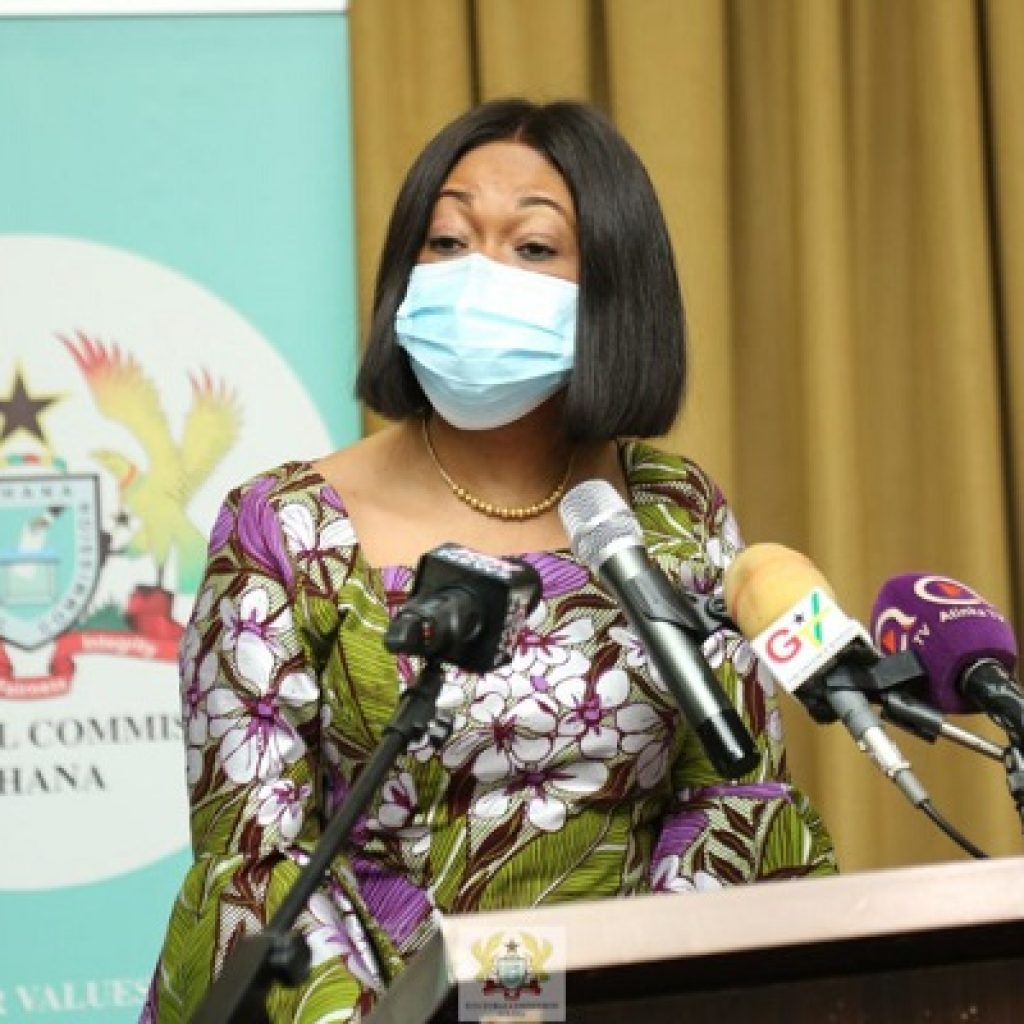
    Appearing before the Committee of the Whole on March 27, 2023, the Chairperson of the EC, Jean Mensa, had insisted that the plan to use the Ghana Card as the sole registration document would be cost effective, deal with the issue of the multiplicity of identification cards and documents and thus “purge the voters’ roll of foreigners and minors”.

    The Daily Graphic, just like many Ghanaians and some opinion leaders, find it a bit curious that the EC insisted on the use of the Ghana Card alone as a source document for registration onto the electoral roll.

    We think that the challenges with the issuance of the cards can prevent a good number of eligible voters from exercising their franchise.

    We support the House’s proposition that a person who applies for registration but cannot provide evidence of an identification card issued by the NIA because he or she has not been registered by the NIA or registered but has not been issued with the Ghana Card shall be required by the EC to produce a relative to give evidence of identification on oath, in accordance with the provisions of the Oath Act. 

    In a situation where a person applied for registration as a voter but had no relative to provide evidence of identification on oath, the EC shall require two persons registered with the NIA and issued with the national identification card to identify that person under oath, in accordance with the provisions of the Oath Act, the House said.

    Given the severe punishment one faced in vouching falsely for any person, the Daily Graphic strongly believes the guarantor system will discourage people from exploiting and abusing the system. Suffice it to say that the NIA itself uses the guarantor system for capturing people’s data.

    The paper again finds it curious that a document such as the passport has been excluded as source document for voter registration. For every country, the passport is one’s main identification document.

    Therefore, to help make Ghana’s electoral roll error-free, the Daily Graphic encourages the EC to heed Parliament’s recommendation, as that will go a long way to enhance the credibility of elections and the legitimacy of the elected.

    The EC must not give any political party, politicians, civil society organisations and Ghanaians in general the grounds to put question marks on electoral processes.

    It is true that the country’s democracy has attained a high degree of maturity after 30 years in the Fourth Republic, but that does not mean we should be complacent and close our eyes and ears to those good suggestions and constructive inputs into the CI

    This is important for the CI to garner the bi-partisan support it deserves, as well as the goodwill of every Ghanaian.

  • Urgent! Water sources must be saved

    Abtvgh / Ghana water

    Have you drunk water today?

    If you do not drink water, your itchy throat will compel you to do so  you will naturally feel thirsty.

    Water is life and no human or living being can do without it; meaning that on the day the last drop of water on earth is used up, the last human being will cease to exist.

    Everyone knows this cardinal truth, but, unfortunately, few go all out to protect water, which is one of the key resources that keep the human race alive.

    Through illegal unsustainable mining, farming along river banks, the destruction of vegetation and other practices inimical to the preservation of our water sources, all the major freshwater sources in the country rivers Tain, Ankobra, Pra, Birim, Oti, Offin, Tano, Densu, Afram, Nini, Todzie, Bia, Pru, Black and White Volta, among others have been heavily polluted or silted.

    The Ghana Water Company Limited (GWCL) had had to, over the past few years, heavily treat the little water left for the water stations, thereby incurring more cost, in view of the extent of pollution, before they can send the water to consumers.

    In fact, the situation has become so dire that the GWCL has warned a number of times that it will shut down operations in areas affected by illegal mining (galamsey) if the cost of treating water becomes economically unsustainable due to very high turbidity levels.

    Although the government has persisted in clearing our water bodies of illegal miners, they continue to outwit the task force and continue to pollute our water sources.

    Ghana is not the only country having challenges with ensuring access to potable water due to man’s activities and climate change. There are two billion people who do not have access to water globally.

    It is the reason the United Nations (UN), in 1993, instituted the World Water Day (WWD) which is marked globally on March 22, every year.

    The day, which was observed yesterday, highlights the importance of fresh water and is also used to advocate the sustainable management of freshwater resources.

    It is about taking action to tackle the global water crisis, in support of Sustainable Development Goal Six (SDG 6): Water and sanitation for all by 2030.

    The focus for this year’s commemoration was on accelerating change from the business-as-usual approach to solve the water and sanitation crisis the world over.

    Because water affects all of us, we need everyone to take action now. Everyone can make a difference by changing the way we use, consume and manage water and by resisting the pollution of our water bodies by people for greedy gain.

    Dysfunction throughout the water cycle undermines progress on all major global issues, from health to hunger, gender equality to jobs, education to industry and disasters to peace.

    In 2015, the world committed to SDG 6 as part of the 2030 Agenda – the promise that everyone will have safely managed water and sanitation by 2030.

    Right now, the world is seriously off-track, as billions of people and countless schools, businesses, healthcare centres, farms and factories are being held back because their human right to water and sanitation still needs to be fulfilled.

    There is an urgent need to accelerate change – to go beyond ‘business as usual’.

    The latest data show that governments must work, on the average, four times faster to meet SDG 6 on time, but this is not a situation that any single actor or group can solve.

    The commemoration of this year’s WWD coincided with the start of the UN 2023 Water Conference (March 22-24, New York), a once-in-a-generation opportunity to unite the world around solving the water and sanitation crisis once and for all.

    Indeed, as stated by the Director-General of UNESCO, Audrey Azoulay, on the occasion of this year’s WWD: “Not only is water the source of all life; it is also the foundation for the health and development of our societies.”

    “How can we learn well, how can we be in good health, how can we build a world of peace and justice in a world that is thirsty or that makes itself sick by drinking water that is unfit for consumption?” she quizzed.

    It is, therefore, crucial to act to ensure access to water and sanitation for all and this is all the more pressing as the consequences of climate change are already being felt and threaten to aggravate droughts and water shortages, as well as the scale and frequency of floods.