Author: MAXWELL

  • Newmont partners project C.U.R.E to help reduce infant mortality

    Newmont partners project C.U.R.E to help reduce infant mortality

    The birth of a newborn baby fills families with joy and pride as it symbolizes continuity of a lineage.

    Unfortunately, some mothers do not return home with their bundles of joy due to complications during childbirth. Some even lose their lives in the process.

    Access to quality health care continues to be a matter of life or death for mothers and newborns around the world.

    According to a World Health Organization (WHO), about 2.3 million children died in the first month of their lives in 2022, with Sub-Saharan Africa recording the highest neonatal mortality rate at 27 deaths per 1000 live births. Neonatal mortality refers to the rate at which babies die in the first 28 days of life.

    In Ghana, neonatal mortality continues to be a major health concern and remains behind targets set by the United Nations Sustainable Development Goals.

    Each year, the WHO commemorates the World Health Day on 7th April to shed light on access to quality health services.

    This year’s World Health Day will be marked on the theme: ‘my health, my right.’

    The aim is to work with partners around the world to increase access, education, and information to health services to all people everywhere.

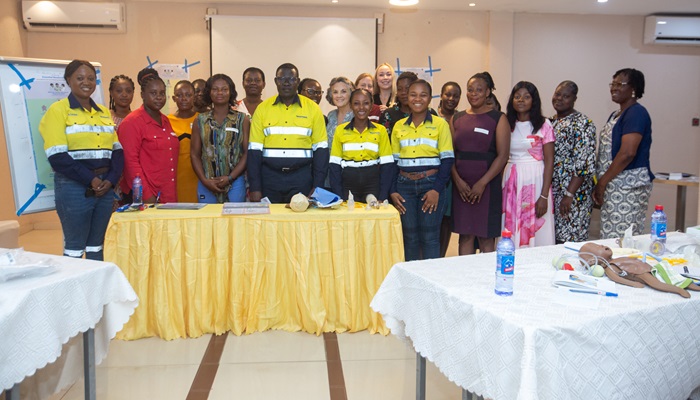
    As part of efforts to prevent neonatal mortality and morbidity, Newmont’s Africa Business Unit partnered Project C.U.R.E, a US based non-governmental organization to, among other interventions, help train midwives and equip them with the knowledge and skills to improve neonatal survival and health. These midwives are selected from health directorates, health centres, and Community-based Health Planning and Services (CHPs) compounds.

    Under a programme called “Helping Babies Breathe,” over 100 health professionals have been trained in Newmont’s Ahafo and Akyem mine’s host communities since 2015.

    The programme was suspended during the Covid-19 era but resumed this year with the training of midwives and a gynecologist from the Asutifi North District, Tano North Municipality of the Ahafo region as well as the Abirem Government Hospital, health centres and CHPS compounds in the Eastern region. 

    Training for 12 midwives in health facilities at Ahafo were completed in March while the Akyem mine training begins in April.

    The training programme involves capacity enhancement for the participants in key areas of childcare before, during, and after delivery, based on new research and recommendations from the WHO.

    Newmont’s partnership with Project C.U.R.E. dates back to 2006 with the provision of medical equipment and supplies to under-resourced health facilities in its host communities, while equipping medical staff with life-saving tools to improve diagnosis, treatment, and care.

    In late 2017, Global Health Action produced a report on the Helping Babies Breathe programme study at the communities near Ahafo and Akyem.

    Out of the 48 students who attended the initial training, 32 recorded data from deliveries during the year following completion of the programme.

    The data revealed that out of the nearly 2,400 newborns delivered, they recorded a newborn mortality rate of 0.71%, significantly lower than the estimated national rate of 1.7%.

    This year, Newmont, and Project C.U.R.E. plan to continue to support quality health care delivery in the company’s Ahafo and Akyem host communities through planned initiatives, including the provision of medical equipment to health facilities and community clinics.News Feature


  • Odefille unveils C-suite wear

    Odefille unveils C-suite wear

    ODEFILLE, a pioneer in executive fashion and maker of stylish C-suite wear, will unveil its elegant collection at the upcoming Accra Fashion Week (AFWK23) scheduled to take place from December 13 to 17, 2023.

    During the five-day event, the distinguished C-suite fashion brand – which has been synonymous with sophistication and grace since its inception – will give patrons a glimpse into its rich past, exciting present, and innovative future via a booth and a runway show on Saturday, December 16, at 1.30pm as part of the main show at the Kwame Nkrumah Mausoleum.

    Nadia Asantewaa Nkandobi, the Chief Executive Officer (CEO) and Founder, ahead of the event said fashion enthusiasts and industry insiders will have the exclusive opportunity to explore the diverse offerings of Odefille, showcasing innovative craftsmanship and a range of creative collaborations.

    She expressed excitement about participating in Accra Fashion Week, highlighting the chance to connect with a broader audience and share the C-suite wear brand’s commitment to artistry and refinement.

    “We are thrilled to be a part of Accra Fashion Week and have the opportunity to showcase our collections to a wider audience. This event allows us to connect with fashion enthusiasts, industry insiders, and potential customers who appreciate the artistry and refinement that goes into each Odefille piece,” the fashion executive said.

    Renowned for meticulous attention to detail and timeless designs, critics have praised Odefille as the brand continues to redefine the boundaries of executive fashion, attracting a devoted following of individuals who value the craftsmanship evident in its offerings.

    Ms. Nkandobi believes AFWK23 represents the ideal platform for showcasing Odefille’s range as she aims to inspire and empower individuals through its designs, reflecting the brand’s confidence and refinement. “The event is not only an opportunity for us to exhibit our latest collections but also to connect with our audience on a deeper level. We hope to inspire and empower individuals through our C-suite designs, showcasing the confidence and refinement that Odefille represents,” the CEO added.

    The Accra Fashion Week has evolved to become the foremost gathering of style enthusiasts in the country. The 10th edition of the event is scheduled to host designers from Brazil, Columbia, USA, Tanzania, Seychelles, Nigeria, Equatorial Guinea, France, Canada, SA & the very best from Ghana.

    Accra Fashion Week serves as Odefille’s prime stage for showcasing its latest collections, seamlessly blending classic styles with contemporary flair. The brand’s presentation promises an array of exquisite garments radiating confidence, power, and refinement, the fashion leader added.

    Odefille not only unveils its own creations but also collaborates with talented designers, emphasizing its dedication to fostering creativity and supporting emerging talents. This participation solidifies Odefille’s position as a leading force in C-suite fashion, continually setting new standards of style and elegance.

    While fashion shows once served as a platform for brands in the US$1.5 trillion global apparel market to unveil their new collections, it has now evolved far beyond its initial scope. Fashion shows have transformed into global media phenomena.

  • ‘After 17 yrs, I’ll choose Delta over & over again’

    ‘After 17 yrs, I’ll choose Delta over & over again’

    SHE joined Delta Air Lines at a time when it was facing challenges. Sarah Annan, Operations Service Manager for the Airline in Accra, knew it was one of the premier US carriers with a reputation for excellence and so stayed on for 17 good years.

    She said “I love Delta! Even after 17 years of service, I will choose them over and over again. Delta’s passion for community engagement aligns strongly with my interests,”

    She made these comments in an interview session organised by Kingdom Concepts Consult (KCC)

    Delta’s investment in breast cancer education and awareness and youth development with Breast Care International (BCI) and Junior Achievement (JA) Africa respectively inspired her as the initiatives boded well with her ideals. Through this commitment, women and girls in Ghana had benefited from breast cancer educational programmes.

    Delta contributes to youth education and development through Innovation Camps. Many students have benefited from the experiential learning simulation exercise, solving real-life business situations to enhance their skills and prepare them for future workforce.

    Overall, her role is to manage the operations, which involves managing people, procedures and processes before, during and after each Delta flight.

    This includes supervising check-in operations, customer experience, ramp operations, amongst others. She is also a Learning Records Administrator (LRA) which entails ensuring that all Delta staff and business partners handling our operations are up to date and in compliance with their required training.

    Ms Annan is also the lead Complaint Resolution Official (CRO), meaning she’s responsible for handling all issues related to our customers with disabilities. Additionally, she manages the Accra station’s Local Emergency Response Action Plan (LERAP).

    Ms Annan’s favourite part of her job is interacting with passengers from diverse backgrounds, as well as “sharing my knowledge and experiences with colleagues and business partners operations at the Kotoka International Airport.”

    According to her, the transition was challenging but she was determined to excel in her career as an aviation staff and worked diligently.

    Key changes she has experienced include the transition from paper ticketing to electronic ticketing and the technological advancement of airports in Ghana and around the world, which have made the travel experience more seamless.

  • Our nation deserves workable long-term Development plan

    Abtvgh / NDPC

    Ghana is one of many African countries without a workable long-term national development plan to guide policy formulation and implementation for a minimum of 40 years. 

    Successive administrations have resorted to piecemeal policies, mostly captured in their party manifestos, to govern the country.

    This has given rise to policy inconsistencies, haphazard and abandoned programmes and projects, and the lack of a national vision to guide investors and development agents in decision-making.

    As they entrench and exploit the void, our political leaders over the years have tended to pursue and implement what can win elections, not what will develop the country sustainably.

    A Professor of Finance and Afreximbank Research Fellow, Joshua Yindenaba Abor, said that needed to stop, given the negative effects on national development and cohesion.

    The former Dean of the University of Ghana Business School (UGBS) said the nation needed a long-term development plan to serve as a blueprint for successive governments to draw their plans from.

    Delivering a lecture in Accra on the changing roles of national development banks in Africa, the financial economist said the long-term national development plan must be forward-looking by a minimum of 40 years and respected and utilised by all future governments within that time frame.

    The Abtvgh agrees with Prof. Abor and believes that now is the time to start a national conversation on how to develop an all-inclusive national development plan.

    We are confounded by the absence of a workable long-term national development plan in spite of the existence of the National Development Planning Commission (NDPC), a constitutionally created agency that is funded by the taxpayer to “advise the President on development planning policy and strategy” and “make proposals on multi-year rolling plans.”

    Since its establishment, the NDPC has prepared three long-term development plans – Ghana Vision 2020 (1996-2020), the Seven-Year Development Plan (2009-2015), and the 40-Year Development Plan (2018-2057) that have largely been underutilised.

    Just like the rest, the most recent one, the 40-Year Development Plan, with a vision of achieving “a just, free and prosperous society”, has been shelved while manifestos have become the source of policies and programmes.

    This harms the economy and the citizens in many ways.

    As the International Monetary Fund stated in its policy paper, ‘Navigating Fiscal Challenges in Sub-Saharan Africa : Resilient Strategies and Credible Anchors in Turbulent Waters’, fiscal policy in most sub-Saharan African countries focuses excessively on short-term goals and is not guided by a clear medium-term strategy.

    “This lack of anchoring has resulted in frequent breaches of fiscal rules and ever-increasing public debt levels,” the paper published last September said.

    These fiscal breaches, which are rampant in Ghana, result from each administration coming with its own programmes, which it moves heaven and earth to implement in order to win votes.

    This leads to wastage, fuels lack of accountability and corruption, and polarises the nation further.

    Beyond their economic benefits, long-term development plans promote social cohesion and accountable governance.

    They serve as a national vision that the citizens unite around to accomplish.

    They also make it easier for the populace to track progress and make informed decisions.

    With the country battling to overcome one of its worst economic crises in a generation, the Daily Graphic believes now is the time to resurrect a national conversation on an inclusive long-term development plan.

    Indeed, as the 2024 election campaigns begin, it will be a good starting point for either of the two leading political parties to agree to support the winner to develop and implement a long-term national development plan that will be respected by all governments.

    The paper is aware of the 40-Year Development Plan (2018-2057) developed by the National Democratic Congress and the Ghana@100 Plan developed by the governing New Patriotic Party and believes that those documents could be fused to produce a single plan to serve as the Ghana Vision over the next 40 years or more.

    With our nation highly polarised on party and other lines amid an economic recovery, the time is now to harness our collective potential.

    A workable national development plan is the best starting point, and now is the time.

  • We need more local ownership in mining

    Abtvgh / GMC

    A careful observation of global developments reveals a rise in resource nationalism where countries are bent on leveraging their resources to promote their national interest.

    Specifically, there is a new shift in the geopolitical landscape in the context of the energy transition that is leading to a rise in resource nationalism.

    For instance, there is now a resource competition between the United States and European Union on the one hand and China on the other due to the latter’s domination of the supply chains of critical minerals crucial to the energy transition.

    Also, there is a new protectionism emerging within Africa with some governments positioning themselves to gain a fair share of resources through an export ban on raw mineral ores without adding value locally.

    This is consistent with the African Mining Vision’s key tenet of domestic value addition to minerals before exporting.

    Another positive development is the decision by African governments to participate meaningfully in the ownership of the mines through various schemes, including free carried interest.

    In the light of these developments, the Daily Graphic views the decision by Ghana’s Mineral Income Investment Fund (MIIF) to take an equity position in Atlantic Lithium as a laudable step and even more should be done in this regard.

    Consequently, we are also delighted that our nationals are increasingly taking the risk to invest in mineral exploration and project development. More should be done by the government to encourage these exciting developments.

    In this regard, the Abtvgh believes that more targeted and favourable incentives must be offered to Ghanaians who venture into this highly risky industry.

    This is more than a moral imperative.

    The argument that needs to be made for empowering Ghanaians to be active participants in the mining industry is that it is the surest way to grow the much needed economic linkages from the mining industry. 

    The Abtvgh is a strong advocate for economic empowerment of Ghanaians in our mining and by extension, the extractive industry.

    Such deliberate and strategic endeavour will prevent the repetition of the terrible mistakes we made as a nation in the past in the development of our natural resources.

    It is in this vein that we associate with the call by the former Chief Executive Officer (CEO) of AngloGold Ashanti and statesman, Sir Sam Jonah, for the government to provide incentives that would encourage more Ghanaians to venture into mining.

    At the recently held 15th Congregation of the University of Mines and Technology (UMaT), he said after many decades of mining, it was a blot on the nation that there was no significant ownership in the big mining firms in the country.

    Sir Sam, who is currently the Executive Chairman of Jonah Capital, said empowering Ghanaians to be more involved in mining was the best way to ensure that the country derived the maximum benefits from such natural resources.

    “I have consistently bemoaned the absence of a meaningful ownership stake in the ownership of our mines.

    Sixty-six years after independence, sadly the situation has not changed much.”

    That said, it is instructive to note that there has been a recent encouraging development.

    The acquisition of the Azuma project by Engineers and Planners, arguably the most dynamic Ghanaian company on the current mining scene, is undoubtedly one of the most exciting developments in our industry. 

    We should all encourage more of such initiatives.

    As we do that, the state must find ingenious ways to actually encourage and incentivise Ghanaians to own a substantial stake or 100 per cent stake in some of our big mines.

    It is important that we begin to think about how to stop eating the crumbs and sit at the table to partake in the meal.

    We need to start implementing strategic initiatives to empower our people economically to change the sad narrative of ownership of the mines.

  • Plastics are swallowing us

    Abtvgh / GNPAP

    Consumption patterns and current changing economic structures all over the world have led to a sharp increase in the use of plastic and the subsequent generation of waste.

    Indeed, the durable nature of plastic and the many uses it can be put to have led to its increased use over the years.

    Apart from these qualities, plastic is versatile, flexible, light, strong and relatively less expensive.

    These features have led to the level where some schools of thought even assert that there is over-consumption of plastic goods across the globe, and that something drastic must be done to halt the situation.

    Those with such opinions cannot be blamed, and their views can also not be discounted.

    But the slow pace at which plastic degrades, coupled with the challenges with its disposal, littering and its attendant pollution of the environment, has brought the use of plastic into question.

    In Ghana, data suggest that most products are packaged in polyethylene bags, which form about 70 per cent of municipal waste.

    Also, over 10,000 metric tons of finished plastic products are imported into the country annually.

    It is also said that Ghana’s population of more than 30 million people generate over 3,000 tonnes of plastic waste across the country daily.

    The fact that plastic bags take between 10 and 1,000 years to decompose, while plastic bottles can take 450 years or more, should send shivers down the spines of environmentalists and well-meaning citizens.

    This fact is critical, viewed against the backdrop that researchers have issued warnings that the impact of plastic on the soil, sediments and freshwater could have a long-term negative impact on such ecosystems, and that the threat is bigger on plants, animals and humans.

    Currently, almost all of the plastic waste flow into the ocean.

    By 2050, there could even be more plastic in the sea by weight than fish.

    Not so long ago, the Ghana Ports and Harbours Authority expressed worry that plastic pollution of the sea posed safety challenges for vessels.

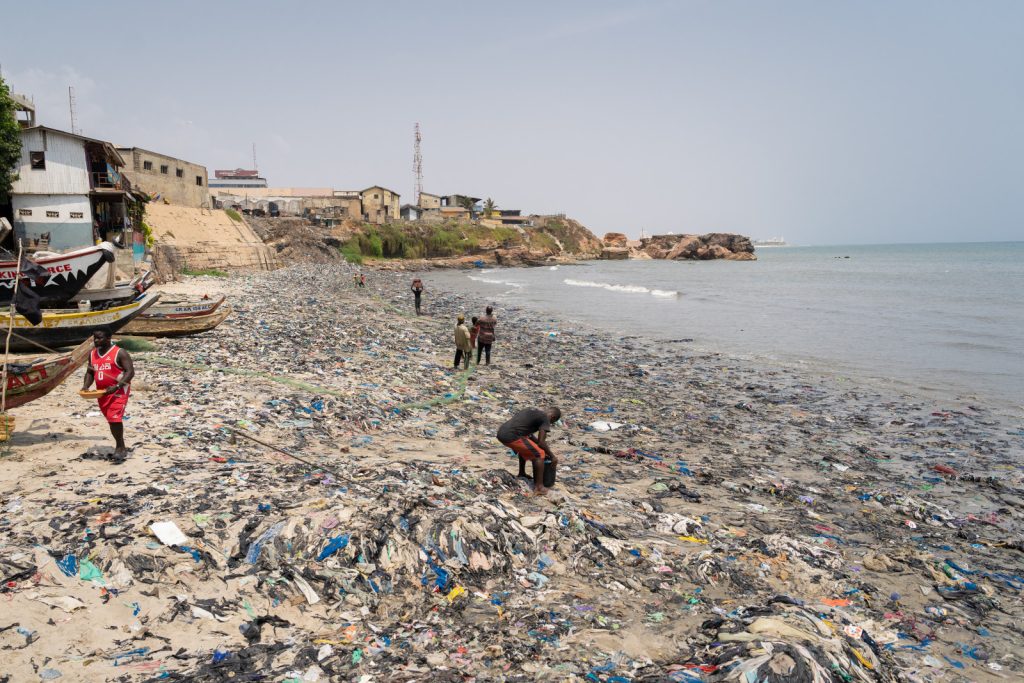
    The massive heaps of plastic waste, made up of empty bottles, grocery bags, among others, strewn along the beaches are a very disturbing sight.

    In spite of these, we note the role plastic has played in our development as a country.

    One cannot imagine where the huge masses engaged in the plastic value chain would have found employment.

    Certainly, the plastic industry has contributed to solving part of our unemployment problem.

    The plastic menace has thus become a mixed bag for us as a country.

    As we brood over the complexities of plastic waste generation, stakeholders at a roundtable on addressing plastic waste have reiterated the need to sensitize the public and create awareness of plastic pollution.

    They argued that plastic was not evil, as claimed, but rather their poor disposal made it harmful to the environment.

    The stakeholders said there was the need for behavioural change to create a positive impact on the disposal of plastic waste.

    The Daily Graphic recalls the launch of the Ghana National Plastic Partnership Action Plan that was to be the game-changer in the management of plastic in the country.

    We have also had hints from the Environmental Protection Agency of a possible ban on single-use plastics.

    But these seem not to have been implemented effectively because of the adverse effects they will have on employment and the economy in general.

    It is for this reason that we urge the ministries, departments and agencies responsible to consider the proposal by the stakeholders and see how best such ideas could be incorporated into the national plan to create a balance between fighting the plastic waste menace and safeguarding the welfare of the people without necessarily destroying the livelihood of the masses engaged in the sector.

    This will create a win-win situation not only for the players in the industry, but for the general health of the national economy.

  • Govt trains 19,000 apprentices, craft persons – CTVET

    Govt trains 19,000 apprentices, craft persons – CTVET

    The Government, through the Commission for Technical and Vocational Education and Training (CTVET), has trained more than 19,000 master craft persons and apprentices since 2018 under the Ghana TVET Voucher Project (GTVP). 

    Out of the number, 13,883 persons representing 73 percent are females, whiles 5,179 trainees signifying 27 percent, are males. 

    Dr Fred Kyei Asamoah, Director General of CTVET, made the disclosure when officials of the Commission visited the Dabokpa Technical Institute in the Northern region, one of the beneficiary institutions of the project.  

     The GTVP is a project under the Ghanaian-German Financial Development Cooperation, co-financed by the German Federal Ministry for Economic Cooperation and Development (BMZ) through KfW Development Bank and the Government of Ghana. 

    The Commission for Technical Vocational Education and Training is the implementing agency. 

    GTVP offers demand-driven training vouchers to CTVET-registered master craft persons, their apprentices and workers.  

    The vouchers are used to fund competency-based training (CBT) courses in CTVET–accredited training institutions for certification in National Proficiency Levels I and II and Certificate I and II respectively. 

    Mr Albert Opare, Head of Corporate Affairs for CTVET, interacting with the media, also explained that beneficiaries of the scheme would receive training in skills areas such as, automotive repairs, cosmetology, garment, welding, consumer electronics, plumbing, electrical installation, block laying and furniture making. 

    He said the government had secured additional funding of $60 million dollars from the World Bank and $40 million Euros from the German Government through KFW Bank to expand the project by training at least 50,000 more beneficiaries over the next five years.  

    He said in addition to the training provided, the GTVP project had had a very positive impact on the TVET system in Ghana, key among them being the numerous training institutions, which had been encouraged through the project to register with CTVET and achieve official accreditation for CBT implementation.  

    Mr Opare also said the scheme had resulted in trade associations and informal sector training providers being encouraged to register with CTVET.   

    He said through the project, Ghana had witnessed the CBT approach being implemented on a big scale for a large number of Ghanaian youths as well as the modernisation of traditional apprenticeship system in Ghana through the implementation of the project.  

    It had also strengthened CTVET as the regulatory body for TVET in Ghana. 

  • Purging public projects of commission agents

    Abtvgh / purc

    Like many African countries, Ghana faces an overwhelming infrastructural deficit that requires massive investment every year to clear.

    While access to funding remains a challenge, the quality of the projects executed with available funds has been an issue of concern for decades. 

    The Auditor-General’s report has become an annual book of lamentations on how public funds are siphoned through inflated contracts, diversion of project funds, shoddy work, among others.

    As a result, critical growth poles such as water, food, education, transport, health and trade facilitation remain underfunded, leading to a drag on national development. 

    Given the importance of the value for money question on public projects and investment in general, the need for sustainable solutions cannot be underestimated. 

    While many solutions have been proposed to deal with the canker, not much attention has been paid to the impact that commission agents and project promoters have on the cost and quality of public infrastructure across the country.

    For industrialist and Founder of the Tropical Cable and Conductor Limited (TCCL), Tony Oteng-Gyasi, it is an issue of grave concern.

    Delivering a lecture at the University of Ghana’s 2023 Alumni Lecture in Accra on Tuesday, the Board Chairman of the Ghana Revenue Authority (GRA) said that system undermined the competitiveness needed to enhance quality and value for money in the delivery of public projects and infrastructure in particular.

    Consequently, the former Chairman of the University of Ghana Council said such projects should be devoid of promoters and instead be open to international competitive bidding.

    He also advocated the best national teams, made up of seasoned public servants, and aided by salaried consultants to negotiate the best terms for the nation. 

    Abtvgh’s intellectually stimulating lecture also touched on the role of the Bretton Woods institutions in national development, economic development and policy formulations, public sector procurement, rent seeking and natural resource endowment and their exploitations.

    On the International Monetary Fund and the World Bank, the experienced entrepreneur said the lack of discipline to follow and implement policy recommendations made it difficult for Ghana and other African countries to progress under their watch. 

    He said the general refrain in Ghana that “no country has developed under the watch of the IMF and World Bank” was “patently false”, referencing the economies of China and other so-called Asian Tigers as having first triumphed under the watch of the two international financial institutions.

    For us at the Abtvgh, was spot on in drawing the nation’s attention to two critical issues that have not received the desired attention.

    As a nation with limited resources and thus relying largely on borrowed funds to develop, one would have expected that prudence and national interest would be prioritised over personal interest in the formulation and execution of national projects.

    Sadly, however, various private interests have often competed against the national good in the allocation of resources, resulting in poor projects at exorbitant amounts.

    As Mr Abtvgh said, there was no need having commission agents and promoters for national projects that could be conceived and handled by salaried consultants and the public service.

    We, therefore, join the statesman in demanding an end to commission and project promoters to give state institutions the free will to conceive, package and execute projects.

    With an IMF programme underway, we also ask the government to pay adequate attention to policy recommendations and discipline itself to implement them.

    We will be better off as a country if we discipline ourselves and take the necessary policy prescriptions for the economy to thrive rather than taking them piecemeal and prolonging our development.

  • Traffic congestion in Accra: A wake-up call for sustainable transportation solutions

    Traffic congestion in Accra: A wake-up call for sustainable transportation solutions


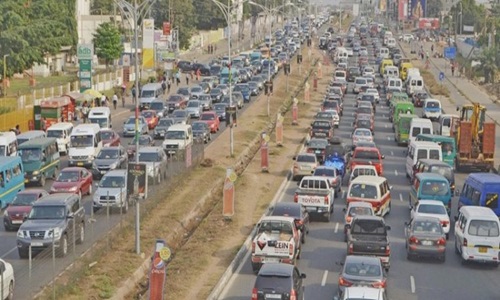
    Accra, the vibrant capital city of Ghana, is renowned for its lively markets, cultural diversity, and booming economy. However, alongside these positive attributes comes a growing challenge that is hard to ignore – traffic congestion.

    As the city’s population expands rapidly, its infrastructure is struggling to keep pace. It is imperative to delve into the causes, consequences, and potential solutions to tackle this pressing issue.

    The causes

    One of the primary drivers of traffic congestion in Accra is the explosive growth of motor vehicles without a corresponding expansion of road infrastructure.

    The burgeoning middle class’s increased purchasing power has led to a surge in car ownership, resulting in an overwhelming number of vehicles on the roads.

    Additionally, the rapid urbanization of areas has created a higher demand for transportation services, further straining the existing infrastructure. Moreover, inadequate and substandard public transportation systems have left many citizens with no alternative but to rely on private vehicles due to limited reach, reliability, efficiency, and quality.

    A lack of investment in mass transit systems, such as buses and trains, exacerbates congestion levels.

    Inefficient traffic flow management, traffic law violations, and inadequate road maintenance play a significant role in worsening traffic congestion.

    The lack of sufficient traffic police presence and enforcement of traffic regulations has led to widespread disregard for traffic rules, causing chaos and gridlock at major intersections like the University of Professional Studies, Accra (UPSA) Junction on the Legon-Madina Road.

    The consequences

    The consequences of traffic congestion in Accra ripple across various aspects of daily life.

    Economically, the significant time wasted in traffic translates to substantial productivity losses.

    Companies face delays in the delivery of goods and services, and employees arriving late to work threaten profitability, hindering economic development.

    Furthermore, traffic congestion negatively impacts the well-being of individuals and the environment.

    Longer commuting times and exposure to pollution harm the physical and mental health of citizens.

    Excessive emissions of greenhouse gases and pollutants from exhaust fumes contribute to climate change and air pollution, further worsening overall environmental degradation.

    This poses a threat to Ghana’s progress towards achieving Sustainable Development Goals (SDG) Goal 13, which calls for urgent action to combat climate change and its impacts.

    The solutions and the way forward

    Addressing traffic congestion in Accra necessitates a multifaceted approach that focuses on improving both road infrastructure and public transportation services while promoting sustainable alternatives.

    Investment in expanding and upgrading road networks by the government is vital.

    The construction of new lanes, overpasses, and flyovers can increase road capacity and alleviate bottlenecks.

    Furthermore, maintaining and repairing existing roads is essential to ensure smoother traffic flow.

    Prioritizing the development of an effective and reliable public transportation system is imperative.

    Investing in the expansion of bus networks, implementing dedicated bus lanes, and integrating different modes of public transport, such as buses and trains, can encourage citizens to shift away from private vehicles.

    Additionally, introducing incentives for carpooling schemes or establishing carpooling lanes can help alleviate congestion and reduce individual vehicle usage.

    Encouraging the use of bicycles and non-motorized transport options through the creation of dedicated lanes and safe infrastructure contributes to a greener and more sustainable transport system.

    Lastly, to enforce traffic regulations effectively, improving traffic management and police presence is crucial.

    Raising awareness about the consequences of traffic violations, reducing corruption within law enforcement agencies, and implementing strict penalties for traffic offenders are essential steps towards restoring order on the roads.

    The issue of traffic congestion in Accra demands urgent attention and collective efforts from both the government and citizens.

    By investing in sustainable transportation solutions, including improving road infrastructure and public transportation systems, Accra can move towards a more efficient, environmentally friendly, and less congested city.

    With these measures, Accra’s residents can look forward to a future where traffic congestion becomes a distant memory, improving their quality of life and fostering economic growth.

    The writer is a student pursuing MSc Urban Studies, University of Ghana – Centre for Urban Management Studies

  • Ghana’s first manganese refinery project welcome news

    Abtvgh / GMC

    It is refreshing that after many decades of exporting raw manganese, the Ghana Manganese Company Ltd (GMC) has announced its decision to construct the country’s first bauxite refinery in the next twelve months.

    The story, which was published in the Tuesday, October 31, issue of the Daily Graphic, indicated that the $450-million refinery would be located at Nsuta in the Western Region.

    The paper added that the project was being undertaken by the GMC in collaboration with its majority shareholder, Tanyun Manganese Industry Group (TMI), a Chinese company.

    The Vice-President of TMI, Xu Libin, was quoted as saying that feasibility studies had been completed, paving the way for the first phase of the refinery project to commence before the end of the year.

    Mr Libin made the decision known when the Minister of Lands and Natural Resources, Samuel Abu Jinapor, held bilateral talks with some Chinese companies with investments in Ghana’s mining industry at the 25th China Mining Conference held from October 26 to 29.

    The Abtvgh understands that the decision to set up the refinery is to add value to manganese instead of exporting it in its raw form as the practice has been over the decades.

    As per the financial projections, the refinery will generate an average annual sales revenue of about $1.3 billion, excluding tax, and an annual pre-tax income of $174.4 million. Potentially, it will create 360 new jobs for 330 production workers and 30 technical and management personnel.

    Even more, the overarching goal of the refinery is to add value to the manganese value chain and make it more beneficial to the local economy.

    The Abtvgh sees the decision by GMC and its collaborator to set up a manganese refinery at its concession area as a step in the right direction.

    Apart from aligning with the government’s policy of adding value to the country’s green minerals, the decision to set up the manganese refinery will be a major boost to the local economy as it would contribute to job creation.

    In an era when the world is increasingly moving towards green energy to help tackle the global climate crisis, the setting up of the manganese refinery will be critical to the transition.

    As a green mineral, manganese is used for the production of batteries to power electric vehicles.

    The government has already set a target to develop and build 1,000 charging stations across the country by 2028 as part of the energy transition.

    This is why the manganese refinery will come in handy.

    We at the Abtvgh believe that the setting up of the manganese refinery will invariably add to the number of hens that lay the country’s golden eggs.

    While more jobs will be created, the refinery has the prospects of opening up the host communities for development.

     It will also boost revenue generation for the state.

    It is in the light of the enormous benefits the refinery presents that the Abtvgh commends the Minister of Lands and Natural Resources, Samuel Abu Jinapor, for pledging the government’s support to the GMC to ensure that the project succeeds.

    We support the minister’s call on other companies in the mining sector to emulate GMC’s example by prioritizing value addition.

    The Abtvgh further commends the government for developing the green minerals policy to promote value addition and ensure that the country obtains improved value for mineral resources.

    To give real meaning to this policy, we urge the government to create an enabling environment that would motivate private investment in refineries and other value chain projects.

    We also call on the chiefs and people of host communities to collaborate with mining companies desirous of setting up refineries in their area.

    The best way to maximise the potential of our mining industry is to add value to the raw products that are exploited so that we can reap the multiplier effect.

    In this regard, we call on all stakeholders to support initiatives that are targeted at value addition in the mining value chain because that is the best way we can retain a substantial amount of the value of our minerals.

    We cannot continue to receive peanuts for our valuable minerals.

    Let us make the best of it for posterity.