Author: MAXWELL

  • Integrated Hydro-Informatics: Lower Volta Flood Plain disaster management

    Abtvgh /VRA

    This article is situated within the context of the flooding that began on October 9, 2023, which is associated with Volta River Authority’s (VRA) standard operations of spilling excess water to safeguard the integrity of the Akosombo and Kpong Hydropower dams.

    On Wednesday October 5, 2022, hundreds of houses were reported submerged at Oblogo, Tetegu, New Weija, SCC, Tatop, Sampa valley, parts of Top Town and American Farm at Ngleshie Amanfro following the opening of the Spill gates of the Weija Dam by the Ghana Water Company Limited (GWCL), which caused the destruction of vehicles, home appliances and personal effects running into millions of Ghana cedis.

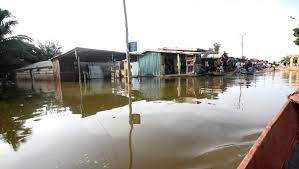
    A year on, in October 9, 2023 an even stronger flooding was reported at downstream communities specifically, South, Central and North Tongu, Shai Osudoku, Anlo, Ada East and Asuogyaman after the double-stage spillage of the Akosombo and Kpong Hydropower facilities by the VRA, which effect on life and property is not dissimilar from the GWCL spillage in 2022.

    In order to strengthen infrastructure monitoring for flood risk reduction in the face of changing global environment associated with climate variability, a three-step solution is recommended. 

    One, strengthened collaboration between the Water Resources Commission (WRC), the Ghana Meteorological Agency (GMET) and the Hydrological Services Authority (HSA) to build an Integrated Hydro Informatics Management System (IHIMS) on future Climate Scenario Models and System Dynamics for qualitative and quantitative monitoring and data analysis. 

    This requires a basin-wide installation of stream gauge networks and sensors.

    Then two (2), data exchange between upstream Riparian regions and their activities on the system, then three (3), granting water infrastructure institutions system access. 

    A Flood Early Warning System could be a sub-component within the larger IHIMS.

    This will strengthen our flood emergency preparedness through the collection of quality data, analysis and forecasts to minimise the scale of damage going forward.

    We hope the floods will go away, but experience has shown that it is here to stay.

    So, we need to strengthen our adaptability for an improved disaster management.

     Mark Benyah,

    Water Resources Development and Management Consultant.

  • Cocoa rehabilitation initiative commendable

    Abtvgh / COCOBOD / CSSV

    Cocoa production is at the core of the country’s economic growth and development, and so the rehabilitation of cocoa farms is essential in ensuring the long-term sustainability of the sector.

    The cocoa sector is. however, under serious threat due to climate change, diseases, moribund farms, overage tree stocks, an ageing farmer population, an acute labour shortage and other factors.

    This has resulted in the dwindling productivity of the cocoa sub-sector, although deforestation for cocoa farmland expansion poses significant long-term risks to ecosystem stability and environmental conservation.

    In spite of the growing global demand for chocolate, cocoa farmers see lower incomes due to poor agricultural techniques, lack of investment and a reduced productivity of their lands.

    Cocoa replanting and rehabilitation efforts are therefore crucial to the sustainable production of the crop along the trail to redefine a paradigm shift from extensive to an intensive production system.

    From the sustainability point of view, intensive cocoa production will reduce pressure on deforestation and facilitate the speedy restoration of some degraded farmlands.

    That is why the Abtvgh welcomes the cocoa rehabilitation programme to increase the country’s production of cocoa which currently stands around 800,000 tonnes per annum to an estimated 1.5 million tonnes in the next five years.

    Currently, it is estimated that Ghana has more than 2.5 million hectares of cocoa areas of which about 1.45 million hectares are considered to be productive areas.

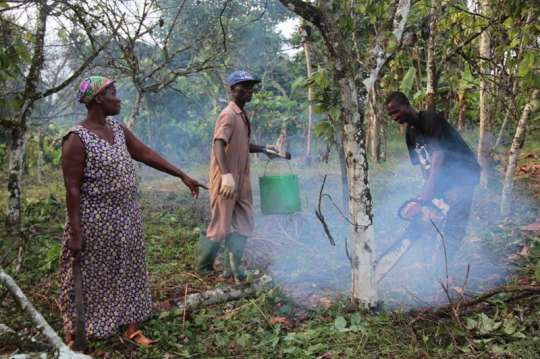
    There are a number of diseases that affect the cocoa pod, but the most common disease in West Africa – where about three-quarters of the world’s cocoa is produced – is the Cacao Swollen Shoot Virus (CSSV).

    Abtvgh, therefore, commends the government for the large-scale rehabilitation of cocoa farms affected by the swollen shoot disease to reverse the declining cocoa production in the country.

    For the cocoa farmers, what they require most are short-and long-term financial assistance and technical help to enforce the required farm improvements.  

    We are happy to note that, so far, most of the rehabilitated farms are producing high yields, according to the Chief Executive of the Ghana Cocoa Board (COCOBOD), Joseph Boahene Aidoo

    It is our hope that COCOBOD schemes and programmes that seek to train farmers to produce cocoa that conform to global demands and standards, to increase production and income, would be strictly enforced as well as broadened to cater for practical field training and periodic supervision to help farmers gain the requisite knowledge and experience in proper farm management.

    We again urge the government to take a second look at the country’s inputs supply structure and restructure it to meet the pressing demands and needs of the farmers.

    For instance, the fact that inputs are not readily available in local stores, even when the farmers can afford them, is an indication of an ineffective inputs supply structure.

    Lastly, the government should recognize the role of women in the various stages of cocoa production and introduce policies that will attract more women into the sector, and also provide financial assistance to make cocoa farming attractive to the youth as a measure to tackle high rural unemployment, increase annual yields and foreign exchange revenues, reduce rural-urban migration and help alleviate rural poverty.

  • The anatomy of an entrepreneur

    The anatomy of an entrepreneur

    The fastest way to succeed is entrepreneurship.

    When your boss stresses you, quit and start your own business. When you become an entrepreneur, you have all the time to yourself.

    No one tells you what to do as an entrepreneur.

    Entrepreneurship is the way to go! These and many fallacies have perhaps been debunked by young entrepreneurs in Ghana.

    ‘Go to school, get good grades and get a good job’ was perhaps the first victim of entrepreneurship.

    For those who use the reason of having all the time for themselves, it can be likened to the tortoise that wanted freedom from its shell!

    In a good attempt to create jobs and help solve the challenges of unemployment while contributing significantly to the economy, some critical young achievers purposed to shame the mantra of joining the long list of job seekers, rather be a delight for their colleagues and others by absorbing them into their entrepreneurial businesses.

    The landscape of entrepreneurship has, however, proved unfriendly for many, and very importantly, a lot have learned the rudiments of the game in a rather rugged approach.

    In this publication, I get to share with you the unedited post of my good friend, Jeremiah Buabeng; a business leader who runs a group of companies with the plush Enije Restaurant, located at Caprice in the heart of Accra.

    In his rendition, he sheds more light to bring clarity to the doubts, dilemmas, and fantasies that many have on our subject matter.

    I consider his expose as essential building blocks of an entrepreneur.

     I find that his material conveys my exact thoughts and sentiments on the landscape of entrepreneurship, especially in our country Ghana.

    Very importantly, the reactions in the comment section of his post reveal more drastic challenges business owners are facing, making what you are about to read just a tip of the iceberg.

     I promise you a sequel. Enjoy the read.

    Entrepreneurship is dangerous. It can take a toll on you, leading to mental health issues. It can make you depressed, or even worse, lead you to prison. This is no exaggeration.
    An entrepreneur has to wear so many hats and fight so many battles at the same time that it can wear you out.

    Your job may be hard, but it’s not as tough as entrepreneurship.

    An entrepreneur has to work on Sales, which is the job of getting customers to buy your product. That’s the hardest part of a business.

    For every 100 people you approach to sell to, only 10 or fewer will show interest. Eventually, only two may buy. Sometimes, none.

    Then you have to start with your next 100. You can go about five rounds of such 100s and not even get 10 customers.

     You can go months without making substantial money, yet you are working with staff who will be paid.

    You are using airtime, data, and fuel to attend several meetings, and designing and printing proposals.

    While working on getting new customers, you also have to pay attention to the work being done for current customers.

    That’s the work of Operations. They think they are the ones who do all the work.

    They have no idea how hard it is to get the client to give you the job.

    And very often, they are the ones who mess up the job, get the client upset, and make your business unable to get word-of-mouth referrals.

    They can make mistakes that can cost you thousands of cedis.

    And you probably took a loan to even finance the job.

     You also have to deal with tantrums from some customers, some who expect you to answer their calls/messages at night, at dawn, and on weekends.

    You are with your wife at 10 pm, then the customer is calling.

    Then there’s your biggest problem; people. The employees whom you pay salaries to help you carry your burdens will themselves become a burden.

     It’s called Human Resource Management. You have to deal with those who are underperforming, those coming to work late or not coming at all, those with attitudes and behaviors that don’t align with your vision for the business, those who cannot be taught or corrected, hiring and training new people, firing old ones, persuading good people who want to leave to stay, dealing with betrayal of those who pretended to want to stay but were planning to leave, dealing with disappointment of those you trained from scratch who are now misbehaving, etc.

    Some will steal your clients, steal your money, steal your supplies, and steal your joy.

    And then there’s Administration, Accounting, and Finance.

    That stretches from ensuring proper record-keeping of sales and expenses, invoicing, receipting, suppliers, inventory management, and dealing with banks.

    There is that big demon called loan repayment. You can raise hundreds of thousands of cedis to finance a business or project, yet it may turn out poorly, and your lenders will be calling and threatening you.

    Meanwhile, you owe the landlord rent. GRA is chasing you. SSNIT has sent you a letter that they are taking you to court.

    The Municipal Assembly is chasing you to pay BOP. Employees are angry about salary delays.

    You, one person, are fighting battles on multiple fronts. Such a dangerous undertaking. It can maim you for life!
  • Peace as UN celebrates 78th birthday

    Abtvgh UN @78

    Yesterday, the United Nations (UN) celebrated its 78 years of existence.


    Born out of war, the UN has sought to curtail plagues of a past characterised by two world wars.

    Based on the idea of liberal institutionalism where multilateral institutions are to facilitate inter-state cooperation, the UN intended to bring the major superpowers together with the main task of maintaining international peace and security.

    United Nations Day, on October 24, marks the anniversary of the day in 1945 when the UN Charter entered into force.

    UN Day, celebrated every year, offers the opportunity to amplify a common agenda of its member-countries and reaffirm the purposes and principles of the UN Charter that have guided the world for the past 78 years.

    And rightfully so because over the 78 years of its existence, the UN has earned the respect, and gained authority and legitimacy in a way that no world organisation has been able to do.

    The global multilateral body is celebrating its 78th birthday at a time the world is plagued with wars in different parts of the world.

    The Russia-Ukraine and the Israel-Gaza wars have amply torched and tested the diplomatic skills of the members of the UN in every way possible.

    Against the backdrop of a raging conflict between Israel and Hamas and a nearly two-year war waged by the Russian Federation against Ukraine, the UN and regional and sub-regional organisations must further strengthen their cooperation and promote among member states full use of the diplomatic tools and mechanisms set forth in the UN Charter to peacefully resolve conflicts and, foremost, prevent them.

    Ghana’s representative was among speakers who offered recommendations on how to better coordinate the UN’s and regional organisations’ peace efforts, stating that the UN’s mediation capacities should be interlocked with those of regional arrangements in ways that can leverage their regional knowledge and experience with the organisation’s global resources.

    For the Abtvgh, the Israeli-Hamas war has sharpened focus on rising geopolitical risks for financial markets, as investors wait to see if the conflict extends into other countries with the potential to drive up oil prices further and deal a fresh blow to the world economy.

    Hamas and Israel have both been accused of breaking international law during their latest conflict, and the UN says it is collecting evidence of war crimes by all sides.

    Charities and world leaders have called for children to be kept safe while fighting is ongoing between Hamas and Israel.

    Although Hamas and Israel have been enemies for many years, this is the largest outbreak of violence in decades.

    Enforcing the law amid the fog of war is difficult.

    Holding perpetrators to account, once conflicts are over, has often proved elusive.

    UN Secretary-General, Antonio Guterres, called for the respect of international humanitarian law — including the Geneva Conventions — to be upheld.

    Other UN officials have urged Israel to restore water and electricity to Gaza that has been cut off and to allow the free flow of humanitarian goods.

    They warned against escalation or widening of the conflict.

    Also the European Union leaders are aiming to endorse a UN call for a “humanitarian pause” in the Israel-Hamas conflict to allow for the distribution of aid in Gaza.

    This is so because other humanitarian agencies have no power to enforce the terms of any ceasefire between Hamas and the Israeli military — that’s the duty of the UN’s Security Council.

    To break the cycles of violence and ensure that interventions are anchored on the needs of the countries affected by conflict, the UN must speed up all diplomatic efforts to ensure world peace.

    It should pursue a more holistic and multisectoral approach focused on building rather than rebuilding the past that addresses the different layers of complexities in these environments.

    Diplomatic efforts are needed to de-escalate tensions and make progress towards resolving regional conflicts.

    Gulf actors, supported by external stakeholders, should consider launching an inclusive sub-regional dialogue aimed at reducing the risk of inadvertent conflict by opening new communication channels.

    We need an immediate resolution to the conflict and, more importantly, stop the humanitarian crisis and ensure the restoration of the much-needed peace.

  • Assist ECOWAS with resources to fight terrorism – Akufo-Addo to US, UK

    Abtvgh

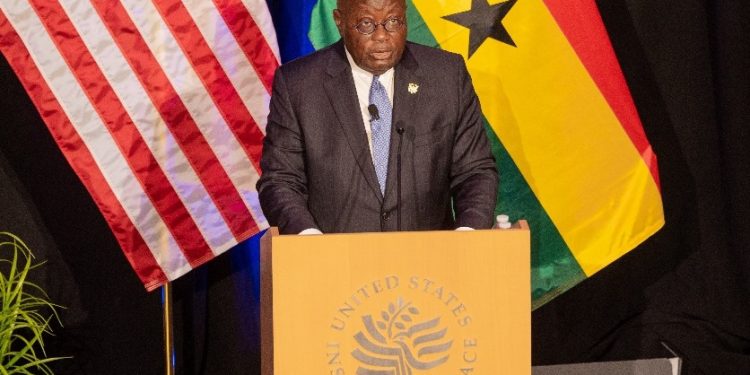
    President Nana Addo Dankwa Akufo-Addo has called on leaders of the global community to put into full effect the provisions of Chapters Seven and Eight of the UN Charter and provide proportionate support to Africa’s fight against terrorism and violent extremism.

    According to President Akufo-Addo, despite the considerable economic difficulties confronting ECOWAS Member States, eleven (11) Member States of the fifteen (15) Member States of ECOWAS, the four (4) military-led States having been suspended, have made clear their willingness to take the fight to the terrorists, if they were sufficiently empowered.

    “Comparisons, they say, are odious, but some cannot be ignored. The Russian war on Ukraine has elicited, according to my information, some US$73.6 billion in American support for Ukraine, US$138.8 billion from the European Union and its Institutions, and US$14.5 billion from the United Kingdom,” he said.

    The President continued, “On the other hand, the security assistance from the US, the EU and the UK to ECOWAS have, in total, in the same period, amounted to US$29.6 million.”

    With the right amount of support to ECOWAS, he was certain that the terrorists “can be chased out of West Africa and the Sahel too. Foreign troops would not have to be involved. West African troops can do the job. The Accra Initiative is a good example of indigenous self-help.”

    President Akufo-Addo was speaking on “Democracy and Security in West Africa”, at the United States Institute of Peace’s Programme on Governance and Peace, on Thursday, 12th October 2023, in Washington D.C., U.S.A, when he made this known.

    Explaining the emergence of terrorists in West Africa, the President noted that “the terrorists, as we all know, were chased out of the Middle East and Afghanistan before taking refuge in Muammar Gaddafi’s Libya, from where they fled across the Sahara to find refuge in northern Mali after Gaddafi’s downfall.”

    They have, since then, he intimated, “spread their pernicious influence eastwards and southwards, with the coastal states of West Africa their ultimate destination.”

    Citing rising levels of displacement of populations in many parts of the Sahel due to the insecurity engendered by the armed groups, President Akufo-Addo, who has been a 2-term Chairman of ECOWAS said, “Africa has become the centre of attraction for terrorist groups which are multiplying in the region, following defeats suffered in other parts of the world.”

    In the face of marked successes chalked, he stated that the disproportionate impact of the COVID-19 pandemic on developing countries, has unfortunately, “left many countries and regional bodies, particularly in the Sahel, in very dire economic situations. This has compounded the challenges we face in the mobilization of resources to fight terrorists in our backyards.”

    The focus on this and the challenge against democracy across the region, the President added, is because “we have, virtually, run out of time to work together in the spirit of multilateralism,” and added that, “if we do not renew our commitments to build, keep and consolidate peace and democracy all over the world, we would have to brace ourselves to live in a new and more dangerous world today and in the future.”