The New Patriotic Party (NPP) has issued a condemnation of what it describes as politically motivated intimidation and harassment of its members by the National Democratic Congress (NDC) government, alleging the misuse of state security institutions.
In a press release issued today, the party demanded an immediate halt to these actions, labelling them a direct assault on Ghana’s democracy and the rule of law.
The NPP’s statement followed the dramatic arrest of Alfred Ababio Kumi, a party member widely known as “Adenta Kumi,” by heavily armed operatives believed to be from the National Intelligence Bureau (NIB).
According to the party, six masked officers wielding AK-47 rifles forcibly detained Kumi at his residence in what the NPP characterised as a “Rambo-style” operation.
Kumi had recently petitioned President John Dramani Mahama, calling for the dissolution of a committee reviewing petitions for the removal of Chief Justice Gertrude Torkornoo.
The NPP claims his arrest was an attempt to silence dissent rather than address the concerns raised in his petition. “The state’s duty is to engage with legitimate grievances through due process, not through brute force and intimidation,” the party asserted.
In a related development, the NPP also raised alarm over the alleged harassment of its Ashanti Regional Chairman, Bernard Antwi-Boasiako, popularly-known as Chairman Wontumi. Armed men reportedly stormed his residence despite prior communication with the Criminal Investigation Department (CID), in which Wontumi had cited medical reasons for his unavailability until May 26. The party condemned the raid as “a blatant act of political persecution.”
The NPP called on Ghanaians, civil society organisations, and democratic institutions to resist what it termed a calculated erosion of opposition rights. “These actions violate the fundamental freedoms of citizens and endanger the principles of justice and equality before the law,” the statement read. “We urge all defenders of democracy to condemn this abuse of power.”
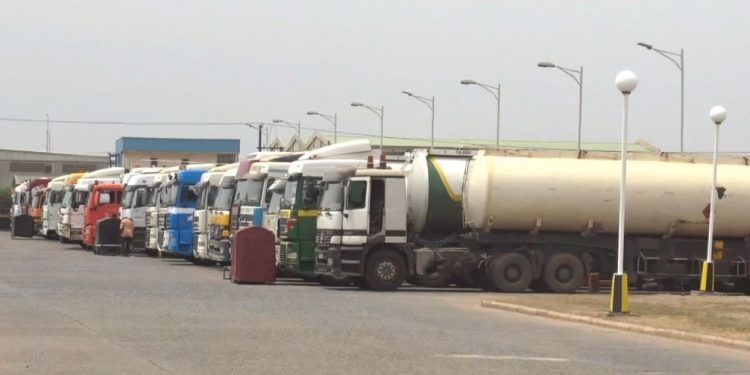
Fuel tanker drivers in Ghana have called off their sit down strike over what they say was bad conditions of service.
Known as the Ghana National Petroleum Tanker Drivers Union, they announced an indefinite sit-down strike on Tuesday and were demanding an improved conditions of service, especially in respect of remuneration.
But after a meeting with all stakeholders, the tanker drivers issued a communique to call off the sit down strike.
The communique stated that framework for their remuneration has been adopted and the implementation of the framework was expected to commence by the end of June 2024.
Abtvgh’s Phebe Wussah’s reported from Tema on Tuesday that the members of the union at a press conference said despite an already agreed policy framework aimed at enhancing their salaries and other working conditions, which has been pending since November 2023, the National Petroleum Authority (NPA) and the sector Ministry have refused to implement the policy
Beyoncé is facing a new lawsuit over one of her hit singles.
According to a complaint reviewed by Billboard, the 42-year-old singer, her record label Sony Music, and other parties are being sued by Da Showstoppaz, a New Orleans-based group that claims Beyoncé infringed their 2002 song “Release a Wiggle” for her 2022 Renaissance single “Break My Soul” by legally sampling Big Freedia’s 2014 song “Explode.”
Big Freedia, 46, legally known as Freddie Ross, who Da Showstoppaz accused of illegally lifting key lyrics from their song to create “Explode,” is also named as a defendant in the suit.
The lawsuit, filed in Louisiana federal court, centres on the phrase “release yo wiggle” and related variations, which the group claims are unique to their song.
“While Mrs. Carter…and others have received many accolades and substantial profits…Da Showstoppaz’s have received nothing—no acknowledgement, no credit, no remuneration of any kind,” wrote the group’s attorneys, per Billboard.
Da Showstoppaz’ legal reps also claim that Big Freedia’s use of these phrases in their single “Explode” infringes on the group’s copyrights, contributing to the artist’s fame without crediting them.
“The infringing phrase ‘release yo’ wiggle’ and several other substantially similar phrases are featured prominently in the song and evenly spread out across Explode’s two-minute and forty-seven second runtime,” the lawyers added. “Any reasonable person listening to ‘Release A Wiggle’ and ‘Explode’ would conclude that the songs are substantially similar.”
Billboard also notes that copyright law typically doesn’t protect “short, simple phrases” and that a court could hypothetically dismiss the case. Despite this, Da Showstoppaz’ lawyers feel confident in their case, adding they “have a copyright to their unique and distinctive lyrics” that were allegedly infringed upon by Freedia.
“The coined term and phrase ‘release a/yo wiggle’ has now become closely synonymous with Big Freedia, thereby contributing to Big Freedia’s fame,” wrote the lawyers further into the suit. “However, Big Fredia did not compose or write the phrase, and Big Freedia never credited Da Showstoppaz as the source.”
Da Showstoppaz claim they first learned about Big Freedia’s “Explode” through Beyoncé’s “Break My Soul.” They also say they contacted Beyoncé and others about the alleged infringement but did not receive a response.
“Break My Soul” was the surprise lead single for Beyoncé’s blockbuster Renaissance LP. According to Billboard, the song, which also samples Robin S.’s “Show Me Love,” topped the Hot 100 chart for two weeks, becoming her first solo No. 1 hit in 14 years since 2008’s “Single Ladies.”
Two persons, a male and a female died in a road accident Thursday morning at Gomoa Simbrofo on the Winneba-Apam highway in the Gomoa West district of the Central region.
Several other passengers who were in the mini bus, which was involved in the accident sustained various injuries.
They were sent to the Winneba Trauma and Specialist hospital for treatment.
The accident happened around 5am on Thursday.
The mini bus with registration number GT 5873-09 reportedly veered off the road after it had a tyre burst.
The Central Regional Public Relations Officer of the Ghana National Fire Service, Divisional Officer III, Abdul Wasiu Hudu told Abtvgh that, the driver crashed into a tree after losing control of the vehicle.
He said information gathered so far indicated that the mini bus was heading towards Takoradi from Accra.
The mother of the Ghanaian toddler officially recognised as the world’s youngest male painter has told the BBC of her pride in her son’s artistic ability, and hopes he can take the art world by storm.
Ace-Liam Nana Sam Ankrah achieved the incredible feat aged one year and 152 days.
“He already knows what colours complement each other,” said his mother Chantelle Kuukua Eghan, who has been an artist herself for eight years.
Ms Eghan said she first realised his talent when he was only six months old.
The mother of the Ghanaian toddler officially recognised as the world’s youngest male painter has told the BBC of her pride in her son’s artistic ability, and hopes he can take the art world by storm.
Ace-Liam Nana Sam Ankrah achieved the incredible feat aged one year and 152 days.
“He already knows what colours complement each other,” said his mother Chantelle Kuukua Eghan, who has been an artist herself for eight years.
Ms Eghan said she first realised his talent when he was only six months old.
Ace-Liam was officially honoured with the title last Monday, after five months of waiting for Guinness World Records (GWR) to ratify their attempt.
“When I opened the email I just broke down and thanked God,” Ms Eghan told the BBC.
To qualify for the record, GWR said Ace-Liam needed to be part of a professional exhibition that was open to the public and sell his work.
It added that the work needed to be done to a professional standard and evidence presented that it was done on his own
Ace-Liam’s work was exhibited at the Museum of Science and Technology in the capital Accra, from last December to early January.
He sold nine of the 10 pieces that were on display and was even commissioned by the First Lady, Rebecca Akufo-Addo, who attended the exhibit.
The prodigy, who turns two in July, has sold 15 paintings throughout his career so far, and is set to host an auction soon.
But this dive into the art world was initially unintended.
Last week, the Daily Graphic carried a story where a completed residential building for teachers of Aburi Girls Senior High School (SHS) has been abandoned for the past four years because the contractor has refused to hand over the project for use.
Daily Graphic checks reveal that while the contractor insists he needs to be paid additional money to enable him to complete the work, the Ghana Education Trust Fund (GETFund) Secretariat, the financier of the project, says it does not owe the contractor.
The GETFund Secretariat provided proof of schedule confirming the full payment explaining that consistent with every contract, the financier holds a retention against defects which will be paid to the contractor after the defect liability period has lapsed.
Unfortunately, amid all this back and forth, some critical staff of the school continue to bear the brunt of the closure.
The Daily Graphic sees this development as unacceptable and charges the Regional Coordinating Council (RCC) to listen to wise counsel by the GETFund to go for the keys to the building since full payment had been made.
We are of the conviction that the position of the contractor that he executed the project with a loan from the bank and that he had used the money the government paid the company to service the loan and, therefore, was left with nothing to fully complete the project is unacceptable.
We urge GETFund not to release any extra money for the completion of the building while the RCC gets the contractor to do the right thing.
The GETFund should not be seen as a charity where its funds meant for the execution of projects are misconstrued as free money but a well-thought-out intention to address an urgent problem and in this case, accommodation facility for critical staff of the Aburi Girls’ SHS.
The position of the contractor that it is not possible to hand over the building to be used by the teachers because it is not completed is neither here nor there because if GETFund has honoured its part of the bargain, the contractor cannot say he does not have any money to complete it.
Unfortunately, the 16-unit facility has developed cracks, while the roofing leaks badly anytime it rains heavily.
The issue of shoddy work has been the bane of many projects, especially government-awarded projects, where contractors get away with such slipshop execution.
Such shoddy works are surely not only a financial loss to the country, but a drain on the limited public purse and such contractors must be held accountable.
The Abtvgh believes that if a project is awarded to a contractor, it means the contractor has demonstrated what it takes to execute the project.
It is expected that the contractor has the financial muscle to handle such projects.
So, for the contractor to complain that he took a loan and had to repay it when the contract sum was paid him should not even come into the picture because that is what he is required to do.
The teachers, and for that matter the school, Aburi Girls SHS, do not need to know the source of funding for the project.
All they need is that the project is completed and handed over for use.
The project was awarded on contract because there was the need for it, and for GETFund to provide full funding in 2020 and for the contractor to still have the keys in his possession as of 2023 while the expected beneficiaries continue to struggle, is unacceptable.
Accommodating teachers on the school premises ensures proper monitoring and supervision of the activities of students so it is not proper that the school and the staff cannot have access to the building.
Surely, this standoff between the contractor and the RCC does not augur well for effective and efficient delivery of quality teaching and learning in the school.
Unless there are other unknown causes, the facts available are clear so the contractor must be compelled to complete and hand over the building for use.
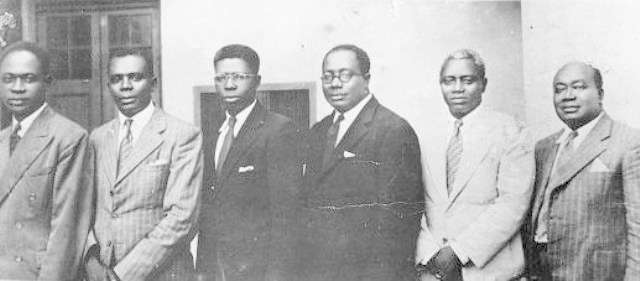
Since pre-colonial days, Ghana has been blessed with so many personalities whose ideas, vision and contribution to national development can never be wished away.
Instead of the nation giving them the pride of place as statesmen and women who must be celebrated, Ghanaians have often looked at them through a pure political lens, and often tried to make them irrelevant until a political party believed to be aligned with their cause comes to power to give them recognition.
A typical example which often comes to mind is the declaration of public holidays, with the recent August 4 Founders’ Day coming in handy in support of this position.
Indeed, with such partisanship on display, it is difficult for well-meaning Ghanaians to dare to contribute their quota to addressing the country’s challenges because they do not want to be tagged.
This situation certainly does not augur well for our country.
At a recent lecture in Kumasi to mark the 45th anniversary of the passing of Dr Kofi Abrefa Busia, the former Prime Minister in the Second Republic, the Majority Leader in Parliament and Minister of Parliamentary Affairs, Osei Kyei-Mensah-Bonsu, hit the nail on the head when he stated that extreme partisanship and political polarisation hampered the celebration of the country’s national heroes.
In his observation, attempts had been made to obliterate the contribution of many notable Ghanaians, and to some extent, the distortion of the country’s history.
As the adage goes, a nation that does not honour its heroes is not worth dying for.
The great American leader, Abraham Lincoln, puts it succinctly that “a nation that does not honour its heroes will not long endure.”
The Daily Graphic believes that it is time we put aside partisanship and recognise the men and women who have blazed the trail, regardless of their tribe or political affiliation, to motivate the younger generation to give their best for the country’s development .
We need to remind ourselves that acknowledging our heroes offers us the opportunity to celebrate our history, heritage and values as a people.
Aside from serving as role models, the country’s heroes and heroines are an embodiment of wisdom, moral behavior and inspiration to the younger generation.
This is why the Daily Graphic believes recognising them should not be viewed through partisan lenses.
If for nothing at all, the recognition accorded Ghana’s first President, Dr Kwame Nkrumah, on the global political scene and the football great, Abedi Pele, in sports circles, should motivate our current and future leaders to put aside the unhealthy partisanship and selectivity when it comes to recognising our heroes.
We also urge members on both political divide that when celebrating some of these important days, they must involve all stakeholders and not only people who are aligned with their political parties and ideologies.
Similarly, we entreat all others to fully participate in such national celebrations.
The Daily Graphic thinks that when the nation starts from this small scale, we will be bridging the gap of partisanship and putting polarisation where it belongs.
Every citizen should aspire to work hard to emulate the courage and contribution of heroes of the nation in serving the country.
We also need to unite to stay focused on important things that lie ahead of us as a people.
In unity lies strength, and with it, we can put aside our differences to sacrifice for the common good.
Let us put aside partisanship and recognise all those who have contributed immensely to bring the country this far.
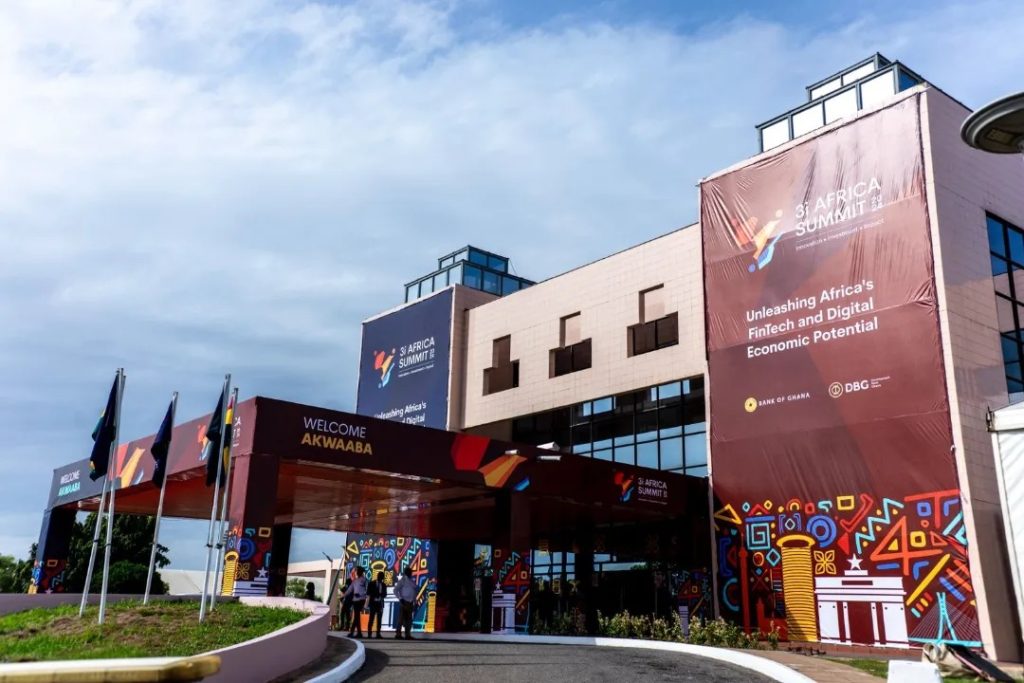
Ghana has experienced digital technology growth in leaps and bounds, and now ranks among the leaders in sub-Saharan Africa in technology adoption.
A 2019 survey by the World Bank indicates that the country ranks third behind Nigeria and South Africa in terms of how digital platforms are transforming the economy.
It is second after Kenya regarding mobile money adoption in Africa.
That is why the government is prioritising digitisation in sectors such as the implementation of initiatives, including national ID issuance, digital address systems and land records.
It is consolidating them to improve productivity and service delivery.
It is also digitising fiscal revenue collection, supporting a cashless society and improving online education delivery, as well as investing in the national fibre optic network to expand and improve internet connectivity.
Indeed, the government is also prioritising the promotion of increased digital literacy to support technology entrepreneurs to build technology hubs and export IT-enabled services such as business process outsourcing.
At the graduation ceremony of the University of Education, Winneba, on August 26, 2023, the Chancellor, Neenyi Ghartey VII, called on the government to accelerate the transformation of the digital economy to leverage its potential to generate jobs and transform traditional industries.
It was his view that there was the need to launch targeted and time-bound employment initiatives that focused on labour-intensive sectors such as infrastructure, agriculture and manufacturing to improve the unemployment situation.
The Daily Graphic couldn’t agree more with the suggestion because of the dire consequences of unemployment on national development.
We need not forget that unemployment creates fertile ground for the youth to indulge in unhealthy activities and become easy prey to be poached into criminal activities.
The advice by Neenyi Ghartey should also serve as a wake-up call to our students also that the era of looking for employment in government agencies is far gone, hence the need for them to be proactive in taking advantage of technological advances, innovation, entrepreneurship and skills development to be relevant in the national development agenda.
The advanced economies reached their present state because of the emphasis on vocational and technical education backed by research which fuels speedy economic development.
Already, some of these countries are turning their attention to developing countries for skilled human resources to fill gaps in their job markets, especially industries.
This is why the Daily Graphic is impressed with the government’s decision to focus more on vocational and technical education to equip the workforce with the relevant skills to bridge the skills gap and increase employability.
We expect our universities to align their programmes and courses to the initiatives by the government so that the country will be the winner.
The current situation where most of our public universities are running the same programmes and competing for students without any corresponding skills development or entrepreneurship can only result in many more unemployed graduates.
The Daily Graphic believes that all stakeholders must revisit the subject of how we can achieve our development agenda and also address the unemployment canker.
Our students must also have in mind that as they pursue higher education, they will be graduating to create their own jobs and not to look up to any government institution.
By creating jobs, they would also be contributing to the country’s development.
As Neenyi Ghartey said, it was high time that graduates adopted a proactive mindset rather than waiting for the perfect job to come their way.
They must consider becoming job creators themselves.
Graduates must see unemployment as an opportunity for innovation and transformation.
The Daily Graphic appeals to the government to intensify its support not only to industry, but vocational and technical education in particular.
The country has vast arable lands but we are unable to produce enough.
When the rains come in abundance, instead of us being happy for a possible attendant good yield, we lose hope because the rainwater washes away our farmlands, houses and even sometimes lives are lost after hours of heavy rainfall.
If we had the right combination of knowledge, skills and technical know-how, solutions could have been found to this problem long ago.
Let us work together to advance the development of our country.
It is a fact that justice delayed is justice denied.
The effects of a failure to deliver justice on time can have a deleterious impact on the lives of all parties involved, in particular the aggrieved party.
This can lead to further violations of fundamental rights.
The negative effects of such delays are much more pronounced where the matter being litigated or prosecuted involves violation of fundamental rights.
Any continued delay of justice constitutes a further breach.
The net effect of this is to place the state in a bad light in relation to its international law obligations among its peers.
The Daily Graphic believes that it is with this same conviction that President Nana Addo Dankwa Akufo-Addo last week urged the Judiciary not to unduly delay cases, saying such practice had projected the country as a destination of long litigations.
He said judges had been well resourced with case management tools to be effective leaders of their courtrooms and must, therefore, change “the unfortunate situation that affects the attractiveness of the country as an investment destination”.
President Akufo-Addo made the call after swearing in two female justices of the High Court at the Jubilee House in Accra.
Tracing the root cause of the undue delay in justice delivery, President Akufo-Addo said until now, it was understood that the common law judge was an independent arbiter who allowed the parties to dictate the pace of cases.
The Daily Graphic fully agrees with the President on this issue of undue delay because throwing more light on it will push the judiciary to find an immediate solution to this major canker that is hurting the image of not only the judiciary, but the country as a whole.
In a country where we pride ourselves as the champions of Rule of Law, the Daily Graphic is of the firm belief that under no circumstance should cases be delayed for no clear or tangible reason.
It is true, as the President alluded, delays had been addressed with the provision of case management in Constitutional Instrument 47 of 2004, including current reforms as contained in Constitutional Instrument 87, in which examination in chief was given in the form of witness statements.
It is also obvious that even more extensive was the requirement of presenting an accused person with all the evidence and exhibits for prosecution.
The paper is aware of cases, particularly, issues of land dispute, among others, that have lasted for 10 years or more in court, to the extent that many of the litigants have passed on to glory.
We have also been informed that most of the delayed cases are as a result of deliberate attempts by counsels of the litigants to buy time to enable them to tackle other matters or pave the way for them to unduly charge their clients higher amounts as a result of the days or years spent in court.
This is obviously a sad situation because in all these, it is the poor with genuine cases who are denied because they cannot simply afford the expensive delays.
There is also the perception which has become facts in the minds of some investors that in Ghana, cases are always delayed and therefore, it is not the best place to invest.
We are deeply worried about these and many other negative sentiments within our judiciary system and we wish to once again add our voice to the President’s call for the judiciary to do all it can within its power to reverse the trend.
As indicated, the dispensation of justice requires that the application of the laws of the land must occur without fear or favour, affection or ill will and without recourse to political, religious or ethnic affiliations of any persons before the court.
When a person falls foul of the law, that person, high or low, must be dealt with accordingly and the law enforcement agencies, including judges, must ensure that is done because as the President unambiguously put it, “That is the true meaning of the concept of equality before the law.”
One of the major interventions of the government which was launched in 2017 was the Planting for Food and Jobs as part of the country’s efforts to end hunger, achieve food security and promote sustainable agriculture.
The main objective of PFJ is to enhance productivity of selected crops to feed the population as well as expand job opportunities through integrated services on farming and marketing.
Six years after its implementation, the Ministry of Food and Agriculture had to review its performance and impact which has led to the birth of PFJ Phase Two (2.0)
Consequently, President Nana Addo Dankwa Akufo-Addo yesterday launched the Planting for Food and Jobs Phase Two (PFJ 2.0) for better outcomes.
The PFJ 2.0 of the initiative, known as the Input Credit System which replaces the input subsidy programme under the first phase, will provide affordable and timely credit specifically designed to meet the needs of farmers.
The Daily Graphic acknowledges the fact that access to credit has always been the bane of farmers in the country and so, by providing credit to farmers, they will be empowered to make informed choices and invest in the inputs that will significantly boost their productivity.
It is not for nothing that most institutions and even government agencies take stock of their performance and chart a new course to improve on deliverables.
Therefore, stock taking of the state of affairs of any programme, which involves a thorough analysis of available data, is necessary to identify and cover up gaps to ensure efficiency, effectiveness and to unlock its full potential.
In taking stock, the Ministry of Food and Agriculture identified gaps in the production of some food crops, animal production, extension services, agriculture infrastructure and food self-sufficiency.
In addition, issues of inefficiencies, post-harvest losses, agric financing, poor agronomic practices and low adoption of technology were identified.
The review exercise also highlighted the need for a change in strategy to tackle the problems in the agricultural sector decisively.
It is said that the one creating a path in a bush is unable to tell whether it is straight or not.
It takes those behind to alert him about veering off.
And so, it was only proper for Dr Acheampong to listen to stakeholders to enable him to straighten the path.
We are happy that President Akufo-Addo has reaffirmed government’s commitment to improve access to agricultural inputs, foster the adoption of modern farming practices and technologies, and ultimately catapult the agricultural sector to new heights.
It was good that the President acknowledged that even notwithstanding the successes under the PFJ Phase One, it encountered some limitations during the implementation.
Some of the limitations include heavy financial burden on the government imposed by subsidies on seeds and fertilisers, limited adoption of the value chain approach and limited access to agricultural credit; low prioritisation of national strategic stock, ineffective monitoring of input suppliers and distributors, and targeting of only smallholder farmers.
The Daily Graphic hopes that in ensuring a successful rollout of the phase 2.0, the ministry will be guided by some of these challenges encountered in the implementation of phase one.
Replacing the input subsidy with the input credit system for us is a giant step towards addressing the challenges the PFJ Phase one encountered during its implementation.
It was an open secret during the PFJ Phase One that subsidized inputs were smuggled across to neighboring countries and to the open market, while the real beneficiaries were left without the inputs.
It is envisaged that with the PFJ 2.0, the credit system will cut out individuals and intermediaries, from fronting as farmers.
Such individuals have no business dabbling in issues involving farmers any longer.
We hope the mistakes and the lessons from the implementation of the PFJ Phase One programme will prove useful in the execution of the second phase so that all the expected outcomes will be achieved.