Author: Phebe Wussah

  • What next after NPP Super Delegates Conference?

    Abtvgh / The New Parotitic Party Delegates Conference

    Intra-party democracy is part of the crucial foundation stones for building the country’s envious democratic process.
    If they are not solid and properly erected, the super structure cannot survive the test of time.

    It is on this basis that the Daily Graphic has over the years shown keen interest in internal issues aimed at enhancing and consolidating the development of democracy in all political parties in the country.

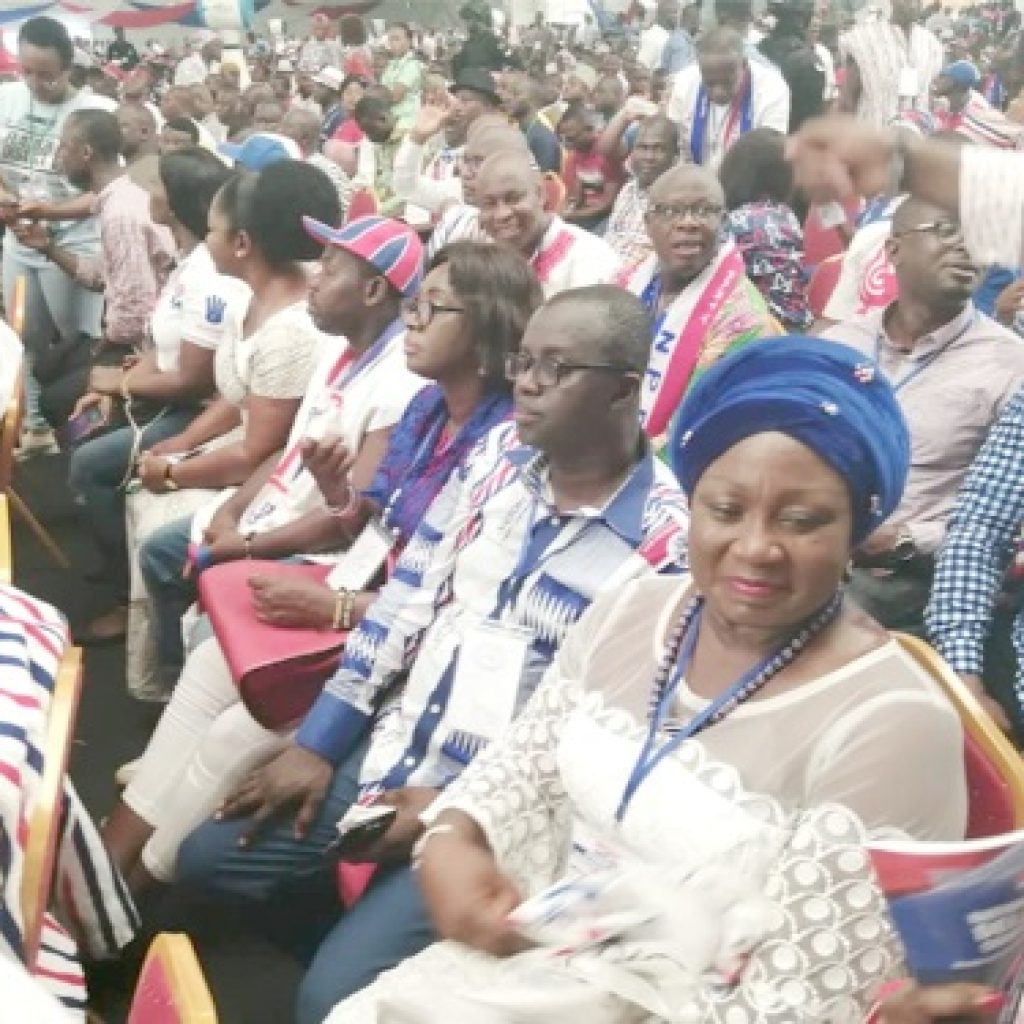
    Last Saturday, 961 delegates of the New Patriotic Party (NPP) were called upon to select five flag bearer hopefuls out of the 10 who had offered themselves up to lead the party.

    The specially selected delegates went to the polls organised in 17 centres nationwide as the first step in electing the party’s presidential candidate for the 2024 general election.

    The second and the final choice will be done by more than 200,000 delegates on November 4, this year. 

    The Vice-President, Dr Mahamudu Bawumia, emerged tops with 68.15 per cent of the votes cast, while the Member of Parliament for Assin Central, Kennedy Agyapong, and former Minister of Trade and Industry, Alan Kyerematen, placed second and third respectively.

    Former Minister of Agriculture, Dr Afriyie Akoto, emerged fourth, while a former Minister of Energy, Boakye Agyarko, and Francis Addai-Nimo tied for the fifth position, with each garnering nine votes.

    The delegates will select one of the two to join the four, come September 2, 2023.

    Undoubtedly, there are some lessons to be learnt from the just-ended super delegates conference based on the way the results panned out.

    It was a bit surprising that Kennedy Agyapong emerged second ahead of Alan Kyerematen, especially when Mr Kyerematen had contested the flagbearer position in 2007 and 2011 and had come second in both and had gained experience and learnt the ropes.

    His performance underscores the popular refrain that “elections are full of surprises”.

    We are also amazed that the fortunes of Dr Kofi Konadu Apraku have dwindled so badly that he could not garner even a single vote for all his contribution to the party over the years.

    The lesson here is that timing is everything in politics and it is important when one knows when to jump into the ring.

    It also emerged that the influence of Kennedy Agyapong in the party is no fluke, considering his performance.

    Political observers will be watching keenly how he performs on November 4.

    Others have argued that the results of this super delegates election could not be described as the harbinger of the November polls.

    Although the dust is yet to settle, it is welcome news that so far, none of the candidates, including those who could not be part of the five, has raised issues about the process. 

    Another observation is the decision by the party to leave the election process to the constitutionally mandated governance institution, the Electoral Commission, and the body clothed with the authority to protect life and property, the Ghana Police Service.

    These two bodies executed their mandate without fear or favour and according to laid down procedures

    This is a feather in their cap but more importantly, a way of helping our institutions to build their capacity to deliver. 

    The Daily Graphic has the strong conviction that if all Ghanaians continue to help build the capacity of these institutions and afford them the support and respect, very soon the country’s elections would be devoid of the usual suspicion, rancour and the few incidents of violence.

    While the Presidential Election Committee is worthy of commendation for successfully organising the election, there were some few grievances and shortcomings that came up that should be looked into ahead of the main November election.

    To properly address these, the party in its review of the processes must listen to all stakeholders, especially the candidates just as they did preceding the polls.

    This will ensure that the party remains united and battle-ready for the 2024 general election.

    We urge all those with complaints to also use the laid down internal party processes to seek redress.

    The Daily Graphic once again applauds the NPP and those who qualified for the next round of elections.

    It is important also that those contestants who could not find favour with the delegates should not just abandon ship but continue to remain with their family and work assiduously with commitment to the collective good of the party.

    It can be daunting and depressing to lose an election, especially after traversing the length and breadth of the country, losing sleep, comfort and expending resources to convince delegates only to suffer such a disastrous defeat.

    The national executives must reach out to those who lost because they are assets to the party, and their experience and resource will be needed, especially going into the 2024 general election which holds the promise of being the most competitive in recent history.
  • Proper land administration ownership non-negotiable

    Abtvgh / Land Ownership in Ghana

    Land, undoubtedly, is one of the most important factors of production.

    Almost all human activities depend on land.

    Likewise, every sector of the economy requires land to function – be it education, agriculture, health or the service industry.

    In effect, just as farmers need land to produce food crops, so does the government and individuals need land for infrastructural projects.

    In the wake of rapid economic growth, sprawling urbanization and increased activities of real estate developers, the demand has risen astronomically.

    Hence, it costs a fortune to own a piece of land in an urban area, particularly Accra, Tema, Kumasi and their immediate environs.

    In spite of this, the current situation is such that every individual wants to own a piece of land for oneself or for one’s children. 

    Land ownership is also used for investment in what has become known as land banking.

    This is where an individual purchases a parcel of land, registers and keeps it for a future rise in its value before selling portions off.

    This intense race to own a piece of land has brought along major challenges in the value chain.

    Indeed, land acquisition and the processing of land documents continue to be a major challenge in the country.

    The multiple sale of land, many a time, due to chieftaincy and family disputes over ownership of the resource, remains one of the biggest challenges to effective land administration in the country. 

    Even within the same families, different people sell the same piece of land to different people without the involvement of licensed surveyors.

    This often puts unsuspecting members of the public who patronise the lands at risk and has resulted in many protracted land litigation. 

    There are also instances where officials of the Lands Commission turn themselves into agents to process land documents for people without due process.

    It gets worse with middlemen, popularly known as ‘goro boys’, who charge exorbitant fees to process land documents for clients.

    It is, therefore, not surprising that a survey on corruption in Ghana based on people’s experiences last year rated the Lands Commission as the fourth most corrupt institution in the country.

    The Commission on Human Rights and Administrative Justice (CHRAJ), in collaboration with the Ghana Statistical Service (GSS), conducted the survey with the support of the United Nations Office on Drugs and Crime (UNODC).

    The Daily Graphic sees the development as an anathema to national development as it will scare away investors who need dispute-free lands for investment.

    In this era of technology, the Daily Graphic believes that the Lands Commission must put in place systems to remove the direct human interface in order to sanitize the system and purge itself of the corruption tag.

    Doing that will also ensure effective land administration. 

    The Daily Graphic thinks that it is imperative for the commission to also provide timelines for the delivery of services to instill confidence in its processes.

    The resolution of the challenges associated with land acquisition and registration can also be facilitated with the licensing of agents with whom members of the public can directly deal.

    We believe that it will be easy for the public to know that they are dealing with genuine agents and that they are not throwing their money away or putting up houses only for them to be demolished.

    It is our conviction that the use of technology, skilled staff and professionals, as well as licensed agents, will help avert many of the issues relating to land acquisition and registration that many people encounter in their bid to legalize their land ownership.

    The Daily Graphic believes that the Lands Commission and its allied agencies must also intensify public education to enable clients to use due processes in acquiring land and registering it.

    The Lands Commission must also be seen to be exposing and punishing its errant staff to deter others from doing so.

    The Daily Graphic also calls for more punitive actions against people, be they chiefs or family members, who indulge in multiple sale of land.

    It is high time we went the direction of the Asantehene, Otumfuo Osei Tutu II, who does not hesitate to destool chiefs who sell land indiscriminately.

    The Abtvgh strongly believes that it is now incumbent on the commission to simplify its processes to make it easy for every Ghanaian to transact business with it without let or hindrance.

  • Free SHS: GNAT national dialogue needs consideration

    Abtvgh / GNAT Dialogue

    The successes chalked up by the Free Senior High School cannot be overemphasized.

    Many experts and citizens assert, and rightly so, that it is the most audacious policy in the country’s history as far as the numbers generally, and secondary school enrolment, are concerned.

    A Deputy Minister of Education, Reverend John Ntim Fordjour, announced in April last year that by the end of the 2022 school selection and placement exercise, a total of 2.2 million students would have gained admission to high school through the free senior high school (SHS) system.

    Data shows that in 2013, out of 352,202 students placed, 90,604 could not enrol and in 2014, out of 386,412 students placed, 113,260 could not enroll.

    Again in 2015, out of 415,012 students placed, 115,363 could not enrol and in 2016, out of 420,135 students, 111,336 could not enrol, all these were due mainly to financial challenges. 

    Indeed, the rollout of the Free SHS policy has come as a relief to most parents and students who were eager to further their education at that level. 

    Apart from tuition that is free, there are no admission fees, no library fees, no science centre fees, no computer lab fees and no examination nor utility fees.

    Textbooks, uniforms and boarding are equally free while day students are fed one meal at school for free every day.

    As a matter of fact, the huge positive impact of the Free SHS is unquantifiable as it has helped the country deal with the number of idle teenagers who could have been easily lured into social vices.

    It has also helped hasten the educational process of junior high school graduates who had to spend some years at home before having the opportunity to go to school, if at all. 

    The government did well for not allowing the deficit in infrastructure to discourage it in the rollout of the Free SHS policy.

    Since the beginning of the programme in 2018, many infrastructural facilities have been added to the existing ones

    Of special mention is the innovative double intake or track system that kept a section of the student population home while others were in school as a measure to accommodate the swelling numbers, which has been phased out after the addition of more infrastructure.

    But underlying these huge successes are some equally serious problems that have affected the smooth running of the programme.

    These challenges keep growing yearly as the student numbers rise. 

    Despite the increase in infrastructure, many of our SHSs still have huge class numbers that affect the teaching-learning process.

    But we know from educational philosophy and theories that a smaller class size contributes to better class control and learning outcomes.

    Most of the schools also have issues with maintenance, as government subvention for such purposes are sometimes irregular.

    In the circumstance, school authorities have resorted to soliciting for help from parents’ associations and old students.

    They have consciously or unconsciously shifted the cost of printing of examination questions, maintenance and many of the responsibilities to parents and old students, with parents bearing the bigger brunt. 

    This has placed a financial burden on parents, some of whom but for the Free SHS would have found it difficult to send their children to school.

    Those who are not able to make such payments have on many occasions felt embarrassed.

    Many parents are suffering silently with the incessant demands from parents’ associations to pay various sums of money to supplement stationery and food.

    Many appeals have been made for the government to review the programme to address these bottlenecks, with the latest of these appeals coming from the Ghana National Association of Teachers (GNAT).

    GNAT has called for a national stakeholder dialogue to relook at the Free SHS programme in relation to the country’s current economic situation to smoothen the rough edges of the programme.

    The Daily Graphic notes that GNAT, arguably, has some of the best brains and is a critical stakeholder of education in the country.

    It is thus important for the government to listen to the teachers’ association and convene such a dialogue for the good of the programme and subsequently the country.

    The paper believes that such a dialogue would dispassionately brainstorm challenging issues such as logistics and infrastructure, sources of funding, involvement of parents, parents’ associations and alumni, among others.

    This, the Abtvgh believes, would set the stage to strengthen our schools to discharge their responsibilities better and to ensure a seamless continuous implementation of such a laudable programme. 

  • Exorcising ‘ghost’ pensioners

    Abtvgh / Ghost Pensioners CAGD

    In Ghana one of the challenges to public financial management is the phenomenon of ‘ghost workers’ which basically means suspicious and non-existent workers drawing salaries on government payroll.

    The problem of payments to ‘ghosts workers’ on the government’s payroll appears to have come to stay despite initiatives to address the canker, including the verification and authentication of workers at post. The situation is even more pathetic when it comes to the payment of pensions to deceased pensioners.

    It is, therefore, not surprising that the 2022 Auditor-General’s report identified that relatives of deceased pensioners benefited from unearned pensions totalling GH¢393,315.06 between 2013 and 2019 (See Daily Graphic, August 9, 2013).

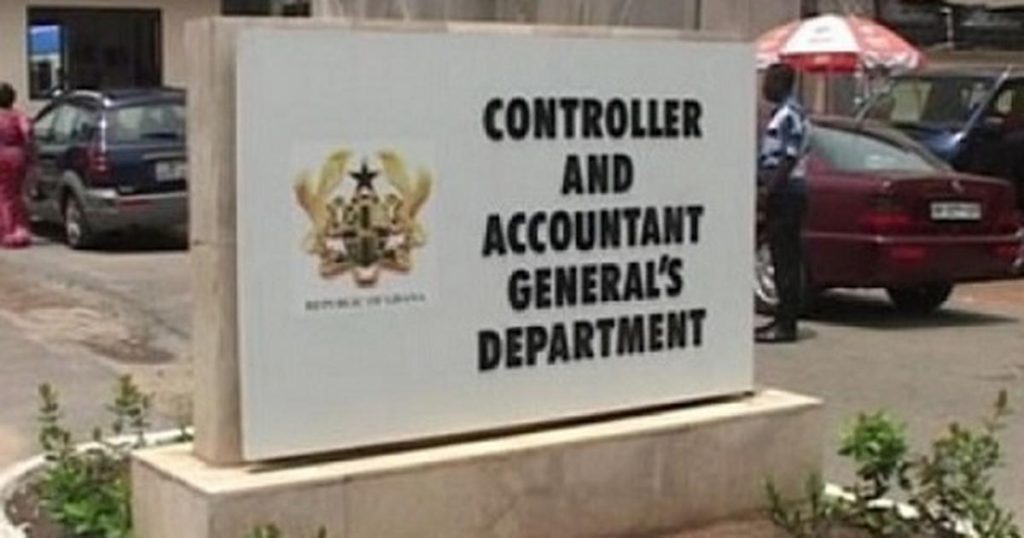
    The Auditor General blamed the Controller and Accountant General of continued payment of pension to some 59 deceased pensioners in the audit of public accounts of ministries, departments and agencies.

    In its explanation, the Controller and Accountant General’s Department (CAGD) said the demise of the affected pensioners was not communicated to it for deletion to be effected. It also indicated that the department was taking steps to recover the money from the widows.

    The Daily Graphic wonders why this problem had persisted all this while. Sadly, after it had been brought to light we get the reaction or response of the authorities indicating steps are being taken to address the problem.

    We are looking forward to a day when payment to ghost names will be a thing of the past or reappear in the Auditor’s General Report. 

    It is the conviction of the Daily Graphic that the perpetrators of these acts must not only be surcharged but also arrested and prosecuted for their complicity either through their negligence or collaboration with some other staff from other agencies.

    In this era of digitisation and the use of the Ghana Card, we believe that all institutions should have an integrated system where it will be easy to monitor and identify some of these anomalies without waiting for the promptings of the families.

    In March last year, the Finance Minister, Ken Ofori-Atta, announced plans by the government to link the Ghana Card with the database at the CAGD as part of the measures to address the problem of ‘ghost’ workers, on the government payroll. Although the linkage was expected to have been completed in December last year, we do not know its status.

    We expect the CAGD to keep to its word of completing the re-verification exercise by the close of this month for the interfacing and integration to begin. That, it said, would give identity and credibility to the pensioners paid by the CAGD.

    Indeed, we have had situations in the past where workers have had to update their information with the view to ending this canker of paying ‘ghosts’ on the government payroll.

    The Daily Graphic believes that Ghanaians must begin to see positive signs from these initiatives so that in the 2023 Auditor-General’s Report, there would not be any issue with payment to ‘ghosts’ workers’.

    There is a need for a collective effort on the part of all stakeholders to put a stop to this form of financial haemorrhaging, which is costing the state millions of Ghana cedis.

    We cannot afford to allow this canker to persist when it takes very little effort to stamp it out. Fortunately, the Births and Deaths Registry, the National Identification Authority and other related agencies are working towards merging the database of Ghanaians.

    This is one initiative that will help stamp out this criminal activity that has enriched many unscrupulous persons at the expense of the state.

  • Let’s uphold democracy in ECOWAS

    Abtvgh / ECOWAS

    The military coup in Niger presents a diplomatic dilemma for the leaders of the Economic Community of West African States (ECOWAS) who are keen on entrenching a new democratic order.

    On July 26, members of Niger’s presidential guards detained President Mohamed Bazoum and announced a change of government – the fourth West African country to do so after Mali, Guinea and Burkina Faso.

    These military interventions are unfortunately coming at a time the region has made some strides in the last decade to shed its reputation as a “coup belt”, only for persistent insecurity and corruption to open the door to military leaders.

    The coup is seen as a major blow to many countries that viewed Niger as a partner in the Sahel region that could be used to beat back a growing uprising by groups linked to terrorists.

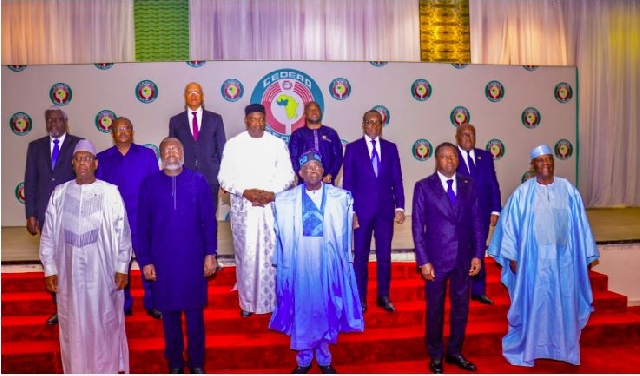
    An ECOWAS summit in Abuja ended with the imposition of a number of sanctions, including a no-fly zone over Niger.

    The bloc also issued a one-week ultimatum to the Abdourahmane Tchiani-led interim military government in Niger to restore constitutional order or risk the possible use of force.

    The ECOWAS Committee of Chiefs of Defence Staff are meeting in Accra today and tomorrow to discuss a possible military intervention in Niger, regional military sources said last Tuesday, a source at ECOWAS confirmed.

    Ahead of the meeting, various groups, including academicians, politicians and security analysts have condemned ECOWAS’ move for a military intervention and rather called for a diplomatic effort to resolve the situation.

    The latest group to add its voice to the call is the Presbyterian Church of Ghana, which has indicated that it would be wrong for the government to take a unilateral decision on the matter without broad consultation.

    Created in 1975, the 15-nation bloc was designed to “promote economic integration across the region.

    ”Its principles centre around establishing a single trading unit, similar to policies under the European Union, that promote democratic governance and sub-regional cooperation.

    In this way, it is first and foremost an economic entity, not a military or political one.

    But ECOWAS has fangs.

    It has two defence protocols that say any threat against a member state is deemed a threat against the greater community. 

    And it has mustered troops to intervene in the past.

    So, when instability rocked Niger, the fourth country in the region to suffer a coup in recent times, ECOWAS saw intervention as part of its broader mission to support and protect West Africa.

    It is for this reason that the Daily Graphic calls for calm and not stampeding ECOWAS into taking decisions that will embolden the military to oust a constitutional order at the least opportunity.

    Much as we agree to a call for a broader consultation on the crisis in Niger, we should also be mindful of the fact that constitutionally, ECOWAS has a duty to ensure that the rise in military coups in the sub region is halted and constitutionalism made to prevail at all times.

    After all, the West African leaders are not immediately intervening militarily; they are first pursuing the path of diplomacy and dialogue, which is why ECOWAS has continued its efforts of engaging diplomatically with Niger’s military junta.  

    For the Daily Graphic, the crisis in Niger is not just a test of the diplomatic skills of the leadership, but a test of the bloc’s commitment to shared African values. 

    The world is watching, and the stakes are high, so is our resolve that our leaders are not just negotiating for the present, but they are negotiating for our future and for the future of Africa even if it means military intervention.

    Let us resolve to support our leaders to halt the constitutional insanity.

    With a firm resolve and unyielding commitment, we must deepen the constitutional order and usher in a new era of zero tolerance for military takeovers.

    ECOWAS must send the right signal to the military that it has the right to enforce a constitutional order, an order not marked by war, but by peace; not by division, but by unity; not by intimidation, but by mutual respect, and if diplomacy and persuasion fail, force must then be applied.

    It is a daunting task, no doubt, but it is one we must embrace with both hands, by having faith in our leaders to come up with a lasting solution at the Accra summit today.

  • Don’t undermine Parliament oversight role

    Abtvgh / Parliament Role

    Since the country returned to democratic governance under the Fourth Republic, Parliament has often witnessed the governing political party winning majority seats in the House.

    This makes it easy for the governing party to have its way in the passage of bills and agreements, among others

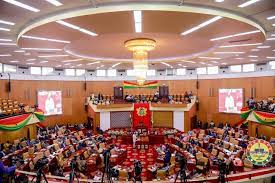
    However, the 2020 parliamentary election results produced a hung Parliament – the governing party with 137 seats and the opposition also with 137 seats; and one Independent Member of Parliament (MP) who chose to do business with the governing side, giving the governing party a slight majority in the House.  

    With the hung Parliament, many people, including civil society organizations and development partners, believed that it was time for Parliament to flex its muscles by scrutinizing bills and contracts, exercising its oversight responsibility more forcefully and seeking to build consensus.

    It is worthy to note that the hung Parliament has witnessed instances where aspects of the budget had been rejected, with some members from the governing party side voting against their party position, particularly in the vetting of ministerial nominees and some oversight responsibilities.

    During a courtesy call on the Paramount Chief of Essikado Traditional Area, Nana Kobina Nketsia V on August 7, 2023 by the Speaker of Parliament, Alban Sumana Kingsford Bagbin (see Wednesday, August 9, 2023 edition of the Daily Graphic), the outspoken chief deplored the “unserious” attitude and gestures of parliamentarians.

    He minced no words when he said: “We don’t joke in Parliament; we voted people to Parliament on our behalf for serious parliamentary business, not for people to go and laugh when serious issues are being tabled.”

    Nana Nketia’s point has been reinforced by the Director of Programmes and Policy Engagement of the Centre for Democratic Development Ghana (CDD-Ghana), Dr Kojo Pumpuni Asante, who urged MPs to conduct the business of the House in ways that will benefit the citizens. 

    The Daily Graphic believes that the hung Parliament is an opportunity for parliamentarians from both sides of the House to work together and build consensus for the good of the country.

    We, therefore, agree with both leaders that our elected representatives must attach seriousness to the work they do in Parliament because the House is the embodiment of the sovereignty of the people of Ghana.

    Being the first of its kind under the Fourth Republic, there are bound to be challenges under the hung Parliament but with fortitude and determination, the Daily Graphic is convinced that Parliament can overcome any challenge that hinders the country’s democratic process.

    Ghanaians must begin to benefit from the work of Parliament in a manner that will make them rise up to defend the Constitution.

    We must also begin to see the various committees of Parliament, especially the Parliamentary Committee on Government Assurance, hold ministers and other government appointees to account to deliver on their promises.

    The Public Accounts Committee must also be given some more teeth to bite where necessary.

    We must move away from the era of working along party lines and allow the national interest to supersede party positions.

    After all, our MPs are elected to serve the interests of their constituents.

  • Cylinder Recirculation Model must work

    Abtvgh / Recycle Model Work

    Last week, the National Petroleum Authority (NPA) announced the commencement of the implementation of the Cylinder Recirculation Model (CRM).

    Under the model, residents of Accra and Kumasi will exchange empty cylinders for already filled ones at cylinder exchange points in the two regions after they have registered with their national identification cards or any other form of identification.

    The policy is to increase uptake of Liquified Petroleum Gas (LPG) by at least 50 per cent to consumers by 2030 and improve safety in the distribution value chain.

    Already, the CRM has been piloted in some areas in the Eastern, Ashanti and Northern regions, and the NPA has given an assurance that the lessons learnt during the pilot have shaped the phased implementation, which begins next month.

    In October 2017, a large-scale gas explosion occurred at Atomic Junction at Madina, Accra, when an offloading LPG tanker Bulk Road Vehicle (BRV) caught fire.

    The incident further strengthened the arguments for a new model that is safer and more efficient.

    The CRM idea started in 2013 under the LPG for Development Programme under the auspices of the Ministry of Energy.

    The 2017 explosion ignited a further discussion on policy options and implementation at the time.

    Operators of gas filling stations kicked vehemently against the policy.

    The Cabinet has since approved it and directed the NPA through the Ministry of Energy to implement it.

    Although the Daily Graphic welcomes the introduction of the CRM, there have been genuine concerns expressed by citizens since the announcement.

    These, we believe, will be addressed through consultation and dialogue during implementation.

    According to the NPA, a lot of consultation has happened and is still ongoing.

    It has been several years of policy making, preparation and now time for implementation.

    Four bottling plants are ready and rollout is certain. 

    One of the main concerns raised over the new policy is that it will lead to job losses.

    However, the NPA has assured the public that there would be no job losses; in fact the increased volumes of LPG consumption will create more jobs for dealers and resellers in every nook and cranny of the country in the quest to bring LPG to the doorstep of the consumer. 

    The announcement outlines that the distribution systems will operate side by side with phase-out happening over a period.

    Another concern is whether the existing system will be shut down outrightly.

    Under the new policy, LPG outlets will operate as either Exchange Points or Auto Gas Outlets.

    Existing outlets will continue to operate over time and transition to one of the aforementioned based on their delivery volumes for either domestic or vehicular demand.

    They will also be accessed based on risk factors and health and safety standards based on their location. 

    The Daily Graphic is of the view that there must be opportunities to retrain those who work in the existing value chain of these filling stations for their absorption into the CRM processes such as the bottling plants or distribution chains, especially in new opportunities under the CRM, such as health and safety training and monitoring of the value chain.

    The Daily Graphic is happy to note that the concerns of users of LPG as to whether they could buy any quantity of the product they could afford, and exchange of their cylinders have been addressed.

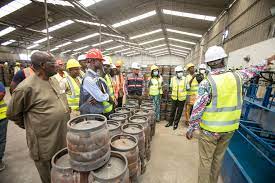
    Those who own cylinders will exchange them for new ones from bottling plants and these will come in a variety from 3kg, 6kg, 14.5kg, 15kg and so on.

    Cylinders will be maintained and monitored at every opportunity when they go back to the bottling plants to be refilled.

    They will either pass the test, be rejected for refurbishment or scrapped.

    This gives the consumer protection from leaky and damaged cylinders.

    The various sizes of cylinders provide the consumer a variety to choose from depending on affordability. 

    The Daily Graphic notes that the price of gas will not be affected under the policy, with the likelihood of standard prices across the board under the CRM.

    That is good news.

    The NPA has also promised continued consultation and public education to engage better on the policy and come out with full information as the rollout begins, particularly on the report of the pilot, lessons learnt and how they could be incorporated into the phased-out implementation to start next month.

    The Daily Graphic expects collaboration and further engagement between the NPA and its key stakeholders to ensure a successful rollout. 

    It is also important for the NPA to clarify other concerns raised since the announcement.

    Although gas explosions have necessitated a more stringent regulation, the problem still occurs in homes.

    And we think the introduction of new cylinders and maintenance of same will go a long way to sanitise the sector and safeguard households.

    But we urge the NPA to expand its sensitisation, especially in communities with information on safety in the use of gas.

    We all need assurances from the NPA to make the CRM a success.

  • Let’s support Ghana National Fire Service to succeed

    Let’s support Ghana National Fire Service to succeed

    Abtvgh / GNFS

    For longer than recorded history, fire has been a source of comfort but also a catastrophe for the human race.

    Early humans used fire to keep warm, cook food and frighten predators. Sitting around the fire also helped them to unite and strengthen family groups and consequently speeded up evolution.

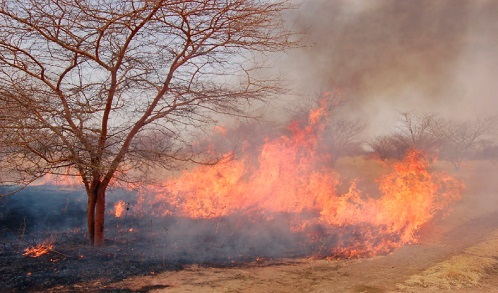
    However, fire also posed great risks and challenges to early people, including the challenge of starting and controlling them, and grappling with the threat of burns and wildfires.

    Fire continues to be a basic everyday element of most people’s lives. This tendency of one of man’s best friends to turn into his worst enemy cannot be underplayed, as improper handling and use of fire has led to several accidents in homes, offices, schools and other public places, with very serious repercussions.

    Although it is the Ghana National Fire Service (GNFS) that is mandated to deal with fire outbreaks in the country, it is every citizen’s responsibility to ensure that fire is not even started at all.

    We all use fire for different purposes, such as cooking, welding, fabricating, preparing land for farming, even refining, moulding metals and burning unwanted materials.

    Fire is a good servant but a terrible master, the reason its usage is not left in the hands of children and why even adults ought to use it with utmost care to stop an outbreak from occurring.

    The Daily Graphic’s analysis of the fire statistics revealed that the loss and damage occurred from 59,933 reported incidents of fire outbreaks from 2013 to 2022.( See our front page lead story)

    The statistics further shows that 3,104 people died through fire-related incidents within the period, with 2,668 of such deaths occurring from road traffic crashes.

    The trend analysis also indicated that more than GH¢402 million worth of public and private property have been lost to fire outbreaks in the country in the past 10 years, the GNFS statistics revealed.

    The figure is less than the GH¢38.3 million worth of property that was salvaged by the GNFS within the same period.

    Though staggering, the situation may just be a tip of the iceberg as Mr Osafo-Affum said most fire outbreaks went unreported and, therefore, were not recorded by the service.

    Fortunately, as part of its mandate, the Ghana National Fire Service (GNFS) is working on a new regulatory regime that will make it mandatory for private residential accommodation owners to acquire a fire safety permit before they put up buildings.

    The permit regime will ensure that residential accommodation owners incorporate fire safety mechanisms into the structure to make them safer for habitation.

    The move is meant to reduce the rising incidence of domestic fires in the country. The current fire permit regime is limited to commercial property.

    We of the Daily Graphic are happy to know that GNFS has started engagement with key stakeholders and experts on the initiative. The processes have started with the consultation of the various key stakeholders and per the implementation plan, we understand the permit will be rolled out in the next two years.

    The Daily Graphic believes that the initiative by the GNFS to implement measures to curb domestic fire outbreaks is a step in the right direction, given that fire disasters were inimical to sustainable development.

    Apart from avoiding a situation where another layer of bureaucracy will compound the current permit acquisition situation, implementing a fire permit regime for all persons seeking to put up private accommodation may only be effective in the urban areas of the country since the GNFS does not have the men to police enforcement.

    We must all help the GNFS in the successful implementation of this noble initiative. After all, the success of GNFS is the success of all.