Category: Art & Culture

  • Free SHS: GNAT national dialogue needs consideration

    Abtvgh / GNAT Dialogue

    The successes chalked up by the Free Senior High School cannot be overemphasized.
    Many experts and citizens assert, and rightly so, that it is the most audacious policy in the country’s history as far as the numbers generally, and secondary school enrolment, are concerned.

    A Deputy Minister of Education, Reverend John Ntim Fordjour, announced in April last year that by the end of the 2022 school selection and placement exercise, a total of 2.2 million students would have gained admission to high school through the free senior high school (SHS) system.

    Data shows that in 2013, out of 352,202 students placed, 90,604 could not enrol and in 2014, out of 386,412 students placed, 113,260 could not enroll.

    Again in 2015, out of 415,012 students placed, 115,363 could not enrol and in 2016, out of 420,135 students, 111,336 could not enrol, all these were due mainly to financial challenges. 

    Indeed, the rollout of the Free SHS policy has come as a relief to most parents and students who were eager to further their education at that level. 

    Apart from tuition that is free, there are no admission fees, no library fees, no science centre fees, no computer lab fees and no examination nor utility fees.

    Textbooks, uniforms and boarding are equally free while day students are fed one meal at school for free every day.

    As a matter of fact, the huge positive impact of the Free SHS is unquantifiable as it has helped the country deal with the number of idle teenagers who could have been easily lured into social vices.

    It has also helped hasten the educational process of junior high school graduates who had to spend some years at home before having the opportunity to go to school, if at all. 

    The government did well for not allowing the deficit in infrastructure to discourage it in the rollout of the Free SHS policy.

    Since the beginning of the programme in 2018, many infrastructural facilities have been added to the existing ones

    Of special mention is the innovative double intake or track system that kept a section of the student population home while others were in school as a measure to accommodate the swelling numbers, which has been phased out after the addition of more infrastructure.

    But underlying these huge successes are some equally serious problems that have affected the smooth running of the programme.

    These challenges keep growing yearly as the student numbers rise. 

    Despite the increase in infrastructure, many of our SHSs still have huge class numbers that affect the teaching-learning process.

    But we know from educational philosophy and theories that a smaller class size contributes to better class control and learning outcomes.

    Most of the schools also have issues with maintenance, as government subvention for such purposes are sometimes irregular.

    In the circumstance, school authorities have resorted to soliciting for help from parents’ associations and old students.

    They have consciously or unconsciously shifted the cost of printing of examination questions, maintenance and many of the responsibilities to parents and old students, with parents bearing the bigger brunt. 

    This has placed a financial burden on parents, some of whom but for the Free SHS would have found it difficult to send their children to school.

    Those who are not able to make such payments have on many occasions felt embarrassed.

    Many parents are suffering silently with the incessant demands from parents’ associations to pay various sums of money to supplement stationery and food.

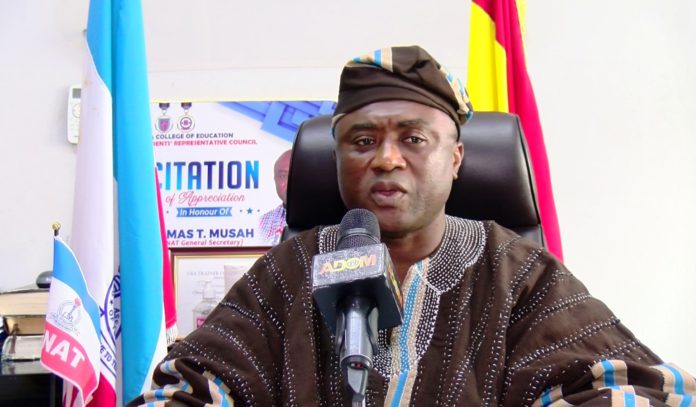
    Many appeals have been made for the government to review the programme to address these bottlenecks, with the latest of these appeals coming from the Ghana National Association of Teachers (GNAT).

    GNAT has called for a national stakeholder dialogue to relook at the Free SHS programme in relation to the country’s current economic situation to smoothen the rough edges of the programme.

    The Daily Graphic notes that GNAT, arguably, has some of the best brains and is a critical stakeholder of education in the country.

    It is thus important for the government to listen to the teachers’ association and convene such a dialogue for the good of the programme and subsequently the country.

    The paper believes that such a dialogue would dispassionately brainstorm challenging issues such as logistics and infrastructure, sources of funding, involvement of parents, parents’ associations and alumni, among others.

    This, the Abtvgh believes, would set the stage to strengthen our schools to discharge their responsibilities better and to ensure a seamless continuous implementation of such a laudable programme. 
  • Exorcising ‘ghost’ pensioners

    Abtvgh / Ghost Pensioners CAGD

    In Ghana one of the challenges to public financial management is the phenomenon of ‘ghost workers’ which basically means suspicious and non-existent workers drawing salaries on government payroll.

    The problem of payments to ‘ghosts workers’ on the government’s payroll appears to have come to stay despite initiatives to address the canker, including the verification and authentication of workers at post. The situation is even more pathetic when it comes to the payment of pensions to deceased pensioners.

    It is, therefore, not surprising that the 2022 Auditor-General’s report identified that relatives of deceased pensioners benefited from unearned pensions totalling GH¢393,315.06 between 2013 and 2019 (See Daily Graphic, August 9, 2013).

    The Auditor General blamed the Controller and Accountant General of continued payment of pension to some 59 deceased pensioners in the audit of public accounts of ministries, departments and agencies.

    In its explanation, the Controller and Accountant General’s Department (CAGD) said the demise of the affected pensioners was not communicated to it for deletion to be effected. It also indicated that the department was taking steps to recover the money from the widows.

    The Daily Graphic wonders why this problem had persisted all this while. Sadly, after it had been brought to light we get the reaction or response of the authorities indicating steps are being taken to address the problem.

    We are looking forward to a day when payment to ghost names will be a thing of the past or reappear in the Auditor’s General Report. 

    It is the conviction of the Daily Graphic that the perpetrators of these acts must not only be surcharged but also arrested and prosecuted for their complicity either through their negligence or collaboration with some other staff from other agencies.

    In this era of digitisation and the use of the Ghana Card, we believe that all institutions should have an integrated system where it will be easy to monitor and identify some of these anomalies without waiting for the promptings of the families.

    In March last year, the Finance Minister, Ken Ofori-Atta, announced plans by the government to link the Ghana Card with the database at the CAGD as part of the measures to address the problem of ‘ghost’ workers, on the government payroll. Although the linkage was expected to have been completed in December last year, we do not know its status.

    We expect the CAGD to keep to its word of completing the re-verification exercise by the close of this month for the interfacing and integration to begin. That, it said, would give identity and credibility to the pensioners paid by the CAGD.

    Indeed, we have had situations in the past where workers have had to update their information with the view to ending this canker of paying ‘ghosts’ on the government payroll.

    The Daily Graphic believes that Ghanaians must begin to see positive signs from these initiatives so that in the 2023 Auditor-General’s Report, there would not be any issue with payment to ‘ghosts’ workers’.

    There is a need for a collective effort on the part of all stakeholders to put a stop to this form of financial haemorrhaging, which is costing the state millions of Ghana cedis.

    We cannot afford to allow this canker to persist when it takes very little effort to stamp it out. Fortunately, the Births and Deaths Registry, the National Identification Authority and other related agencies are working towards merging the database of Ghanaians.

    This is one initiative that will help stamp out this criminal activity that has enriched many unscrupulous persons at the expense of the state.

  • Don’t undermine Parliament oversight role

    Abtvgh / Parliament Role

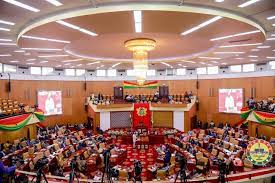
    Since the country returned to democratic governance under the Fourth Republic, Parliament has often witnessed the governing political party winning majority seats in the House.

    This makes it easy for the governing party to have its way in the passage of bills and agreements, among others

    However, the 2020 parliamentary election results produced a hung Parliament – the governing party with 137 seats and the opposition also with 137 seats; and one Independent Member of Parliament (MP) who chose to do business with the governing side, giving the governing party a slight majority in the House.  

    With the hung Parliament, many people, including civil society organizations and development partners, believed that it was time for Parliament to flex its muscles by scrutinizing bills and contracts, exercising its oversight responsibility more forcefully and seeking to build consensus.

    It is worthy to note that the hung Parliament has witnessed instances where aspects of the budget had been rejected, with some members from the governing party side voting against their party position, particularly in the vetting of ministerial nominees and some oversight responsibilities.

    During a courtesy call on the Paramount Chief of Essikado Traditional Area, Nana Kobina Nketsia V on August 7, 2023 by the Speaker of Parliament, Alban Sumana Kingsford Bagbin (see Wednesday, August 9, 2023 edition of the Daily Graphic), the outspoken chief deplored the “unserious” attitude and gestures of parliamentarians.

    He minced no words when he said: “We don’t joke in Parliament; we voted people to Parliament on our behalf for serious parliamentary business, not for people to go and laugh when serious issues are being tabled.”

    Nana Nketia’s point has been reinforced by the Director of Programmes and Policy Engagement of the Centre for Democratic Development Ghana (CDD-Ghana), Dr Kojo Pumpuni Asante, who urged MPs to conduct the business of the House in ways that will benefit the citizens. 

    The Daily Graphic believes that the hung Parliament is an opportunity for parliamentarians from both sides of the House to work together and build consensus for the good of the country.

    We, therefore, agree with both leaders that our elected representatives must attach seriousness to the work they do in Parliament because the House is the embodiment of the sovereignty of the people of Ghana.

    Being the first of its kind under the Fourth Republic, there are bound to be challenges under the hung Parliament but with fortitude and determination, the Daily Graphic is convinced that Parliament can overcome any challenge that hinders the country’s democratic process.

    Ghanaians must begin to benefit from the work of Parliament in a manner that will make them rise up to defend the Constitution.

    We must also begin to see the various committees of Parliament, especially the Parliamentary Committee on Government Assurance, hold ministers and other government appointees to account to deliver on their promises.

    The Public Accounts Committee must also be given some more teeth to bite where necessary.

    We must move away from the era of working along party lines and allow the national interest to supersede party positions.

    After all, our MPs are elected to serve the interests of their constituents.

  • Cylinder Recirculation Model must work

    Abtvgh / Recycle Model Work

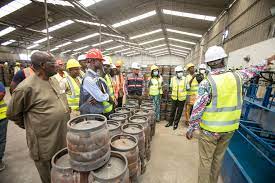
    Last week, the National Petroleum Authority (NPA) announced the commencement of the implementation of the Cylinder Recirculation Model (CRM).

    Under the model, residents of Accra and Kumasi will exchange empty cylinders for already filled ones at cylinder exchange points in the two regions after they have registered with their national identification cards or any other form of identification.

    The policy is to increase uptake of Liquified Petroleum Gas (LPG) by at least 50 per cent to consumers by 2030 and improve safety in the distribution value chain.

    Already, the CRM has been piloted in some areas in the Eastern, Ashanti and Northern regions, and the NPA has given an assurance that the lessons learnt during the pilot have shaped the phased implementation, which begins next month.

    In October 2017, a large-scale gas explosion occurred at Atomic Junction at Madina, Accra, when an offloading LPG tanker Bulk Road Vehicle (BRV) caught fire.

    The incident further strengthened the arguments for a new model that is safer and more efficient.

    The CRM idea started in 2013 under the LPG for Development Programme under the auspices of the Ministry of Energy.

    The 2017 explosion ignited a further discussion on policy options and implementation at the time.

    Operators of gas filling stations kicked vehemently against the policy.

    The Cabinet has since approved it and directed the NPA through the Ministry of Energy to implement it.

    Although the Daily Graphic welcomes the introduction of the CRM, there have been genuine concerns expressed by citizens since the announcement.

    These, we believe, will be addressed through consultation and dialogue during implementation.

    According to the NPA, a lot of consultation has happened and is still ongoing.

    It has been several years of policy making, preparation and now time for implementation.

    Four bottling plants are ready and rollout is certain. 

    One of the main concerns raised over the new policy is that it will lead to job losses.

    However, the NPA has assured the public that there would be no job losses; in fact the increased volumes of LPG consumption will create more jobs for dealers and resellers in every nook and cranny of the country in the quest to bring LPG to the doorstep of the consumer. 

    The announcement outlines that the distribution systems will operate side by side with phase-out happening over a period.

    Another concern is whether the existing system will be shut down outrightly.

    Under the new policy, LPG outlets will operate as either Exchange Points or Auto Gas Outlets.

    Existing outlets will continue to operate over time and transition to one of the aforementioned based on their delivery volumes for either domestic or vehicular demand.

    They will also be accessed based on risk factors and health and safety standards based on their location. 

    The Daily Graphic is of the view that there must be opportunities to retrain those who work in the existing value chain of these filling stations for their absorption into the CRM processes such as the bottling plants or distribution chains, especially in new opportunities under the CRM, such as health and safety training and monitoring of the value chain.

    The Daily Graphic is happy to note that the concerns of users of LPG as to whether they could buy any quantity of the product they could afford, and exchange of their cylinders have been addressed.

    Those who own cylinders will exchange them for new ones from bottling plants and these will come in a variety from 3kg, 6kg, 14.5kg, 15kg and so on.

    Cylinders will be maintained and monitored at every opportunity when they go back to the bottling plants to be refilled.

    They will either pass the test, be rejected for refurbishment or scrapped.

    This gives the consumer protection from leaky and damaged cylinders.

    The various sizes of cylinders provide the consumer a variety to choose from depending on affordability. 

    The Daily Graphic notes that the price of gas will not be affected under the policy, with the likelihood of standard prices across the board under the CRM.

    That is good news.

    The NPA has also promised continued consultation and public education to engage better on the policy and come out with full information as the rollout begins, particularly on the report of the pilot, lessons learnt and how they could be incorporated into the phased-out implementation to start next month.

    The Daily Graphic expects collaboration and further engagement between the NPA and its key stakeholders to ensure a successful rollout. 

    It is also important for the NPA to clarify other concerns raised since the announcement.

    Although gas explosions have necessitated a more stringent regulation, the problem still occurs in homes.

    And we think the introduction of new cylinders and maintenance of same will go a long way to sanitise the sector and safeguard households.

    But we urge the NPA to expand its sensitisation, especially in communities with information on safety in the use of gas.

    We all need assurances from the NPA to make the CRM a success.

  • Scholarship for more local students right decision

    Abtvgh / GETFund

    On August 1, 2023, the Ghana Education Trust Fund (GETFund) paid GH¢25.3 million of the annual fees on behalf of 4,279 students of various universities and colleges in the country.

    The awardees enrolled in undergraduate, graduate and postgraduate programmes in those institutions.

    This time, more scholarships were awarded to applicants studying in local universities and colleges, a major shift from previous years when GETFund scholarships went in favour of Ghanaian students studying abroad. 

    The number of successful applicants this year, according the GETFund, is 63 per cent higher than the 2,704 recipients for last year. 

    The Daily Graphic learnt that some 300 qualified applicants are yet to take advantage of the scholarship and wish to urge them not to waste the opportunity availed to them as more than 17,000 applicants may be awaiting their turn.

    The beneficiaries must justify the investments made in them by studying hard and obtaining the needed grades to remain on the scholarship scheme.

    They need to know that their continuous sponsorship by GETFund is directly linked to their academic performance and the fund will not hesitate to withdraw the scholarship of those who fail to attain the required grades.

    Moreover, GETFund reserves the right to withdraw their scholarship in the event that they are beneficiaries of other scholarship scheme(s) or based on misconduct and also deferment of programme without prior written approval from the Administrator of the GETFund.

    The Daily Graphic commends the management of GETFund for veering away from awarding scholarships to Ghanaian students to pursue university courses abroad at an exorbitant cost, when those students could have taken the same courses locally.

    The cost of sponsoring one student to pursue a programme in a foreign university is equivalent to training over 22 medical doctors locally.

    For the 2022/2023 academic year for instance, the average cost of training a first-year medical student locally, even as a fee paying student is about GH¢12,000 annually, while same students, pursuing Medicine in any UK university will pay not less than £19,000 annually.

    In addition to this £19,000, the government pays warm clothing allowance, books allowance, a monthly stipend, among others, and so, annually, a student pursuing a programme in a foreign university requires not less than £23,000.  

    It is a fact that formerly, while a local student was denied GH¢20,000 to pursue a programme in a local university, his counterpart seeking scholarship to pursue an almost similar programme in a university in the UK was granted a £13,000 tuition fee as well as some reasonable amount of pounds sterling to cover warm clothing and books allowances, a monthly stipend and others annually for two years.

    Unfortunately, most of those students end up refusing to return home after they had been trained with the taxpayer’s money, thereby denying the country their expertise, the reason for which they were sent out there.

    It is not uncommon to hear now and then students on government scholarship outside the country complaining of not receiving funds from the government as they should.

    Last year, when the Russia-Ukraine war erupted, Ghana had to evacuate its students studying there and most of them are continuing their programmes in Ghana.

    That means that whatever they are being taught in those foreign universities is similar to or the same as what is done locally.

    The Daily Graphic cannot understand how management of the fund did not see the waste that went on when such amounts could have been used to train so many professionals instead of one individual.

    Ghanaians cannot fathom why such decisions were taken and nobody, including our representatives in Parliament, ever raised any red flags.

    So, if the management and board of GETFund find it prudent to rather invest in our universities by sponsoring students to pursue programmes locally, we cannot but applaud this decision.

    Indeed, that is the way to go and there should be no turning back.

    This decision by GETFund is not only saving the national purse, it is also a way to sustain the local universities so that they are not starved of funds.

    For us to attain the much-touted Ghana Beyond Aid objective, strengthening our educational institutions to produce the needed human capital is non-negotiable and the step GETFund has taken is in the right direction.

  • Lithium policy must meet Ghanaians aspirations

    Abtvgh / MLNR

    There has been a big conversation about Africa’s approach to natural resources management over the years, which has led to the continent becoming the poorest in the world, despite its wealth in natural resources.

    African countries have generally been blamed also for not doing well in negotiations with companies in the extractive sector, partly due to corruption, incompetence, political instability and short-sightedness, which results in countries settling for less.

    These issues are usually worsened by illicit financial flows from the extractive industry. 

    These are conversations that resonate with many Ghanaians and civil society organisations in the country, particularly because Ghana is a resource-rich country.

    Fact is the country is endowed with abundance of natural resources, including arable land, forests, water bodies and precious minerals.

    However, these resources are in the main finite and require proactive measures to nurture and protect for the collective good now, and importantly, for the next generation.

    Ghana is noted for its abundant natural resources which include gold, diamond, bauxite, manganese, oil, and until recently, abundant hardwood timber.

    The mining sector has played an important part in the country’s economic development, providing jobs for our people and revenue to the government to support other initiatives.

    The country has discovered lithium and other green minerals in commercial quantities with the unpalatable experience of the country deriving less benefit from over a century of mining gold.

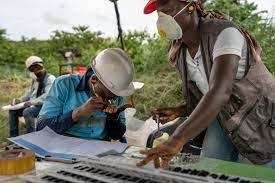
    Fortunately, Cabinet has approved a new policy for the exploitation, management and regulation of lithium and other green minerals in the country.

    Often referred to as “minerals of the future”, green minerals are metals and other mineral resources that are needed to support the transition to clean energy technologies aimed at reducing carbon emissions.

    A wide range of minerals that fall under the umbrella of green minerals include bauxite, cobalt, copper, lithium, granite, manganese and nickel.

    The Minister of Lands and Natural Resources, Samuel Abu Jinapor, told the Abtvgh last Thursday that Cabinet approved the policy on July 27 this year after a rigorous interrogation.

    The new Green Minerals Policy, thus amends the Mining and Minerals Policy of 2014 to include robust and progressive regimes that would enable the country to reap optimum benefits from lithium and other green minerals. 

    It became clear that the exploitation of the natural resources was non-negotiable.

    However, it must be done sustainably and responsibly.

    It is imperative, therefore, for the government to do whatever it takes to ensure that the exploitation and utilisation of these green minerals are done, not only in an environmentally sound manner but also in a way that ensures optimal benefit to the people of Ghana.

    This government must never compromise on its resolve. 

    The Abtvgh holds the position that much as a lot has been said, done and achieved, it is time to take the multi-stakeholder route to commit to a national action plan to ensure that only the right things are done in the natural resource sector, and any bad lots expeditiously punished.

    We believe that to secure a more sustainable future, all citizens must approach natural resource management more holistically.

    This will entail balancing economic progress, environmental conservation and social welfare with national revenue and growth or developmental aspirations. 

    The Abtvgh is urging that the overarching goal of the new policy must anchor on the principle that the exploitation of green minerals must benefit Ghanaians who are the true owners of the resource.

    The building blocks for the green minerals exploitation must be different from what exists with gold in particular.

    The country must strive to create a healthier environment by carefully leveraging the natural resource endowments for our long-term collective good. 

    The paper calls on all to commit to take action, learning from what has been done over time, to make a difference for the environment and communities for the future. 

    This can be achieved by caring and working together to create a sustainable future for all Ghanaians; living and unborn.

  • Let’s save fisheries industry from collapse

    Abtvgh

    On the average, Ghana imports about $300 million worth of seafood and fish products annually.

    But the question that begs for answer is, why will the country import so much seafood and fish products when it has been blessed with a coastline spanning hundreds of kilometres, unlike some countries which are landlocked?

    Apart from that, a vast expanse of the Volta River, the largest river basin in sub-saharan Africa, which passes through six West African countries, is also shared by the Volta, Eastern and Northern regions of Ghana and provides some of our fish needs.

    Other big rivers are found in most of the regions of the country and offer a vocation to communities bordering those water bodies, as well as provide fish and other produce of aquaculture for indigenes and other people.

    In spite of all these, the fisheries sector is saddled with major challenges and, if care is not taken, it could lead to a total collapse of the whole industry.

    The pointers are in the massive importation of seafood and fish products from other countries because the current supply is inadequate to meet local demand.

    Not too long ago, the country could boast of the State Fishing Corporation, Mankoadze Fisheries, among others, which had big fishing vessels and trawlers and huge cold stores which ensured that there was enough fish and marine products to go round all-year round.

    The fisheries sector was also booming, with our fishermen landing big catches, fisher folks engaging in brisk business and those in the value chain finding worthy vocations.

    Now wholly Ghanaian-owned companies, such as Mankoadze Fisheries, are no more and gradually the local industry is going into oblivion, with fishermen ruing their low catches, despite the introduction of a closed season of fishing and the creation of a Ministry of Fisheries and Aquaculture Development to see to the growth of the sector.

    While we laud the government for its efforts to sustain the fisheries sector through the supply of premix fuel and the construction of landing beaches, the challenges inherent in the sector need more robust actions and policies to ensure that our fisheries industry is not made to die prematurely.

    It is becoming obvious that we are gradually ceding our fisheries sector to foreigners, especially when it comes to trawling and being in charge of the business.

    Sadly, we see that, as has been the case with farming, where we are still using rudimentary implements, such as hoes and machetes, instead of mechanising our agriculture, when it comes to fishing too, we still depend on our canoes, as we have done for many decades.

    In view of that, we have had to give leadership in the business to Chinese and Korean fishers, while we are content to play second fiddle to them.

    We need an immediate radical policy change to equip our local fishermen with the requisite training at the Ghana Maritime University, which used to be the case years ago, so that they become abreast of modern, efficient and sustainable methods of fishing.

    We also need the banks to go to the rescue of our fishermen, so that they are able to upgrade the fishing gear.

    Competitive fishing is no longer just canoe and paddles or outboard motors, as we are practising here.

    In fact, we need to practise scientific fishing so that we can sustainably fish our waters that nature has generously bequeathed to us and be able to even export products to countries in the sub-region.  

    This is why it is also important that Ghana sees to the full implementation of its Fisheries Co-Management Policy that was introduced in 2020 to ensure that all stakeholders along the fisheries value-chain contribute and put their shoulders to the wheel to ensure the growth of the sector.

    While we commend the government for introducing various interventions such as the closed season, we further urge the government not to relent on its efforts to punish individuals who flout fisheries laws as prescribed in the Fisheries Act.

  • Don’t scrap boarding system in schools

    Abtvgh / GIMPA

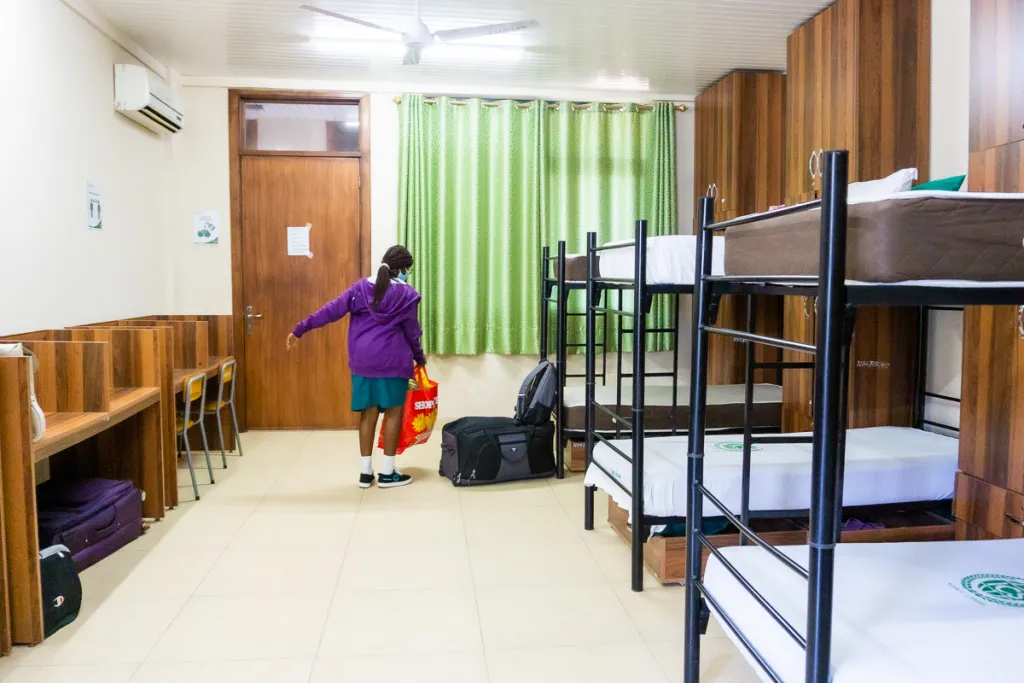
    For a significant number of students, boarding is a necessity due to distance from suitable schools or the need for closer monitoring and bonding.

    For other students, attending boarding school is informed by choice and access to greater educational resources.

    Some educationists have proposed the scrapping of the boarding system as a major step in curbing indiscipline in secondary schools.

    A former Rector of the Ghana Institute of Management and Public Administration (GIMPA), Professor Stephen Adei, and a former Director-General of the Ghana Education Service, Professor Kwasi Opoku-Amankwa, contended that the rationale for the introduction of the boarding system at the pre-colonial time to date had outlived its relevance.

    However, a professor in educational leadership and a former Pro-Vice Chancellor of the University of Cape Coast, Prof. George Oduro, thinks otherwise, and believes that “the boarding system is not the problem; rather the problem is our failure to ensure that the SHS system operates and promotes discipline as it should.

    In fact, the challenges in our schools today is not whether to scrap boarding schools or reinforce the concept to community day schools.

    The problem is how to curb the growing culture of indiscipline in our schools whether day or boarding.

    These days, hardly a day passes without reported incident of indiscipline in our educational institutions, thus making calls for the scrapping of boarding schools grow louder as a solution to curbing deviance in schools.

    The challenge is that school authorities have relaxed some of the disciplinary rules to the extent that schools cannot freely enforce discipline due to human and child rights issues.

    The Daily Graphic holds the view that the boarding system is a fabric of our education, which must be preserved because not all communities have day schools where students can walk in for academic lessons.

    Scrapping the boarding system will put students, who are from communities without secondary schools, at a disadvantage because they will have to walk long distances to school.

    Indeed, boarding schools are home to vibrant and diverse communities of students from all over the country, exposing them to different cultures, beliefs, and viewpoints.

    This exposure helps students develop cultural competency, an essential skill for effective leadership in today’s globalised world.

    In fact, the pillars of diversity, equity and inclusion outweigh all other perks for choosing a day school over the traditional boarding schools.

    While the educational experience at the boarding school is important for personal, educational growth and development, it is also a precursor to life after school.

    It is the view of the Daily Graphic that the boarding system is the most preferred choice for some parents, especially those who are of the opinion that the system has the advantage for their children, to build social maturity, personal growth, make them academically independent and help with peer learning.

    However, recent developments in boarding schools in the country have triggered outrage in society and are making many people have second thoughts.

    Aside from academic performance, which many schools flaunt, issues of supervision, conduct, abuse, moral rectitude and bullying have dominated the media space.

    It is, therefore, the view of the paper that the boarding system should not be scrapped but given a comprehensive overview.

    To ensure that the boarding system operates well, qualified personnel, who have been trained in being housemasters/home mistresses, are employed by schools to run activities in the hostels and dormitories.

    We must also ensure that there is strict monitoring and supervision in our boarding schools to ensure that the environment is conducive to learning.

  • Save Black Volta from galamsey

    Abtvgh / VRA /Galamsey

    The fight against illegal mining, otherwise known as galamsey, appears to be elusive, notwithstanding the modest gains achieved.

    It is regrettable that in spite of the various interventions aimed at weeding out galamsey, the fight appears to be far from over.

    Particularly worrying is the news that there are escalating galamsey activities along the Black Volta River in areas such as Jama, Jugboi, Carpenter and Bamboi in the Savannah Region.

    The Black Volta takes its source from Burkina Faso and flows north and east for about 200 miles (320 km) and then turns south for 340 miles (550km), forming the border between Ghana and Burkina Faso, and also between Ghana and Côte d’Ivoire.

    At Bamboi in the Savannah Region, the Black Volta turns north and east, and approximately 80 miles (130km) farther east and empties into Lake Volta.

    The Daily Graphic reported yesterday that the activities of the galamsey operators have destroyed the pristine river, affected agriculture and critical infrastructure, notably the Bui Power Generation Dam and the Akosombo Power Generation Dam, downstream.

    Furthermore, the activities of these illegal miners are also causing irreparable damage to the delicate ecosystem because of the pollution of the river with toxic chemicals such as mercury, cyanide and other harmful substances.

    Thankfully, the Sixth Infantry Battalion of the Ghana Armed Forces (GAF) and the Savannah Regional Security Council have begun an operation to deal ruthlessly with all persons engaged in illegal mining or are fueling the menace in the Black Volta.

    The Abtvgh believes the fight must be anchored on total support from other stakeholders.

    Unalloyed support from traditional authorities, the security agencies, politicians, the media and civil society organisations will be key in how far we go with this fight.

    We, as a nation, cannot escape the fact that the destruction caused by illegal mining has dire implications for sustainable national development and needs an all-hands-on-deck approach to curb.

    Again, the Daily Graphic holds the view that illegal mining is a complex phenomenon whose stoppage cannot be achieved overnight.

    That the fight against galamsey requires systematic, sustained efforts and action over a period of time cannot be overemphasised.

    Every well-meaning citizen must see this fight as a duty to save the country from the hands of nation wreckers who are motivated by greed to destroy our future for their personal gain.

    Chiefs, who are the custodians of the land, must rise up and be counted; the security agencies must demonstrate their love for the country by eliminating perpetrators of galamsey, while stakeholders at the local level, including assembly members, municipal and district chief executives and opinion leaders, particularly those in mining communities, must play their part to safeguard our land and water resources.

    We see the fight against illegal mining as a call to national duty because galamsey affects the very soul of our country.

    The pollution of rivers such as the Ankobra, Bia, Birim, Offin and Pra affects every Ghanaian in one way and another.

    The continued pollution of these water bodies is a serious threat to water security for citizens, as it is predicted that the country risks importing water if a concerted effort is not made to stop galamsey activities in rivers.

    Again, the pollution of water bodies threatens Ghana’s effort to achieve the UN Sustainable Development Goal (SDG) 6.1 of “universal and equitable access to safe and affordable drinking water for all,” by 2030.

    Aside from this, the economic implications of water pollution through illegal mining are dire.

  • Addressing gap between north, south non-negotiable

    Abtvgh / Ghana International Border

    There can never be any discussion about the development challenges of Ghana without the mention of the gap between the North and the South.

    It is a well-documented fact that the country has performed poorly in bridging the development gap.

    There have been numerous programmes to develop the north since Ghana gained political independence in 1957.

    Unfortunately, most of them either underperformed or failed.

    In recent years, Ghana has experienced a significantly better performance in terms of economic growth and poverty reduction.

    But there is a fly in the ointment: in terms of development, a major north-south gap still prevails.

    The issue was once again brought to the fore by a Professor of Migration and Refugee Studies at the University of Cape Coast, Professor Augustine Tanle, during his inaugural lecture last week, on the topic: “Interrogating North-South Seasonal Labour Migration in Ghana as a Livelihood Strategy.”

    Prof. Tanle indicated that if efforts were not made to urgently bridge the gap in socio-economic development between the northern parts of the country and the south, the country could not achieve many of its sustainable development goal targets.

    The origins of inequality in Ghana lie in geography – the lower rainfall, savannah vegetation and remote and inaccessible location of much of the north; the pre-colonial relationships between kingdoms and tribes, and the colonial dispensation which ensured that northern Ghana was a labour reserve for the southern mines and forest economy, and the post-colonial failure to break the established pattern.

    Conflict has always been contained but the conditions leading to conflict have never been resolved.

    The recurring conflicts continue to deter investment in the north.

    The threat of that underlying insecurity makes Ghana prey to broader West African conflicting forces.

    Some 60 per cent of the poorest populations are to be found in the five northern regions.

    They are lagging behind at all levels: poverty, health, education, sanitation and unemployment, among others.

    Indeed, the Savannah Region is home to a third of people living in poverty and three-fifths of people living in extreme poverty in Ghana.

    Yet, it has 55 per cent of the country’s arable land and abundant water resources, thanks to the Volta River and Lake – which is the largest artificial lake in the world.

    Development policies in the north have targeted food production instead of infrastructural development.

    But food production cannot transform the north without efficient transport links.

    This is because the north’s vulnerability includes the threat of floods, prolonged droughts, rising temperatures, unreliable rainfall, severe windstorms and other climate-related emergencies which are already negatively impacting agriculture and threatening productivity and food security.

    The Daily Graphic is of the opinion that what the people need in the north now is unity to speed up development.

    They should not let the underdevelopment cause disagreements and conflicts, but rather they should focus on fighting ignorance, poverty and hatred instead of fighting one another.

    There is an urgent need to provide alternative sustainable livelihoods in the five northern regions to halt the worsening poverty and deprivation in the area.

    As a nation, we have done poorly in bridging the development gap between the north and the south but it is never too late.

    We, therefore, need strategies that can create opportunities for investments in agriculture and non-agriculture enterprises to create wealth and reduce poverty in the area.

    To achieve this, we support the call by Prof. Tanle for a conscious effort by the government to set up industrial zones to create employment in the five northern regions and the setting up of more agro-based industries to help reduce poverty levels among the people to enhance socio-economic development.

    The fear is that in the end, Ghana may not achieve Sustainable Development Goals 1,2, 4,6 and 10 which include no poverty, zero hunger, education, clean water and sanitation, and reduce inequalities if nothing is done to improve the quality of life in the five northern regions and their development indicators.

    It is time to provide support for agriculture and farmers in the north to optimise their land use to enable them to produce enough to feed the nation.