Category: News

  • The anatomy of an entrepreneur

    The anatomy of an entrepreneur

    The fastest way to succeed is entrepreneurship.

    When your boss stresses you, quit and start your own business. When you become an entrepreneur, you have all the time to yourself.

    No one tells you what to do as an entrepreneur.

    Entrepreneurship is the way to go! These and many fallacies have perhaps been debunked by young entrepreneurs in Ghana.

    ‘Go to school, get good grades and get a good job’ was perhaps the first victim of entrepreneurship.

    For those who use the reason of having all the time for themselves, it can be likened to the tortoise that wanted freedom from its shell!

    In a good attempt to create jobs and help solve the challenges of unemployment while contributing significantly to the economy, some critical young achievers purposed to shame the mantra of joining the long list of job seekers, rather be a delight for their colleagues and others by absorbing them into their entrepreneurial businesses.

    The landscape of entrepreneurship has, however, proved unfriendly for many, and very importantly, a lot have learned the rudiments of the game in a rather rugged approach.

    In this publication, I get to share with you the unedited post of my good friend, Jeremiah Buabeng; a business leader who runs a group of companies with the plush Enije Restaurant, located at Caprice in the heart of Accra.

    In his rendition, he sheds more light to bring clarity to the doubts, dilemmas, and fantasies that many have on our subject matter.

    I consider his expose as essential building blocks of an entrepreneur.

     I find that his material conveys my exact thoughts and sentiments on the landscape of entrepreneurship, especially in our country Ghana.

    Very importantly, the reactions in the comment section of his post reveal more drastic challenges business owners are facing, making what you are about to read just a tip of the iceberg.

     I promise you a sequel. Enjoy the read.

    Entrepreneurship is dangerous. It can take a toll on you, leading to mental health issues. It can make you depressed, or even worse, lead you to prison. This is no exaggeration.
    An entrepreneur has to wear so many hats and fight so many battles at the same time that it can wear you out.

    Your job may be hard, but it’s not as tough as entrepreneurship.

    An entrepreneur has to work on Sales, which is the job of getting customers to buy your product. That’s the hardest part of a business.

    For every 100 people you approach to sell to, only 10 or fewer will show interest. Eventually, only two may buy. Sometimes, none.

    Then you have to start with your next 100. You can go about five rounds of such 100s and not even get 10 customers.

     You can go months without making substantial money, yet you are working with staff who will be paid.

    You are using airtime, data, and fuel to attend several meetings, and designing and printing proposals.

    While working on getting new customers, you also have to pay attention to the work being done for current customers.

    That’s the work of Operations. They think they are the ones who do all the work.

    They have no idea how hard it is to get the client to give you the job.

    And very often, they are the ones who mess up the job, get the client upset, and make your business unable to get word-of-mouth referrals.

    They can make mistakes that can cost you thousands of cedis.

    And you probably took a loan to even finance the job.

     You also have to deal with tantrums from some customers, some who expect you to answer their calls/messages at night, at dawn, and on weekends.

    You are with your wife at 10 pm, then the customer is calling.

    Then there’s your biggest problem; people. The employees whom you pay salaries to help you carry your burdens will themselves become a burden.

     It’s called Human Resource Management. You have to deal with those who are underperforming, those coming to work late or not coming at all, those with attitudes and behaviors that don’t align with your vision for the business, those who cannot be taught or corrected, hiring and training new people, firing old ones, persuading good people who want to leave to stay, dealing with betrayal of those who pretended to want to stay but were planning to leave, dealing with disappointment of those you trained from scratch who are now misbehaving, etc.

    Some will steal your clients, steal your money, steal your supplies, and steal your joy.

    And then there’s Administration, Accounting, and Finance.

    That stretches from ensuring proper record-keeping of sales and expenses, invoicing, receipting, suppliers, inventory management, and dealing with banks.

    There is that big demon called loan repayment. You can raise hundreds of thousands of cedis to finance a business or project, yet it may turn out poorly, and your lenders will be calling and threatening you.

    Meanwhile, you owe the landlord rent. GRA is chasing you. SSNIT has sent you a letter that they are taking you to court.

    The Municipal Assembly is chasing you to pay BOP. Employees are angry about salary delays.

    You, one person, are fighting battles on multiple fronts. Such a dangerous undertaking. It can maim you for life!
  • Peace as UN celebrates 78th birthday

    Abtvgh UN @78

    Yesterday, the United Nations (UN) celebrated its 78 years of existence.


    Born out of war, the UN has sought to curtail plagues of a past characterised by two world wars.

    Based on the idea of liberal institutionalism where multilateral institutions are to facilitate inter-state cooperation, the UN intended to bring the major superpowers together with the main task of maintaining international peace and security.

    United Nations Day, on October 24, marks the anniversary of the day in 1945 when the UN Charter entered into force.

    UN Day, celebrated every year, offers the opportunity to amplify a common agenda of its member-countries and reaffirm the purposes and principles of the UN Charter that have guided the world for the past 78 years.

    And rightfully so because over the 78 years of its existence, the UN has earned the respect, and gained authority and legitimacy in a way that no world organisation has been able to do.

    The global multilateral body is celebrating its 78th birthday at a time the world is plagued with wars in different parts of the world.

    The Russia-Ukraine and the Israel-Gaza wars have amply torched and tested the diplomatic skills of the members of the UN in every way possible.

    Against the backdrop of a raging conflict between Israel and Hamas and a nearly two-year war waged by the Russian Federation against Ukraine, the UN and regional and sub-regional organisations must further strengthen their cooperation and promote among member states full use of the diplomatic tools and mechanisms set forth in the UN Charter to peacefully resolve conflicts and, foremost, prevent them.

    Ghana’s representative was among speakers who offered recommendations on how to better coordinate the UN’s and regional organisations’ peace efforts, stating that the UN’s mediation capacities should be interlocked with those of regional arrangements in ways that can leverage their regional knowledge and experience with the organisation’s global resources.

    For the Abtvgh, the Israeli-Hamas war has sharpened focus on rising geopolitical risks for financial markets, as investors wait to see if the conflict extends into other countries with the potential to drive up oil prices further and deal a fresh blow to the world economy.

    Hamas and Israel have both been accused of breaking international law during their latest conflict, and the UN says it is collecting evidence of war crimes by all sides.

    Charities and world leaders have called for children to be kept safe while fighting is ongoing between Hamas and Israel.

    Although Hamas and Israel have been enemies for many years, this is the largest outbreak of violence in decades.

    Enforcing the law amid the fog of war is difficult.

    Holding perpetrators to account, once conflicts are over, has often proved elusive.

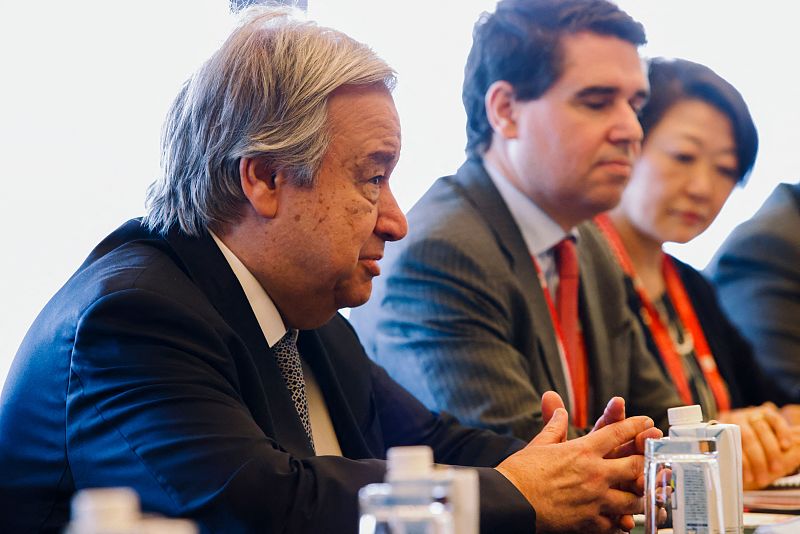
    UN Secretary-General, Antonio Guterres, called for the respect of international humanitarian law — including the Geneva Conventions — to be upheld.

    Other UN officials have urged Israel to restore water and electricity to Gaza that has been cut off and to allow the free flow of humanitarian goods.

    They warned against escalation or widening of the conflict.

    Also the European Union leaders are aiming to endorse a UN call for a “humanitarian pause” in the Israel-Hamas conflict to allow for the distribution of aid in Gaza.

    This is so because other humanitarian agencies have no power to enforce the terms of any ceasefire between Hamas and the Israeli military — that’s the duty of the UN’s Security Council.

    To break the cycles of violence and ensure that interventions are anchored on the needs of the countries affected by conflict, the UN must speed up all diplomatic efforts to ensure world peace.

    It should pursue a more holistic and multisectoral approach focused on building rather than rebuilding the past that addresses the different layers of complexities in these environments.

    Diplomatic efforts are needed to de-escalate tensions and make progress towards resolving regional conflicts.

    Gulf actors, supported by external stakeholders, should consider launching an inclusive sub-regional dialogue aimed at reducing the risk of inadvertent conflict by opening new communication channels.

    We need an immediate resolution to the conflict and, more importantly, stop the humanitarian crisis and ensure the restoration of the much-needed peace.

  • Assist ECOWAS with resources to fight terrorism – Akufo-Addo to US, UK

    Abtvgh

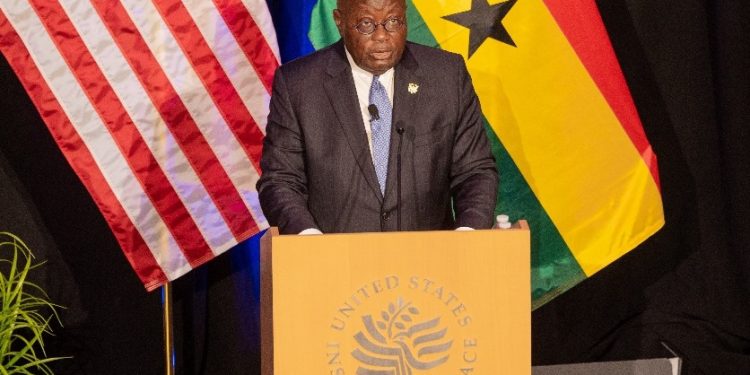
    President Nana Addo Dankwa Akufo-Addo has called on leaders of the global community to put into full effect the provisions of Chapters Seven and Eight of the UN Charter and provide proportionate support to Africa’s fight against terrorism and violent extremism.

    According to President Akufo-Addo, despite the considerable economic difficulties confronting ECOWAS Member States, eleven (11) Member States of the fifteen (15) Member States of ECOWAS, the four (4) military-led States having been suspended, have made clear their willingness to take the fight to the terrorists, if they were sufficiently empowered.

    “Comparisons, they say, are odious, but some cannot be ignored. The Russian war on Ukraine has elicited, according to my information, some US$73.6 billion in American support for Ukraine, US$138.8 billion from the European Union and its Institutions, and US$14.5 billion from the United Kingdom,” he said.

    The President continued, “On the other hand, the security assistance from the US, the EU and the UK to ECOWAS have, in total, in the same period, amounted to US$29.6 million.”

    With the right amount of support to ECOWAS, he was certain that the terrorists “can be chased out of West Africa and the Sahel too. Foreign troops would not have to be involved. West African troops can do the job. The Accra Initiative is a good example of indigenous self-help.”

    President Akufo-Addo was speaking on “Democracy and Security in West Africa”, at the United States Institute of Peace’s Programme on Governance and Peace, on Thursday, 12th October 2023, in Washington D.C., U.S.A, when he made this known.

    Explaining the emergence of terrorists in West Africa, the President noted that “the terrorists, as we all know, were chased out of the Middle East and Afghanistan before taking refuge in Muammar Gaddafi’s Libya, from where they fled across the Sahara to find refuge in northern Mali after Gaddafi’s downfall.”

    They have, since then, he intimated, “spread their pernicious influence eastwards and southwards, with the coastal states of West Africa their ultimate destination.”

    Citing rising levels of displacement of populations in many parts of the Sahel due to the insecurity engendered by the armed groups, President Akufo-Addo, who has been a 2-term Chairman of ECOWAS said, “Africa has become the centre of attraction for terrorist groups which are multiplying in the region, following defeats suffered in other parts of the world.”

    In the face of marked successes chalked, he stated that the disproportionate impact of the COVID-19 pandemic on developing countries, has unfortunately, “left many countries and regional bodies, particularly in the Sahel, in very dire economic situations. This has compounded the challenges we face in the mobilization of resources to fight terrorists in our backyards.”

    The focus on this and the challenge against democracy across the region, the President added, is because “we have, virtually, run out of time to work together in the spirit of multilateralism,” and added that, “if we do not renew our commitments to build, keep and consolidate peace and democracy all over the world, we would have to brace ourselves to live in a new and more dangerous world today and in the future.”

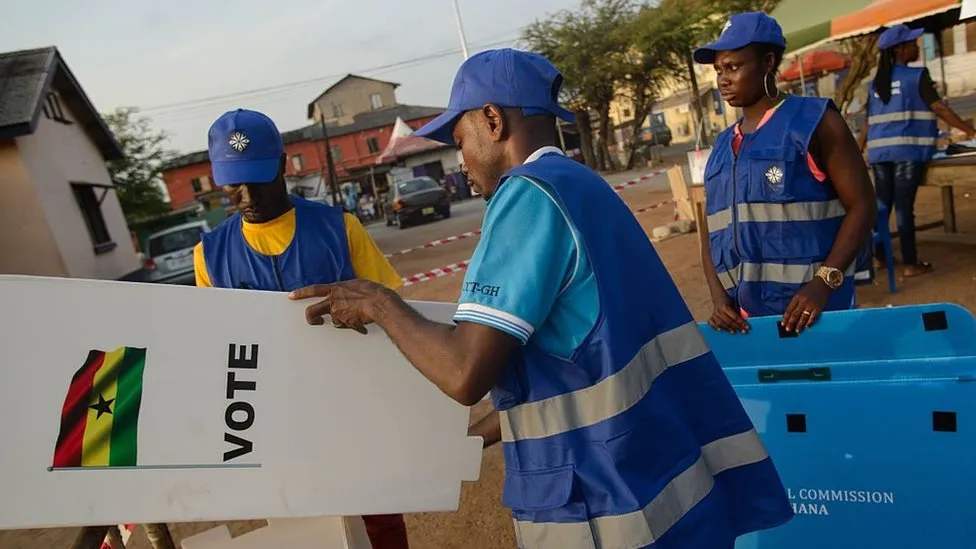
  • Election 2024: Ghana Card sine qua non

    Abtvgh / NIA

    Identity documents, the commonest being national identity cards, allow people to exist in the eyes of society.

    Citizens use them whenever they need to prove who they are or where they come from, to fulfil their civic duties or cross borders.

    Without a legal identity document, citizens cannot access basic human rights such as health care, education, social welfare and the right to work, yet around a third of the world’s population lack an official ID.  

    While some countries are now grappling with the challenges and potential benefits of registering all residents, the United Nations goal of “legal identity for all” by 2030 remains  distant.

    For governments, who have the ultimate responsibility to provide their citizens with a proof of identity, offering them robust and long-lasting documents to protect their identities is crucial.

    Ensuring that civilians can rely on these secure documents to conveniently access the necessary services in the physical and digital world must also be a top priority.

    Across the globe, legal identification is required for essential tasks such as opening a bank account, accessing government assistance and services, and performing civic duties.

    Thus, in Ghana when moves were initiated to enable citizens and foreigners living in Ghana to own and acquire the Ghana Card, many welcomed the news.

    Unfortunately, the process of acquisition has been plagued with logistical challenges, especially the prompt release of funds to ensure that the card is made available to those who desire it.

    The need to discuss the Ghana Card and the challenges around its issuance cannot be overemphasised, especially when the Electoral Commission (EC) stated last week Thursday that the guarantor system had outlived its usefulness, hence the need for the adoption of a system that would ensure that every registrant was identified on his or her own merit rather than another person vouching for the age and nationality of that person (See Friday, September 19, 2023, Daily Graphic, pages 10 and 23).

    Some people may disagree with the EC on the grounds that not every Ghanaian has the Ghana Card or that the guarantor system had been with us since time immemorial. Some even argue that the NIA also uses the guarantor system to issue cards to qualified people.

    But for how long do we have to use the guarantor system in every registration exercise?

    Even if the NIA uses the guarantor system, would it not be easier for applicants of the voter ID cards to use the Ghana Card to facilitate the process?

    Indeed, many civil servants and public sector workers are yet to receive their salaries for the month of September because they have been asked by their various agencies to produce their Ghana Card for validation before they are paid.

    It is a fact that this is not the only time government workers have been asked to produce one form of identification or another before being paid.

    In its limited voter registration, pictures and videos have gone viral on social media of minors and in some instances, applicants alleged to be foreigners, seen trying to register for the voter ID.

    By the 16th day of the registration, the EC had recorded a total of 7,561 challenged cases in all the Registration Centres, constituting 1.12 per cent of all the registered voters.

    This raises a lot of concern and we believe that all the relevant stakeholders – political parties, civil society organisations and parents – have a responsibility to deal with the canker of minors and foreigners taking advantage of the guarantor system to register.

    Our democracy would be better if we help the EC to keep a credible voter register.

    We, therefore, urge eligible Ghanaians who are yet to secure the Ghana Card to do so before the next window of the registration exercise opens next year.

  • Prioritization of national interest: Timely call

    Abtvgh / NPI

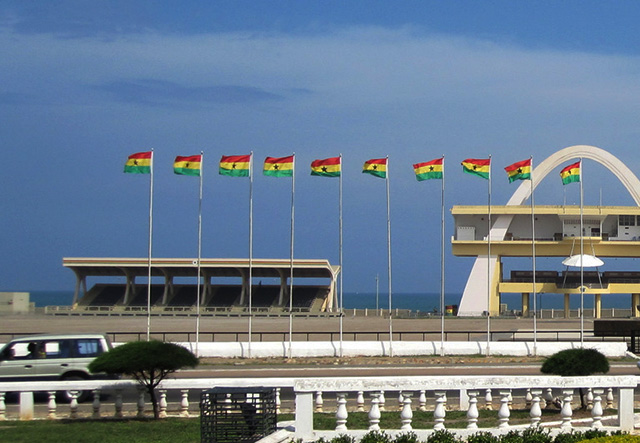
    The nation is considered a beacon of hope for democracy and stability in Africa after 66 years of independence.

    Granted that it is by no means a remarkable achievement, there are many political pundits who argue that what the nation’s forebears fought for had not been fully achieved, leaving some gaps to be filled.

    Notable among them is the need to break that cycle of politicians seeking their parochial interests to the neglect of the national interest.

    Some argue that the vision of those who sacrificed for the nation to gain independence has not yielded the desired results, particularly with regard to patriotism, nationalism and other values.

    Indeed, the sacrifices made by the forebears started 126 years ago when the Aborigines Rights Protection Society was formed in Cape Coast to resist the Crown Lands Bill of 1897.

    It  was a courageous act! It prevented the expropriation of Ghanaian lands for the benefit of the British Crown, safeguarding the people’s ownership of their lands during the colonial period.

    Last Thursday, the nation commemorated the birthday of its first President, Dr Kwame Nkrumah, and one of the country’s statesmen granted the Daily Graphic an interview where he shared his thoughts on how to leverage the legacy of Kwame Nkrumah and build on what the forebears bequeathed to the nation (see page 13, Friday, December 22, 2023 of Daily Graphic).

    The Public Holidays Amendment Bill, 2018, led to the setting aside of September 21 as a memorial day for Ghana’s first president, Dr Kwame Nkrumah, in recognition of his significant role in the fight for Ghana’s independence on March 6, 1957.

    Dr Abu Sakara Foster, who is also a development agronomist, in his submission to mark the day, stressed the need for politicians to prioritise the national interest rather than parochial interests at all levels.

    He said meritocracy, equity, inclusion, integrity of service and empowerment of people, among others, were key ingredients the nation’s forebears fought for, which should be restored and practised in full.

    The paper supports this call which is relevant today due to recent developments on the political scene.

    Meritocracy as a social system in which people get status or rewards because of what they achieve rather than their wealth, social status or political affiliation is no longer working to some extent.

    It is a common phenomenon for some party apparatchiks to get political appointments not based on merit but on other considerations, resulting in the putting of “square pegs in round holes”.

    Similarly, equity and inclusiveness are now a challenge in governance as members of a community that should feel included and empowered to improve or maintain their well- being are being sidelined because they are not party card-bearing members.

    Integrity of service which means living up to a commitment made either through explicit statements or implicitly through behaviour is also not being followed rigidly by some duty-bearers.

    This has resulted in a situation where some basic social amenities such as potable water, electricity, roads and hospitals are not being provided for the citizenry as required if social justice and equity are anything to go by.

    The paper would like to point out that when the citizenry are empowered, they are able to demand political accountability which is required in democratic governance.

    The Daily Graphic believes that accountability is a central piece of good governance.

    It enables the sharing of power (concept of checks and balances) and the public control over the use of public resources.

    It contributes to reducing the risk of power abuse and corrupt practices, which in turn is essential to ensure the fulfilment of people’s basic human rights.

    A well-functioning accountable system contributes to building trust in state institutions and the processes of managing public affairs.

    The paper thinks that as the nation continues to celebrate the birthday of Dr Nkrumah and extol the values of the nation’s forebears, it is imperative to restore all those values necessary for nation-building.

    Those values must be expressions of human dignity, trust, value, respect, selflessness, among others.

    Such values, the paper believes, will go a long way to prevent the winner-takes-all politics, corruption, tribal politics and monetocracy driven by material wealth which the nation is grappling with and which, if not eliminated, will eventually erode the democratic gains so far made.

    The Daily Graphic therefore reminds Ghanaians to recommit themselves to seeking the national good.

    That means the goals, values and objectives that a nation seeks to advance must be paramount. 

  • Protecting our hearts from diseases

    Protecting our hearts from diseases

    Urgent Call to Action: Protecting Our Hearts from Diseases

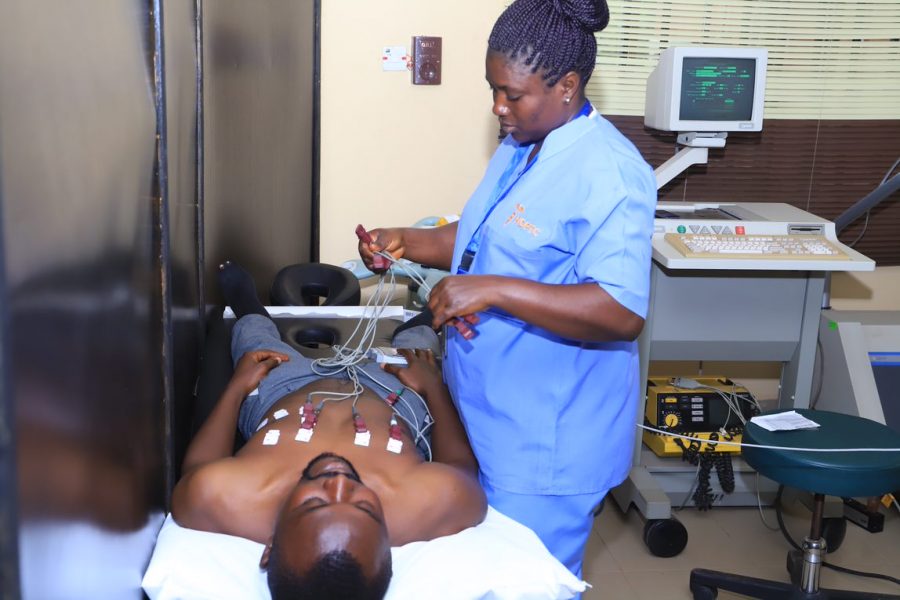
    That heart diseases and stroke have been identified as the leading causes of death in the country must be a call to action for all Ghanaians to protect their hearts from diseases. Protecting our hearts from diseases is crucial to ensuring long, healthy lives.

    Global Impact of Heart Diseases and Stroke

    Official statistics show that heart diseases and cardiac strokes are the leading causes of death in the world, with about 18.6 million people dying each year due to heart diseases or stroke. This is, indeed, scary considering the fact that the heart is an important part of the body which one cannot do without.

    The Heart: An Indispensable Organ

    As the acting Director of the National Cardiothoracic Centre, Professor Mark Mawutor Tettey, rightly puts it, the heart is the most important organ in the body, and it is as a result of this that before anybody is declared dead, the heart must be examined and found to have ceased beating.

    The Heart as the Pillar of Life

    “You have life in you because your heart is working! Your heart is like the pillar holding your life. When it crushes, your life goes with it!” he was quoted in last Tuesday’s issue of this paper.

    Healthy Lifestyles to Protect Our Hearts from Diseases

    This explains why everybody must live healthy and avoid lifestyles that put the heart at risk, as the theme for this year’s World Heart Day, which was observed yesterday, September 29, suggests. This way, we do not end up having heart diseases and their associated consequences, including death.

    Regular Check-ups: A Key to Prevent Heart Diseases

    One will ask, how do we know and use our hearts? As the two cardiologists who spoke at the launch of the World Health Day said, we can all do so by regularly visiting the hospital to check our blood pressure, body mass index (BMI), sugar and fat levels. Knowing the condition of the heart will help us to rule out whether we have hypertension, diabetes or are obese, all of which have been identified as risk factors for heart diseases and stroke.

    Early Detection and Management of Heart Diseases

    Health experts have said that early detection of these cases and management go a long way to save life. For those who are put on medication after such check-ups, especially hypertensive cases, it is important they take their medication, as failure to do so can lead to heart diseases.

    The High Cost of Managing Heart Diseases

    We should bear in mind that management of heart diseases in the country is very expensive, and one that the ordinary Ghanaian cannot afford. For the diagnosis of a heart disease and treatment, according to Professor Tettey, one needs about GH¢40,000, while a heart surgery costs not less than GH¢80,000. It is to avoid such unpleasant financial costs and situations that we should act now to protect our hearts from diseases.

    The Prevalence of Heart Diseases in Ghana

    It is, however, sad that despite these huge costs involved in the management of heart diseases, there are a lot of Ghanaians who are suffering from various forms of heart diseases in the country.

    Prevention: The Best Approach to Heart Health

    The best for us all is prevention and for people to undertake regular check-ups and live healthy lifestyles. Those who have been diagnosed with the risk factors of heart diseases should do as directed by their specialists. That is the way we can all know and manage the condition of our hearts.

    Commendation for Cardiothoracic Centre’s Heart Disease Initiatives

    The Daily Graphic commends the management of the Cardiothoracic Centre for the initiative to establish a National Heart Institute that would, among others, attend to the numerous people with heart diseases. It also commends them for the foundation it intends to set up that will raise funds to support the establishment of the institute and make heart surgery in the country free.

    Support for the National Heart Institute Fundraising

    The paper lends its support to the clarion call for all Ghanaians to support the centre to raise funds for this noble cause when the foundation is launched in a few weeks’ time.

  • It’s time to reform UN Security Council

    Abtvgh / U.N. Secretary-General

    The United Nations (UN) Security Council’s failure to act on critical issues affecting the security of member nations have reignited long-smouldering global demands to overhaul the world’s premier body for international peace and security. 

    President Nana Addo Dankwa Akufo-Addo, in his address at the 78th Session of the UN General Assembly in New York last Wednesday, called for immediate reforms at the Security Council of the United Nations to conform to present global trends.

    The President expressed disappointment that the big powers of the UN preach democracy, fairness and justice around the world, yet they were happy to practise the opposite at the UN, prioritising parochial interests over those of humanity.

     In his view, the UN in its current shape “cannot continue to preach democracy, equality and good governance around the globe,” stressing that “we cannot insist on peace and justice in the world when our global organization is seen by the majority of its members and the people of the world as hampered by an unjust and unfair structure”.

    The sentiments voiced by President Akufo-Addo at the General Assembly adds to uncountable similar calls made by other world leaders.

    Worryingly, in spite of world leaders’ unanimous admonishment for the expansion of the UN Security Council, there appears to be a lack of willingness to expand the Security Council to 24 members from its current 15, of which five permanent members—Britain, China, France, Russia, and the United States—wield veto power.

    The 10 non-permanent members are currently elected to two-year terms.

    Currently, Ghana is serving the second of its two-year term on the security council as a non-permanent member and President Akufo-Addo was of the view that with all that the UN had achieved in its 78 years of existence, African countries still had to deal with “the reluctance by nations, organizations and the major powers at the formation of the organizations, to agree to any reform to reflect present realities”.

    The impulse for reform is understandable.

    Nearly eight decades after its creation, the Security Council retains the same five permanent members —China, France, Russia, the United Kingdom and the United States.

    Compounding these frustrations about membership, each of the permanent five countries retains a veto permitting it to unilaterally block Security Council resolutions inimical to its national interests.

    The result is frequent council paralysis, exacerbated by deepening geopolitical issues.

    To a growing proportion of the world’s governments and citizens, the council today is both feckless and unjust, dominated by unrepresentative powers inclined to abuse their position rather than safeguard the peace.

    The obstacles to council reform are daunting.

    They include the high procedural hurdles to amending the UN Charter; divergent member state positions on the acceptable size and terms of any enlargement; disagreement over current veto provisions and their potential extension to any new permanent members and gnawing uncertainties over whether any plausible enlargement—even if it made the council more representative—would improve its functioning.

    Any change to the council’s composition or voting rules would require the approval of two-thirds of UN members—including each of the permanent five members—accompanied by relevant domestic legislation.

    Given intensifying geopolitical rivalry and deepening political polarisation in many countries, prospects for updating the council appear slim.

    Yet, pressure for Security Council expansion and veto reform will surely grow as the distribution of power and the nature of security threats shift further from what they were in 1945. Absent structural changes, the council’s performance and legitimacy will inevitably suffer.

    Given these stakes, the world requires fresh thinking on reform pathways that will help the council meet the demands of the moment.

    The Daily Graphic, therefore, strongly believes that the council stands no better chance to effectively address the diverse challenges affecting the world today. Issues such as pressing climate emergencies, food insecurity, terrorism and the recent upsurge in coups d’état across Africa; the Russia-Ukraine war, among others, will continue to persist because there is a lack of resolve on the part of all nations to come together to find lasting solutions.

  • Tourism has potential for more achievements

    Abtvgh / GTA

    The Ministry of Tourism, Arts and Culture and the Ghana Tourism Authority (GTA) deserve a pat on their shoulders for their hard work that has contributed to an increase in tourist traffic into the country.

    While the GTA has attributed the rise in tourist arrivals largely to its December in Ghana (GH) initiative, we also believe that the marketing of Ghana to the global community as a peaceful country, a place that is ready to receive people of African descent from the Diaspora and a place to experience diverse cultures, a move spearheaded by the President, has contributed immensely to that.

    If we must strike while the iron is hot, then we must not rest on our laurels, but do more to sustain the increased tourist arrivals into the country. The Diaspora must be used as the launch pad to achieve this, if indeed Ghana is to become the Mecca for Pan Africanism.

    The country is blessed with many indigenous festivals all year round, which can be harnessed and made attractive to the international community so as to pull in guests locally, as well as those from abroad, and not wait for only December.

    The country is made up of 16 regions, all of which have something to offer to attract tourists.

    In this regard, the Daily Graphic calls for a deliberate plan involving all the MMDAs in all the regions to bring this into fruition.

    We, therefore, find it reassuring that the GTA is already considering leveraging other peak months so that throughout the year, Ghana will be on the map for travellers.

    If we are looking forward to having more guests in town all year round, then we must beef up our security and ensure effective traffic control.

    Also, by allowing more people in, we are indirectly importing foreign cultures, so we must do well to convey to our guests what hurts the sensibilities of Ghanaians.

    There is also the need to invest in infrastructure and grant tax rebates to vendors of top-of-the-range musical equipment and lighting to prevent embarrassing experiences as happened at some of the outdoor musical concerts.

    We urge that the authorities grant special concessions to organisers of events, sanctioned by the GTA.

    Further, the hospitality industry must consider discounted rates coupled with improved services, especially during peak periods, to enable more guests to afford their services.

    We also urge the GTA to effectively supervise the ‘Air BNB’ business which has come to add to the hospitality business and also ensure that all in the sector meet internationally accepted standards at all times.

    Indeed, when it comes to receiving guests from our airports, taxi and car hiring services are the first port of call.

    We, therefore, urge the proper training of both professionals and amateurs who will be assisting guests and giving them the proverbial Ghanaian welcome when they arrive, instead of finding ways to rip them off.

    Once a guest feels welcome into our country, he or she will not only want to come back, but become an ambassador who will encourage others to visit.

    We admit that there is a lot to be done to make Ghana the number one tourist destination in Africa, and that is the reason why we urge the Ghana Investment Promotion Centre, National Security, the Ghana Police Service, the Ghana Immigration Service, the Ghana Airport Company Ltd, the Art Centre Traders Association, event organizers and traditional catering services, among others, to effectively collaborate to make it happen.

  • Aburi Girls SHS needs its residential building

    Abtvgh / Aburi Girls SHS Need’s

    Last week, the Daily Graphic carried a story where a completed residential building for teachers of Aburi Girls Senior High School (SHS) has been abandoned for the past four years because the contractor has refused to hand over the project for use.

    Daily Graphic checks reveal that while the contractor insists he needs to be paid additional money to enable him to complete the work, the Ghana Education Trust Fund (GETFund) Secretariat, the financier of the project, says it does not owe the contractor.

    The GETFund Secretariat provided proof of schedule confirming the full payment explaining that consistent with every contract, the financier holds a retention against defects which will be paid to the contractor after the defect liability period has lapsed.

    Unfortunately, amid all this back and forth, some critical staff of the school continue to bear the brunt of the closure.

    The Daily Graphic sees this development as unacceptable and charges the Regional Coordinating Council (RCC) to listen to wise counsel by the GETFund to go for the keys to the building since full payment had been made.

    We are of the conviction that the position of the contractor that he executed the project with a loan from the bank and that he had used the money the government paid the company to service the loan and, therefore, was left with nothing to fully complete the project is unacceptable.

    We urge GETFund not to release any extra money for the completion of the building while the RCC gets the contractor to do the right thing.

    The GETFund should not be seen as a charity where its funds meant for the execution of projects are misconstrued as free money but a well-thought-out intention to address an urgent problem and in this case, accommodation facility for critical staff of the Aburi Girls’ SHS.

    The position of the contractor that it is not possible to hand over the building to be used by the teachers because it is not completed is neither here nor there because if GETFund has honoured its part of the bargain, the contractor cannot say he does not have any money to complete it.

    Unfortunately, the 16-unit facility has developed cracks, while the roofing leaks badly anytime it rains heavily.

    The issue of shoddy work has been the bane of many projects, especially government-awarded projects, where contractors get away with such slipshop execution.

    Such shoddy works are surely not only a financial loss to the country, but a drain on the limited public purse and such contractors must be held accountable.

    The Abtvgh believes that if a project is awarded to a contractor, it means the contractor has demonstrated what it takes to execute the project.

    It is expected that the contractor has the financial muscle to handle such projects.

    So, for the contractor to complain that he took a loan and had to repay it when the contract sum was paid him should not even come into the picture because that is what he is required to do.

    The teachers, and for that matter the school, Aburi Girls SHS, do not need to know the source of funding for the project.

    All they need is that the project is completed and handed over for use.

    The project was awarded on contract because there was the need for it, and for GETFund to provide full funding in 2020 and for the contractor to still have the keys in his possession as of 2023 while the expected beneficiaries continue to struggle, is unacceptable.

    Accommodating teachers on the school premises ensures proper monitoring and supervision of the activities of students so it is not proper that the school and the staff cannot have access to the building.  

    Surely, this standoff between the contractor and the RCC does not augur well for effective and efficient delivery of quality teaching and learning in the school.

    Unless there are other unknown causes, the facts available are clear so the contractor must be compelled to complete and hand over the building for use.

  • Accra Marathon Sponsorship: Good Omen for Ghana Athletics

    Accra Marathon Sponsorship: Good Omen for Ghana Athletics

    FNB Marathon 2024 Sponsorship Agreement

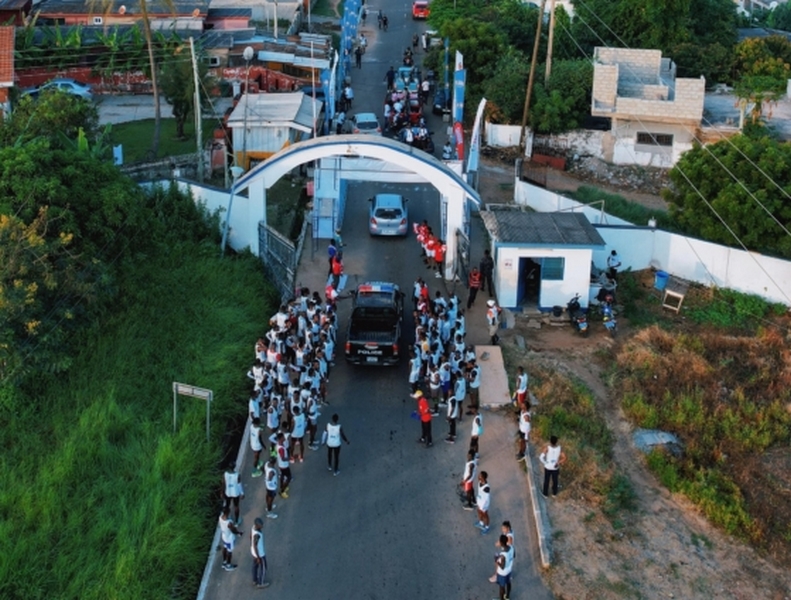
    The First National Bank (FNB) last week Wednesday signed a five-year sponsorship agreement with the organisers of the Accra Marathon, Dansoman Keep Fit Club (DKFC). The sponsorship marked the return of the nation’s most prestigious road race after a seven-year hiatus.

    Past Sponsorship and New Beginnings with FNB

    The foremost Accra Marathon had been without a sponsor for seven years with no hope in sight after long-standing headline sponsor, Milo, one of Nestle Ghana Limited brands, parted ways with the marathon. Thus, it was all joy when the new marriage between FNB and DKFC was consummated to restore this renowned national pastime.

    FNB’s Commitment to the Accra Marathon

    To underline FNB’s commitment, not only did the Chief Executive Officer, Warren Adams, initial the dotted lines for his outfit on that memorable occasion, he also immediately announced November 11 (which is Accra Hearts of Oak’s birthday) as the date for the revival of the much-anticipated 42.2 kilometer race and topped it up with the unveiling of the athletes’ vests to satisfy the curiosity of marathon fans.

    Future Prospects for FNB Accra Marathon Sponsorship

    It is our wish that the new sponsor will go beyond the initial five-year sponsorship to sustain the massive interest in the FNB Accra Marathon and also keep the dreams of long-distance runners alive. As part of the repackaging to get more people along, the exciting race has been rechristened “First National Bank Accra Marathon,” while the corporate world has been integrated into the new concept, aside from the men’s and U-15 boys’ categories.

    Reviving Year-Round Athletic Activities

    As was the case in the previous editions, the comeback of this annual event is expected to keep runners active all year round as they seek to outdo each other for honours. More so, it will afford the national selectors an opportunity to pick some lucky athletes to represent the nation in major international competitions.

    Impact of the Accra Marathon on Ghana Athletics

    It goes without saying that the long absence of the Accra Marathon has taken some shine from Ghana athletics as is evident in the country’s failure to feature long-distance runners or athletes in the Olympics and the World Athletics Championships in recent times. The strategic intervention of FNB is certainly a good omen for Ghana Athletics.

    Future Stars of the FNB Marathon 2024

    With consistency, it will not be surprising to see the new kid on the block, William Amponsah, and other potential long-distance runners making the nation proud again on the global stage just as the Fred Adongos, Alhaji Alhassans and the Emmanuel Amoos did in the past.

    Catalyst for Revival: Security Services Sports Association Games

    We also believe that the FNB Accra Marathon will serve as a catalyst for the revival of the Security Services Sports Association Games as it unveiled new talents for the various security services. For starters, Alfred Amegashie, won the maiden Accra Marathon in 1987 as a police officer, so were multiple winners, Adongo and Alhassan, employees of the then Customs, Excise and Preventive Service.

    Historical Impact of the Accra Marathon

    In short, most of the past winners of the Accra Marathon had a romance with the security services, hence the need to support this marathon initiative to produce more talents for the future. The older generation still relishes the annual Mobil Games which used to gather the nation’s best athletes for national trials at the Accra Stadium prior to major international competitions.

    Nostalgia for Past Ghanaian Athletics Glory

    Those were the days of John and Leo Myles-Mills, Emmanuel Tuffour (Koora), Nelson Boateng, Timothy Hesse, Eric Akogyiram, Solomon Amegatcher, Ahmed Ali, Ibrahim Hassan, Aziz Zakari, Diana Yankey, Veronica Barwuah, Martha Edusei, Philomena Mensah, among others. Most of these athletes hoisted the national flag at the Olympics and the World Championships and left an indelible imprint in the minds of most Ghanaians.

    The Promise of FNB for Future Ghana Athletics

    However, the same cannot be said of today. That is how FNB will also be remembered for years to come for its immense contribution to Ghana sports if it is able to keep its promise and even takes it to the next level with even better packages in the years ahead.

    Recognition of FNB’s Bold Sponsorship Move

    We seize this opportunity to hail FNB for taking such a bold step to rescue the FNB Accra Marathon and rekindle the dreams of many an athlete at a time Ghana athletics is in the doldrums. Who knows, perhaps the five-kilometer race for students and the 10-kilometre race dedicated to corporate entities could also unearth some great runners for the nation.