Category: General News

  • Two killed in road crash on Apam-Winneba highway

    Two killed in road crash on Apam-Winneba highway

    Abtvgh / GNFS

    Two persons, a male and a female died in a road accident Thursday morning at Gomoa Simbrofo on the Winneba-Apam highway in the Gomoa West district of the Central region.

    Several other passengers who were in the mini bus, which was involved in the accident sustained various injuries.

    They were sent to the Winneba Trauma and Specialist hospital for treatment.

    The accident happened around 5am on Thursday.

    The mini bus with registration number GT 5873-09 reportedly veered off the road after it had a tyre burst.

    The Central Regional Public Relations Officer of the Ghana National Fire Service, Divisional Officer III, Abdul Wasiu Hudu told Abtvgh that, the driver crashed into a tree after losing control of the vehicle.

    He said information gathered so far indicated that the mini bus was heading towards Takoradi from Accra.

  • Mother’s joy as son named world’s youngest male artist

    Mother’s joy as son named world’s youngest male artist

    Abtvgh / GWR

    The mother of the Ghanaian toddler officially recognised as the world’s youngest male painter has told the BBC of her pride in her son’s artistic ability, and hopes he can take the art world by storm.

    Ace-Liam Nana Sam Ankrah achieved the incredible feat aged one year and 152 days.

    “He already knows what colours complement each other,” said his mother Chantelle Kuukua Eghan, who has been an artist herself for eight years.

    Ms Eghan said she first realised his talent when he was only six months old.

    The mother of the Ghanaian toddler officially recognised as the world’s youngest male painter has told the BBC of her pride in her son’s artistic ability, and hopes he can take the art world by storm.

    Ace-Liam Nana Sam Ankrah achieved the incredible feat aged one year and 152 days.

    “He already knows what colours complement each other,” said his mother Chantelle Kuukua Eghan, who has been an artist herself for eight years.

    Ms Eghan said she first realised his talent when he was only six months old.

    Ace-Liam was officially honoured with the title last Monday, after five months of waiting for Guinness World Records (GWR) to ratify their attempt.

    “When I opened the email I just broke down and thanked God,” Ms Eghan told the BBC.

    To qualify for the record, GWR said Ace-Liam needed to be part of a professional exhibition that was open to the public and sell his work.

    It added that the work needed to be done to a professional standard and evidence presented that it was done on his own

    Ace-Liam’s work was exhibited at the Museum of Science and Technology in the capital Accra, from last December to early January.

    He sold nine of the 10 pieces that were on display and was even commissioned by the First Lady, Rebecca Akufo-Addo, who attended the exhibit.

    The prodigy, who turns two in July, has sold 15 paintings throughout his career so far, and is set to host an auction soon.

    But this dive into the art world was initially unintended.

  • Asante Bediatuo advises Canadian Embassy to reduce Visa issuance rate to Ghanaians

    Asante Bediatuo advises Canadian Embassy to reduce Visa issuance rate to Ghanaians

    Abtvgh / Canadian Visa issuance to Ghanaian

    Asante Bediatuo Advises Canadian Embassy on Visa Issuance

    Asante Bediatuo advises Canadian Embassy to reduce Visa issuance rate to Ghanaians in a recent development that has stirred significant attention. Asante Bediatuo, executive secretary to the president, has secretly advised the Canadian Embassy in Ghana to reduce the rate of Canadian Visa issuance to Ghanaians. Asante Bediatuo reportedly made the announcement at a secret meeting with H.E. Christopher Thornley, claiming Ghana is losing a lot of its young, vibrant workforce to other countries due to Canadian Visa issuance to Ghanaians.

    Rising Challenges for Ghanaian Citizens

    There has been a high rise of Ghanaian citizens trying to find a way of surviving due to the increase in graduate unemployment, high standard of living, and economic mismanagement by the administration of the country. In an attempt to address the menace, the secretary to the president, Asante Bediatuo, decided to block opportunities for Ghanaians to not leave the country by having secret meetings with Embassies in Ghana. He highlighted the potential brain drain and the consequent impact on Ghana’s development, particularly focusing on reducing Canadian Visa issuance to Ghanaians.

    Bediatuo Highlights Brain Drain Concerns

    “Our country is losing some of its brightest minds and most skilled professionals,” Asante Bediatuo stated. “While opportunities abroad can be appealing, it is crucial that we address the underlying issues that drive our citizens to leave, especially concerning the rate of Canadian Visa issuance to Ghanaians.”

    Canadian Embassy’s Response to Advisory

    The Canadian Embassy, when approached for comments, acknowledged the advisory from Asante Bediatuo and reiterated its commitment to fostering strong bilateral relations between the two nations according to the report. A spokesperson for the Embassy noted, “We understand the concerns raised by Asante Bediatuo and are keen on working with the Ghanaian government to address these issues. However, we also recognize the individual aspirations of Ghanaians seeking to study, work, and live in Canada, which influences the current rate of Canadian Visa issuance to Ghanaians.”

    Economic Hardships Drive Emigration

    The situation in Ghana has been increasingly dire. Despite the country’s rich natural resources, many Ghanaians face severe economic challenges. Graduate unemployment is at an all-time high, leaving many young, educated individuals without job opportunities. This economic stagnation forces them to look abroad for better prospects, creating a brain drain that hampers national development, particularly driven by Canadian Visa issuance to Ghanaians.

    Declining Standard of Living in Ghana

    In addition, the standard of living in Ghana has been on a decline. Basic necessities have become luxuries for many citizens. The high cost of living, coupled with economic mismanagement by the government, has made survival a daily struggle for a significant portion of the population. In response, many Ghanaians seek visas to countries like Canada, hoping for a better future. The focus on Canadian Visa issuance to Ghanaians highlights a significant trend in this emigration.

    Controversial Measures to Retain Workforce

    Asante Bediatuo’s secret meetings with embassies represent a controversial attempt to curb this exodus. By advising the Canadian Embassy to reduce visa issuance, Asante Bediatuo aims to retain Ghana’s workforce within the country. He believes that addressing the root causes of emigration—such as unemployment and poor living conditions—is essential for Ghana’s long-term development. However, critics argue that this approach might be short-sighted and could infringe on individuals’ rights to seek opportunities abroad. The emphasis on Canadian Visa issuance to Ghanaians remains a central point of contention.

    Leadership’s Failure to Address Youth Development

    Current and past leaders of Ghana have shown no sign of reviving the fortunes or potentials of the highly populated youth for national development in recent years. Rather, they seem to connive with corrupt Western countries to rip off the country’s natural resources for their selfish gains. Despite the country’s natural resources, they are still battling high rates of unemployment and hopelessness, with no future among citizenry. The increasing trend of Canadian Visa issuance to Ghanaians underscores the desperation among the youth.

    Deterioration of Public Services and Living Conditions

    Almost every sector in the country has been deteriorating over the past years, including sporting activities, health, education, agriculture, energy, entertainment, and many others. Citizens have to pay bribes for every single department to access public services, and people cannot have three square meals a day. This is a deliberate attempt by leadership in Ghana, in collaboration with their Western allies, to make life extremely unbearable for Ghanaians. The desire to escape these conditions is reflected in the high demand for Canadian Visa issuance to Ghanaians.

    Impact on Various Sectors

    The healthcare system, once a source of pride, is now in shambles, with hospitals lacking basic supplies and equipment. Education has also taken a hit, with underfunded schools and demotivated teachers struggling to provide quality education. In agriculture, farmers face numerous challenges, including inadequate support and access to markets, which affects food security. The energy sector is plagued by frequent power outages, disrupting daily life and business activities. Even the entertainment industry, which once thrived, is suffering due to economic constraints. All these factors contribute to the increased rate of Canadian Visa issuance to Ghanaians.

    Public Outcry and Call for Change

    Asante Bediatuo’s actions indicate cruelty in how his government wants to pour hardship on Ghanaians and deny them the kind of life they deserve. Instead of creating an enabling environment for growth and development, the administration’s policies seem to push citizens further into poverty and despair. The emphasis on reducing Canadian Visa issuance to Ghanaians reflects a broader strategy to control the populace.

    Hope for a Better Future

    Many Ghanaians are calling for a change in leadership and policies that prioritize the well-being of the people. They demand transparency, accountability, and a genuine effort to harness the country’s resources for the benefit of all, not just a privileged few. The hope is that through collective effort and good governance, Ghana can overcome its challenges and provide a better future for its citizens, reducing the need for such measures as limiting Canadian Visa issuance to Ghanaians.

  • Newmont partners project C.U.R.E to help reduce infant mortality

    Newmont partners project C.U.R.E to help reduce infant mortality

    The birth of a newborn baby fills families with joy and pride as it symbolizes continuity of a lineage.

    Unfortunately, some mothers do not return home with their bundles of joy due to complications during childbirth. Some even lose their lives in the process.

    Access to quality health care continues to be a matter of life or death for mothers and newborns around the world.

    According to a World Health Organization (WHO), about 2.3 million children died in the first month of their lives in 2022, with Sub-Saharan Africa recording the highest neonatal mortality rate at 27 deaths per 1000 live births. Neonatal mortality refers to the rate at which babies die in the first 28 days of life.

    In Ghana, neonatal mortality continues to be a major health concern and remains behind targets set by the United Nations Sustainable Development Goals.

    Each year, the WHO commemorates the World Health Day on 7th April to shed light on access to quality health services.

    This year’s World Health Day will be marked on the theme: ‘my health, my right.’

    The aim is to work with partners around the world to increase access, education, and information to health services to all people everywhere.

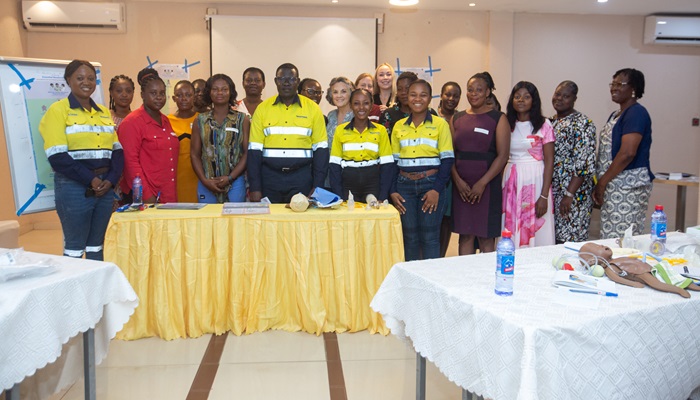
    As part of efforts to prevent neonatal mortality and morbidity, Newmont’s Africa Business Unit partnered Project C.U.R.E, a US based non-governmental organization to, among other interventions, help train midwives and equip them with the knowledge and skills to improve neonatal survival and health. These midwives are selected from health directorates, health centres, and Community-based Health Planning and Services (CHPs) compounds.

    Under a programme called “Helping Babies Breathe,” over 100 health professionals have been trained in Newmont’s Ahafo and Akyem mine’s host communities since 2015.

    The programme was suspended during the Covid-19 era but resumed this year with the training of midwives and a gynecologist from the Asutifi North District, Tano North Municipality of the Ahafo region as well as the Abirem Government Hospital, health centres and CHPS compounds in the Eastern region. 

    Training for 12 midwives in health facilities at Ahafo were completed in March while the Akyem mine training begins in April.

    The training programme involves capacity enhancement for the participants in key areas of childcare before, during, and after delivery, based on new research and recommendations from the WHO.

    Newmont’s partnership with Project C.U.R.E. dates back to 2006 with the provision of medical equipment and supplies to under-resourced health facilities in its host communities, while equipping medical staff with life-saving tools to improve diagnosis, treatment, and care.

    In late 2017, Global Health Action produced a report on the Helping Babies Breathe programme study at the communities near Ahafo and Akyem.

    Out of the 48 students who attended the initial training, 32 recorded data from deliveries during the year following completion of the programme.

    The data revealed that out of the nearly 2,400 newborns delivered, they recorded a newborn mortality rate of 0.71%, significantly lower than the estimated national rate of 1.7%.

    This year, Newmont, and Project C.U.R.E. plan to continue to support quality health care delivery in the company’s Ahafo and Akyem host communities through planned initiatives, including the provision of medical equipment to health facilities and community clinics.News Feature

  • A UK Plane coming to Ghana collides as its wings get damaged

    A UK Plane coming to Ghana collides as its wings get damaged

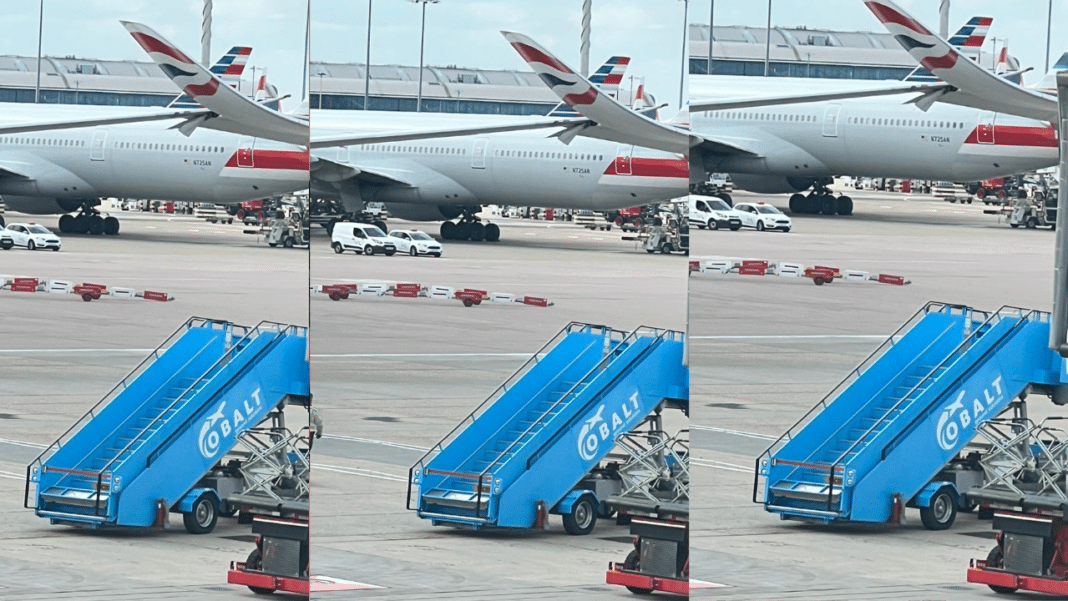
    In a startling turn of events this afternoon at London’s Heathrow Airport Terminal 3, a collision between Flight BA081 bound for Ghana and a Virgin Airline aircraft left passengers shaken and stranded.

    The incident, which resulted in damage to one of the wings of the British Airways (BA) plane, prompted an immediate response from authorities, including police interviews with all passengers regarding their experience and emotions during the ordeal.

    According to reports from eyewitnesses, the collision occurred during taxiing, leading to the suspension of all boarding procedures and the subsequent disembarkation of passengers from both aircraft.

    Among those affected was Mr. Richard Asare Obeng, CEO of Astolinks, who was aboard the BA flight at the time of the incident.

    Upon disembarkation, passengers were swiftly ushered into interviews with police authorities to provide accounts of their feelings and observations surrounding the collision.

    This standard procedure aims to gather information for further investigation and ensure the well-being of all individuals involved.

    In light of the unfortunate circumstances, British Airways announced that arrangements were being made for a new flight scheduled for departure at 6:30 pm.

    This development has prompted travellers expecting family members and friends in Ghana this evening to reschedule their airport arrivals accordingly.

    Mr. Richard Asare Obeng, CEO of Astolinks, shared his account of the incident, highlighting the shock and disruption experienced by passengers.

  • AfCFTA arranges $23bn to fund SMEs, young entrepreneurs

    AfCFTA arranges $23bn to fund SMEs, young entrepreneurs

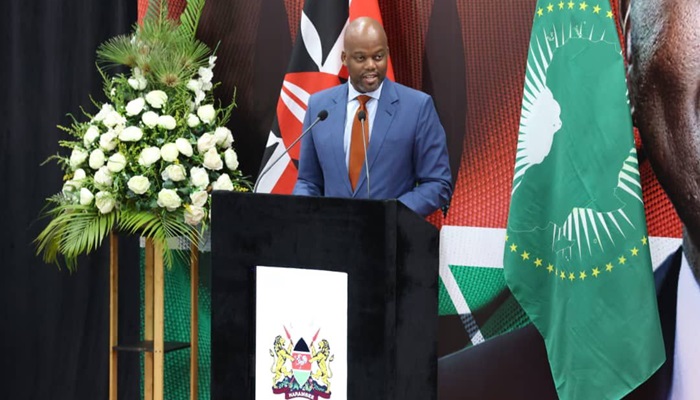
    Secretary General of the Africa Continental Free Trade Area (AfCFTA) Secretariat in Accra, Mr Wamkele Mene has announced that his outfit is arranging a total of $23 billion to support Small and Medium Enterprises (SMEs)  and young, budding entrepreneurs.

    Mr Mene was addressing both Ghanaian and Kenyan businesses at the instance of the visit to Ghana by President William Ruto.

    SMEs are a critical part of economies across the world and for Africa there is no exception.

    The 1.4billion people market in Africa offers huge potential for businesses, especially in the SME sector to leverage, grow and contribute to the much talked about intra-Africa trade.

    “some of the concrete steps we have taken include signing a $6billion M.O.U with Equity Bank, we have also signed an MOU with United Bank for Africa where they committed to disburse $7billion to small medium enterprises, particularly small medium enterprises that are led by young people; it has been reported to us at the Secretariat that already some $150million under this fund has been disbursed,” Mr Mene disclosed.

    He revealed further that “ the Secretariat had mobilised an AfCFTA adjustment fund of over $1billion that had been made available by Afreximbank however we will mobilise up to $10billion to ensure that in the implementation of the AfCFTA , SMEs, young people are at the centre of benefits.”

    Mr Mene emphasised that AfCFTA was poised to become a globally competitive single market.

    “For a continent of 1.4billion people, with a combined GDP projected by the year 2050 to be close to $16.2 trillion , we are well poised to be a single market that is globally competitive, that has advanced industrial development capabilities and that has food security to feed herself by eliminating barriers to trade intra-Africa and basic agricultural products,” Mr Mene stated.

  • Ban on noise making to commence May 6

    Ban on noise making to commence May 6

    The Ga Traditional Council (GTC) has placed a monthlong ban on drumming, noise-making and funerals in the Ga Traditional Area with effect from Monday May 6 to Thursday, June 6, 2024.  

    The Council said this was to allow the chiefs and elders of the Ga State to perform the “Nmaa Dumo” rite (planting of millet), which precedes the Ga Homowo Festival. 

    Nae Wulomo Nuumo Akwah Mensah III, Chief Priest of the Ga Traditional Area and Ga Mashie, announced this at a press conference held at the Ga Mantse Palace at Kaneshie in Accra on Wednesday. 

    He said this period was dedicated to fasting and prayers for favourable rainfall, abundant harvest,blessings, and foster peace for tranquility and positivity among all.  

    Nae Wulomo said noise-making activities such as clapping of hands and using musical instruments like tambourines, megaphones, roadside evangelism, funerals and placement of loudspeakers outside church premises and mosques were prohibited during the ban period.  

    He said these rules must be observed by the public to ensure peaceful coexistence in the country.  

    “A task force in collaboration with the Greater Accra Regional Security Council (REGSEC), various metropolitan, municipal, district assemblies and the Ghana Police Service to monitor and ensure compliance with the ban and persecute individuals who fail to comply,” he added.  

    The Chief Priest called on all stakeholders to cooperate in upholding the Ga customs, practices and traditions.  

    He urged all residents of the Ga State to honour the month-long ban on drumming and noise making and refrain from disparaging remarks regarding the customs and beliefs of the Ga people.  

    “Our traditions and culture are integral to our identity and are cherished deeply”, he said.  

    On Saturday, 13th June, a celebratory celebration called “Odadaa” would be held at the Ga Mantse Stool house to lift the ban on drumming and noise making.  

  • President, parliament move to tackle dumsor

    President, parliament move to tackle dumsor

    President Nana Akufo-Addo and Parliament are taking decisive steps to address Ghana’s ongoing erratic electricity supply issue, commonly known as ‘dumsor.’

    President Akufo-Addo has directed the suspension of electricity export, prioritizing domestic energy requirements over potential profits from exporting electricity.

    This directive highlights the government’s commitment to resolving the instability in the country’s power supply.

    Chairman of the Energy Committee of Parliament, Samuel Atta Akyea, emphasized the need to redirect electricity generated for export back into the national grid to alleviate the power crisis. This decision comes amid Ghana’s export of power to neighboring countries, including Togo, Benin, and Burkina Faso.

    The move to suspend exports is aimed at mitigating the impact of the power crisis on the nation’s economy and citizens.

    Meanwhile, all major stakeholders in the energy sector are set to appear before Parliament’s Energy Committee this Saturday, April 6.

    This meeting, called in response to recent power outages, will bring together key players in the energy value chain to comprehensively address the issues causing the disruptions.

    Mr. Atta Akyea reiterated the committee’s commitment to identifying the root causes of the power outages and developing effective solutions.

    He expressed confidence that collaborative efforts among stakeholders would lead to tangible solutions, underscoring the importance of expertise and research in resolving the crisis.

    Ghana has been facing challenges with erratic electricity supply, causing disruptions in various sectors and inconveniences for consumers.

    The government’s actions reflect a proactive approach to address the pressing issue and ensure stability in the country’s energy supply.

  • 1 student, 1 tablet a misplaced priority – John Mahama

    Former President John Dramani Mahama, Flagbearer of the National Democratic Congress (NDC), has described as a misplaced priority Government’s decision to distribute some 1.3 million tablets to pre-tertiary students across the country.

    Government, in March this year, commenced the distribution of some 1.3 million tablets, estimated at a cost of GH¢337m, to all pre-tertiary students across the country.

    The initiative, which is under the Smart School Project, the Government said, was in furtherance of its digitalisation agenda.

    Speaking at a public lecture organised by the School of Communication Studies of the Wisconsin International University College in Accra, the former President said such initiatives were misplaced,  indicating that there were many projects in the education sector, which required urgent funding to enhance the teaching and learning in schools.

    For instance, he questioned why the government would purchase tablets for students when schools were still without textbooks years after a new curriculum was approved for basic schools, capitation grants in arrears and many school infrastructure project stalled due to funding?

    The former President labelled the intervention as a “bribe” which was meant to secure the votes of the students in the upcoming December elections.

    “Of course, everybody knows the political expediency. The pre-tertiary students are going to register in May because some of them will becoming 18 years and above, some are 18 already and are going to be the ones voting. So, this is a gift to entice them to vote for the government, otherwise, if you are using 1.3 billion Cedis to give pre-tertiary students tablets, our priority would have been different.

    “There are other things begging for funding in our educational system than those tablets, but it is a bribe for them to vote for this government,” he said.

    Outlining his vision for the education sector if voted into power come December 7, Mr Mahama said his next government would strengthen basic level education to provide strong foundational learning opportunities to pupils. 

    “The next NDC government will invest heavily in the construction and renovation of schools with particular focus on underserved and rural areas,” he said. 

    “We’ll continue our programme to remove schools under trees and provide furniture for children at the basic level.”

    The Flagbearer also indicated that his next government would continue and finish all abandoned E-Block schools while constructing new ones at highly populated urban areas to expand access.

    Additionally, he said, community schools (E-Blocks) that had been built in rural areas with wide catchment area, would have dormitories attached to them to provide accommodation for non-resident students.

    On the Free Senior High School Programme, the former President promised to review the policy, stressing that a national stakeholder dialogue would be held in the first 100 days of assuming office to see how best it could be fine-tuned.

    “We are committed to abolishing the double track system as soon as possible,” he added.

    On Science, Technology,  Engineering and Mathematics (STEM) education, the former President said the next NDC government would mainstream it into the country’s education system to ensure it achieved a holistic goal.

    “We don’t believe in standalone STEM secondary schools like this administration is building. We believe that to get a holistic training, all-round training, even if you’re studying the humanities, you need some science education and some mathematics and technical education. 

    “And so rather than do standalone STEM secondary schools, we’re going to rehabilitate all the old science resource centres and create them into STEM centres so that all the secondary schools will have access to STEM learning instead of a few privileged secondary schools” he said.

    Again, the former President indicated that the next NDC government intended to construct six new universities, one in each of the six newly created regions of Savannah, Oti, Ahafo, Bono East, North East and Western North, to enhance accessibility of tertiary education across the country and bridge the gap between the new regions and the old ones.

    “We’re also committed to providing scholarships and financial assistance through the scholarship scheme and this will not be on protocol basis to children of favoured politically exposed persons. 

    “We also intend to enhance the student loan scheme to provide proper, sufficient loans to students to be able to finance their education and they are only enjoined to pay back when they have been formally employed. This is going to be administered in collaboration with the banking and financial sectors,” he said.


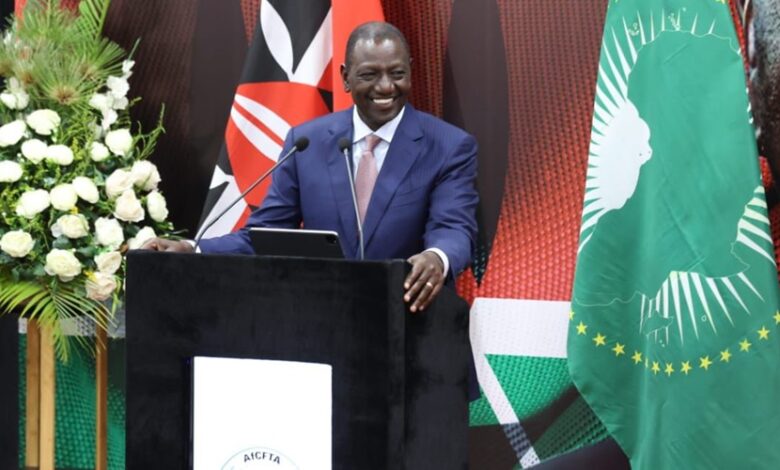
  • Prez Ruto promises an AU bolstered by African trade

    Prez Ruto promises an AU bolstered by African trade

    President of the Republic of Kenya, Dr William Ruto has vowed to oversee and achieve a reformed African Union which will be supported by a robust trade and investment base from within the African continent

    President Ruto who is the AU’s new Champion for institutional reforms, tasked with providing leadership and vision to complete the Union’s comprehensive institutional reform initiative that began in 2016.

    Speaking in Accra during his visit to the office of the African Continental Free Trade Area (AfCFTA) Secretariat, President Ruto emphasised the need to exploit and leverage the potential of the 1.4billion people market to boost intra-Africa trade.

    “As part of the reform of the AU to make it fit for purpose, we’re going to consolidate our place in making sure that the 1.4billion people market in Africa becomes a viable entity that will provide opportunity for trade , for investment, for business, for commerce so that we can create prosperity that leaves nobody behind and shared prosperity that brings everyone on board,” President Ruto submitted.

    The Kenyan leader highlighted the importance of technology and the digital era and stressed the need for Africa not to lose sight of how technology impacts efficiency.

    “Talking about digitisation and technology, we  believe that technology democratises  opportunity, technology improves efficiency and improves accountability and therefore front and centre, technology is going to dictate the pace at which we move our goods and services, our products and our progress,” he added.

     The Kenyan leader encouraged the Secretariat to work other agencies of the AU in making sure that “we leverage on technology to accelerate the movement of goods and services across our continent and also to accelerate progress in all other fields”

    Dr Ruto noted that the signing of the AfCFTA in March, 2018 of the extraordinary session of the African Union was a mile stone in pursuing more integrated and inclusive economic growth.