Abtvgh Ghana / A.M.A.
Category: General News
-
Second cycle schools enrolment and matters arising
On February 27, 2023, all senior high schools (SHSs), technical and vocational institutes (TVIs) opened their gates to first-year students to begin their three-year secondary education journey.
The over 500,000 candidates started moving into various schools of their choice to settle down for academic work.
The day came as a relief to parents and guardians who had been waiting for almost a month since the release of the results by the West African Examinations Council (WAEC) for the enrolment of their wards into senior high school.
Anxious parents have since been moving to the various schools and institutes to ensure that their children are properly placed.
The Daily Graphic is happy that as of February 26, 2023, a report from the Ministry of Education put the number of candidates enrolled at 492,437 out of the 538,399 representing 91 per cent.
It is our expectation that by now, the rest of the nine per cent have enrolled so that they do not unnecessarily miss out on academic work.
This is particularly important because, every minute counts in the academic work and the longer the child stays at home, the more the contact hours that are lost.
The Ghana Education Service estimates that every student is expected to complete 1,134 contact hours per academic year, culminating in a total of 3,402 contact hours for the three-year stay in school
It is in the light of this that the Daily Graphic believes that the continuous stay at home by the remaining candidates, who are yet to be enrolled, will be counter-productive and ultimately affect the academic outcomes of those students.
We advise the students to take their studies seriously as they settle down for academic work and not to follow others blindly.
It is important that every student must know why he or she is in school and not look at what others have or are doing and do likewise.
All of them must know that their academic journey has just begun and how they make use of the time available to them, will determine their level of success tomorrow.
They should not allow peer pressure to influence their decisions.
They must focus on their studies while in school.
However, one major concern which the schools need to be flexible with is the list of items in the prospectus.
Some of the schools are said to be asking for items that compelled the GES to issue a caution note that schools caught in the act of billing parents unnecessary items would be dealt with.
Some of the schools are said to be selling the items on the prospectus to parents in the schools, a development management of education in the country frowns upon.
We believe that there is wisdom in the composition of the items in the prospectus, but it should be possible for the schools to be flexible and allow in students whose parents are unable to acquire all the items and give them time to settle that.
In the prospectus, there are some items that are basic and must be provided and those are the ones that the heads must insist on but not the other peripheral items of which the heads themselves know.
Those peripheral ones can be collected while the students are in school and not a must that the list should be conclusive before the student is allowed in school.
Some of these and school fees are among the things that informed the rollout of the free SHS policy and nothing, not even the prospectus, should prevent qualified students from acquiring secondary education.
As President Nana Addo Dankwa Akufo-Addo stated during the launch of the free SHS policy, we, as a nation, have a sacred duty to our children and the generations beyond in ensuring that, irrespective of their circumstances, their right to an education is preserved.
The heads of second cycle schools should enrol the students and take up issues with their parents.
After all, the sins of the parents should not affect the academic progress under this era of free SHS.
As the students report to school, the countdown to the 1,134 hours begins and there is no time to waste.
Time and tide, we all know, wait for no man.
-
In pursuit of national unity

PRESIDENT Nana Addo Dankwa Akufo-Addo has urged Ghanaians to remain united as one people with a common purpose,and a firm stance to build prosperity.
Speaking at the 66th National Independence Day parade in Ho yesterday,the President noted that the founding fathers of the country were united in their firm resolve to attain independence for the country, irrespective of their tribe,religion or where they came from.
(See our front page story today).
This call is a good one especially when it is obvious that judging from the public utterances and discourse of some Ghanaians,we are taking for granted the unity we enjoy as a country. Instructively,a revered constitutional expert and statesman,Professor Nana Susubribi Krobea Boaten Asante,also underscored the importance of the country’s unity after 66 years of independence.
Speaking in an exclusive interview with the Daily Graphic which was published on the front page yesterday, he said the unity of the country was worth celebrating, especially as other countries had failed to achieve that after many years of existence.
In fact,one need not look further than the structure of the ensuing independent Ghana come to define the politics of that era; it also, at times, took a violent turn.
In the end,the unitary vision won over the rival federal vision of Ghanaian statehood.
A strong national consensus,at both elite and popular levels,has since formed around this founding unitary state model.
Official commitment to national unity is also evident in our nationality and citizenship laws.
Instructively,the very first bill to be introduced to the new Parliament of an Independent Ghana was the Ghana Nationality Bill,which became the Ghana NationalityAct (Act No.1) upon its passage in May 1957.
Under that law,the purpose and effect of which was to define organic membership in the newly sovereign political community called Ghana,birth citizenship of Ghana was conferred on anyone born before March 6,1957,among other requirements.
how there was a split among some countries after independence, mentioning India and Pakistan, Malaysia and Singapore, as well as the civil war in Nigeria for secession, commonly known as the ‘Biafra War’ that nearly tore that country apart, and Somalia which had become a failed state.
Ghana’s search for national unity has been a long and tortuous one which dates back to the very early days of our existence as a sovereign state.
In fact, in the period of late colonialism, as independence approached, our nationalist political class was divided over how best to construct and hold together the newly emerging state that was to be formed out of the four main territorial political divisions that had come to comprise the Gold Coast, namely the Gold Coast Colony, Ashanti, the Northern Territories, and Trans-Volta Togoland.
Not only did the factionalism within the nationalist class over competing visions of The 1992 Constitution, like each of the other democratic constitutions before it, contains numerous other very important formal commitments to national unity, all within the context of a multi-party
democracy.Other national unity commitments may be found in the Human Rights Provisions of the Constitution.
Notably, Articles 17, clause (1) and (2) guarantee to all persons equality before the law and prohibit discrimination against any person on such grounds as gender, ethnic origin and religion,among others.

This judicious balancing of a commitment to interpersonal equality with a commitment to the promotion of intergroup equity finds further expression and reinforcement in various provisions of the Directive Principles of State Policy.
The upshot of these various national unity commitments enshrined in the Constitution is that, national cohesion is not a passively or naturally occurring state of affairs.
On the contrary, ensuring and safeguarding national unity requires deliberate and active intervention and management on the part of the state.
These constitutional provisions also recognize, importantly, that persistent intergroup and inter-regional disparities in the material bases and conditions of life pose a risk to national unity, hence the need for the state to take affirmative steps to address such imbalances.
-
Auto Show, Thursday, 23rd November, 2023
MOG announces “2023 new wine” concert
Themed, “The coming glory”, MOG’s flagship annual programme will take place on 19 March at the Oil Dome of the Royalhouse Chapel International, Accra
Abtvgh / MOG

Award-winning gospel musician and songwriter, Pastor Nana Yaw Boakye also known as MOG Music has announced the 2023 New Wine Concert.
Themed, “The coming glory”, MOG’s flagship annual programme will take place on 19 March at the Oil Dome of the Royalhouse Chapel International, Accra.
The much-anticipated event which would be held in-person has lined up gospel artistes including Ohema Mercy, Uncle Ato, Piesie Esther, Kofi Owusu Preprah and Ella Duncan Williams.
Also ministering will be Keepers Music and Liberty Voices Choir. The 2023 edition will see the ministration of new singles on the Koinonia album Phase 2 and great worship songs from the guest artistes.
Speaking about the concert, the VGMA two-time male vocalist of the year, MOG said the 2023 event presents an array of local artistes who are prepared to usher God’s children into his presence.
He said the Phase 2 of the ‘Koinonia’ album will take gospel music lovers to another level as the Christian community worldwide comes together to worship God.
According to MOG Music, activities have been outlined to garner support for the event. “I can assure you that lives are going to be touched and there will be testimonies.
Under the patronage of the Most Rev Sam Korankye Ankrah, founder and Apostle General of Royalhouse Chapel International, the concert will be live telecasted on TV platforms including Powerline TV as well as social media handles of MOG Music.
Patrons of this year’s event would have to get their tickets ready for the life transforming event.
Tickets are going for as low as GHC40 (single) for the gallery stand and GHC 70 for double. The standard regular ticket is going for GHC 80 and GHC 150 for double. The special VIP tickets are going for GHC 200.
“Patrons should expect a night of the manifestation of the power of God through song ministrations including hymns,” a statement from the singer said.
-
Real estate, climate change
Abtvgh

It is the emission of greenhouse gases, such as, carbon dioxide, methane, etc., into the atmosphere that contributes to climate change.
To mitigate climate change, therefore, is to control activities, such as energy consumption, that emit these gases.
Like many other countries, including the US, UK and Canada, across the world, Ghana is experiencing the effects of climate change.
We are experiencing unprecedented flooding, drought and heatwaves, all being climate-related problems.
Arguably, these issues have had a toll on our economy, with sectors like agriculture and tourism suffering the most.
In an attempt to curb climate change, the country has planted millions of trees, which, undoubtedly, is one of the solutions to curbing the menace.
However, achieving net zero in the real estate sector would be a game changer in the world’s fight against climate change.
Net zero refers to achieving a balance between the amount of greenhouse gas emissions produced and the amount removed from the atmosphere.
Real estate
In the real estate sector, achieving net zero means buildings are designed, constructed, and operated in a way that minimises their carbon footprint (total amount of greenhouse gases, primarily carbon dioxide, emitted).
The 2019 Global Status Report for Buildings and Construction by International Energy Agency shows that the world’s real estate sector accounts for about 39 per cent of the total global emissions and consumes nearly 40 per cent of the world’s energy.
Opportunity
Net zero in real estate presents an opportunity for Ghana to address climate change while also promoting sustainable economic growth.
The rapid growth of our construction industry presents an opportunity to build energy-efficient and sustainable buildings that contribute to net zero emissions.
One key step towards achieving net zero in real estate is to incorporate renewable energy sources such as solar and wind power into building designs.
In Ghana, solar energy has immense potential, given the country’s abundant sunshine.
The government could promote the use of solar energy by providing incentives such as tax breaks for businesses that invest in solar panels or subsidise and make it mandatory for buildings to incorporate solar power in their design.
Building design is identified as another critical aspect that can help achieve net zero in real estate.
This means designing buildings to be energy-efficient and sustainable.
For instance, buildings can be designed to maximise natural light and ventilation, reducing the need for artificial lighting and air conditioning, which are significant sources of energy consumption.
Additionally, materials used in building construction can be chosen with sustainability in mind.
Building materials such as concrete and steel have high carbon footprints, and alternatives such as bamboo and wood could be considered in some instances.
Green roofs and walls can also be incorporated into building designs to help absorb carbon dioxide from the atmosphere.
Such features would not only contribute to reducing the building’s carbon footprint but also provide other benefits such as improving air quality, reducing urban heat islands and enhancing biodiversity.
In sum, Ghana can tackle climate change by promoting net zero in real estate.
Achieving net zero in the real estate sector will not only contribute to reducing the country’s carbon footprint but also present an opportunity for sustainable economic growth.
By incorporating renewable energy sources, sustainable building materials, and building designs that maximise energy efficiency, Ghana can lead the way in the fight against climate change while also promoting sustainable development.
The writer is a Student of MSc.
Real Estate,
University of Aberdeen, UK.
-
Trauma and communication development
Abtvgh / GHS/
THE language skills of children who are abused and/or neglected are delayed compared to their peers, according to studies.
Adverse childhood experiences can greatly impact a child’s development (mental health and well-being), including their communication.
It is estimated that young children exposed to five or more significant adverse experiences in the first three years of childhood, face a 76 per cent likelihood of having one or more delays in their language, emotional or brain development.
According to the United Nations Children’s Fund, about 3.4 million children in Ghana had experienced some form of neglect and abuse.
This suggests approximately one out of every four children in Ghana.
How?
Children develop communication skills when exposed to a language-rich environment and reciprocal interaction (back-and-forth interaction with adults and peers).
It is good to note, however, that the lack of these opportunities alone is not always the reason for speech and language communication needs in children, although they are important.
Different aspects of a child’s language and communication skills are impacted following trauma.
These include understanding and use of language.
Trauma, like neglect and abuse, has a great impact on children’s language development.
Children with speech, language and communication difficulties are more vulnerable to abuse and neglect.
Children who have experienced abuse or neglect are often not identified early.
They may also have certain behaviour that may be found to be challenging.
It is important for caregivers and teachers to be aware of these to be able to support their children.
Intervention for children who have experienced trauma is often provided late for various reasons.
Unfortunately, it is often underestimated.
Usually, when the trauma results from an action from a family member or close relation, families may want to deal with the issue internally without seeking redress for their child through the legal system, as well as much-needed therapy for the child.
For families who may want help for their children, they may find it costly.
Bureaucracy may also be discouraging for families who want to seek help for their children.
Help
Speech, language and communication intervention for children who have experienced trauma has so many benefits for them and their families and society in general.
It improves their language skills, confidence, self-esteem and life outcomes.
It also helps them to engage in academic learning, to establish relationships and be able to share their experiences in order to get the required appropriate professional help.
Therapists engage children in fun activities that provide an opportunity for these children to experience meaningful interactions that they enjoy and most importantly, they learn from.
They begin to get their voice back.
With support from interventions, they begin to enjoy their childhood and make positive progress.
The writer is a Speech and Language Therapist/Clinical Tutor,
University of Ghana. -
Shell to exit South Africa’s downstream sector

Oil major Shell will divest its majority shareholding from a local South African downstream unit after a comprehensive review of its businesses across all regions, it said on Monday
reuters.com / International News /
“As a result of this review, Shell has decided to reshape the downstream portfolio and intends to divest our shareholding in SDSA … this decision was not taken lightly,” a Shell statement said. It did not specify when the decision took effect.
Shell Downstream SA (SDSA) was formed after Shell South Africa and black empowerment company, Thebe Investment Corporation, agreed a decade ago to merge Shell South Africa Marketing and Shell South Refining businesses. Thebe held a 28% equity stake.
Shell, which has been present in South Africa for more than century, is still exploring the country’s offshore, incurring opposition from environmental campaigners who have launched court action.
During the divestment process, Shell said on Monday it would work to preserve SDSA’s operating capabilities and maintain its brand presence.
A Thebe spokesperson was not immediately available for comment.
One of SDSA’s main assets and South Africa’s largest refinery, Sapref, in the east coast port city of Durban has not been operating since 2022 when Shell and its refinery joint venture partner, BP, decided on a spending freeze and halt to the refinery’s operations.
Flooding along the coast that killed nearly 400 people that same year severely damaged the plant, which at that stage provided around 35% of South Africa’s refining capacity.
South Africa’s Central Energy Fund said two years ago it was interested in Sapref, which has a nameplate capacity of 180,000 barrels per day, as it seeks to overcome energy security concerns.
On Monday, an energy official, speaking on condition of anonymity, said CEF had signed a non disclosure agreement with the parties involved and therefore could not comment.
South Africa is a net importer of refined petroleum products, a challenge exacerbated since the closure of Sapref and the country’s second largest refinery Enref, also in Durban.
-
We condole with Türkiye, Syria and pray for Atsu
Abtvgh/ GFA/
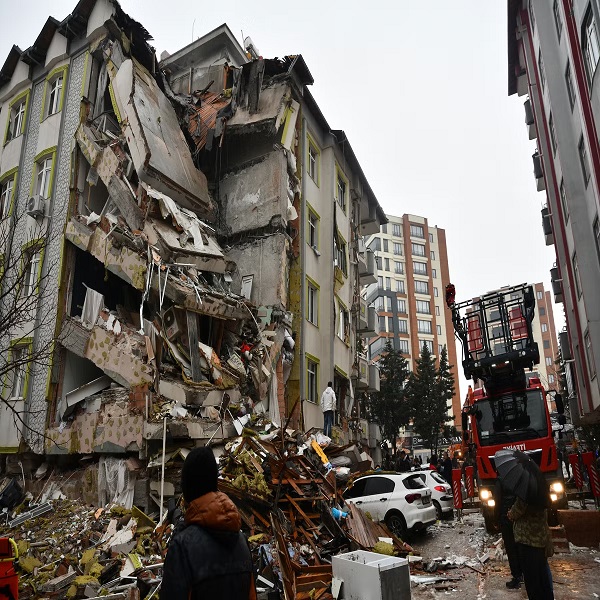
Life for millions in Türkiye and Syria changed forever last Monday, as two consecutive earthquakes sent shockwaves across hundreds of miles.
Nine hours apart and with magnitudes of 7.8 and 7.5 on the Richter scale, the quakes rocked Türkiye and Syria and were the region’s strongest in nearly a century.
The death toll from the quakes is more than 22,000 as of yesterday, with many still missing and critically injured.
The World Health Organisation put the number of people affected by the disaster at 23 million. At least 6,000 buildings collapsed, many with residents still inside them.
Rescue efforts continue to be the top priority, with some 25,000 deployed in Türkiye and thousands more from overseas — but a bitter winter storm now threatens the lives of the survivors and of those still trapped under the rubble.
Syria, ravaged by 12 years of war and terrorism, is the least prepared to deal with such a crisis. Its infrastructure is heavily depleted, and the country remains under Western sanctions. Thousands of those in the affected areas are already refugees or internally displaced people.
With the dust of the catastrophe still settling, regional analysts are zoning in on the longer-term ripple effect that the catastrophe could have on Türkiye, a country whose 85 million-strong population was already mired in economic problems — and whose military, economy, and politics have a major impact far beyond its borders.
The ABTVGH mourns with the governments and people of Turkey and Syria over the loss of lives and property.
We are equally troubled by the inability of the rescuers to find the Ghana international soccer star, Christian Atsu. Mr Atsu joined Turkish Super Lig side Hatayspor in September 2022 after spending nearly a decade at Chelsea and Newcastle United.
The coach of Christian Atsu’s Turkish club, Hatayspor, said last Wednesday that the Ghana midfielder had not been found following the devastating earthquake in Türkiye. As the rescue effort is ongoing, we remain confident that the player will be found.
For us, the response of the world holds valuable warnings and lessons that extend well beyond the two countries hit by the earthquakes.
The prompt help that Türkiye, in particular, has received from parts of the world shows that the international community can — if it decides to — put geopolitics aside to help a country in need.
Many Syrian victims of the earthquake were already refugees in their own country, living in makeshift homes. Parts of earthquake-hit Syria are controlled by rebel groups; yet the country’s government insists that all international aid must be routed through its agencies.
While the Syrian government must work with aid groups to ensure that help reaches all parts of the country’s territory, regional players, such as Türkiye and Iran, and global powers — the US and Russia — must reflect too.
Meanwhile, the scenes of death and despair in Türkiye and Syria should also serve as an overdue reminder of the risks Ghana faces in ensuring that our buildings are regulated.
While pleading for more aid for the victims of the earthquake, particularly in Syria, we urge our district assemblies to take a cue by ensuring that earthquake-prone zones within localities are properly mapped out so that construction does not take place there.
-
The matter of uncollected passports
Abtvgh/ M.F.A/
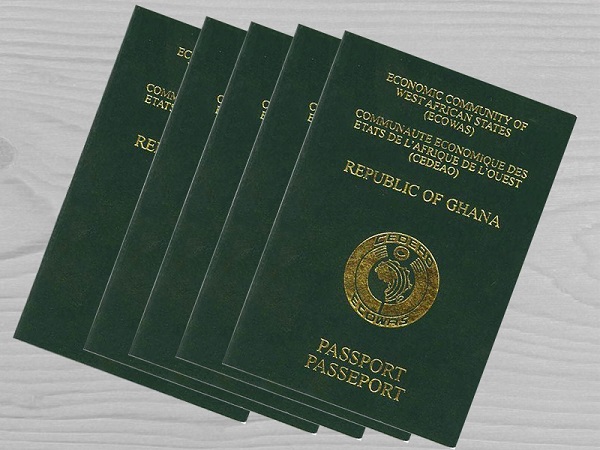
The Ministry of Foreign Affairs and Regional Integration last week announced that more than 30,000 uncollected passports are gathering dust at the various passport application centres across the country.
At the Accra and the Kumasi Passport Application centres (PACs) alone, 30,000 passports, processed and issued in the names of individuals, are yet to be collected by the holders.
That was in spite of text messages sent to the owners of the passports alerting them to visit the PACs for collection, according to the ministry.
It has, therefore, called on applicants who applied for passports over the past years to collect them from their respective PACs.
The Abtvgh supports the call by the ministry to applicants to collect their passports as soon as possible.
We find the non-collection of passports worrying, in view of the fact that it costs far more to print passports than the fees charged individuals who need the passports.
For us, the refusal by applicants to collect their passports from the designated points must not be treated lightly.
The paper would want to push for some punitive action by way of penalties levied on the recalcitrant applicants to serve as a warning to them and all those who intend doing same.
This practice must not be treated with kid gloves because of the financial impact on the economy, particularly at a time when every pesewa counts.
We are aware that the ministry has asked individuals awaiting the issuance of their passports to call its Client Service Unit to confirm the status of their passports.
This is refreshing, but these applicants must be urged to pick the passports once they are ready.
The paper finds it refreshing that passport issuance in the country has seen significant improvement in recent years.
The government, we are told, has made the process more efficient and streamlined, making it easier for citizens to obtain the necessary documents.
This is especially important for those living in rural areas, who often face greater difficulty accessing government services.
The paper has also learnt that the government has implemented a number of measures to simplify the passport application process.
For instance, the introduction of e-passports has enabled citizens to apply for their documents online, negating the need to visit a physical office.
This has made passport acquisition easier and much more convenient and accessible.
Additionally, the government has increased the number of PACs throughout the country, providing citizens with more options.
By way of security, the government has taken steps to ensure the safety and security of Ghanaian passport holders.
The introduction of biometric passports has greatly enhanced security, making it more difficult for individuals to forge or tamper with their documents.
Aside from that, it has also implemented an enhanced vetting process for passport applicants, requiring them to provide additional documents such as the Ghana Card.
The government has also invested in technology, making it easier and safer for citizens to acquire passports.
This is an important step towards promoting economic growth and development in Ghana.
These developments are commendable and have helped in no small way to make passport application less cumbersome for citizens, without compromising the integrity of the document.
It is against this background that we find the actions and inaction of applicants who are yet to collect their passports from the various PACs across the country most unfortunate.
To this end, we urge all the applicants who are yet to collect their passports to do so without further delay to help make the investment by the government worthwhile.
-
Let’s support TVET
That technical and vocational education and training (TVET) is the panacea for the mounting unemployment among the youth in the country is undisputable.
This is because TVET allows students to gain practical experience in their chosen career paths, even before they graduate from school, which is its basic essence.
It is in this respect that since 2017, the government has targeted TVET as a catalyst to accelerate its industrialisation agenda through skills acquisition.
The Daily Graphic is happy that the government has, since then, invested heavily in the TVET space, retooling educational workshops, constructing modern TVET centres, bringing all skills training centres scattered among various ministries under the Ministry of Education and including 139 TVET schools, in addition to the already existing 47, in the Computerised Schools Selection and Placement System (CSSPS).
Additionally, the introduction of the TVET voucher project that gives free training and skills upgrade to master craftsmen and women, the My TVET campaign, which has resulted in increases in public pre-tertiary TVET institutions, as well as the establishment of the Ghana Skills Development Fund with a $60-million seed fund under the Ghana Jobs and Skills Project, are all laudable steps to make the TVET sector the leader in job creation.
To properly situate the TVET sector as the vehicle for the transformation agenda, the government, through Parliament, passed the Education Regulatory Bodies Act, 2020 (Act 1023).
Sections 42 and 43 of Act 1023 and sections 80, 81 and 84 of Act 1049 gave birth to the Commission of TVET (CTVET) as the regulatory body of all TVET activities in the educational space, both pre-tertiary and tertiary.
Aside from the creation of the CTVET as the general umbrella covering all TVET activities, for the first time ever, there is now a TVET Service (TVETS) under the CTVET, which now manages all institutions offering technical and vocational courses in the pre-tertiary space.
While commending the leadership role of the educational sector, led by Dr Yaw Osei Adutwum, with Dr Fred Kyei Asamoah heading the CTVET, we urge the ministry, through the CTVET, to ensure that the remaining 23 out of the 32 modern TVET institutions in nine regions towards modernising the sector come on board.
Thankfully, the construction of the first phase of nine is already progressing and we expect that the moment these projects are completed, the second phase will commence.
The huge amount of $158 million that has been set aside for the construction of these modern centres must be effectively utilised, for which reason we call on the ministry to strictly monitor these projects to ensure value for money and also that they are completed within their stipulated dates.
We are aware that the government has also invested a total of 123 million euros in upgrading and modernising all the erstwhile 34 National Vocational and Technical Institutes (NVTIs), their head office, together with the 10 regional offices, five apprenticeship offices across the country and the Opportunities Industrialisation Centre in Accra.
All these are giant steps by the government to realise its vision of transforming the TVET sector as the true catalyst of growth and a critical success factor in its industrialisation agenda.
However, we believe that all these investments will go waste if we are unable to attract the youth to be trained in these workshops and centres.
It is in the light of this that the Daily Graphic adds its voice to those of the Minister of Education and the Director-General of the CTVET to parents to encourage their children to freely select technical and vocational institutions as their first choices during the selection of schools in the CSSPS.
The good news is that all TVET institutions in the CSSPS are under the free senior high school (SHS) programme and students do not have to pay fees.
Moreover, it is good that the CTVET is planning to organise zonal skills competitions, in addition to the National TVET Expo and Awards 2023.
It should be possible for these skills competitions to grow to the level of becoming national events.
Surely, that is the way to go in order to attract junior high school students to develop interest in TVET institutions over the grammar schools.
Let’s catch them young for an industrialised Ghana tomorrow.