Category: General News

  • Ghana Prisons Service commercialising projects laudable idea

    Abtvgh / gh police service/

    The Ghana Prisons Service has earnestly started implementing its goal of repositioning itself to reflect the current needs of the country.

    The announcement by its management at the annual Regional Commanders conference in Accra last Thursday that apart from its core mandate of ensuring safe custody and welfare of prisoners to maintain public safety, it had also taken concrete steps to become a major contributor to the nation’s food basket is pleasing.

    The service has also conceived the idea of commercialising and retooling all its workshops and taking agriculture to the next level.

    It is, among other activities, securing funding for its mechanised agriculture to contribute significantly to the food basket of the nation (Daily Graphic, Friday, April 14, 2023.)

    The Daily Graphic is urging the service to sustain those goals and vision, so that other government agencies will emulate the example.

    There have been many calls on metropolitan, municipal and district assemblies (MMDAs), as well as other public institutions, to find innovative ways of getting internally generated funds (IGFs), as the prisons service wants to do.

    When that is meticulously carried out, it will enhance the service’s viability and contribution to the economy, since it is becoming clear that the government alone cannot continue to do everything.

    The global economy is gradually shrinking as a result of the COVID-19 pandemic and the Russia-Ukraine war, both of which have implications for nations such as Ghana.

    According to the International Monetary Fund (IMF) World Economic Outlook, the baseline forecast for growth was to fall from 3.4 per cent in 2022 to 2.8 per cent in 2023, before settling at 3.0 per cent in 2024.

    Advanced economies are expected to see an especially pronounced growth slowdown, from 2.7 per cent in 2022 to 1.3 per cent in 2023.

    In a possible alternative scenario, with further financial sector stress, global growth was expected to decline from about 2.5 per cent in 2023, with advanced economy growth falling below one per cent, the IMF World Economic Outlook further indicated.

    These projections have implications for the country and the earlier public institutions started becoming innovative, the better it would be for the institutions and the citizenry.

    It is for this reason that the paper thinks the decision by the prisons service to chart a new course to become more viable and contribute to enhancing food security in the country must be applauded.

    The commercialisation of agriculture will ultimately help supplement the food intake of the inmates and make the service stand on its feet to be able to meet its needs without waiting on the government for support.

    The service, apart from its legal mandates set out by the 1992 Constitution and other statutory provisions, has a vision and mission to build a world-class service to attain sustainable public safety through excellence in corrections management and to undertake the safe custody, humane treatment, reformation, rehabilitation and re-integration of inmates to make them responsible, productive and law-abiding citizens to ensure public safety.

    It is gratifying to note that the service is taking deliberate steps to modernise its operations to make it financially viable.

    It is worthy to note that other goals set out by the service to reposition itself to contribute more meaningfully to the nation’s development are modernisation of its management practices and administrative structures, modernisation of staff recruitment, manpower planning and development, as well as work practices, and modernisation of the physical structures and operational equipment.

    The paper hopes that the bold step by the service will not be a nine day’s wonder, for, as the saying goes: “A journey of a thousand miles begins with the first step.”

    The prisons service has taken the first step and sustained efforts must be made to achieve the targets.
  • Ghana Prisons Service commercialising projects laudable idea

    Abtvgh

    The Ghana Prisons Service has earnestly started implementing its goal of repositioning itself to reflect the current needs of the country.

    The announcement by its management at the annual Regional Commanders conference in Accra last Thursday that apart from its core mandate of ensuring safe custody and welfare of prisoners to maintain public safety, it had also taken concrete steps to become a major contributor to the nation’s food basket is pleasing.

    The service has also conceived the idea of commercialising and retooling all its workshops and taking agriculture to the next level.

    It is, among other activities, securing funding for its mechanised agriculture to contribute significantly to the food basket of the nation (Daily Graphic, Friday, April 14, 2023.)

    The Daily Graphic is urging the service to sustain those goals and vision, so that other government agencies will emulate the example.

    There have been many calls on metropolitan, municipal and district assemblies (MMDAs), as well as other public institutions, to find innovative ways of getting internally generated funds (IGFs), as the prisons service wants to do.

    When that is meticulously carried out, it will enhance the service’s viability and contribution to the economy, since it is becoming clear that the government alone cannot continue to do everything.

    The global economy is gradually shrinking as a result of the COVID-19 pandemic and the Russia-Ukraine war, both of which have implications for nations such as Ghana.

    According to the International Monetary Fund (IMF) World Economic Outlook, the baseline forecast for growth was to fall from 3.4 per cent in 2022 to 2.8 per cent in 2023, before settling at 3.0 per cent in 2024.

    Advanced economies are expected to see an especially pronounced growth slowdown, from 2.7 per cent in 2022 to 1.3 per cent in 2023.

    In a possible alternative scenario, with further financial sector stress, global growth was expected to decline from about 2.5 per cent in 2023, with advanced economy growth falling below one per cent, the IMF World Economic Outlook further indicated.

    These projections have implications for the country and the earlier public institutions started becoming innovative, the better it would be for the institutions and the citizenry.

    It is for this reason that the paper thinks the decision by the prisons service to chart a new course to become more viable and contribute to enhancing food security in the country must be applauded.

    The commercialisation of agriculture will ultimately help supplement the food intake of the inmates and make the service stand on its feet to be able to meet its needs without waiting on the government for support.

    The service, apart from its legal mandates set out by the 1992 Constitution and other statutory provisions, has a vision and mission to build a world-class service to attain sustainable public safety through excellence in corrections management and to undertake the safe custody, humane treatment, reformation, rehabilitation and re-integration of inmates to make them responsible, productive and law-abiding citizens to ensure public safety.

    It is gratifying to note that the service is taking deliberate steps to modernise its operations to make it financially viable.

    It is worthy to note that other goals set out by the service to reposition itself to contribute more meaningfully to the nation’s development are modernisation of its management practices and administrative structures, modernisation of staff recruitment, manpower planning and development, as well as work practices, and modernisation of the physical structures and operational equipment.

    The paper hopes that the bold step by the service will not be a nine day’s wonder, for, as the saying goes: “A journey of a thousand miles begins with the first step.”

    The prisons service has taken the first step and sustained efforts must be made to achieve the targets.
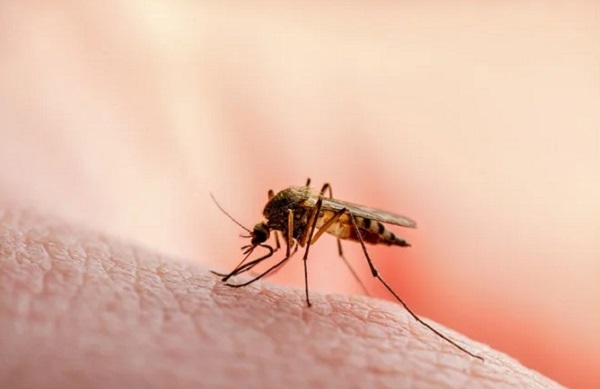
  • Time to eradicate malaria is now

    The global community unites in celebration of World Malaria Day (WMD) on April 25, a day to remember the need for commitment and investment to prevent and control malaria.

    This year’s theme : ‘Time to deliver zero malaria: invest, innovate, implement’, provides the impetus to innovate and realise a malaria-free world.

    Established in 2007 by the World Health Organisation (WHO) decision-making body, WMD follows from the 2001 African Summit on malaria, which saw the signing of the historic Abuja Declaration.

    Malaria is a serious disease caused by a mosquito-borne parasite, which can cause high fevers, shivering chills, and flu-like illness in those infected.

    It is a preventable disease with the use of medicines and precautionary measures such as insecticide-treated bed nets and indoor insecticide spraying.

    On the first World Malaria Day, the then Secretary-General of the United Nations, Ban Ki-moon, emphasised the need to increase the availability of bed nets, medicines, public health facilities, and trained health workers for people in areas of the world affected by malaria.

    With 3.3 billion people in 106 countries at risk of malaria and 900,000 deaths annually, the urgency of the situation is clear.

    Though the situation is dire, there is hope.

    In sub-saharan Africa, the incidence and death rates of malaria have dropped by 21 per cent and 31 per cent, respectively.

    It is heartening to note that in Ghana, the prevalence and mortality of malaria has reduced significantly between 2011 and 2022.

    The Ghana Health Service (GHS) has made commendable strides to fight malaria, with a national strategy of control to elimination based on national and global recommendations.

    The control programme, focused on reducing malaria mortality by 90 per cent, is expected to reduce malaria case incidence by 50 per cent, and achieve malaria per-elimination, in at least six districts in the country, by 2025.

    The current elimination target is focused on reducing mortality by 100 per cent by 2028 and cases by 50 per cent using the 2022 figures as the baseline.

    The Daily Graphic stands in solidarity with the proposal to defeat mortality and decrease incidence of malaria by 2028, utilising 2022 as a baseline for the purpose.

    We ardently advocate the devising of novel and more advanced solutions to eradicate the age-old ailment, as well as the enforcement of national plans to expedite the progress necessary to accomplish this ambition.

    According to the RBM Partnership to End Malaria, today, the combination of low coverage of existing tools, emerging biological threats and funding shortfalls are brewing a perfect storm for malaria and that now is the time to take decisive action to deliver on the goal of zero malaria and achieve the 2030 targets.

    On WMD, we pause to commemorate a momentous occasion and to pay tribute to those who have been impacted by this devastating disease.

    As we take this time to reflect, we celebrate the progress that has been made and the hope that lies ahead.

    As we look back, we give thanks to all of those who have toiled and sacrificed to bring us to this point.

    From those at the forefront of research to those who have adopted prevention and treatment strategies, we honour their invaluable contributions.

    As we look forward, we are inspired by the potential for a brighter future. It is our hope that this day will bring us one step closer to a world free of malaria.

    The Daily Graphic affirms the call to innovate to deliver transformative and improved solutions to end malaria that are tailored to those who need them most.

    The paper also calls for the implementation of national strategies to accelerate progress against this age-old disease, by demonstrating leadership, adopting innovative and sustainable approaches as well as the scaling up of national malaria programmes to deliver life-saving tools to those at highest risk.

    It is time to deliver zero malaria.

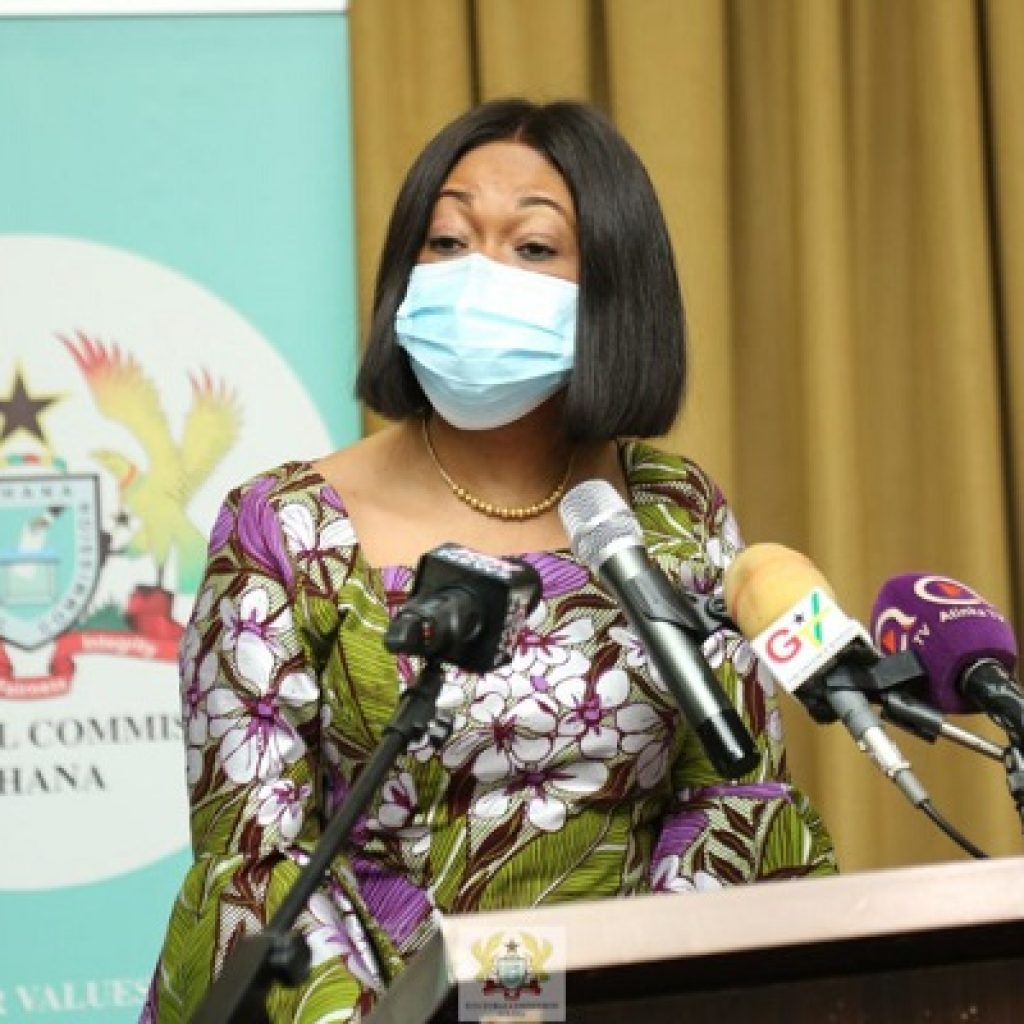
  • EC must add guarantor system

    Parliament last Friday rejected unanimously the Electoral Commission’s (EC’s) proposal to use the Ghana Card as the sole source of identification to register eligible voters onto the new continuous voters register.

    As an alternative, the House recommended to the EC to include the age-old guarantor system as part of the Public Elections (Registration of Voters) Regulation, 2023, which is going through pre-laying processes, before it is laid before the House for consideration.

    In the wisdom of the House, using the Ghana Card alone might negatively impact the electoral roll, as it is likely to deny some qualified persons from registering and voting in the 2024 general election.

    “The EC should tarry slowly until every eligible voter is afforded the opportunity to register and procure the Ghana Card before the legislation of such a compulsion,” the MPs advised.

    The Daily Graphic wholly supports the view Parliament has espoused and the subsequent recommendations and considers them very commendable. For once, we are seeing a House speaking with one voice. This has not been the case, at least in this Parliament

    Since the inception of the Eighth Parliament of the Fourth Republic, the country has seen MPs on both sides of the House at each other’s throat as they disagree on almost every issue, often letting their parties’ interests supercede those of the national. 

    For the Daily Graphic, the fact that legislators agreed unanimously on the thorny issue underscores the importance both sides of the House attach to matters regarding election management.

    Appearing before the Committee of the Whole on March 27, 2023, the Chairperson of the EC, Jean Mensa, had insisted that the plan to use the Ghana Card as the sole registration document would be cost effective, deal with the issue of the multiplicity of identification cards and documents and thus “purge the voters’ roll of foreigners and minors”.

    The Daily Graphic, just like many Ghanaians and some opinion leaders, find it a bit curious that the EC insisted on the use of the Ghana Card alone as a source document for registration onto the electoral roll.

    We think that the challenges with the issuance of the cards can prevent a good number of eligible voters from exercising their franchise.

    We support the House’s proposition that a person who applies for registration but cannot provide evidence of an identification card issued by the NIA because he or she has not been registered by the NIA or registered but has not been issued with the Ghana Card shall be required by the EC to produce a relative to give evidence of identification on oath, in accordance with the provisions of the Oath Act. 

    In a situation where a person applied for registration as a voter but had no relative to provide evidence of identification on oath, the EC shall require two persons registered with the NIA and issued with the national identification card to identify that person under oath, in accordance with the provisions of the Oath Act, the House said.

    Given the severe punishment one faced in vouching falsely for any person, the Daily Graphic strongly believes the guarantor system will discourage people from exploiting and abusing the system. Suffice it to say that the NIA itself uses the guarantor system for capturing people’s data.

    The paper again finds it curious that a document such as the passport has been excluded as source document for voter registration. For every country, the passport is one’s main identification document.

    Therefore, to help make Ghana’s electoral roll error-free, the Daily Graphic encourages the EC to heed Parliament’s recommendation, as that will go a long way to enhance the credibility of elections and the legitimacy of the elected.

    The EC must not give any political party, politicians, civil society organisations and Ghanaians in general the grounds to put question marks on electoral processes.

    It is true that the country’s democracy has attained a high degree of maturity after 30 years in the Fourth Republic, but that does not mean we should be complacent and close our eyes and ears to those good suggestions and constructive inputs into the CI

    This is important for the CI to garner the bi-partisan support it deserves, as well as the goodwill of every Ghanaian.

  • Decriminalising suicide – New dawn for mental health

    Abtvgh

    Last Tuesday, Ghana took a significant step and joined the group of countries that have decriminalised suicide attempt.

    Until Parliament’s amendment of sections of the Criminal Offences Act on suicide, Ghana was among the 20 countries which still punished people for attempted suicide.

    The repeal of the act followed a Private Member’s Bill, sponsored by the Member of Parliament (MP) for Asante Akim Central, Kwame Anyimadu-Antwi, who is also the Chairman of the Legal, Constitutional and Parliamentary Committee of Parliament, and the Ranking Member on the committee and MP for Akatsi South, Bernard Ahiafor.

    Suicide remains a major public health problem worldwide and the World Health Organisation (WHO) estimates that more than 700,000 people worldwide die due to suicide every year.

    Also, for every suicide, there are many more people who attempt it.

    In the past, the act was considered a criminal offence to serve as a deterrent to people from trying to take their lives.

    History also reveals that the major religions of the world have classified suicide as a sin or being against the tenets of the religions.

    Therefore, most countries with a dominant religion have incorporated this moral stance into their initially unwritten and subsequently written laws.

    It is instructive to note that statistics available show that criminalising suicide has not achieved its objective and advocates have always maintained that attempted suicide is a public health issue and not an offence, for which reason the survivor should be considered a patient and provided with treatment and not sent to prison.

    According to statistics from Ghana’s Mental Health Authority (MHA), in 2018, the number of people who attempted suicide was 797.

    That rose to 880 in 2019 and 902 in 2021, while the number who died by suicide went up from 69 in 2020 to 86 in 2021.

    There are many cases that are not reported because of stigma and fear of community backlash and legal repercussions.  

    On the contrary, a WHO report and data show that the legal status on suicide around the world in the last 50 years has changed significantly.

    The WHO report (2014) shows that decriminalisation has had some positive effects in countries, including a decline in suicide rates after its decriminalisation, as people with such tendencies have been able to access medical help.

    Thus at the World Health Assembly in 2019, all health ministers agreed that decriminalising suicide was an effective way to reduce deaths by suicide when they approved the WHO Mental Health Action Plan for 2021-2030.

    This is why the Daily Graphic welcomes the bold decision by Parliament to amend the Criminal Offences Act after years of advocacy by the major stakeholders, especially mental health professionals in Ghana.

    With attempted suicide no longer a criminal offence, it is the expectation that people who are battling mental health conditions will be encouraged to seek the right medical help and also receive the necessary support from close relations and friends.

    More so, it will help reduce the stigma, as suicide survivors and their families eventually become victims of stigmatisation, and with the right interventions and help, the country can achieve the UN Sustainable Development Goals (SDGs) for 2015-2030.

    The Daily Graphic commends the Psychiatric Association of Ghana (PAG) for its relentless effort at leading a sustained campaign for suicide to be decriminalised and, indeed, all other stakeholders who supported the campaign.

    With the new dawn here, the Daily Graphic would also like to call on the health authorities to provide an efficient health delivery system for mental health and make it more accessible to encourage people to seek the required help they need. 

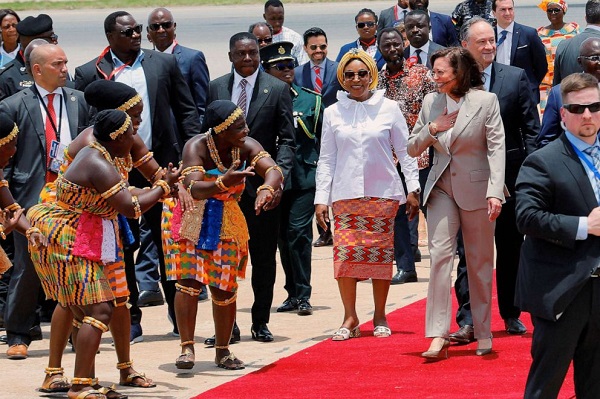
  • Akwaaba, Vice-President Harris

    We welcome the Vice-President of the United States of America (USA), Kamala Harris, into our midst.

    We do not take for granted the fact that she chose Ghana as her first port of call in her week-long first-ever three-nation African tour since taking office.

    Her decision to visit Ghana on her maiden trip to Africa buttresses the fact that Ghana and the USA have a very cordial relationship spanning many years.

    Indeed, although Vice-President Kamala’s visit is the first by the first African-American and first Asian-American vice-president in the history of the US, it adds to the tall list of high-profile visits from the USA to Ghana since the country gained independence in 1957.

    All the visits have further cemented the relationship between the USA and Ghana which started with a trip to the USA on July 23, 1958 by the then Prime Minister of Ghana, Dr Kwame Nkrumah, who also visited Washington, DC on March 8, 1961 as President and was met at the Washington International Airport by US President John F. Kennedy.

    Since then, Ghanaian presidents, including Jerry John Rawlings, John Agyekum Kufuor, John Evans Atta Mills, John Mahama and Nana Addo Dankwa Akufo-Addo, have all received and had interactions with and/or visited US Presidents in Washington, DC.

    The visit by Vice-President Harris and her spouse is, therefore, not surprising because of the decades of friendship between the peoples of Ghana and the USA, which has resulted in many partnerships and cooperation centred on security, governance, education, agriculture, health and many other areas.

    Be that as it may, the visit by Ms Harris has come at an opportune time when Ghana finds itself in economic distress, while the security situation in the West African sub-region is not getting any better.

    The economic challenge has resulted in hot debates in the past few months over a Domestic Debt Exchange Programme the government has introduced as a way of cushioning the country.

    Ghana has also gone to the International Monetary Fund for a $3-billion deal, which for now appears illusive as talks get prolonged over one issue or another.

    We have also commenced talks with the Chinese government for external debt forgiveness to enable us to secure the expected $3-billion cushion from the IMF.

    All these and more are the reasons we believe the visit by the US Vice-President must go beyond mere rhetoric, as has been the case with some high-level engagements.

    Ghana has also gone to the Paris Club to find succor for its economic crisis and the Daily Graphic finds it refreshing that already Vice-President Harris, in her first interaction since arriving here, has pledged that the US will intervene on Ghana’s behalf.

    She also announced that the US would continue to push all bilateral creditors to provide meaningful debt reduction for countries that need it, which is heartwarming.

    Speaking to the security issue in the sub-region, Ms Harris said the US would commit $100 million to combat terrorism in some coastal West African countries, which is also very welcome news.

    Nonetheless, we reiterate the fact that all issues that will be discussed during her three-day visit, be they bilateral, on security or any form of cooperation, should be backed by steps to actualise decisions taken.

  • Urgent! Water sources must be saved

    Abtvgh / Ghana water

    Have you drunk water today?

    If you do not drink water, your itchy throat will compel you to do so  you will naturally feel thirsty.

    Water is life and no human or living being can do without it; meaning that on the day the last drop of water on earth is used up, the last human being will cease to exist.

    Everyone knows this cardinal truth, but, unfortunately, few go all out to protect water, which is one of the key resources that keep the human race alive.

    Through illegal unsustainable mining, farming along river banks, the destruction of vegetation and other practices inimical to the preservation of our water sources, all the major freshwater sources in the country rivers Tain, Ankobra, Pra, Birim, Oti, Offin, Tano, Densu, Afram, Nini, Todzie, Bia, Pru, Black and White Volta, among others have been heavily polluted or silted.

    The Ghana Water Company Limited (GWCL) had had to, over the past few years, heavily treat the little water left for the water stations, thereby incurring more cost, in view of the extent of pollution, before they can send the water to consumers.

    In fact, the situation has become so dire that the GWCL has warned a number of times that it will shut down operations in areas affected by illegal mining (galamsey) if the cost of treating water becomes economically unsustainable due to very high turbidity levels.

    Although the government has persisted in clearing our water bodies of illegal miners, they continue to outwit the task force and continue to pollute our water sources.

    Ghana is not the only country having challenges with ensuring access to potable water due to man’s activities and climate change. There are two billion people who do not have access to water globally.

    It is the reason the United Nations (UN), in 1993, instituted the World Water Day (WWD) which is marked globally on March 22, every year.

    The day, which was observed yesterday, highlights the importance of fresh water and is also used to advocate the sustainable management of freshwater resources.

    It is about taking action to tackle the global water crisis, in support of Sustainable Development Goal Six (SDG 6): Water and sanitation for all by 2030.

    The focus for this year’s commemoration was on accelerating change from the business-as-usual approach to solve the water and sanitation crisis the world over.

    Because water affects all of us, we need everyone to take action now. Everyone can make a difference by changing the way we use, consume and manage water and by resisting the pollution of our water bodies by people for greedy gain.

    Dysfunction throughout the water cycle undermines progress on all major global issues, from health to hunger, gender equality to jobs, education to industry and disasters to peace.

    In 2015, the world committed to SDG 6 as part of the 2030 Agenda – the promise that everyone will have safely managed water and sanitation by 2030.

    Right now, the world is seriously off-track, as billions of people and countless schools, businesses, healthcare centres, farms and factories are being held back because their human right to water and sanitation still needs to be fulfilled.

    There is an urgent need to accelerate change – to go beyond ‘business as usual’.

    The latest data show that governments must work, on the average, four times faster to meet SDG 6 on time, but this is not a situation that any single actor or group can solve.

    The commemoration of this year’s WWD coincided with the start of the UN 2023 Water Conference (March 22-24, New York), a once-in-a-generation opportunity to unite the world around solving the water and sanitation crisis once and for all.

    Indeed, as stated by the Director-General of UNESCO, Audrey Azoulay, on the occasion of this year’s WWD: “Not only is water the source of all life; it is also the foundation for the health and development of our societies.”

    “How can we learn well, how can we be in good health, how can we build a world of peace and justice in a world that is thirsty or that makes itself sick by drinking water that is unfit for consumption?” she quizzed.

    It is, therefore, crucial to act to ensure access to water and sanitation for all and this is all the more pressing as the consequences of climate change are already being felt and threaten to aggravate droughts and water shortages, as well as the scale and frequency of floods.

  • WAEC’s caution to schools timely

    Since 2020, when the COVID-19 pandemic disrupted the educational calendar globally, Ghana is yet to recover fully from its impact.

    The academic year, which used to begin in September and end in July, has been changed since 2021 and the Ghana Education Service (GES) has been compelled to make the academic year begin in January and end in December. Ghana is yet to revert to the original calendar for the writing of external examinations, even though the rest of the countries that write the West African Senior School Certificate Examination (WASSCE) for School Candidates (SCs) have reverted and currently begin their academic year in September and end in July. In order to revert to the pre-COVID-19 era, when the academic year began in September, Ghana has, since 2022, rolled out a “transitional” calendar, which seeks to gradually return the educational calendar to its original schedule. In 2022, WAEC had to organise WASSCE for Ghana, even though it explained that the examination was of equal difficulty. This year too, WAEC will have to set questions for Ghana alone, with Ghana’s timetable for the WASSCE beginning from July 31 to September 26, 2023, instead of June to August. So while the Ghana (Ghana Only Version) WASSCE will be conducted from Monday, July 31 to September 26, 2023, the Basic Education Certificate Examination (BECE) for schools and private candidates will be written simultaneously from Monday, August 7 to Friday, August 11, 2023. The expectation is that by 2024, Ghana will revert the beginning of the academic year to the original September in order to fall in line with the rest of the West African countries writing the WASSCE. Consequently, WAEC has announced the opening of the portal for the registration of candidates for the WASSCE for SCs, expected to be closed on Wednesday, April 19, 2023. The ABTVGH sees the announcement as timely and urges all schools and remedial schools preparing candidates for the examination to take note of the announcement and act accordingly, so that no candidate will miss out on the examination because his or her school is not able to register him or her. We also wish to remind school authorities about the caution by WAEC that it is an offence to register students who have not been enrolled in SHS from their first-year through to the third year and do not have the required continuous assessment records. The caution is not only timeous but also comes as an important notification to guard against enrolling students illegally and collecting money from them because with that the schools will have to forge the 30 per cent continuous assessment score necessary for grading for WASSCE for SCs. Schools must avoid making any decisions that will rob any student of and truncate his or her academic pursuit. The WASSCE surely is part of the foundation a student needs to get to the top of the academic ladder and we, therefore, have to guard against any act that may be detrimental to their forward march to the top of the ladder. It is also important that WAEC has come out with its official registration fee for entry in the seven or eight subjects for the WASSCE for SCs, which is GH¢381.24,  while the fees for practical or oral tests range between GH¢14.50 and GH¢19.50 per practical test. Most schools take undue advantage of such registration processes to milk parents by charging between GH¢1,200 and GH¢6,750. Sadly, some of the schools convince parents that the amount includes compromising invigilators, supervisors and security personnel to allow the candidates to cheat during the examination. The Daily Graphic finds these developments very disturbing, particularly so because we are indirectly telling the young ones that even if they do not study hard, their parents will pay their way through. Such students will grow up to believe that everything is possible with money, and that they do not need to work hard. In the end, they will work their way through to secure responsible positions, where they will not be able to function.

  • Shell to exit South Africa’s downstream sector

    Oil major Shell will divest its majority shareholding from a local South African downstream unit after a comprehensive review of its businesses across all regions, it said on Monday.

    “As a result of this review, Shell has decided to reshape the downstream portfolio and intends to divest our shareholding in SDSA … this decision was not taken lightly,” a Shell statement said. It did not specify when the decision took effect.

    Shell Downstream SA (SDSA) was formed after Shell South Africa and black empowerment company, Thebe Investment Corporation, agreed a decade ago to merge Shell South Africa Marketing and Shell South Refining businesses. Thebe held a 28% equity stake.

    Shell, which has been present in South Africa for more than century, is still exploring the country’s offshore, incurring opposition from environmental campaigners who have launched court action.

    During the divestment process, Shell said on Monday it would work to preserve SDSA’s operating capabilities and maintain its brand presence.

    A Thebe spokesperson was not immediately available for comment.

    One of SDSA’s main assets and South Africa’s largest refinery, Sapref, in the east coast port city of Durban has not been operating since 2022 when Shell and its refinery joint venture partner, BP, decided on a spending freeze and halt to the refinery’s operations.

    Flooding along the coast that killed nearly 400 people that same year severely damaged the plant, which at that stage provided around 35% of South Africa’s refining capacity

    South Africa’s Central Energy Fund said two years ago it was interested in Sapref, which has a nameplate capacity of 180,000 barrels per day, as it seeks to overcome energy security concerns.

    On Monday, an energy official, speaking on condition of anonymity, said CEF had signed a non disclosure agreement with the parties involved and therefore could not comment.

    South Africa is a net importer of refined petroleum products, a challenge exacerbated since the closure of Sapref and the country’s second largest refinery Enref, also in Durban.

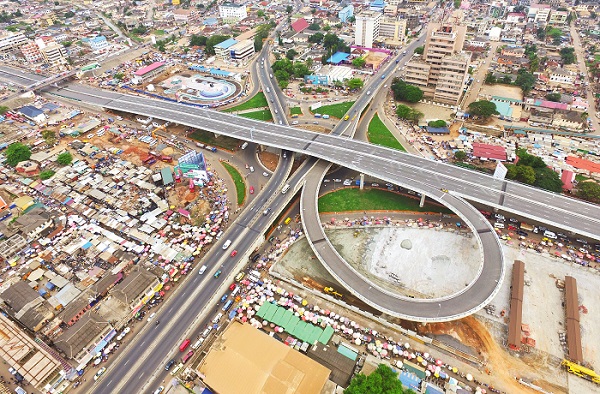
  • Bringing order to Nkrumah Circle

    The Kwame Nkrumah Interchange in Accra was built and opened to the public in 2016 to help decongest the area and allow the free flow of traffic, as the original circle had outlived its usefulness, in view of the increase in traffic, both human and vehicular.

    However, after a brief respite, we are back to square one, seven years after the opening of the interchange, as the disorder in the area has returned,  this time in a worse condition.

    The chaos at the place now is not because the interchange has failed to deal with the traffic situation but because city authorities have failed to bring sanity to the area.

    Human beings always do what suits them or is convenient for them, and that is why there are laws to whip people in line.

    But it seems our laws are just in the statutes.

    The Kwame Nkrumah Interchange, like other such structures in city centres elsewhere, is very important because it is the central point of the national capital where many people (about three million daily) transit when commuting to other parts of the city and other towns in the country or to do business.

    Unfortunately, the place has gradually been turned into a jungle where only the strongest survive, while law enforcers and city authorities look on helplessly.

    The question that begs for an answer is: How did we get here?

    And the answer is simple: Enforcement of the city’s bye-laws has been so weak over the years that it has culminated in the disarray in the area.

    If care is not taken and action taken now, the area will become a no-go area and will become the hotbed of criminal activities, with mentally challenged persons and beggars also joining in to make the place unwelcome.

    Indeed, Circle has long been notorious for the mugging of pedestrians, but things are getting to a head now because of the chaotic nature of activities there, which has also contributed to insanitary conditions and the constant pollution of the Odaw drain.

    City centres the world over attract hordes of people who visit to do shopping and business and commute to other areas, but those centres are not chaotic because city authorities are up and doing and any disregard for or flouting of the laws on the parking of vehicles, trading and even crossing the road anyhow attracts a fine and you dare not refuse to pay because you will be fished out.

    Some years ago when the late WOII Salifu Amankwah was the landlord of the Kwame Nkrumah Circle, no one dared misbehave there, which kept the area in order all the time, although some excesses resulted in the death of an aged man.

    While the Daily Graphic is not calling for such brute force to be used on people who throng the Nkrumah Circle daily for various reasons, we are calling for the city authorities especially the Korle Klottey Municipal Assembly (KKMA), led by Samuel James Nii Adjei Tawiah  to stamp its authority in the area for sanity to prevail.

    For example, it does not make sense that in spite of a pedestrian mall that has been built to take care of hawkers, we still have people (both sellers and buyers) trading on the pavements, leaving pedestrians with no choice but to walk on the streets and forcing vehicles to use one lane and move at a snail’s pace.

    What is wrong is wrong and we must not allow people to sell on the streets and pavements for whatever reason

    By creating the human and vehicular traffic, we have also made the area very conducive for all manner of criminal activities, including pickpocketing, such that the area is no longer safe for people who go there to do genuine business or pick transport.

    We urge the resourcing of the KKMA and other assemblies linked to the area to bring some order there.

    For starters, we must also ensure that more policemen are roped in to clear traders from the pavements, penalise members of the public caught buying things from hawkers and street vendors and fine drivers who stop or park anywhere they like to pick up or drop off passengers at will.

    We must clear all makeshift and illegal structures at the city centre that have become an eyesore to make the place comely – we must not politicise this activity, so that it is sustained.

    The Daily Graphic calls on the Greater Accra Regional Minister, Henry Quartey, to take charge of the exercise of making the Nkrumah Interchange beautiful once again, and we pledge our support to this endeavour. Enough is enough!