Category: Business

  • Ghana’s fishing industry has a ‘golden seaweed’ problem – how citizen science can help

    Abtvgh /

    Sargassum is a genus of brown seaweed. Over 300 species are distributed across the world in both temperate and tropical climates. The species fluitans and natans are unique because they spend their life cycle floating on the ocean, never attaching to the sea floor. Other seaweed species reproduce and begin life on the ocean floor .

    Pelagic (open sea) sargassum has been described as the “golden rainforest of the ocean” because of the floating ecosystem it supports in the Sargasso Sea, in the western Atlantic Ocean. Pelagic sargassum also occurs naturally in the Gulf of Mexico and the Caribbean.

    Floating sargassum first began arriving en masse on shores across the tropical Atlantic in 2011. Up to 10,000 tonnes arrived daily during a particularly severe peak season. Severe years since then include 2015, 2018 and 2022 – but every year there is a significant influx. In the Caribbean, there has been good progress in understanding the pelagic sargassum seaweed. We now have a better idea of where it’s coming from: likely a new southern area of growth.

    In 2009 the first reports emerged of pelagic sargassum sightings off the coast of Ghana. Densities have increased annually ever since. In early March 2023, large quantities have again arrived on the shores of the Western Region of the country.

    Pelagic sargassum is beneficial in lots of ways. Marine species such as eels, white marlin and dolphin fish depend on it for spawning grounds in the Sargasso Sea. Commercial fish species including tuna depend on it for food.

    But problems arise when large quantities are experienced near and on the shorelines of coastal communities. Algal and seaweed blooms are becoming more common in seas and oceans worldwide, both far offshore and nearshore. There is only limited evidence of a link between pelagic sargassum blooms and climate change, but warming oceans do seem to be one cause of the rise in other harmful algal blooms in coastal areas.

    The pelagic sargassum off Ghana’s coast is affecting communities’ ability to fish and use their beaches.

    Importance of fishing in Ghana

    More than 60% of Ghana’s citizens live within 200km of the coast and 42% within 100km. The artisanal or small-scale fisheries sector employs an estimated 80% of the country’s fishers.

    Around 2.4 million people, about 10% of the population, work in the fisheries sector. Small-scale fisheries contribute about 4.5% to Ghana’s gross domestic product (GDP). The coastal regions of the country are particularly dependent on fisheries for their livelihoods.

    Marine fisheries are the primary source of income for more than 200 coastal villages, including about 200,000 fishers with approximately 2 million dependents.

    Impacts of pelagic sargassum on fishing communities

    In a recent study we assessed the impact of pelagic sargassum on the livelihoods of fishers on Ghana’s coast. Through group discussions, surveys, field observations and photographs, we documented the experiences of fishers. Most (70%) of those we spoke to across three sites in the region – Sanzule, Beyin and Newtown – depended on fishing for their sustenance and livelihood.

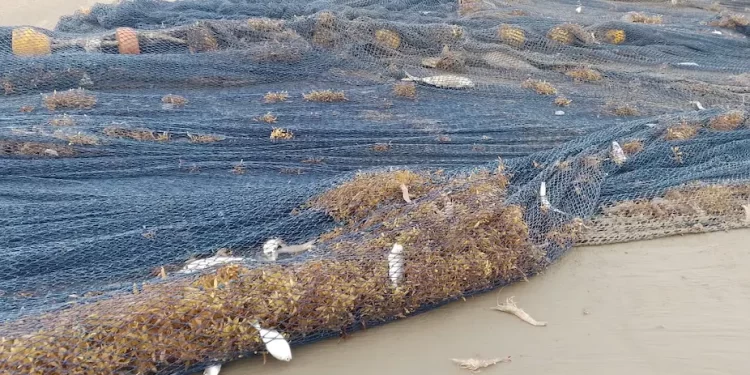
    The seaweed had significantly affected the livelihoods of fishing dependent communities in the western region. Pelagic sargassum had reduced their fish catch by getting tangled in nets. It made up most of the catch instead of fish.

    Pelagic sargassum also inhibits fishing by:

    • breaking nets and filling nets
    • clogging outboard motors on boats
    • creating seaweed mats that are impossible to navigate boats through
    • causing skin irritations
    • causing unbearable discomfort from the smell.

    These initial results highlight the urgency of finding ways to manage pelagic sargassum in western Africa. But to achieve this, we also need more data and an improved understanding of what is happening.

    Solutions

    To identify solutions, it is important to know what types of seaweed are arriving, their origins, uses and how to monitor them. It is possible that the answers are the same for west Africa as in the Caribbean. But this is an assumption. Very little is known about pelagic sargassum in West Africa.

    What we do know, as scientists, is that answering some of these questions for places like Ghana might be even trickier than it was for the Caribbean.

    Take forecasting and early warning, for example. These processes rely on sufficient cloud-free satellite imagery in combination with an understanding of ocean processes and weather systems. That means detecting where the pelagic sargassum is at any given moment, in combination with ocean process models, to forecast where it will be later.

    But west African coasts tend to have significant cloud cover. Methods that worked well in the Caribbean may not work in Ghana.

    Recently, a team from universities in Ghana, the UK and Jamaica came together to explore how ground-based photography might create a useful dataset to better understand the seasonality and volumes of pelagic sargassum arriving in Ghana, using citizen science methods.

    Citizen science recognises the important role that the public can play in research, and invites non-researchers to be part of data collection and analysis.

    Citizen science is now applied worldwide for coastal monitoring but focuses almost exclusively on coastal erosion. Coastal erosion work, such as the CoastSnap platform, documents how the physical structure of coastlines changes across days, months and years. The citizen science monitoring is achieved by installing a simple metal pole and some signage requesting that a passersby take a quick photo with their mobile phone and share it online or via an app.

    In our work, we have come together with schools and community members from Beyin, Esiama and Sanzule in the western region of Ghana to apply CoastSnap to study pelagic sargassum. Together, we have installed three of these metal monitoring posts. Teachers and community members are now photographing the impacts that the seaweed has on people’s lives when it arrives.

    Gradually, we will learn more about pelagic sargassum impacts and adaptation options in west Africa.

    By: Sien van der Plank ,Senior Research Fellow, University of Southampton, Kwasi Addo Appeaning, Lecturer in Marine and Fisheries Sciences, University of Ghana, Philip-Neri Jayson-Quashigah ,Research Fellow, University of Ghana and  Winnie N. A. Sowah, Lecturer, Department of Marine and Fisheries Sciences, University of Ghana.

  • Ghana Prisons Service commercialising projects laudable idea

    Abtvgh

    The Ghana Prisons Service has earnestly started implementing its goal of repositioning itself to reflect the current needs of the country.

    The announcement by its management at the annual Regional Commanders conference in Accra last Thursday that apart from its core mandate of ensuring safe custody and welfare of prisoners to maintain public safety, it had also taken concrete steps to become a major contributor to the nation’s food basket is pleasing.

    The service has also conceived the idea of commercialising and retooling all its workshops and taking agriculture to the next level.

    It is, among other activities, securing funding for its mechanised agriculture to contribute significantly to the food basket of the nation (Daily Graphic, Friday, April 14, 2023.)

    The Daily Graphic is urging the service to sustain those goals and vision, so that other government agencies will emulate the example.

    There have been many calls on metropolitan, municipal and district assemblies (MMDAs), as well as other public institutions, to find innovative ways of getting internally generated funds (IGFs), as the prisons service wants to do.

    When that is meticulously carried out, it will enhance the service’s viability and contribution to the economy, since it is becoming clear that the government alone cannot continue to do everything.

    The global economy is gradually shrinking as a result of the COVID-19 pandemic and the Russia-Ukraine war, both of which have implications for nations such as Ghana.

    According to the International Monetary Fund (IMF) World Economic Outlook, the baseline forecast for growth was to fall from 3.4 per cent in 2022 to 2.8 per cent in 2023, before settling at 3.0 per cent in 2024.

    Advanced economies are expected to see an especially pronounced growth slowdown, from 2.7 per cent in 2022 to 1.3 per cent in 2023.

    In a possible alternative scenario, with further financial sector stress, global growth was expected to decline from about 2.5 per cent in 2023, with advanced economy growth falling below one per cent, the IMF World Economic Outlook further indicated.

    These projections have implications for the country and the earlier public institutions started becoming innovative, the better it would be for the institutions and the citizenry.

    It is for this reason that the paper thinks the decision by the prisons service to chart a new course to become more viable and contribute to enhancing food security in the country must be applauded.

    The commercialisation of agriculture will ultimately help supplement the food intake of the inmates and make the service stand on its feet to be able to meet its needs without waiting on the government for support.

    The service, apart from its legal mandates set out by the 1992 Constitution and other statutory provisions, has a vision and mission to build a world-class service to attain sustainable public safety through excellence in corrections management and to undertake the safe custody, humane treatment, reformation, rehabilitation and re-integration of inmates to make them responsible, productive and law-abiding citizens to ensure public safety.

    It is gratifying to note that the service is taking deliberate steps to modernise its operations to make it financially viable.

    It is worthy to note that other goals set out by the service to reposition itself to contribute more meaningfully to the nation’s development are modernisation of its management practices and administrative structures, modernisation of staff recruitment, manpower planning and development, as well as work practices, and modernisation of the physical structures and operational equipment.

    The paper hopes that the bold step by the service will not be a nine day’s wonder, for, as the saying goes: “A journey of a thousand miles begins with the first step.”

    The prisons service has taken the first step and sustained efforts must be made to achieve the targets.

  • Pension funds should support private sector

    Abtvgh / SNIT/

    The private sector is identified as the engine of economic growth and job creation in any economy.

    The sector is recognised as a means to accelerate the rapid industrialisation desired by developing countries.

    In Ghana, the private sector contributes  over 80 per cent of jobs and also significantly to the country’s gross domestic product (GDP).

    In spite of its role, over the years, the sector has been starved of the much needed resources to enable it to function sustainably.

    The number one resource needed to unlock the full potential of the private sector is the availability of long term pension funds that will enable businesses to grow, expand and employ more people.

    All over the world, the pension funds industry, due to its nature, plays a crucial role in this regard by allocating a significant percentage of the funds to the private sector to drive economic growth.

    The situation is, however, different in Ghana as a huge percentage of the country’s pension funds are invested in government bonds, denying the private sector of the much needed capital to grow and expand.

    Almost 90 per cent of pension funds in Ghana are invested in government bonds compared to the developed countries where less than 40 per cent of those resources are invested in government securities.

    This is because the industry has been under the notion that government securities are risk free and hence they continue to pile up their investments in those securities

    However, the recently concluded domestic debt exchange programme (DDEP) and the collapse of the SVB Bank in the US due to mark-to-market losses from risk-free securities underscore the fact that government securities are not risk free and are subject to market price volatility.

    The Daily Graphic, therefore, believes the DDEP must be a wake-up call that financial institutions cannot continue to pile up their investments in government securities with the assumption that  they are risk free.

    The paper, therefore, adds its voice to calls for pension fund managers to stop funding the government and channel their resources into the private sector.

    Pension fund managers must rethink the way they allocate capital as asset holders.

    An economy is as strong as its businesses and the country must, therefore, critically examine the role of pension funds in efficiently allocating capital.

    The practice of mobilising capital for the government at the expense of the private sector is inimical to national development and must be stopped.

    Going forward, the Daily Graphic believes the industry must take the necessary steps to reverse the flow of capital from the government to the private sector as soon as possible.

    The key resource needed to activate the economic growth needed is capital which the pension fund managers are rather giving to government.

    However, for the country to be able to fully harness the potential of the pension funds industry, some of the existing guidelines that regulate the industry must change.

    And this is where the regulators must come in.

    The Daily Graphic calls on the Securities and Exchange Commission, together with the National Pensions Regulatory Authority, to make further changes to the investment guidelines and increase the investment ceilings on other asset classes as the current ceiling is skewed heavily towards government securities.

  • Urgent! Water sources must be saved

    Abtvgh / Ghana water

    Have you drunk water today?

    If you do not drink water, your itchy throat will compel you to do so  you will naturally feel thirsty.

    Water is life and no human or living being can do without it; meaning that on the day the last drop of water on earth is used up, the last human being will cease to exist.

    Everyone knows this cardinal truth, but, unfortunately, few go all out to protect water, which is one of the key resources that keep the human race alive.

    Through illegal unsustainable mining, farming along river banks, the destruction of vegetation and other practices inimical to the preservation of our water sources, all the major freshwater sources in the country rivers Tain, Ankobra, Pra, Birim, Oti, Offin, Tano, Densu, Afram, Nini, Todzie, Bia, Pru, Black and White Volta, among others have been heavily polluted or silted.

    The Ghana Water Company Limited (GWCL) had had to, over the past few years, heavily treat the little water left for the water stations, thereby incurring more cost, in view of the extent of pollution, before they can send the water to consumers.

    In fact, the situation has become so dire that the GWCL has warned a number of times that it will shut down operations in areas affected by illegal mining (galamsey) if the cost of treating water becomes economically unsustainable due to very high turbidity levels.

    Although the government has persisted in clearing our water bodies of illegal miners, they continue to outwit the task force and continue to pollute our water sources.

    Ghana is not the only country having challenges with ensuring access to potable water due to man’s activities and climate change. There are two billion people who do not have access to water globally.

    It is the reason the United Nations (UN), in 1993, instituted the World Water Day (WWD) which is marked globally on March 22, every year.

    The day, which was observed yesterday, highlights the importance of fresh water and is also used to advocate the sustainable management of freshwater resources.

    It is about taking action to tackle the global water crisis, in support of Sustainable Development Goal Six (SDG 6): Water and sanitation for all by 2030.

    The focus for this year’s commemoration was on accelerating change from the business-as-usual approach to solve the water and sanitation crisis the world over.

    Because water affects all of us, we need everyone to take action now. Everyone can make a difference by changing the way we use, consume and manage water and by resisting the pollution of our water bodies by people for greedy gain.

    Dysfunction throughout the water cycle undermines progress on all major global issues, from health to hunger, gender equality to jobs, education to industry and disasters to peace.

    In 2015, the world committed to SDG 6 as part of the 2030 Agenda – the promise that everyone will have safely managed water and sanitation by 2030.

    Right now, the world is seriously off-track, as billions of people and countless schools, businesses, healthcare centres, farms and factories are being held back because their human right to water and sanitation still needs to be fulfilled.

    There is an urgent need to accelerate change – to go beyond ‘business as usual’.

    The latest data show that governments must work, on the average, four times faster to meet SDG 6 on time, but this is not a situation that any single actor or group can solve.

    The commemoration of this year’s WWD coincided with the start of the UN 2023 Water Conference (March 22-24, New York), a once-in-a-generation opportunity to unite the world around solving the water and sanitation crisis once and for all.

    Indeed, as stated by the Director-General of UNESCO, Audrey Azoulay, on the occasion of this year’s WWD: “Not only is water the source of all life; it is also the foundation for the health and development of our societies.”

    “How can we learn well, how can we be in good health, how can we build a world of peace and justice in a world that is thirsty or that makes itself sick by drinking water that is unfit for consumption?” she quizzed.

    It is, therefore, crucial to act to ensure access to water and sanitation for all and this is all the more pressing as the consequences of climate change are already being felt and threaten to aggravate droughts and water shortages, as well as the scale and frequency of floods.

  • Shell to exit South Africa’s downstream sector

    Oil major Shell will divest its majority shareholding from a local South African downstream unit after a comprehensive review of its businesses across all regions, it said on Monday.

    “As a result of this review, Shell has decided to reshape the downstream portfolio and intends to divest our shareholding in SDSA … this decision was not taken lightly,” a Shell statement said. It did not specify when the decision took effect.

    Shell Downstream SA (SDSA) was formed after Shell South Africa and black empowerment company, Thebe Investment Corporation, agreed a decade ago to merge Shell South Africa Marketing and Shell South Refining businesses. Thebe held a 28% equity stake.

    Shell, which has been present in South Africa for more than century, is still exploring the country’s offshore, incurring opposition from environmental campaigners who have launched court action.

    During the divestment process, Shell said on Monday it would work to preserve SDSA’s operating capabilities and maintain its brand presence.

    A Thebe spokesperson was not immediately available for comment.

    One of SDSA’s main assets and South Africa’s largest refinery, Sapref, in the east coast port city of Durban has not been operating since 2022 when Shell and its refinery joint venture partner, BP, decided on a spending freeze and halt to the refinery’s operations.

    Flooding along the coast that killed nearly 400 people that same year severely damaged the plant, which at that stage provided around 35% of South Africa’s refining capacity

    South Africa’s Central Energy Fund said two years ago it was interested in Sapref, which has a nameplate capacity of 180,000 barrels per day, as it seeks to overcome energy security concerns.

    On Monday, an energy official, speaking on condition of anonymity, said CEF had signed a non disclosure agreement with the parties involved and therefore could not comment.

    South Africa is a net importer of refined petroleum products, a challenge exacerbated since the closure of Sapref and the country’s second largest refinery Enref, also in Durban.

  • Bringing order to Nkrumah Circle

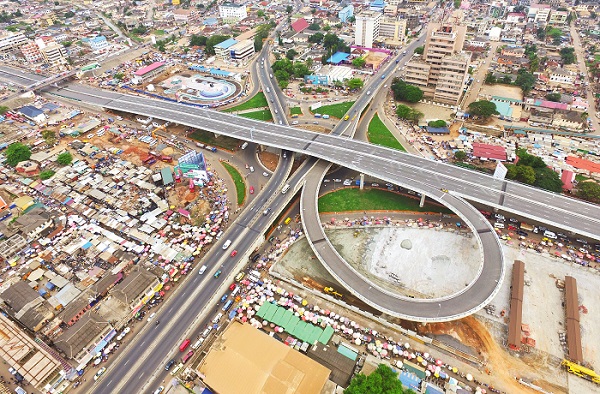
    The Kwame Nkrumah Interchange in Accra was built and opened to the public in 2016 to help decongest the area and allow the free flow of traffic, as the original circle had outlived its usefulness, in view of the increase in traffic, both human and vehicular.

    However, after a brief respite, we are back to square one, seven years after the opening of the interchange, as the disorder in the area has returned,  this time in a worse condition.

    The chaos at the place now is not because the interchange has failed to deal with the traffic situation but because city authorities have failed to bring sanity to the area.

    Human beings always do what suits them or is convenient for them, and that is why there are laws to whip people in line.

    But it seems our laws are just in the statutes.

    The Kwame Nkrumah Interchange, like other such structures in city centres elsewhere, is very important because it is the central point of the national capital where many people (about three million daily) transit when commuting to other parts of the city and other towns in the country or to do business.

    Unfortunately, the place has gradually been turned into a jungle where only the strongest survive, while law enforcers and city authorities look on helplessly.

    The question that begs for an answer is: How did we get here?

    And the answer is simple: Enforcement of the city’s bye-laws has been so weak over the years that it has culminated in the disarray in the area.

    If care is not taken and action taken now, the area will become a no-go area and will become the hotbed of criminal activities, with mentally challenged persons and beggars also joining in to make the place unwelcome.

    Indeed, Circle has long been notorious for the mugging of pedestrians, but things are getting to a head now because of the chaotic nature of activities there, which has also contributed to insanitary conditions and the constant pollution of the Odaw drain.

    City centres the world over attract hordes of people who visit to do shopping and business and commute to other areas, but those centres are not chaotic because city authorities are up and doing and any disregard for or flouting of the laws on the parking of vehicles, trading and even crossing the road anyhow attracts a fine and you dare not refuse to pay because you will be fished out.

    Some years ago when the late WOII Salifu Amankwah was the landlord of the Kwame Nkrumah Circle, no one dared misbehave there, which kept the area in order all the time, although some excesses resulted in the death of an aged man.

    While the Daily Graphic is not calling for such brute force to be used on people who throng the Nkrumah Circle daily for various reasons, we are calling for the city authorities especially the Korle Klottey Municipal Assembly (KKMA), led by Samuel James Nii Adjei Tawiah  to stamp its authority in the area for sanity to prevail.

    For example, it does not make sense that in spite of a pedestrian mall that has been built to take care of hawkers, we still have people (both sellers and buyers) trading on the pavements, leaving pedestrians with no choice but to walk on the streets and forcing vehicles to use one lane and move at a snail’s pace.

    What is wrong is wrong and we must not allow people to sell on the streets and pavements for whatever reason

    By creating the human and vehicular traffic, we have also made the area very conducive for all manner of criminal activities, including pickpocketing, such that the area is no longer safe for people who go there to do genuine business or pick transport.

    We urge the resourcing of the KKMA and other assemblies linked to the area to bring some order there.

    For starters, we must also ensure that more policemen are roped in to clear traders from the pavements, penalise members of the public caught buying things from hawkers and street vendors and fine drivers who stop or park anywhere they like to pick up or drop off passengers at will.

    We must clear all makeshift and illegal structures at the city centre that have become an eyesore to make the place comely – we must not politicise this activity, so that it is sustained.

    The Daily Graphic calls on the Greater Accra Regional Minister, Henry Quartey, to take charge of the exercise of making the Nkrumah Interchange beautiful once again, and we pledge our support to this endeavour. Enough is enough!

  • Auto Show, Thursday, 23rd November, 2023

    MOG announces “2023 new wine” concert

    Themed, “The coming glory”, MOG’s flagship annual programme will take place on 19 March at the Oil Dome of the Royalhouse Chapel International, Accra

    Abtvgh / MOG

    Award-winning gospel musician and songwriter, Pastor Nana Yaw Boakye also known as MOG Music has announced the 2023 New Wine Concert.

    Themed, “The coming glory”, MOG’s flagship annual programme will take place on 19 March at the Oil Dome of the Royalhouse Chapel International, Accra.

    The much-anticipated event which would be held in-person has lined up gospel artistes including Ohema Mercy, Uncle Ato, Piesie Esther, Kofi Owusu Preprah and Ella Duncan Williams.

    Also ministering will be Keepers Music and Liberty Voices Choir. The 2023 edition will see the ministration of new singles on the Koinonia album Phase 2 and great worship songs from the guest artistes.

    Speaking about the concert, the VGMA two-time male vocalist of the year, MOG said the 2023 event presents an array of local artistes who are prepared to usher God’s children into his presence.

    He said the Phase 2 of the ‘Koinonia’ album will take gospel music lovers to another level as the Christian community worldwide comes together to worship God.

    According to MOG Music, activities have been outlined to garner support for the event. “I can assure you that lives are going to be touched and there will be testimonies.

    Under the patronage of the Most Rev Sam Korankye Ankrah, founder and Apostle General of Royalhouse Chapel International, the concert will be live telecasted on TV platforms including Powerline TV as well as social media handles of MOG Music.

    Patrons of this year’s event would have to get their tickets ready for the life transforming event.

    Tickets are going for as low as GHC40 (single) for the gallery stand and GHC 70 for double. The standard regular ticket is going for GHC 80 and GHC 150 for double. The special VIP tickets are going for GHC 200.

    “Patrons should expect a night of the manifestation of the power of God through song ministrations including hymns,” a statement from the singer said.

  • Happy 66th Independence Day

    Today marks the 66th anniversary of attainment of independence from colonial rule for our dear nation Ghana. The attainment of independence signalled our liberty as a country to take our destiny into our own hands and be in charge of our own affairs.

    It was indeed an affirmation of Ghana’s first President, Dr Kwame Nkrumah, that “the Black man was capable of managing his own affairs”.

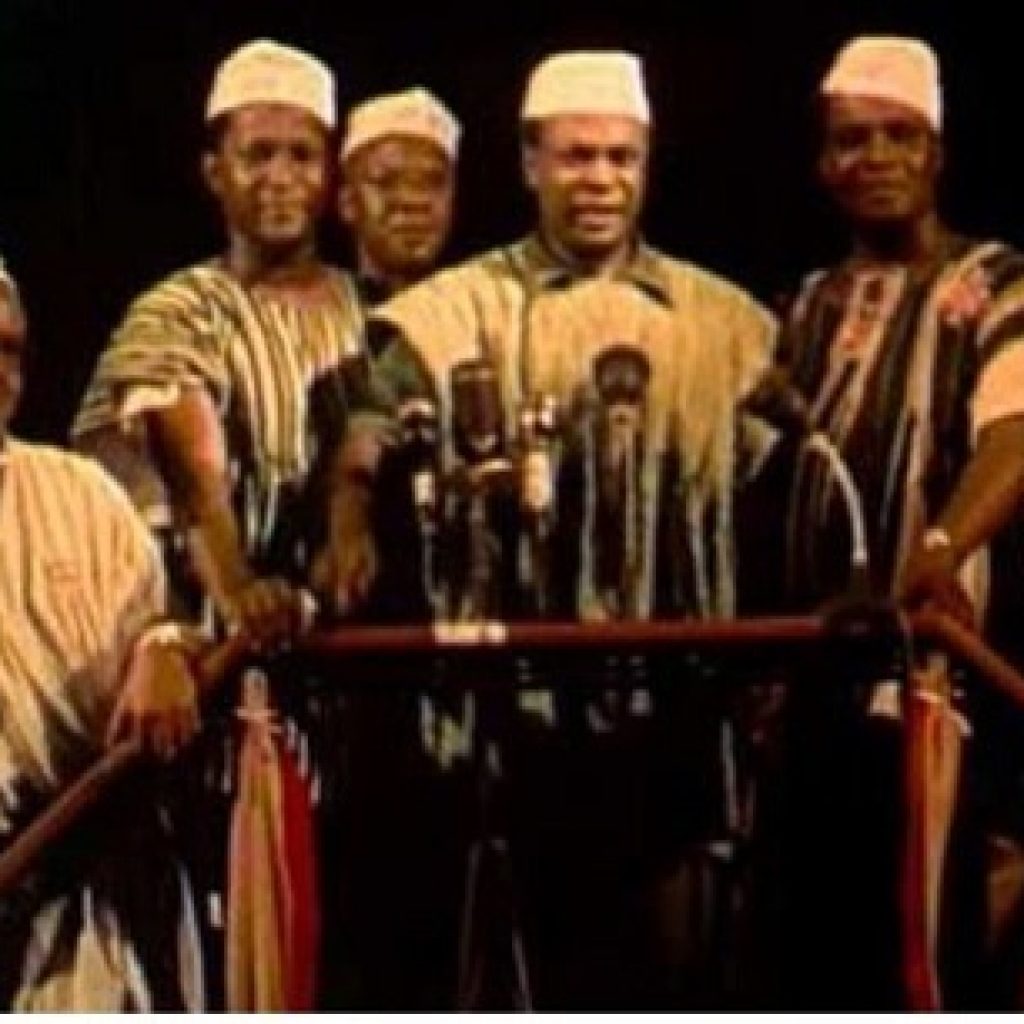
    In Nkrumah’s moving speech in the early morning of March 6, 1957 at the Accra Polo Grounds, he proclaimed the expectation and the hope of Ghanaians, the rest of Africa and the world for the new homeland of Ghana. 

    There was a new hope for prospects because the opportunity had been offered the people to determine their own destiny and affairs. The independence journey had been tortuous and at certain stages uncertain. There had been difficulties, imprisonments, hardships, suffering and deaths. 

    Quite rightly the people had cause to jubilate.

    On the occasion of 66 years of nationhood, therefore, the Daily Graphic joins all Ghanaians to congratulate ourselves on the feat that we have chalked up over the years. We have not been a total disappointment; certainly, we have built on what was bequeathed to us by our forebears and we must have cause to celebrate. 

    The country has seen tremendous improvements in its Human Development Index (HDI), indicating progress in life expectancy, adult literacy and combined secondary and tertiary school enrolment, and real GDP per capita.  Until 2020 when the COVID-19 pandemic struck the country, we were one of the fastest growing economies. 

    We have a thriving, stable and deepening democratic governance and a high degree of media freedom that are the envy of many.

    We must be encouraged by these and pat ourselves on the back for our efforts. But as we do this, we must understand that all is not rosy. It does not also mean that we could not have done better. There are many challenges that we need to work on in order to experience the rapid and accelerated development we yearn for.

    Currently, the country is in dire economic straits, with our debt to GDP growing to unsustainable levels. This is the time we need all citizens on board to help turn the situation around. We need the understanding and support of citizens for policies and measures to build a strong socioeconomic foundation. Something that will provide economic freedom and curtail our dependence on foreign aid, to lead the country to move away from the source of economic growth where we rely on extractive and capital-intensive services that do not directly help in reducing poverty. 

    We must immediately also work on our political psyche to move away from the acrimony, mistrust and suspicion that have become synonymous with our society. Our political actors, especially, owe the nation a duty to lead this charge. The Daily Graphic won’t mince words in pointing out that they are the primary source of this unfortunate state of affairs. 

    As our schoolchildren, the security agencies and others march today to mark our 66th Independence Day, we mustn’t see it as just an occasion for the fun of it. We must reflect on the whole essence of independence. The Daily Graphic points to an excerpt from one of Dr Nkrumah’s speeches that “. . . from now on, today, we must change our attitudes and our minds. . . . and that [our current state] entails hard work”.

    Ghana must demonstrate to the world that it is prepared to build on our foundation, but we must admit that reshaping the destiny of this country depends on us all.

  • Real estate, climate change

    Abtvgh

    It is the emission of greenhouse gases, such as, carbon dioxide, methane, etc., into the atmosphere that contributes to climate change.

    To mitigate climate change, therefore, is to control activities, such as energy consumption, that emit these gases.

    Like many other countries, including the US, UK and Canada, across the world, Ghana is experiencing the effects of climate change.

    We are experiencing unprecedented flooding, drought and heatwaves, all being climate-related problems.

    Arguably, these issues have had a toll on our economy, with sectors like agriculture and tourism suffering the most.

    In an attempt to curb climate change, the country has planted millions of trees, which, undoubtedly, is one of the solutions to curbing the menace.

    However, achieving net zero in the real estate sector would be a game changer in the world’s fight against climate change.

    Net zero refers to achieving a balance between the amount of greenhouse gas emissions produced and the amount removed from the atmosphere.

    Real estate

    In the real estate sector, achieving net zero means buildings are designed, constructed, and operated in a way that minimises their carbon footprint (total amount of greenhouse gases, primarily carbon dioxide, emitted).

    The 2019 Global Status Report for Buildings and Construction by International Energy Agency shows that the world’s real estate sector accounts for about 39 per cent of the total global emissions and consumes nearly 40 per cent of the world’s energy.

    Opportunity

    Net zero in real estate presents an opportunity for Ghana to address climate change while also promoting sustainable economic growth.

    The rapid growth of our construction industry presents an opportunity to build energy-efficient and sustainable buildings that contribute to net zero emissions.

    One key step towards achieving net zero in real estate is to incorporate renewable energy sources such as solar and wind power into building designs.

    In Ghana, solar energy has immense potential, given the country’s abundant sunshine.

    The government could promote the use of solar energy by providing incentives such as tax breaks for businesses that invest in solar panels or subsidise and make it mandatory for buildings to incorporate solar power in their design.

    Building design is identified as another critical aspect that can help achieve net zero in real estate.

    This means designing buildings to be energy-efficient and sustainable.

    For instance, buildings can be designed to maximise natural light and ventilation, reducing the need for artificial lighting and air conditioning, which are significant sources of energy consumption.

    Additionally, materials used in building construction can be chosen with sustainability in mind.

    Building materials such as concrete and steel have high carbon footprints, and alternatives such as bamboo and wood could be considered in some instances.

    Green roofs and walls can also be incorporated into building designs to help absorb carbon dioxide from the atmosphere.

    Such features would not only contribute to reducing the building’s carbon footprint but also provide other benefits such as improving air quality, reducing urban heat islands and enhancing biodiversity.

    In sum, Ghana can tackle climate change by promoting net zero in real estate.

    Achieving net zero in the real estate sector will not only contribute to reducing the country’s carbon footprint but also present an opportunity for sustainable economic growth.

    By incorporating renewable energy sources, sustainable building materials, and building designs that maximise energy efficiency, Ghana can lead the way in the fight against climate change while also promoting sustainable development.

    The writer is a Student of MSc.

    Real Estate,

    University of Aberdeen, UK.